
TL;DR:
- Temporary signage serves a crucial role during short-term projects, requiring specific materials, installation methods, and compliance with regulations. Proper planning, early permits, and quality execution ensure safety, effectiveness, and avoid costly enforcement issues. Treating temporary signs with the same strategic importance as permanent signage enhances professionalism and project success.
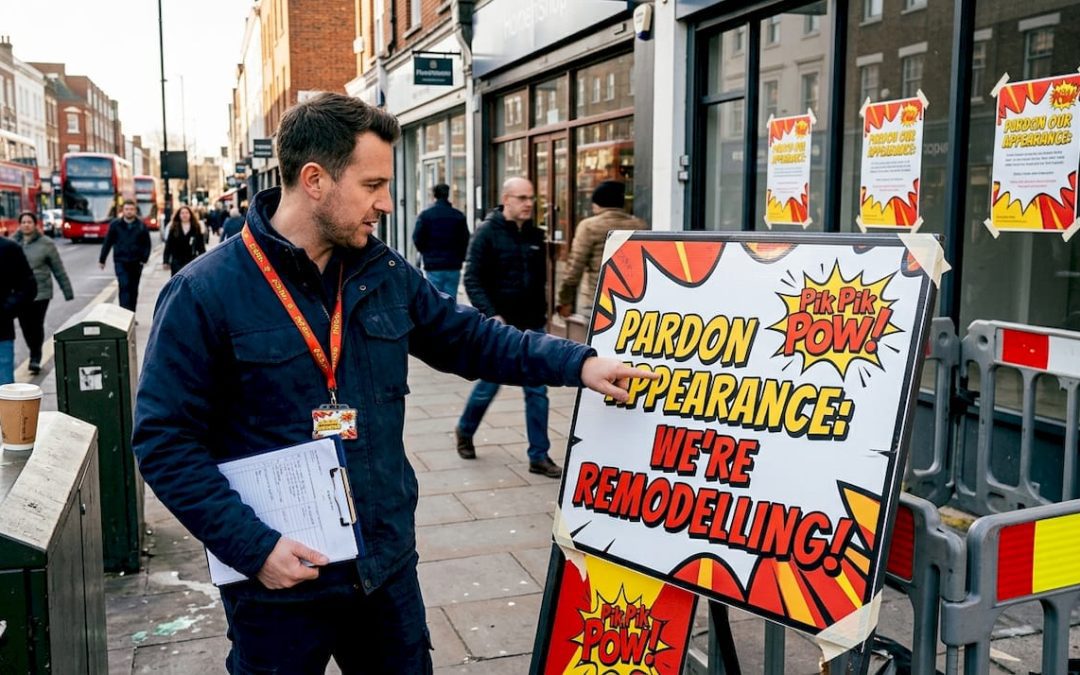
Signage doesn’t always need to be permanent to be important. Many business owners and project managers assume that if a sign isn’t bolted to a wall for years, it barely warrants serious attention. That assumption leads to missed compliance deadlines, poor on-site communication, and avoidable fines. Temporary signage is signage intended for a limited, short-term period and is used to communicate messages during an interim phase, such as an active construction phase or a retail event. This article covers what defines it, the main types, the regulations that apply, and how to plan your deployment properly.
Table of Contents
- What defines temporary signage
- Key types of temporary signage and their applications
- Regulations and compliance: what you need to know
- Planning and practical tips for deploying temporary signage
- Why temporary signage is undervalued: practical lessons from UK site and retail experience
- Explore bespoke signage solutions for your next project
- Frequently asked questions
Key Takeaways
| Point | Details |
|---|---|
| Clear definition | Temporary signage serves short-term purposes and is not permanently mounted. |
| Multiple types | Applications range from construction sites and retail events to road projects and public notices. |
| Regulatory awareness | Local regulations set limits on area, illumination, duration, and permit requirements. |
| Planning essentials | Successful temporary signage requires strategic scheduling for deployment and removal. |
| Strategic value | Temporary signage is as important to project success as permanent solutions when treated correctly. |
What defines temporary signage
Temporary signage has a clear, practical purpose: to communicate a message for a defined, short-term period without being permanently fixed in place. The key distinction is not just the duration, but the intent and installation method. Temporary signs are typically not permanently mounted and are constructed specifically for short-term messaging during an interim phase of a project or commercial activity.
Several characteristics separate temporary signage from its permanent counterpart:
Materials used
Temporary signs are generally produced using lighter, lower-cost materials suited to short-term display. Common options include:
- Cardboard and foam board, used frequently for retail promotions and indoor directional signs
- Corrugated plastic (Correx), popular on UK construction sites for site boards and safety notices
- PVC mesh and vinyl banners, used for shopfront hoardings and event displays
- Plywood boards, which are more robust and often used for external site signage
- Cloth and fabric banners, frequently chosen for retail sales events and public exhibitions
Mounting methods
Rather than fixed structural mounts, temporary signs are installed using stake posts, A-frame stands, cable ties, adhesive fixings, or scaffolding brackets. These methods allow quick installation and straightforward removal without leaving permanent marks on buildings or ground surfaces.
Purpose and context
You will typically see temporary signage deployed to maintain visibility during a refurbishment, inform the public during a construction phase, direct foot traffic at an event, or promote a time-limited sale. The types of construction signage used on active sites include everything from safety warnings to site identification boards, all of which serve a temporary but critical function.
It is also worth noting that some local authorities define temporary signage partly by material and mount type, not solely by duration. This matters when applying for planning consent or checking whether your installation falls under a permitted development category.
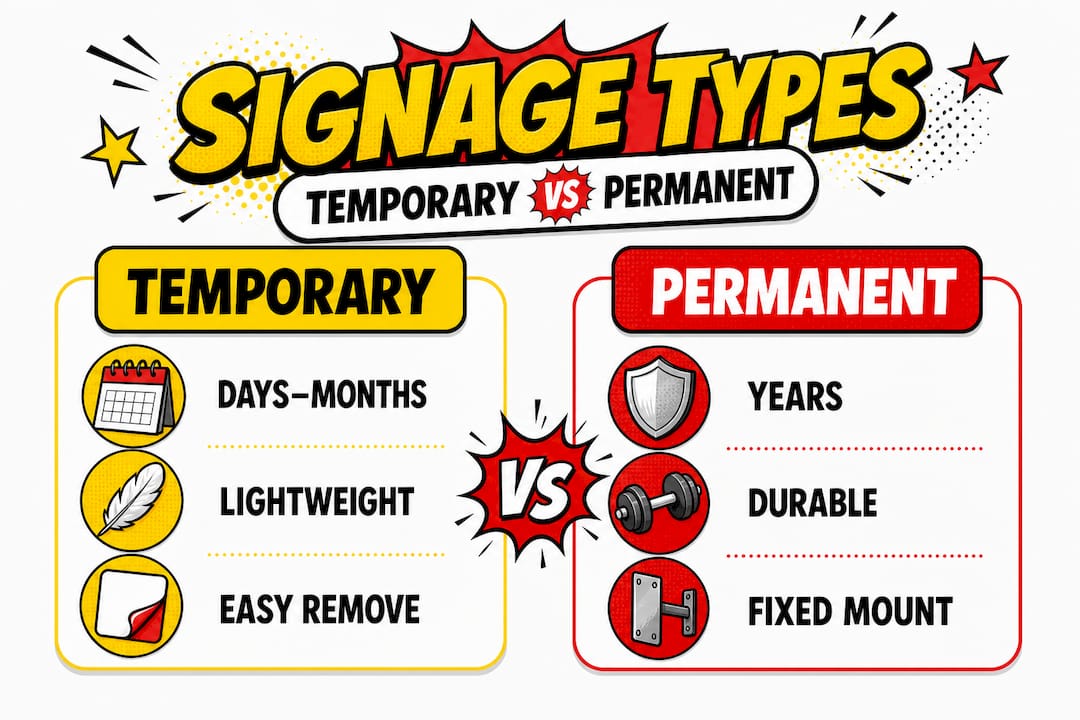
| Feature | Temporary signage | Permanent signage |
|---|---|---|
| Intended duration | Days to months | Years |
| Typical materials | Foam board, Correx, vinyl, cloth | Aluminium, steel, acrylic, dibond |
| Mounting method | Stakes, frames, cable ties | Welded brackets, drilled fixings |
| Planning consent required | Sometimes exempt | Usually required |
| Cost level | Lower | Higher |
Pro Tip: When ordering temporary signage for a construction hoarding, specify UV-resistant ink and weatherproof lamination even on short-term installations. A sign that fades or peels after two weeks reflects poorly on your project and may need replacing at extra cost.
Explore how signage systems can bring structure and consistency to both temporary and permanent display needs across a project or retail environment.
Key types of temporary signage and their applications
Now that the foundational definition is clear, let’s explore the different forms temporary signage takes and where you see them in action across UK projects and businesses.
1. Construction phase signage
Construction sites in the UK rely heavily on temporary signage to manage safety, identity, and public communication. Site boards display the project name, developer details, and planning reference numbers. Safety signs warn operatives and visitors of specific hazards. Hoarding panels wrap the perimeter of a site to restrict access and communicate brand identity to passers-by. These signs form a critical layer of construction site safety that project managers must plan and budget for from the outset.
2. Retail temporary signage
Retailers use temporary signage for seasonal promotions, clearance sales, new product launches, and store layout changes. Window posters, A-frame boards, pull-up banner stands, and sale banners are all considered temporary because they are changed regularly and not structurally fixed. A well-executed temporary display can drive significant foot traffic. Retailers that ignore the quality of their short-term signage risk undermining the credibility of their promotions.

3. Traffic control zone signage
On road maintenance and infrastructure projects, temporary traffic control signs are a defined category conveying regulatory, warning, and guidance messages within active work zones. In the UK, these include lane closure signs, speed limit boards, directional arrows, and pedestrian diversion notices. These signs have strict size, colour, and placement requirements governed by traffic management regulations and must be installed and removed according to the approved traffic management plan.
4. Special event signage
Events such as festivals, markets, corporate open days, and sporting occasions use temporary signage extensively. Banners direct attendees to car parks and entrances. Branded panels identify sponsor zones. Floor graphics and temporary wayfinding boards guide large crowds safely. For outdoor public events, organisers typically need approval from the local authority before erecting banners or large-format displays on public land.
5. Corporate and office fit-out signage
During office refurbishments or tenant fit-outs, temporary signage informs staff about relocated departments, closed access routes, emergency exits, and construction hazards. This category is often overlooked but is genuinely important for maintaining safety and business continuity during a phased project.
Here is a comparison of the most common temporary signage categories and their typical applications:
| Signage type | Typical application | Common material | Duration |
|---|---|---|---|
| Site board | Construction site identity | Dibond, foam PVC | Project duration |
| Safety sign | Hazard warning on site | Correx, rigid PVC | Project duration |
| Retail banner | Seasonal promotion | Vinyl, fabric | Days to weeks |
| Traffic control sign | Roadwork zone management | Aluminium composite | Hours to weeks |
| Event banner | Festival or market direction | PVC mesh, fabric | Event duration |
| Hoarding panel | Site perimeter branding | Foam PVC, printed vinyl | Months |
You can also learn more about construction signage compliance to understand which sign types are legally required on UK sites and which are advisable from a best practice standpoint.
Well-run projects use construction checklists to track signage installation and removal as part of the broader site management process, reducing the risk of signs being forgotten or left in place after their purpose has expired.
Regulations and compliance: what you need to know
Understanding the types and contexts of temporary signage is only part of the picture. The next step is ensuring your temporary signage is not only functional but fully compliant with local planning rules and safety requirements.
How temporary signs are regulated differently from permanent ones
Temporary signs are regulated separately from permanent signs, with constraints covering illumination, location and setback distances, sign area, and permitted time windows. In many cases, certain temporary signs can be erected without a planning permit, but that exemption is not unconditional. It usually depends on the sign area, the type of land it sits on, and whether it is illuminated.
Key regulatory factors to check before installing any temporary signage:
- Illumination: Most regulatory frameworks prohibit illuminated temporary signs. If you need lighting around your sign, check this specifically with your local planning authority.
- Size limits: Maximum permitted display areas vary by sign type and location. Exceeding them, even temporarily, can result in enforcement action.
- Setback distances: Signs must typically be placed a minimum distance from roads, kerbs, or neighbouring properties. This applies to both freestanding signs and banners affixed to hoardings.
- Permitted duration: Signs linked to a retail event may only be allowed for a set number of days. Construction signs are usually permitted for the project duration but must be removed upon completion.
- Placement on public land: Banners and event signs erected on or near the public highway require formal approval. Banners in the public right-of-way typically require explicit approval, including compliance with construction standards, placement limits, and timing restrictions.
“Temporary signage in public areas is not a free-for-all. Placement, timing, and construction standards all require formal approval before installation proceeds.”
Pro Tip: Before ordering temporary banners for a public-facing event or construction hoarding, contact your local highways department or planning office to confirm whether consent is required. Getting this wrong can mean forced removal and a wasted print budget.
Familiarising yourself with construction signage terminology helps enormously when dealing with planning applications and site managers, since terms like “hoarding licence” and “scaffold banner” have specific legal meanings in the UK. For retail operators, reviewing the process around shop sign planning permission will clarify what falls under permitted development and what requires formal consent.
Knowing when to involve signage specialists early also pays dividends. Specifying signage early in a project avoids costly last-minute changes and ensures compliance is built into the design from the start, rather than retrofitted.
You can also find practical guidance on construction compliance from construction site safety resources that highlight how proactive planning prevents costly enforcement issues.
Planning and practical tips for deploying temporary signage
Applying compliance knowledge in real project planning makes temporary signage both effective and smooth to manage. Here is a practical framework for getting it right from the outset.
Step-by-step planning process
- Identify all signage requirements early. At the project planning stage, list every location where temporary signage will be needed, including site entrances, hazard zones, hoardings, and any public-facing areas.
- Confirm regulatory requirements for each sign type. Check size, placement, duration, and illumination rules with your local planning authority before briefing a designer or printer.
- Apply for permits where required. Factor permit lead times into your project schedule. Some approvals take two to four weeks, which can delay site mobilisation if left too late.
- Brief your signage supplier with full specifications. Include dimensions, material preferences, mounting method, and expected display duration so the supplier can recommend the right materials and finishes.
- Schedule installation and removal dates. Project managers must plan for area limits and duration tied to project milestones, including when signage removal is required and whether permits are needed at each stage.
- Inspect signage regularly during display. Weather damage, vandalism, and general wear can make signs unsafe or non-compliant. Build inspection into your regular site or store walkthrough schedule.
- Remove signs promptly at project completion or event end. Late removal is a common compliance failure and can attract enforcement notices.
Common pitfalls to avoid
- Underestimating lead times for print and permit approvals
- Ordering signs with insufficient weatherproofing for outdoor use
- Installing signs too close to roads or property boundaries without checking setback rules
- Failing to update signs when project details change, such as revised planning references or new hazard information
- Leaving construction signage in place after project completion, which can trigger planning enforcement
The signage impact for developers is significant, not just in terms of compliance but in how a project presents itself to neighbours, investors, and potential buyers during the build phase. Poorly managed signage signals poor project management overall.
Understanding signage installation timelines helps you build realistic schedules that account for design, production, delivery, and installation, avoiding the last-minute scramble that leads to compliance shortcuts.
For a broader view of proactive risk management in the planning process, managing risk at the design stage offers useful frameworks applicable to signage procurement and deployment.
Why temporary signage is undervalued: practical lessons from UK site and retail experience
Here is something that experience in this industry makes clear: temporary signage is consistently treated as an afterthought, and it causes real problems. Businesses and project teams invest heavily in permanent brand assets, then cobble together last-minute banners or hand-written notices for anything short-term. The result is inconsistent, sometimes non-compliant, and frequently ineffective.
The real cost of this attitude tends to show up in two places. First, compliance failures. We have seen construction projects forced to remove non-compliant site boards after enforcement action, sometimes delaying site access by days while replacements are sourced and re-approved. Second, missed commercial opportunity. A retail business running a major clearance sale with an uninspiring A4 printout in the window is actively losing footfall to a competitor with professionally printed banners.
The argument that temporary signage doesn’t need to be high quality because “it’s only up for a few weeks” is simply wrong. If anything, short-term signs need to work harder because they have less time to make an impression. A well-produced, compliant hoarding panel communicates professionalism and project credibility to everyone who walks past. The benefits of branded signage apply just as strongly to temporary formats as to permanent shopfront installations.
The lesson we consistently share with clients is this: treat your temporary signage with the same strategic seriousness as your permanent signage. Plan it early, budget properly for it, involve your signage supplier at the specification stage, and build compliance checks into your project management process. The financial and reputational cost of getting it wrong is almost always higher than the cost of getting it right the first time.
Explore bespoke signage solutions for your next project
If you are planning a construction project, retail event, or commercial fit-out and need temporary signage that is professionally produced and fully compliant, this is where practical guidance meets real delivery capability.
At Pik Pik POW!, we work with project managers, retail teams, and developers across the UK to design and produce temporary signage that performs well and holds up to scrutiny. From site boards and hoarding panels to retail banners and event wayfinding, our consultative approach means you get the right specification from the start, not a replacement order two weeks in. Explore our expert signage systems for a structured approach to managing multiple sign types across a project, or take a look at our digital signage options for dynamic, updateable display solutions suited to retail and corporate environments.
Frequently asked questions
What materials are most commonly used for temporary signage?
Materials such as cardboard, foam board, or cloth are frequently selected for temporary signs due to their cost-effectiveness and ease of installation, with corrugated plastic and vinyl also widely used on UK construction and retail sites.
How long can temporary signage be displayed before removal is required?
Duration limits vary by sign type and location, but approved special event signs must be removed within seven days of event completion, while construction signage is typically tied to project completion milestones.
Do temporary signs require permits in the UK?
Some temporary signs are allowed without a sign permit, but this depends on the sign area, location, and duration involved, so you should always verify with your local planning authority before installation.
What is the difference between temporary and permanent signage?
Temporary signage is typically not permanently mounted and is constructed for short-term messaging, whereas permanent signage is designed for ongoing use with durable materials and fixed structural installation.
Are there restrictions on illuminated temporary signs in the UK?
Many regulatory frameworks require that temporary signs must be nonilluminated, setting clear limits on lighting to avoid safety risks and light pollution, so always check illumination rules before specifying any lit elements.