TL;DR:
- Branded signage increases store visibility and attracts more customers across multiple locations.
- Consistent signage reinforces brand identity, builds trust, and improves customer experience.
- Proper signage supports operational efficiency, compliance, and long-term brand equity.
Managing brand identity across multiple retail sites is one of the more demanding tasks for UK marketing and branding managers. When a customer walks into one of your locations and finds faded lettering, inconsistent colour schemes, or generic signage, their confidence in your brand takes a hit. Branded signage solves this directly. It gives every site a clear, consistent, and professional appearance that reflects your business values. In this article, we cover the core benefits of branded signage, from boosting footfall and strengthening identity to supporting compliance and operational efficiency across your estate.
Table of Contents
- Enhancing visibility and attracting customers
- Strengthening brand identity and consistency
- Supporting customer experience and wayfinding
- Driving operational efficiency and compliance
- A fresh perspective: Why branded signage is more than a marketing tool
- Take the next step: Branded signage solutions for your business
- Frequently asked questions
Key Takeaways
| Point | Details |
|---|---|
| Boosts visibility | Branded signage draws attention and increases customer footfall for retail stores. |
| Builds trust | Consistent signage across locations creates a recognisable and reliable brand identity. |
| Enhances customer experience | Effective signage guides customers, improving satisfaction and repeat visits. |
| Supports compliance | Branded signage streamlines operations and ensures adherence to UK regulations. |
| Strategic investment | Modern signage offers operational savings and long-term brand benefits beyond just marketing. |
Enhancing visibility and attracting customers
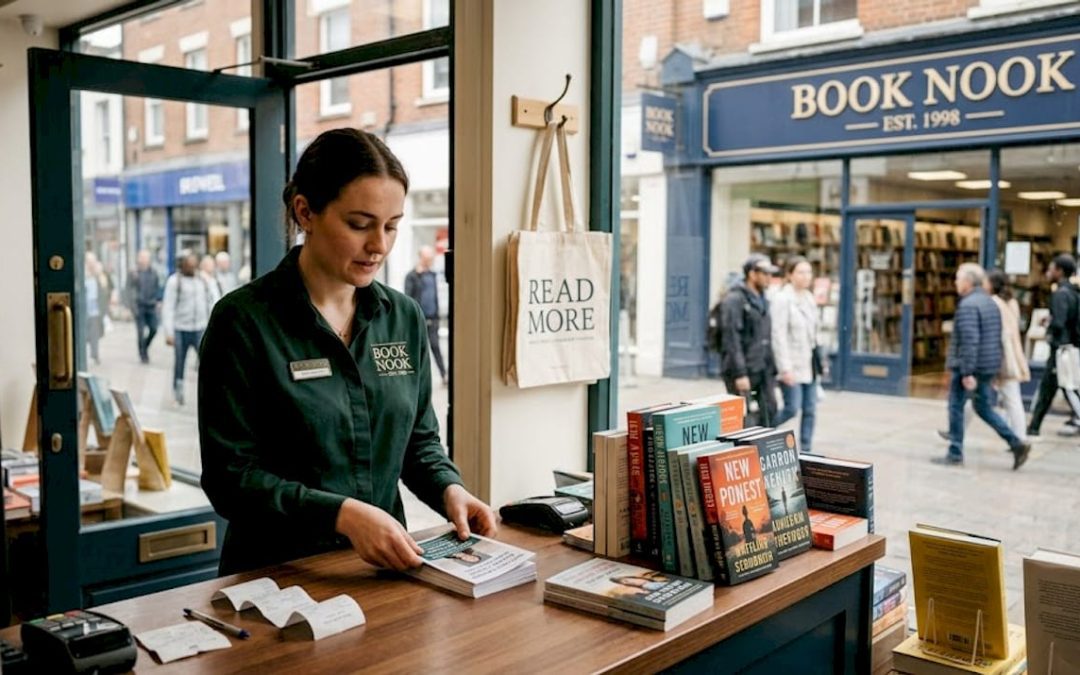
Visibility is the first battle in retail. Before a customer walks through your door, they have to notice you. In busy high streets and retail parks, your signage is competing with dozens of other businesses for attention. Branded signage gives you a clear edge.
Branded signage improves store visibility and attracts more customers by making your premises instantly recognisable, even from a distance. A well-placed fascia sign with strong contrast, legible typography, and your brand colours does more than label your shop. It communicates professionalism and reassures passing customers that you are a credible business worth entering.
The design of your signage also plays a significant role in how long people pause to look. Illuminated signage, for example, extends your visibility into evening hours, which matters greatly for retail locations open past dusk. Dimensional lettering and bold graphics draw the eye naturally and increase dwell time on your shopfront.
Here is what effective branded signage contributes to footfall and conversion:
- Increased street-level recognition: Customers can identify your store from further away, giving them more time to make the decision to enter.
- Stronger first impressions: A professionally branded entrance sets an expectation of quality before the customer even steps inside.
- Consistent visual cues across sites: When your signage looks the same at every location, customers feel at ease visiting a new branch.
- Improved wayfinding in complex retail environments: Clear, branded directional signs reduce hesitation and encourage customers to explore further.
Pro Tip: Consider the viewing angle and distance for each site individually. A sign that works on a quiet side street may need to be larger or more illuminated on a busy retail park to achieve the same impact.
The bespoke signage benefits for multi-site businesses go beyond aesthetics. Bespoke solutions are sized and designed for each location’s specific environment, ensuring maximum impact rather than a one-size-fits-all approach.
Strengthening brand identity and consistency
Visibility is just the start. Consistency in branding ensures lasting customer relationships, and this is where branded signage becomes a strategic asset.
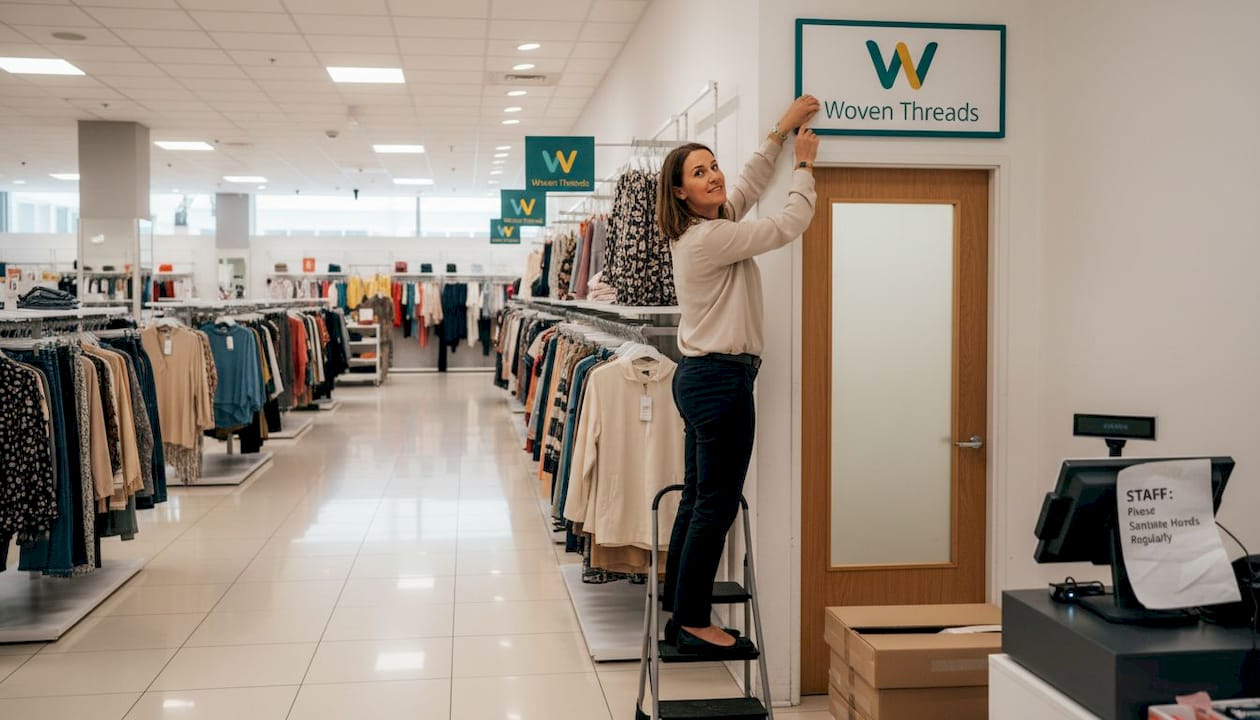
For retail chains operating across multiple locations, consistency is non-negotiable. A customer who visits your Manchester store and then your Bristol branch should experience the same visual identity. The same fonts, the same colours, the same tone. Consistent signage creates a unified brand experience, reducing confusion and building trust with customers who interact with your business at different sites.
The difference between branded and generic signage is significant. Here is a comparison to illustrate the point:
| Feature | Branded signage | Generic signage |
|---|---|---|
| Visual recognition | High across all sites | Low, varies by location |
| Customer trust | Builds over time | Limited or absent |
| Brand recall | Strong and consistent | Weak |
| Professionalism | Clearly communicated | Often questioned |
| Long-term value | Grows with the brand | Depreciates quickly |
Generic signage may seem cost-effective in the short term, but it works against you when a customer cannot immediately identify your store or associate it with a previous positive experience.
The key elements that make branded signage work for identity are:
- Colour accuracy: Pantone or RAL-matched colours reproduced consistently across print and fabrication.
- Typography standards: Using the correct brand fonts at every site, whether on a fascia, a window graphic, or a freestanding display.
- Material and finish consistency: Whether you use brushed aluminium, acrylic, or vinyl, the specification should match across locations.
- Tone of messaging: Any text on signage should reflect your brand voice, not generic phrasing.
Working with site signage design tips early in your rollout process helps you establish guidelines that can be replicated faithfully at every new or refurbished site.
Supporting customer experience and wayfinding
Branding consistency lays the foundation. Next, signage shapes the customer journey directly.
Once a customer is inside your store or moving through a retail complex, their experience depends heavily on how clearly they are guided. Poor wayfinding leads to frustration. Customers who cannot find what they are looking for quickly are more likely to leave without purchasing. Branded signage integrated throughout the interior of your sites reduces this friction considerably.
Effective branded signage enhances navigation and the overall customer journey, making it easier for shoppers to orientate themselves and move confidently through your space.
Here is a snapshot of how wayfinding signage affects retail performance:
| Signage type | Impact on customer behaviour |
|---|---|
| Entrance and welcome signs | Sets expectations, reduces hesitation |
| Departmental signs | Speeds up navigation, reduces staff queries |
| Promotional and point-of-sale signs | Increases product awareness and upsells |
| Exit and safety signs | Builds trust, supports compliance |
For multi-site chains, rolling out a consistent wayfinding system delivers compounding benefits. Staff spend less time answering directional questions, and customers feel more in control of their shopping experience. This directly supports repeat visits.
Best practices for implementing wayfinding across a retail chain:
- Conduct a customer journey audit at each site to identify where confusion currently occurs.
- Standardise signage categories and use consistent icons and language across all locations.
- Prioritise high-traffic zones such as entrances, changing rooms, tills, and customer service points.
- Review and update signage after any store layout change to avoid outdated guidance.
- Integrate brand colours and fonts into every wayfinding element, not just prominent signs.
“Clear, well-placed signage does not just guide customers. It communicates that your business is organised, professional, and attentive to their needs.”
Exploring bespoke wayfinding options allows you to tailor systems to each site’s layout while maintaining brand standards across the whole estate.
Driving operational efficiency and compliance
Beyond the customer experience, signage has practical benefits for business operations.
For multi-site retail businesses, operational efficiency often comes down to how clearly information is communicated at the site level. Branded signage contributes to this in ways that are easy to overlook but significant in practice. When staff can navigate stockrooms, loading bays, and back-of-house areas using clearly labelled, well-designed signs, errors decrease and processes run more smoothly.
Well-designed branded signage aids compliance and streamlines operations, particularly in environments where health and safety regulations apply. In retail, this includes fire exit signage, hazard warnings, and capacity notices, all of which must meet specific UK standards.
Here is what branded compliance signage achieves across your estate:
- Regulatory compliance at every site: Signage that meets British Standards and relevant health and safety legislation reduces legal risk.
- Reduced staff confusion: Clear internal signage for processes such as waste management, cleaning protocols, and emergency procedures ensures staff act consistently.
- Faster onboarding at new locations: When signage is standardised, new staff at any branch can orientate themselves quickly without additional training.
- Brand alignment in operational areas: Even in staff-facing spaces, branded signage reinforces company culture and professionalism.
Pro Tip: When specifying durable signage for compliance purposes, always check that the materials meet the relevant British Standards for fire resistance and legibility in emergency conditions. Saving money on cheaper materials can result in costly replacements or, worse, compliance failures.
Signage that serves both brand and compliance functions is a practical investment. It reduces the cost of producing separate branded materials and separate regulatory notices, consolidating both into professionally designed solutions.
A fresh perspective: Why branded signage is more than a marketing tool
Most discussions about branded signage focus on aesthetics and footfall. Those matter. But there is a broader strategic argument that many retail managers miss.
Branded signage builds long-term brand equity. Every time a customer sees your signage executed consistently, another small reinforcement of your brand identity occurs. Over months and years, this compounds. It is not just about looking good today. It is about ensuring your business is immediately recognisable in five years, even as consumer habits shift.
There is also a growing opportunity in digital integration. Modern signage solutions increasingly blend physical and digital elements, allowing you to update messaging without replacing physical structures. This reduces long-term costs while keeping your brand current.
The harder truth is that many retail chains underinvest in signage because they see it as a one-time cost rather than an ongoing retail signage strategy. Signage that is poorly maintained or inconsistently applied erodes the credibility you have built, often without you realising it. Treating branded signage as a strategic asset, reviewed and refreshed alongside your broader brand guidelines, gives you a measurable advantage over competitors who treat it as an afterthought.
Take the next step: Branded signage solutions for your business
If you are ready to strengthen your brand identity across all your locations, Pik Pik Pow! offers a full range of solutions designed for retail chains and multi-site businesses.
From signage systems built for consistent rollout across multiple branches to digital signage solutions that keep your messaging flexible and on-brand, we work with you from design through to installation. Our team understands the practical demands of managing signage at scale, including compliance requirements, brand standards, and site-by-site variation. Get in touch with us to discuss your requirements or request samples. We make it straightforward to move from brief to finished signage that works across your entire estate.
Frequently asked questions
What is branded signage and why does it matter?
Branded signage incorporates your business identity, including your logo, colours, and typography, into every display across your sites. It matters because signage creates recognition and builds customer trust at every point of contact.
How does branded signage help with compliance in the UK?
Properly designed branded signage can incorporate health and safety requirements alongside your visual identity, ensuring every site meets its obligations. Signage supports compliance and safety protocols without compromising on brand presentation.
Can branded signage increase customer footfall?
Yes. Clearly visible, well-positioned branded signage draws more customers in by making your premises easy to identify and appearing professional. Branded signage increases customer numbers and store impact across different retail settings.
Is digital signage a branded signage option?
Digital signage supports modern brand visibility by allowing dynamic, updateable content that stays consistent with your brand guidelines, making it a highly flexible option for retail chains.
How do I ensure consistency across multiple locations?
Establishing clear signage design guidelines and working with a specialist signage partner are the most reliable approaches. Design guidelines ensure signage consistency by setting standards for materials, colours, typography, and placement that apply at every site.