
TL;DR:
- Signage is a powerful, ongoing marketing tool that builds brand awareness and community trust.
- Legal compliance requires specific standards for size, stability, notices, and council approvals.
- Strategic design, material choice, and digital engagement enhance project visibility and lead generation.
Most UK property developers treat signage as a formality. You order the hoardings, tick the compliance boxes, and move on. But that approach leaves a significant opportunity unused. Effective site signage works as a live marketing asset across the entire build cycle, communicating your brand, building public confidence, and generating direct enquiries long before a development opens. In this guide, we cover the design principles, legal requirements, material choices, and branding strategies that help developers get far more from their signage investment.
Table of Contents
- Understanding the role of signage in modern development
- Legal requirements: navigating UK signage regulations
- Designing signage for brand impact and audience engagement
- Choosing the right materials for longevity and compliance
- A developer’s-eye view: the missed opportunity in project signage
- Expert signage solutions for stand-out developments
- Frequently asked questions
Key Takeaways
| Point | Details |
|---|---|
| Strategic asset | Signage is a valuable tool for brand building and project marketing, not just a legal box to tick. |
| Regulatory compliance | UK law defines clear signage requirements—get these right to avoid costly setbacks. |
| Brand impact | Effective signage engages audiences, cements site reputation, and can generate concrete leads. |
| Material choices | The right materials ensure signs last, stay safe, and keep your site looking professional throughout the project. |
Understanding the role of signage in modern development
With the scope set, let us dig into the broader influence that signage can wield in shaping project outcomes.
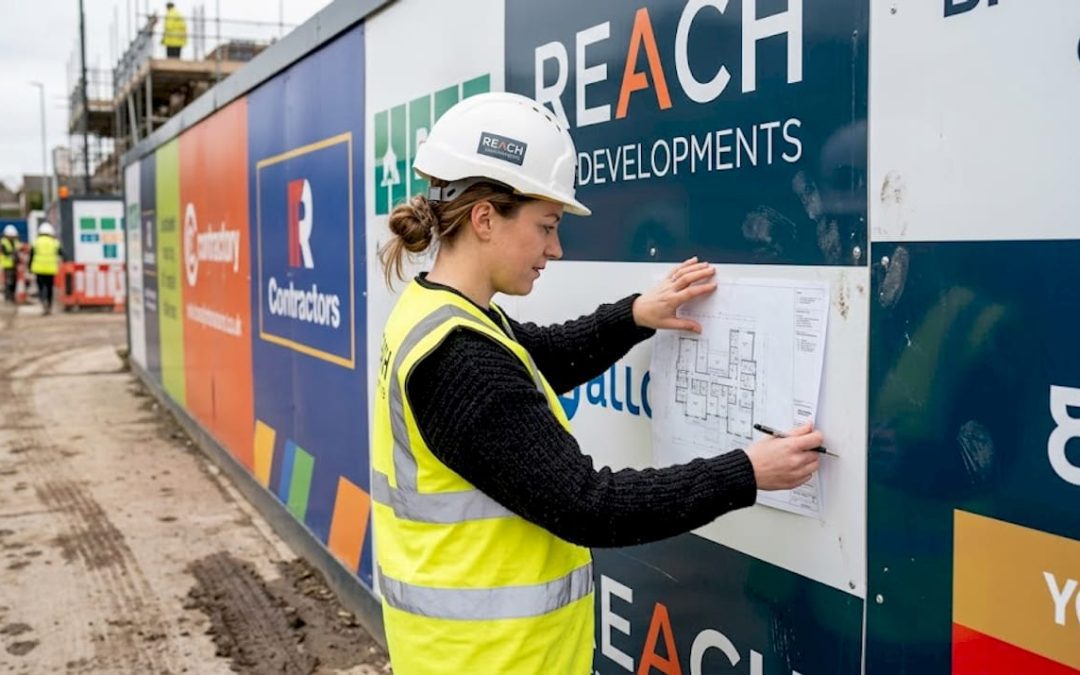
For most pedestrians and passing drivers, your site hoarding is the first encounter they have with your project. It sets expectations, communicates credibility, and positions your brand before any sales suite opens or brochure is printed. Many developers treat this as an afterthought, yet it functions as one of the few marketing channels that works continuously, with no media spend required, for the full duration of a build.
Strategic signage connects a project to its surrounding community in several important ways:
- First impressions: A well-branded hoarding immediately signals that the project is managed professionally, which matters to prospective buyers, investors, and local residents alike.
- Ongoing engagement: Signage updated at key milestones (planning approval, groundworks completion, topping out) keeps the project visible and relevant throughout its lifecycle.
- Brand recall: Consistent use of your logo, colour palette, and messaging across all site signage builds cumulative awareness in the local area.
- Community reassurance: Clear information about the project timeline, site contacts, and safety arrangements reduces friction with neighbours and local stakeholders.
- Safety communication: Mandatory safety notices, hazard warnings, and access restrictions protect workers and members of the public, reducing your liability exposure.
Properly placed hoardings boost both safety and project image, which means the two goals are not in tension; they reinforce each other.
“Signage is not a single transaction. It is a sustained conversation between your project and its audience, conducted over months or years.”
Our construction signage guide explores how developers can treat each panel as a purposeful touchpoint rather than a passive barrier. The shift in mindset is small, but the impact on public perception and lead generation is substantial.
Legal requirements: navigating UK signage regulations
Appreciating the big-picture value of signage, it is vital to also master the legal essentials that underpin every project.
UK signage law for development sites is shaped primarily by two frameworks. The Construction (Design and Management) Regulations 2015 (CDM 2015) establishes duties around site safety, which includes physical barriers and warning notices. The Town and Country Planning Act 1990 and associated Advertisement Regulations govern what you can display, where, and at what scale without requiring separate advertisement consent.
UK regulations mandate construction hoarding for safety, with specific criteria for size, stability, and safety notices. Hoardings must typically be at least 2.4 metres high when adjacent to a public highway, be structurally stable under wind loading, and display clearly visible safety notices. Placement on public land always requires council approval.
| Signage element | Regulatory requirement | Common oversight |
|---|---|---|
| Hoarding height | Minimum 2.4 m on public-facing elevations | Falling short on corner junctions |
| Structural stability | Must withstand British wind load standards | Inadequate footings or fixings |
| Safety notices | Mandatory CDM notices, emergency contacts | Missing site manager details |
| Advertisement consent | Required for commercial messaging beyond basic ID | Assuming planning permission covers this |
| Lighting | Required if site is active during low-light hours | Overlooked on phased or fast-track projects |
Common compliance mistakes include forgetting that advertisement consent is separate from planning permission, and failing to update safety notices when site personnel change. Penalties can include enforcement notices, removal orders, and fines.
Pro Tip: Submit your hoarding and signage layout plan to the local authority at the same time as your site setup notification. Early dialogue prevents costly revisions later.
For a complete breakdown of what your project needs, our guide to types of construction signage and our resource on signage tips for safer construction both provide practical, compliance-focused checklists.
Designing signage for brand impact and audience engagement
Once legal obligations are clear, developers can focus on using signage as a potent branding and engagement tool.
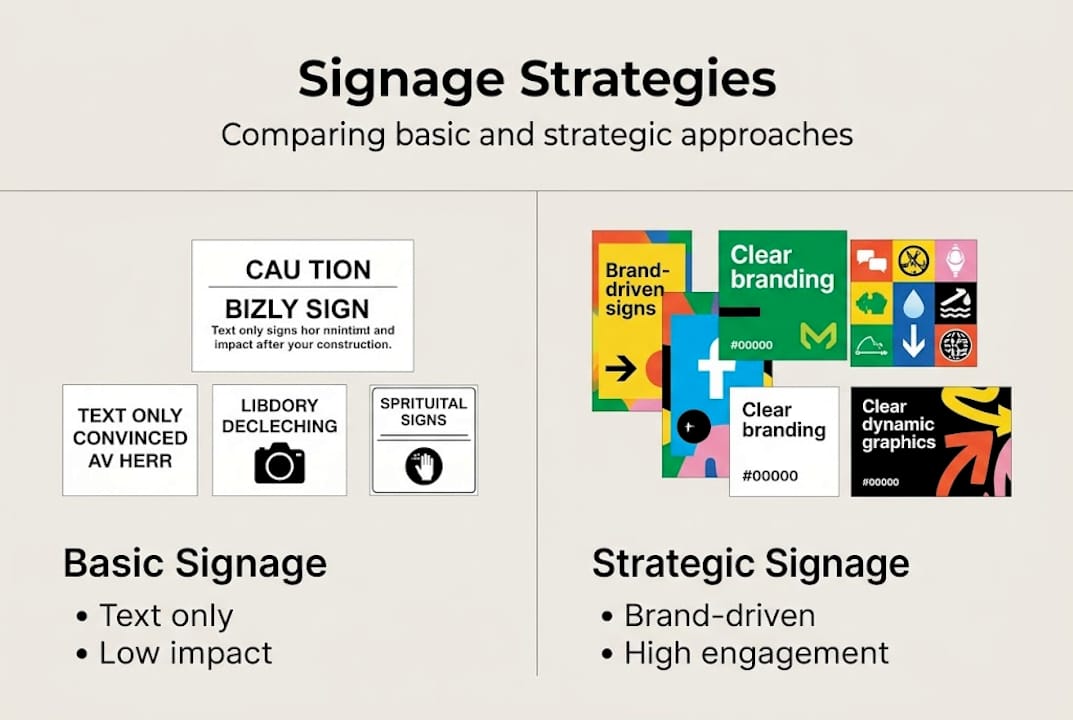
Compliant signage and compelling signage are not the same thing, but they do not need to be in conflict. With the right design approach, your hoardings can satisfy every regulatory requirement while also functioning as high-visibility advertising for your development.
Strategic placement is the foundation. Consider these four steps when planning your signage layout:
- Map pedestrian and vehicle sight lines. Identify the primary approach directions to your site and position your most prominent branded panels at those points.
- Align visual identity with your target buyer profile. A luxury residential scheme calls for a restrained palette and premium typography. A commercial mixed-use development may benefit from bolder, more energetic design language.
- Build in digital engagement. Embed QR codes for marketing engagement, unique landing page URLs, and social media handles directly into your hoarding design. These elements cost little to add but create measurable marketing data.
- Plan for milestone updates. A design framework that allows panels to be refreshed at key stages keeps the project visible and relevant without a full redesign each time.
| Approach | Basic signage | Strategic signage |
|---|---|---|
| Design | Generic, text-heavy | Brand-led, visually structured |
| Engagement | Passive | QR codes, URLs, contact prompts |
| Milestone updates | Rarely changed | Planned refresh schedule |
| Lead generation | None | Tracked enquiries via digital elements |
Pro Tip: Use bold typography and durable materials on your primary hoarding face, then reinforce the message with secondary panels closer to pedestrian level, where QR codes and contact details are easier to scan or note.
Our guide to designing site signage for brand impact walks through practical layout principles, and our resource on outdoor signage best practices covers visibility and engagement in detail.
Choosing the right materials for longevity and compliance
Brand impact begins with good design, but durability and legal compliance are just as fundamental to a project’s success.

Material selection is where many developers make a false economy. Cheaper substrate options may save money at the outset but incur higher maintenance costs, fail earlier under UK weather conditions, and can undermine your brand image if panels warp, fade, or deteriorate mid-project.
Here is a practical overview of the most common options:
- Dibond (aluminium composite panel): Rigid, lightweight, and highly weather-resistant. Suitable for main hoarding faces and directional signage. Holds print quality exceptionally well over long periods.
- Correx (polypropylene): Lower cost and lightweight, but less durable. Best reserved for short-term or internal applications, not long-run external hoardings.
- Mesh banners: Ideal for scaffold wraps and large-format coverage. Wind-permeable design reduces structural loading, and UV inks and mesh printed with UV-stable inks maintain colour fidelity through seasons.
- Aluminium sheet: The most robust option for permanent or semi-permanent installations, including mandatory safety signage boards that must remain legible throughout the build.
- Foamex (PVC foam board): Economical for short-term internal or sheltered signage, but unsuitable for exposed external use.
Pro Tip: Match your material specification to your project timeline. A 12-month residential scheme and a 4-year mixed-use development have very different durability requirements. Specifying correctly from the start avoids costly mid-project replacements.
Material choice also has a direct bearing on regulatory compliance. Safety-critical signage must remain legible and structurally sound throughout the project. Degraded or illegible safety notices are a compliance failure, not simply an aesthetic issue.
For further reading, our article on the importance of durable signage and our resource covering branding and safety benefits explain how material investment pays off across both brand and safety dimensions.
A developer’s-eye view: the missed opportunity in project signage
With essentials covered, it is worth pausing for a candid look at why too many projects miss the opportunity that signage presents.
In our experience working alongside UK developers, the most common problem is not ignorance of the rules. It is timing. Signage decisions get pushed to the back of pre-construction planning and end up being made in a hurry, with whatever is cheapest and fastest. The result is generic panels that satisfy the letter of the law but do nothing for brand awareness or lead generation.
The developers who see the greatest return from their signage budgets are those who treat it as part of the project’s marketing strategy from the outset. They brief their signage supplier at the same time they brief their sales agent. They plan milestone updates. They track enquiries from QR codes and landing pages. They understand that a well-branded 200-metre hoarding run in a busy urban location delivers more impressions per week than many paid digital campaigns.
We have also seen the opposite. Projects where poor signage created friction with local residents, where missing safety notices attracted enforcement action, and where no design continuity existed between the hoarding, the sales suite, and the sales brochure. These are avoidable problems, and they carry real costs. Brush up on signage terminology and insights to build the vocabulary you need to brief effectively and make confident decisions at the start of your next project.
Expert signage solutions for stand-out developments
With fresh perspective in hand, the next logical step is to find a signage partner who brings these principles to life.
At Pik Pik POW!, we work with property developers and project managers across the UK to deliver signage that is fully compliant, clearly branded, and built to last. Whether you need a complete hoarding wrap for a city-centre scheme, architectural signage for a commercial development, or digital signage to engage prospective buyers in real time, we have the expertise and manufacturing capability to deliver it.
Our signage systems are designed to scale with your project, from initial site setup through to completion and handover. We integrate QR codes, campaign URLs, and milestone refresh planning as standard. If you are ready to make signage a genuine asset on your next development, get in touch with our team today.
Frequently asked questions
What are the legal requirements for construction site signage in the UK?
UK laws require hoardings at least 2.4 metres high, with structural stability, clear safety notices, and council approval for public placement. CDM 2015 also mandates specific safety information is prominently displayed throughout the build.
How can signage help developers attract buyers or tenants?
Well-designed signage captures attention, builds brand awareness, and drives direct enquiries through QR codes for marketing engagement or prominent contact details. It functions as continuous, low-cost advertising for the duration of the project.
What materials last longest on UK construction sites?
Durable options such as aluminium sheet, dibond panels, and UV-print mesh withstand British weather and maintain legibility, ensuring both brand integrity and ongoing safety compliance throughout a long build programme.
Is it worth including digital elements like QR codes on site signage?
Yes. QR codes and unique URLs let you track marketing ROI directly from your hoardings and give prospective buyers an immediate, frictionless way to register interest or access project information.