TL;DR:
- Bespoke signage is fully customized to match your brand, site, and specific needs.
- It enhances brand perception, increases footfall, and ensures regulatory compliance.
- The process from design to installation is straightforward, offering long-term value and adaptability.
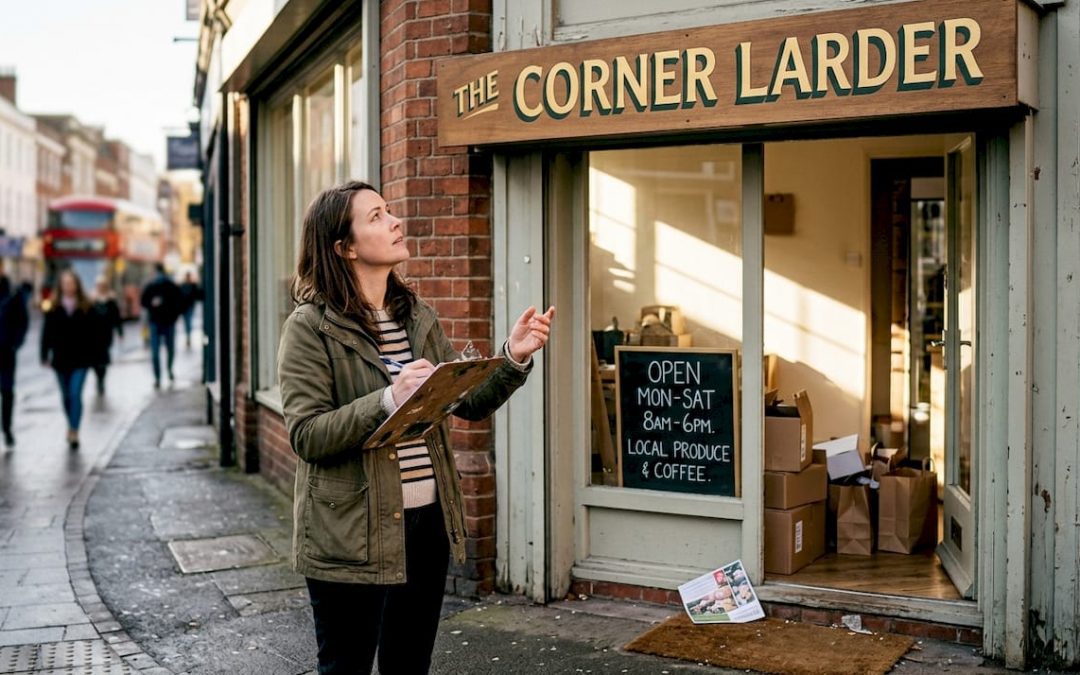
Most UK businesses assume that any sign will do the job. Put your name above the door, add a logo, and customers will find you. But that assumption costs businesses more than they realise. Research consistently shows that signage is one of the most powerful drivers of first impressions, footfall, and brand trust. Off-the-shelf signs may fill a space, but they rarely tell your story or reflect your brand with any precision. This guide covers what bespoke signage actually means, why it matters for UK retail, construction, and commercial businesses, and how the process works from brief to installation.
Table of Contents
- What is bespoke signage and why does it matter?
- Key benefits of bespoke signage for UK businesses
- How the bespoke signage process works
- Real-world applications: bespoke signage in retail, construction, and commercial sectors
- A fresh perspective on bespoke signage: what most guides miss
- Explore bespoke signage solutions for your business
- Frequently asked questions
Key Takeaways
| Point | Details |
|---|---|
| Custom branding impact | Bespoke signage allows your brand to stand out with unique design tailored to your image. |
| Improved business visibility | Tailored signs increase footfall and trust by clearly communicating your business identity. |
| Sector-specific solutions | Custom signage delivers compliance and practical benefits for retail, construction, and commercial sectors. |
| Simple custom sign process | Working with experts, you gain hands-on input from concept to installation, ensuring the best results. |
What is bespoke signage and why does it matter?
Bespoke signage is signage that is fully designed and manufactured around your specific business needs, brand identity, and physical site. Nothing is taken from a template. Every element, from the dimensions and materials to the typeface and finish, is chosen to suit your premises and your customers.
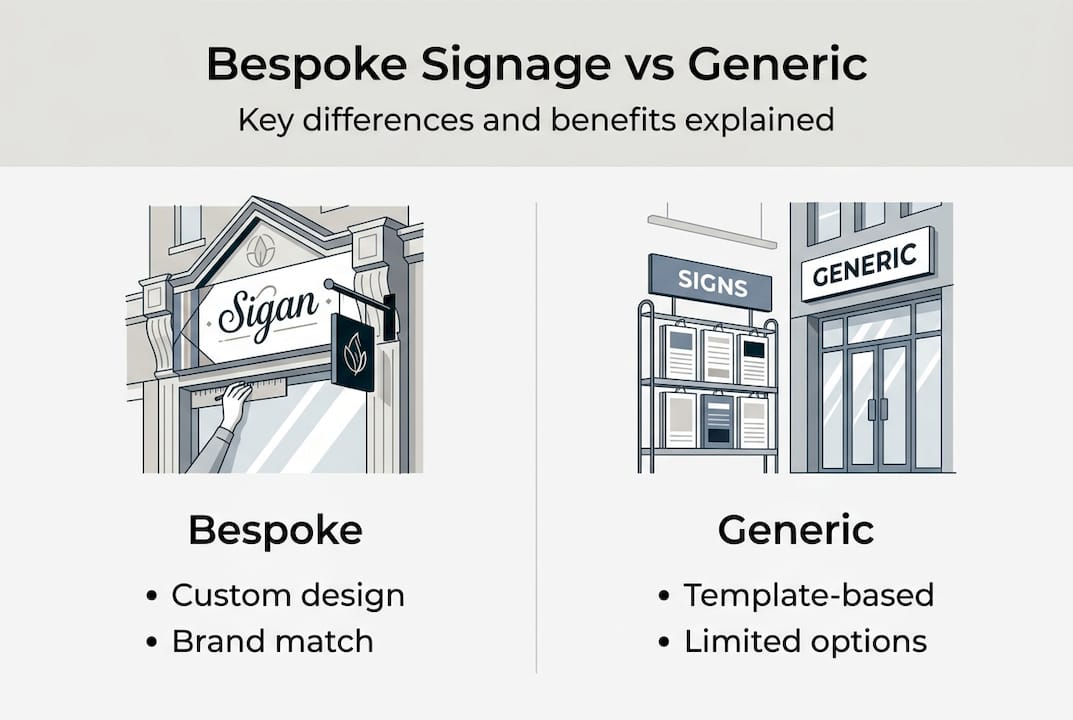
This is fundamentally different from off-the-shelf or template-based signage, which offers limited customisation and forces your brand to fit a pre-existing format. The contrast is significant, and the table below makes it clear.
| Feature | Bespoke signage | Off-the-shelf signage |
|---|---|---|
| Design | Fully custom to your brand | Template-based, limited options |
| Materials | Chosen for site and durability | Standard, fixed options |
| Dimensions | Made to fit your exact space | Fixed sizes only |
| Brand accuracy | Precise colour and font matching | Approximate at best |
| Compliance | Built to meet specific regulations | Generic, may not comply |
| Longevity | Designed for long-term use | Variable quality |
First impressions form within seconds. When a potential customer walks past your premises, your signage is doing the talking before any member of staff can. A sign that looks generic or misaligned with your brand sends an unintended message about quality and professionalism. Bespoke signage ensures that message is always the right one.
The custom signage benefits extend well beyond aesthetics. As noted in guidance on bespoke solutions, bespoke signage offers specific advantages for construction projects where site conditions, safety requirements, and brand visibility all need to be addressed simultaneously. The same principle applies across sectors.
The businesses that benefit most from bespoke signage include:
- Retail businesses needing shopfront fascias, window graphics, and interior displays that attract footfall
- Construction companies requiring site hoardings, safety signage, and branded perimeter boards
- Commercial offices and interiors needing wayfinding, reception signs, and branded environments
- Education institutions requiring clear directional and informational signage across large campuses
- Hospitality venues where atmosphere and brand consistency depend on cohesive visual identity
Good site signage design accounts for all of these variables from the outset, rather than retrofitting a standard product to an unsuitable space.
Key benefits of bespoke signage for UK businesses
The case for bespoke signage goes well beyond appearance. There are measurable, practical advantages that affect your brand’s performance and your bottom line.
| Benefit | What it means for your business |
|---|---|
| Brand consistency | Every sign matches your exact colours, fonts, and tone |
| Improved perception | Professional signage signals quality and trustworthiness |
| Increased footfall | Clear, attractive signs draw customers in |
| Regulatory compliance | Signs are built to meet planning and safety standards |
| Long-term ROI | Durable materials reduce replacement frequency and costs |
Consider a UK retail scenario. A clothing boutique on a busy high street installs a bespoke illuminated fascia sign in its exact brand colours, with a custom typeface and premium finish. Compared to a neighbouring shop using a generic printed banner, the boutique’s sign communicates permanence, quality, and attention to detail. Customers associate that visual quality with the products inside. The result is a measurable difference in walk-in rates and customer confidence.
“Professional signage is one of the fastest ways to build trust with new customers before they ever step through the door.”
Custom signage enhances business visibility and branding in ways that generic products simply cannot replicate. When your signs are consistent with your wider brand identity, customers recognise you more quickly and remember you more reliably.

Pro Tip: When briefing a signage supplier, bring your full brand guidelines including Pantone colour references, approved fonts, and logo files. This ensures your signs are accurate, not approximate.
For businesses working on designing office signs or refitting a retail space, consistency between interior and exterior signage is equally important. Applying the same bespoke approach to both creates a seamless customer experience. You can also find practical shop sign design tips to help you plan your visual identity before approaching a supplier.
How the bespoke signage process works
Many business owners assume that commissioning bespoke signage is complicated or slow. In practice, a well-managed process is straightforward and the results are worth the investment of time.
Here is how a typical bespoke signage project unfolds:
- Consultation — You discuss your requirements, site conditions, budget, and brand guidelines with a specialist. This stage defines the scope and identifies any planning or compliance considerations.
- Design — The supplier produces design concepts based on your brief. You review visuals, suggest changes, and agree on the final design before any manufacturing begins.
- Approval — Final sign-off on design, materials, and specifications. This is also when any planning permission requirements are confirmed.
- Manufacture — Your signs are produced using the agreed materials and processes, whether that is aluminium fabrication, LED illumination, vinyl printing, or another method.
- Installation — Trained installers fit your signs to the required standard, ensuring structural integrity, safety compliance, and a clean finish.
Lead times vary depending on complexity, but most bespoke projects are completed within two to four weeks from approval. Signage project planning is most effective when signage is considered early in a building or fit-out project, rather than added as an afterthought.
Pro Tip: Involve your signage supplier at the earliest possible stage of a project. Early specification means fewer surprises, better material choices, and smoother installation.
Material selection is a key part of the process. The right choice depends on location, exposure to weather, required lifespan, and budget. Choosing signage materials correctly at the outset avoids costly replacements later. Guidance on effective signage design for construction environments highlights how material durability and visibility standards must be built into the design from the start, not added retrospectively.
Real-world applications: bespoke signage in retail, construction, and commercial sectors
Bespoke signage solves different problems in different sectors. Here is how it works on the ground across three major UK industries.
Retail
- A shopfront fascia sign in exact brand colours with illuminated lettering increases visibility after dark and draws footfall from further along the street.
- Window graphics using bespoke cut vinyl or printed film promote seasonal offers while maintaining brand consistency.
- Interior display signage guides customers through the store and reinforces product categories without cluttering the space.
Construction
- Site hoardings carry branded graphics that promote the developer while securing the perimeter and meeting local authority requirements.
- Bespoke construction signage types include project boards, directional signs for deliveries, and visitor management signs, all tailored to the specific site layout.
- Tailor-made safety signs improve communication and compliance on site, ensuring workers and visitors understand hazards and procedures clearly.
Commercial interiors
- Office reception signs in fabricated letters or backlit panels create a strong first impression for clients and visitors.
- Internal wayfinding systems guide people through complex buildings using consistent design language that reflects the organisation’s brand.
- Branded meeting room names, floor directories, and accessible signage all contribute to a professional, cohesive environment.
In construction and industrial settings, compliance is not optional. Signage tips for safety on UK construction sites cover specific colour coding, symbol standards, and placement requirements under current regulations. Bespoke signage allows these requirements to be met without sacrificing brand quality or visual consistency. A generic sign may technically comply, but a bespoke solution communicates the same safety information more clearly and reinforces your professional reputation at the same time.
A fresh perspective on bespoke signage: what most guides miss
Most articles on bespoke signage focus on design quality and upfront cost. Those things matter, but they miss a more important point. The real value of bespoke signage is in its adaptability over time.
Brands evolve. Regulations change. Businesses expand into new premises or rebrand entirely. Off-the-shelf signage becomes obsolete the moment any of those things happen. Bespoke signage, when specified correctly, can be designed with modularity in mind. Panels can be updated, lettering can be replaced, and formats can be adapted without starting from scratch.
Ignoring the total lifecycle cost of signage is one of the most common mistakes we see. A cheaper off-the-shelf sign replaced three times over five years costs more than a single bespoke solution built to last. The custom branding insight that experienced suppliers bring is precisely this kind of long-term thinking. Treat your signage as part of your ongoing business infrastructure, not a one-off purchase, and you will get far more value from every pound spent.
Explore bespoke signage solutions for your business
If this guide has helped you see the value of a tailored approach, the next step is straightforward. At Pik Pik Pow!, we work with UK businesses across retail, construction, and commercial sectors to deliver signage that is built around your brand, your site, and your goals.
Whether you need a complete signage systems overhaul, a single shopfront installation, or digital signage solutions for your commercial interior, we can help. We also offer a full range of wayfinding signage options for offices and commercial buildings. Get in touch with our team today to discuss your requirements and take the first step towards signage that genuinely works for your business.
Frequently asked questions
How does bespoke signage improve brand visibility?
Bespoke signage is tailored to display your brand identity clearly and consistently, making your premises instantly recognisable to customers. Because every element matches your brand guidelines precisely, your business visibility and branding are reinforced at every customer touchpoint.
Is bespoke signage more expensive than ready-made signs?
Bespoke signage can cost more upfront but delivers better value and brand impact over its lifetime. When you factor in durability, accuracy, and reduced replacement frequency, bespoke signage adds long-term value that off-the-shelf products rarely match.
What sectors benefit the most from bespoke signage?
Retail, construction, and commercial property sectors see the greatest impact from bespoke solutions, thanks to site-specific requirements and branding needs. As noted across different industries benefiting from custom signage, the more complex the site, the greater the advantage of a tailored approach.
How does the bespoke signage process work?
You will work with a specialist through stages from consultation and design to installation, ensuring your signs suit your needs and comply with regulations. Effective signage design for construction and other sectors follows this structured process to deliver consistent, compliant results every time.