TL;DR:
- 3D signage offers greater visibility and brand distinction compared to flat signs.
- Various types include halo-lit, front-lit, and CNC laser-cut signs for different environments.
- Proper planning, material choice, and compliance are key to successful installation and long-term impact.
Not all signs are created equal. A flat vinyl banner and a precision-cut illuminated 3D fascia sign are worlds apart in terms of visual impact, brand perception, and customer recall. For UK businesses operating in competitive retail streets, busy construction sites, or professional corporate environments, the type of signage you choose can directly influence whether a potential customer walks through your door or walks past it. This guide covers everything you need to know about 3D signage: what it is, how it works, the main types available, the business benefits, and how to choose and install it correctly for your specific environment.
Table of Contents
- What is 3D signage and how does it work?
- Main types of 3D signage explained
- Business benefits of 3D signage
- Choosing and installing 3D signage for your business
- Why 3D signage is the secret weapon UK businesses often overlook
- Explore stand-out 3D signage with Pik Pik Pow
- Frequently asked questions
Key Takeaways
| Point | Details |
|---|---|
| 3D signage definition | 3D signage stands out by adding depth and visual impact compared with flat signs. |
| Wide range of types | Options include illuminated, non-illuminated, and specialty materials for every business setting. |
| Measurable business value | 3D signage increases visibility, enhances branding, and improves wayfinding for customers and staff. |
| Practical installation advice | Successful 3D signage requires careful planning, compliance with UK regulations, and ongoing upkeep. |
| Expert help available | Professional guidance ensures your 3D signage delivers maximum brand impact. |
What is 3D signage and how does it work?
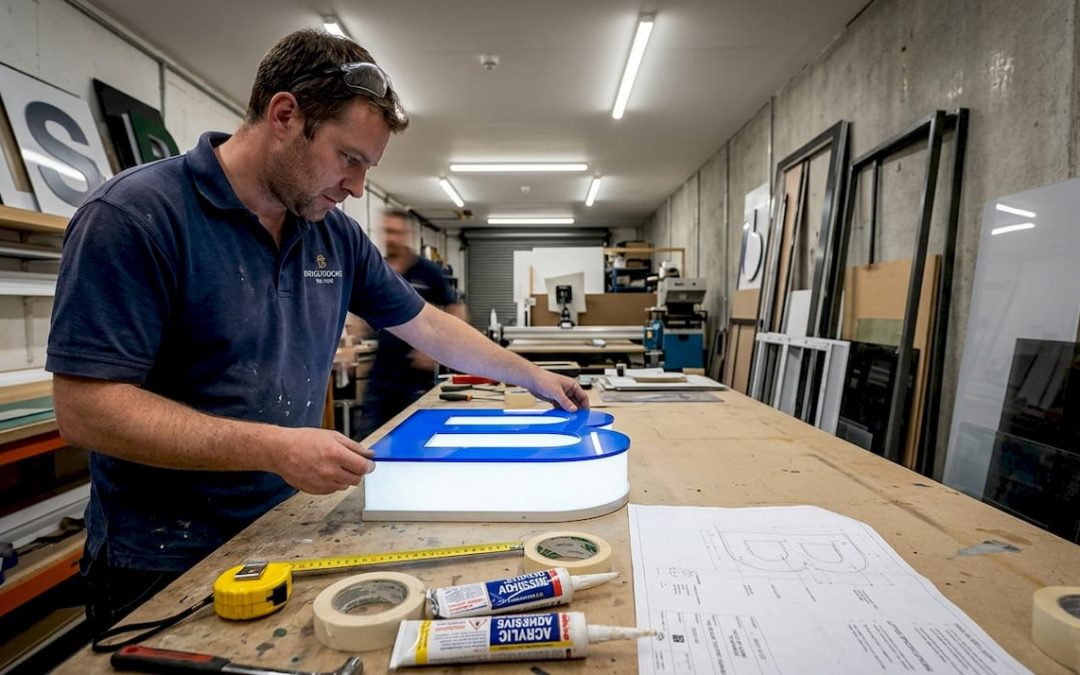
At its most straightforward, 3D signage involves depth and dimensionality to enhance visual impact, setting it apart from flat, printed alternatives. Where a standard flat sign sits flush against a surface, a 3D sign projects outward, creating physical depth that catches light, casts shadows, and draws the eye from a greater distance. This is not a gimmick. It is a practical design decision that affects how quickly and clearly your brand is noticed.
3D signs are built using a range of materials, each suited to different environments and budgets. The most common options include:
- Acrylic: Lightweight, versatile, and available in a wide range of colours and finishes. Works well for both indoor and outdoor use.
- Metal (aluminium or stainless steel): Durable and premium-looking. Ideal for corporate entrances and high-traffic exterior locations.
- Foam (PVC or high-density): Cost-effective and easy to shape. Often used for interior signage or temporary installations.
- Wood: Adds warmth and character. Popular in hospitality, boutique retail, and heritage settings.
Manufacturing methods include CNC routing, laser cutting, and increasingly, 3D printing for more intricate shapes. The sign is then finished with paint, vinyl wraps, chrome effects, or integrated LED lighting depending on the intended look.
The key difference between 3D signage and flat alternatives lies in how they interact with their surroundings. Depth creates natural shadow lines that shift throughout the day as light changes, keeping the sign visually dynamic without any additional effort. Placement also matters. A 3D sign mounted at eye level on a busy high street will outperform the same message printed flat on a hoarding.
Pro Tip: When planning your 3D sign, consider the direction of natural light at your premises. A sign that catches morning sun from the east will look very different at noon. Work with your signage designer to ensure the depth and finish work across different lighting conditions, not just in the showroom.
Research consistently shows that dimensional signage commands greater attention and higher recall rates compared to flat alternatives, making it a worthwhile investment for businesses that rely on foot traffic and first impressions.
Main types of 3D signage explained
With an understanding of what makes a sign truly three-dimensional, you will want to explore the types available that can best match your business needs. Different industries favour specific signage systems for branding and wayfinding, and the right choice depends on your environment, budget, and brand identity.
| Type | Best environment | Wow factor | Typical cost range |
|---|---|---|---|
| Halo-lit letters | Corporate, premium retail | Very high | £££ |
| Front-lit letters | High street retail, hospitality | High | ££ |
| Non-illuminated 3D | Office interiors, construction hoardings | Medium | £ to ££ |
| CNC/laser cut signs | Boutique retail, wayfinding, events | Medium to high | ££ |
Halo-lit letters are mounted away from the wall with LED strips behind them, creating a glow effect around each letter. They work particularly well in low-light environments and give a premium feel suited to corporate lobbies and upscale retail.
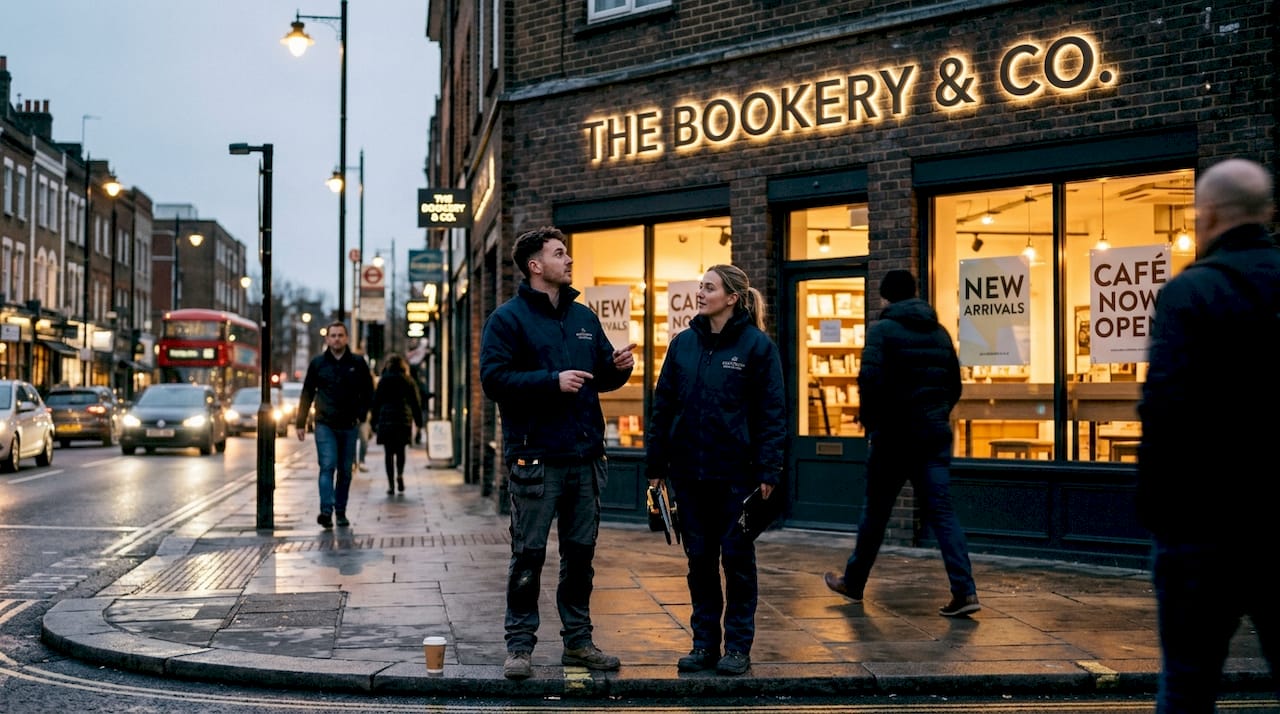
Front-lit signs have LEDs integrated within the letter or shape itself, illuminating the face directly. These are practical for high street shops where visibility in all weather conditions is a priority.
Non-illuminated 3D signs rely entirely on depth, material, and finish to create impact. They are a strong choice for construction site hoardings, internal office branding walls, and environments where power supply is limited.
CNC and laser cut signs offer the most flexibility in terms of shape and detail. They are widely used in digital signage integrations, wayfinding systems, and event branding where bespoke shapes are needed.
Beyond the core types, there are several features worth considering:
- LED integration for energy-efficient illumination
- Weatherproof coatings and UV-resistant finishes for outdoor longevity
- Modular designs that allow easy rebranding without full replacement
- Anti-vandal finishes for high-footfall or public-facing locations
For construction sites, non-illuminated CNC-cut safety boards and hoarding panels tend to be the most practical. For retail, front-lit or halo-lit fascia signs deliver the strongest visual return. Corporate offices often benefit from a combination of non-illuminated dimensional lettering for reception walls and halo-lit exterior signage for building entrances.
Business benefits of 3D signage
Understanding the types of 3D signs available, it is important to see the direct impact this investment can have on your business goals. The case for 3D signage goes beyond aesthetics.
Studies on retail environments indicate that 3D signs improve wayfinding and noticeability, with dimensional signage consistently outperforming flat alternatives in visibility tests. For businesses in competitive locations, that difference in noticeability can translate directly into footfall.
Here are three core benefits worth considering:
- Greater visibility: The physical depth of 3D signage means it catches light and creates shadow, making it visible from wider angles and greater distances than flat signs. On a busy UK high street, this can be the difference between being noticed and being overlooked.
- Stronger brand differentiation: A well-designed 3D sign communicates quality and investment. It signals to customers that you take your brand seriously. This is particularly valuable in sectors like retail and professional services where first impressions carry significant weight.
- Improved wayfinding and safety: In construction environments, construction safety signage with dimensional elements is easier to spot quickly, reducing confusion and supporting compliance. In large office buildings or retail parks, wayfinding signage with 3D elements helps visitors navigate confidently.
Real-world examples back this up. Retail clients who upgrade from flat vinyl to illuminated 3D fascia signs regularly report an increase in customer enquiries simply because their premises are easier to locate. Construction companies using dimensional site boards with bold 3D lettering find their hoarding panels serve a dual purpose: safety compliance and brand marketing to passing traffic.
Pro Tip: In the UK, overcast skies are the norm for much of the year. Choose high-contrast colour combinations and consider illuminated options to ensure your 3D sign remains impactful on grey days. A sign that only looks good in direct sunlight is not working hard enough for your business.
Choosing and installing 3D signage for your business
To translate these benefits into results, UK business owners need a practical roadmap for choosing and installing 3D signage correctly. Proper planning and compliance are essential when introducing 3D signage to a business environment, and skipping steps here can lead to costly delays or refusals.
Follow these steps to get it right from the start:
- Define your requirements: What is the primary purpose of the sign? Brand awareness, wayfinding, safety, or a combination? Clarity here shapes every subsequent decision.
- Assess your space: Consider wall surface, available fixings, sight lines, and proximity to other visual elements. A sign that looks impressive in isolation may be lost in a cluttered environment.
- Choose your materials: Match materials to your environment. Exterior signs need weatherproof finishes. Interior signs can use a wider range of materials including foam and wood.
- Verify planning requirements: Many outdoor signs in the UK require advertisement consent from your local council. Check with your local planning authority before ordering, particularly for illuminated signs or those above a certain size.
- Plan installation and maintenance: Consider how the sign will be fixed, who will install it, and how it will be cleaned or maintained over time.
| Sign type | Typical lead time | Maintenance level | Indicative cost |
|---|---|---|---|
| Halo-lit letters | 3 to 6 weeks | Low to medium | £800 to £3,000+ |
| Front-lit letters | 2 to 4 weeks | Low | £500 to £2,000+ |
| Non-illuminated 3D | 1 to 3 weeks | Very low | £200 to £1,000+ |
| CNC/laser cut | 1 to 4 weeks | Very low | £150 to £800+ |
Common pitfalls to avoid:
- Ordering before checking planning permission, which can result in having to remove a newly installed sign.
- Choosing materials based on cost alone without considering the outdoor environment or UV exposure.
- Underestimating installation complexity, particularly for large or illuminated signs that require electrical work.
- Failing to consider designing site signage from a brand consistency perspective, resulting in a sign that does not align with your wider visual identity.
When working with a signage company, ask to see examples of similar projects, confirm whether they handle planning applications, and clarify what aftercare or warranty is included.
Why 3D signage is the secret weapon UK businesses often overlook
After working with businesses across retail, construction, and corporate sectors, one pattern stands out clearly. Smaller UK businesses consistently underinvest in their signage while their larger competitors treat it as a core part of brand strategy. The reason is not budget alone. It is a lack of awareness about what 3D signage actually delivers.
First impressions are formed within seconds. A flat, faded sign communicates neglect, regardless of how good your product or service is. Large chains understand this, which is why they invest heavily in dimensional, illuminated fascia signs across every location. The psychological effect of a well-crafted 3D sign is real and measurable.
You do not need to overhaul everything at once. Testing a single 3D feature, whether that is a set of illuminated letters above your entrance, a dimensional logo on your reception wall, or a bold CNC-cut sign on your construction hoarding, can produce a noticeable shift in how your brand is perceived. As we explore in our branded signage insights, even modest investments in quality signage consistently outperform cheap flat alternatives in terms of long-term brand value.
Explore stand-out 3D signage with Pik Pik Pow
Ready to upgrade your business image and customer impact? At Pik Pik Pow, we design and manufacture bespoke 3D signage for businesses across retail, construction, and corporate environments throughout the UK. From halo-lit fascia signs to precision CNC-cut interior branding, we handle everything from concept to installation.
Explore our full range of signage systems to see what is possible for your premises, or browse our digital signage solutions if you are looking to combine dimensional impact with dynamic content. Get in touch with our team to discuss your requirements and receive a tailored quote. We make it straightforward to move from idea to installation.
Frequently asked questions
What materials are commonly used in 3D signage?
3D signage uses acrylic, metal, wood, or foam to achieve depth and durability, with the choice depending on whether the sign is for indoor or outdoor use and the desired finish.
Is 3D signage suitable for outdoor use in the UK climate?
Yes. With the right material selection and weatherproof finishes, 3D signage withstands UK weather conditions including rain, UV exposure, and temperature fluctuations, remaining visually strong year-round.
Do I need planning permission for 3D signage in the UK?
Many outdoor installations require advertisement consent from your local council, so always check UK signage compliance requirements before placing your order, particularly for illuminated or large-format signs.
How long does it take to create and install 3D signage?
Production and installation timelines vary by signage type and complexity, typically ranging from one week for simple non-illuminated signs to six weeks for bespoke illuminated installations.