
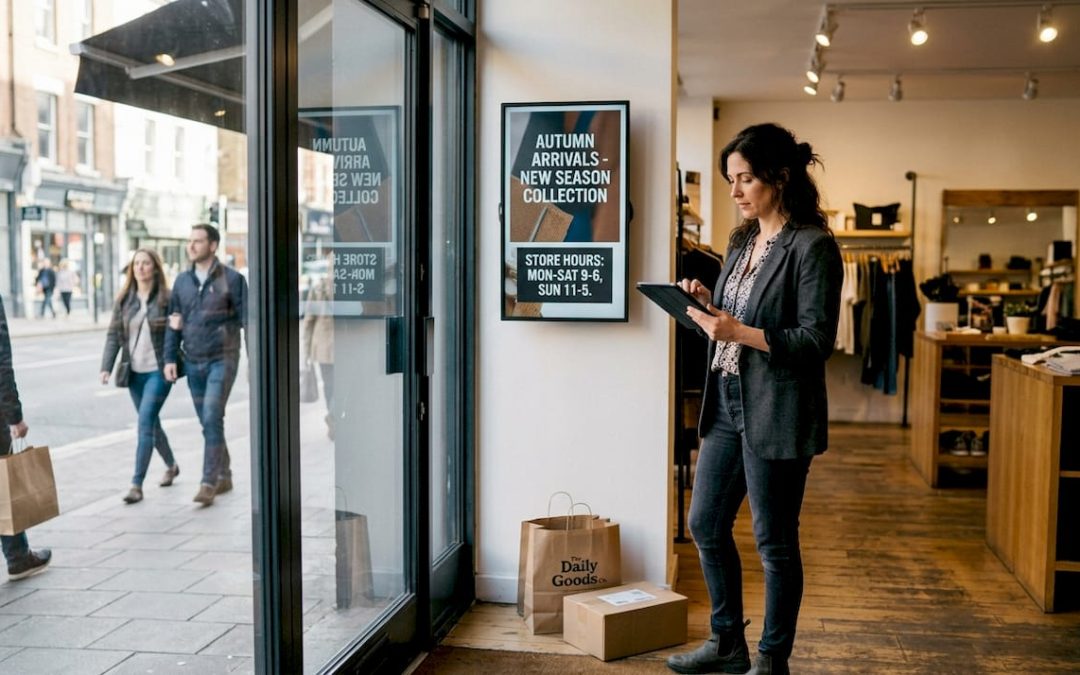
Signage is no longer a static afterthought in brand strategy. For marketing and branding professionals in retail and commercial sectors, it has become one of the most dynamic touchpoints in the customer journey. The challenge is knowing which trends will genuinely move the needle for your business and which are simply noise. Dynamic digital content outperforms static signage by 83%, which tells you the stakes are real. This article breaks down the most actionable signage design trends for 2026, so you can make informed decisions that strengthen your brand presence and deliver measurable results.
Table of Contents
- How to judge signage trends for your brand
- Digital and AI-powered signage integration
- Minimalism and modularity: less is more
- Eco-smart materials and sustainable printing
- Personalisation and adaptive wayfinding
- Design trend comparison table: key choices for 2026
- Matching trends to your sector: practical recommendations
- Enhance your signage strategy for 2026
- Frequently asked questions
Key Takeaways
| Point | Details |
|---|---|
| Embrace digital innovation | AI-powered and digital signage delivers strong engagement and measurable sales increases. |
| Minimise and modularise | Clean, adaptable designs ensure your signage is cost-effective and easy to upgrade over time. |
| Prioritise sustainability | Eco-smart materials improve brand image and future-proof compliance in signage. |
| Customise for context | Personalised and adaptive wayfinding boosts user experience in complex spaces. |
How to judge signage trends for your brand
Before investing in any new signage approach, it pays to assess whether a trend actually fits your business context. Not every innovation is right for every setting, and rushing into a costly rollout without proper evaluation can waste both budget and time.
As factors like audience, location, and budget all influence which trends are appropriate, start by asking yourself these questions:
- Who is your audience? Younger, urban demographics respond well to digital and interactive formats. Older or more traditional audiences may prefer clear, well-crafted static signage.
- Where is your site located? High-footfall retail environments benefit from dynamic content. A professional office or B2B setting may call for something more restrained.
- What is your budget? AI-powered and digital signage carry higher upfront costs but strong long-term ROI. Traditional static signage remains cost-effective for permanence and brand consistency.
- Do you have the capacity to manage digital content? Digital screens require regular content updates. If your team cannot maintain them, the investment loses its value quickly.
Once you have answered these questions, you can evaluate each trend against your specific needs. A useful starting point is understanding signage for maximum brand impact before committing to a direction.
Pro Tip: Pilot new trends on a single site or display before committing to a full rollout. This reduces risk and gives you real performance data to justify wider investment.
With the criteria established, we can now examine each of the top trends that are reshaping signage in 2026.
Digital and AI-powered signage integration
Having outlined how to judge the relevance of trends, let us start with the most disruptive: digital and AI-powered signage. This is the area seeing the fastest adoption and the clearest commercial returns.
Digital screens allow you to serve dynamic, context-based content that responds to time of day, weather, footfall levels, or even customer demographics. AI takes this further by personalising messaging in real time, serving the right content to the right audience at the right moment. The results speak for themselves: retailers using digital signage report up to 33% increases in sales.
Key benefits of digital and AI-powered signage include:
- Real-time content updates without reprinting or reinstalling physical materials
- Audience-responsive messaging that adapts to who is in front of the display
- Reduced long-term print costs as content changes are handled digitally
- Higher engagement rates compared to static formats
AI-powered content is now used in 41% of signage deployments, and adoption is accelerating as hardware costs continue to fall. If you are considering this route, our AI signage guide and digital signage overview cover the practical steps in detail.
Minimalism and modularity: less is more
While digital technology leads the way, a parallel trend is shaping successful signage through simplicity and flexibility. Minimalist design strips away visual clutter, allowing your core message to land clearly and quickly. In busy retail or commercial environments, this clarity is a genuine competitive advantage.
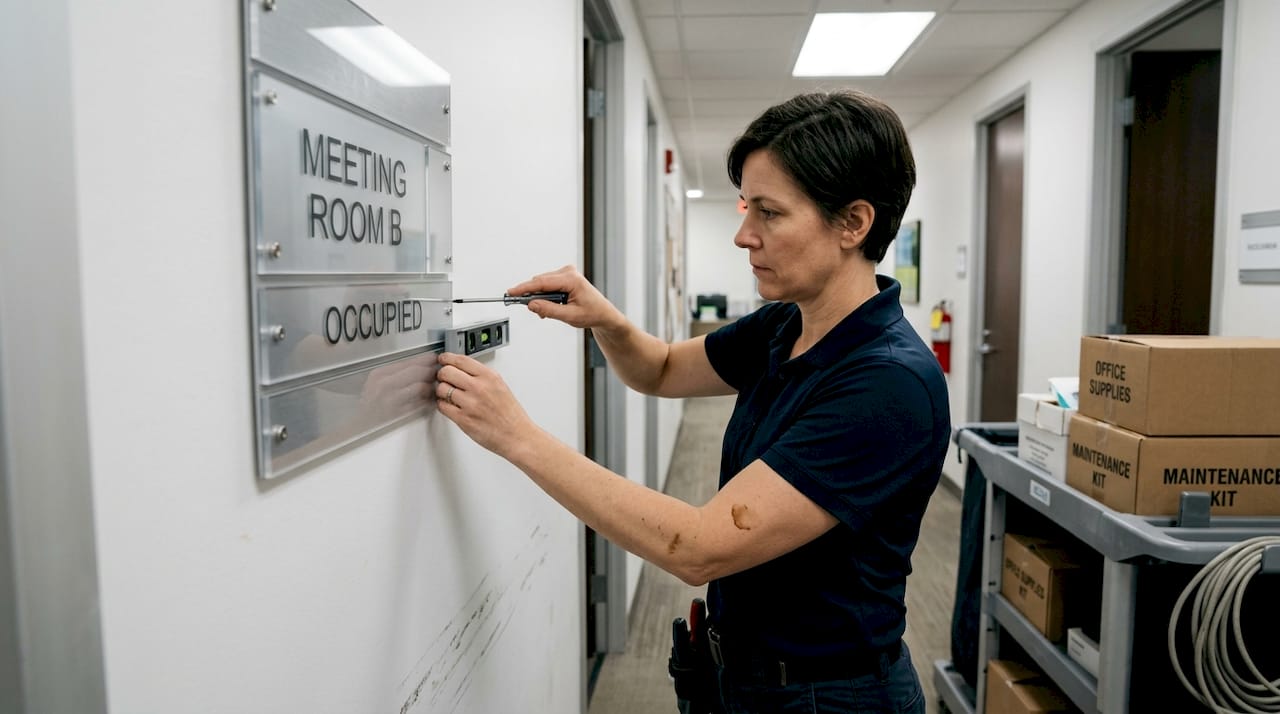
Modular signage systems take this further by allowing individual panels or components to be updated, replaced, or reconfigured without replacing the entire installation. This is particularly valuable for brands with multiple sites or those that need to refresh messaging seasonally.
“Minimalist, modular signs are recommended for future-proofing and easier upgrades.” State of Digital Signage 2026
Here is a straightforward comparison to help you weigh your options:
| Feature | Modular signage | Fixed signage |
|---|---|---|
| Upfront cost | Moderate | Lower |
| Long-term flexibility | High | Low |
| Update ease | Simple panel swap | Full replacement |
| Best for | Multi-site, frequent changes | Permanent brand installations |
| Maintenance | Low | Very low |
For brands exploring this approach, digital signage solutions and signage systems overview are worth reviewing. Products such as Philips D-Line modular signage illustrate how modular hardware is evolving to support this trend at scale.
Eco-smart materials and sustainable printing
As audiences grow more eco-aware, sustainable signage is becoming a winning differentiator. Sustainability is now a brand differentiator in competitive urban and retail environments, and customers are increasingly attentive to whether a brand’s physical presence reflects its stated values.
The top three sustainable signage materials worth considering in 2026 are:
- Recycled aluminium composite panels — durable, lightweight, and widely recyclable at end of life. Ideal for exterior fascia signs and architectural applications.
- FSC-certified timber and bamboo — natural materials that communicate warmth and environmental responsibility. Well-suited to hospitality, boutique retail, and interior wayfinding.
- Water-based and eco-solvent inks on recyclable substrates — a strong choice for wide-format printed graphics, banners, and point-of-sale displays where frequent changes are needed.
Beyond materials, the production process matters too. Choosing local print partners reduces transport emissions and supports faster turnaround. Our work in eco-friendly printing reflects this commitment to lower-impact production without compromising on quality.
Pro Tip: Combining eco-materials with a local print partner not only reduces your carbon footprint but also shortens lead times, which is a practical advantage when campaign deadlines are tight.
Personalisation and adaptive wayfinding
With sustainability reshaping materials, how we guide and assist users with signage is evolving too. Adaptive wayfinding refers to signage systems that respond dynamically to user movement, real-time conditions, or accessibility needs. Rather than fixed directional signs, these systems update based on where people are and what they need.
Personalised signage and adaptive wayfinding improve experience and safety, particularly in large or complex environments. Key applications include:
- Shopping centres where footfall patterns shift throughout the day and promotional zones change regularly
- Airports and transport hubs where real-time information is critical for passenger flow
- University campuses and large workplaces where accessibility and clear navigation reduce friction for visitors
- Healthcare facilities where clear, calm wayfinding directly affects patient experience
Mobile integration is an emerging layer here. QR codes and NFC-enabled signs allow users to pull directions or information directly to their phones, extending the signage experience beyond the physical display. For a broader view of where this is heading, interpretive signage trends offer useful context. Our own wayfinding signage trends resource covers practical implementation for commercial settings.
Design trend comparison table: key choices for 2026
With each trend explained, here is a straightforward table to compare your options for 2026. Use this as a quick reference when presenting options to stakeholders or planning your signage budget.
| Trend | Key benefits | Typical ROI | Best for | Considerations |
|---|---|---|---|---|
| AI and digital signage | Dynamic content, personalisation | High (up to 33% sales lift) | Retail, transport, hospitality | Higher upfront cost, content management needed |
| Minimalist design | Clarity, strong brand presence | Moderate | All sectors | Requires disciplined brand guidelines |
| Modular systems | Flexibility, lower long-term cost | Moderate to high | Multi-site, frequent updates | Initial design investment |
| Eco-smart materials | Brand trust, compliance | Moderate | Urban retail, hospitality | Material sourcing lead times |
| Adaptive wayfinding | Navigation, accessibility | Moderate to high | Campuses, venues, large retail | Integration with digital infrastructure |
For a deeper look at how these trends connect to broader brand strategy, our guide on bespoke branding trends is a useful next step.
Matching trends to your sector: practical recommendations
The comparison gives the context. Now, let us break down recommendations by setting so you can prioritise with confidence.
- Retail: Digital and AI-powered signage is the strongest investment. Retail signage commands 31% of the global digital segment and grows at 8% CAGR, reflecting the sector’s appetite for dynamic, high-impact formats. Pair this with modular systems for promotional flexibility.
- Office and commercial interiors: Minimalist design and modular wayfinding work well here. The focus is on clarity, professionalism, and low maintenance rather than high-frequency content changes.
- Hospitality: Eco-smart materials and personalised wayfinding are strong fits. Guests respond positively to environments that feel considered and sustainable, and clear navigation reduces staff burden.
- Campuses and large venues: Adaptive wayfinding with mobile integration is the priority. Accessibility and real-time responsiveness matter most in these complex environments.
When prioritising, consider footfall volume, how frequently your messaging needs to change, and whether your team has the capacity to manage digital content. For guidance on planning your signage investment from the outset, signage planning tips covers the key decisions to make early in the process.
Pro Tip: If you anticipate growth or frequent rebranding, prioritise modular or digital solutions from the start. Retrofitting later is always more expensive than building in flexibility upfront.
Enhance your signage strategy for 2026
Having matched trends to your sector, the next step is implementation with reliable partners. At Pik Pik POW!, we work with retail, commercial, and hospitality brands across the UK to deliver signage that reflects the trends covered in this article, from AI-integrated digital displays to eco-smart wide-format printing and modular architectural systems.
Whether you are exploring digital signage solutions for a retail environment or need a complete signage systems review for a multi-site rollout, our team combines design expertise with precision manufacturing to deliver results. Visit the Pik Pik POW! website to view our full range of solutions or get in touch to discuss your 2026 signage strategy with our specialists.
Frequently asked questions
What is the most impactful signage trend for retail in 2026?
Digital and AI-powered signage is delivering the strongest results, with retailers reporting up to 33% sales increases after implementation. It offers the highest engagement and the clearest commercial return for retail environments.
Are static signs still relevant with the rise of digital?
Yes. Static signage remains essential for permanence, brand consistency, and low-maintenance applications. Minimalist and modular static formats are particularly well-suited to professional and architectural settings.
How can small businesses afford digital signage upgrades?
Start with scalable, modular digital solutions that allow phased investment. Modularity makes upgrades affordable and future-proof, and leasing hardware is a practical option for reducing upfront costs.
Does sustainability matter in signage design?
Increasingly, yes. Sustainability is now a differentiator in competitive retail and urban environments, influencing customer trust and helping brands meet growing regulatory expectations around environmental responsibility.
Where is adaptive wayfinding signage most useful?
Personalised and adaptive wayfinding delivers the greatest benefit in shopping centres, airports, university campuses, and large workplaces where complex layouts and high visitor volumes make clear navigation essential.
Recommended
- Types of signage solutions for brand impact in 2026
- Bespoke signage: boost branding & visibility in 2026
- Role of Design in Signage: Boosting UK Brand Impact
- Understanding indoor signage: boost navigation & branding in 2026
- Visual Branding Essentials: Impact On Business Success|BM
- 7 Essential Branding Tips for Startups Seeking Rapid Growth – Reddog Consulting Group