
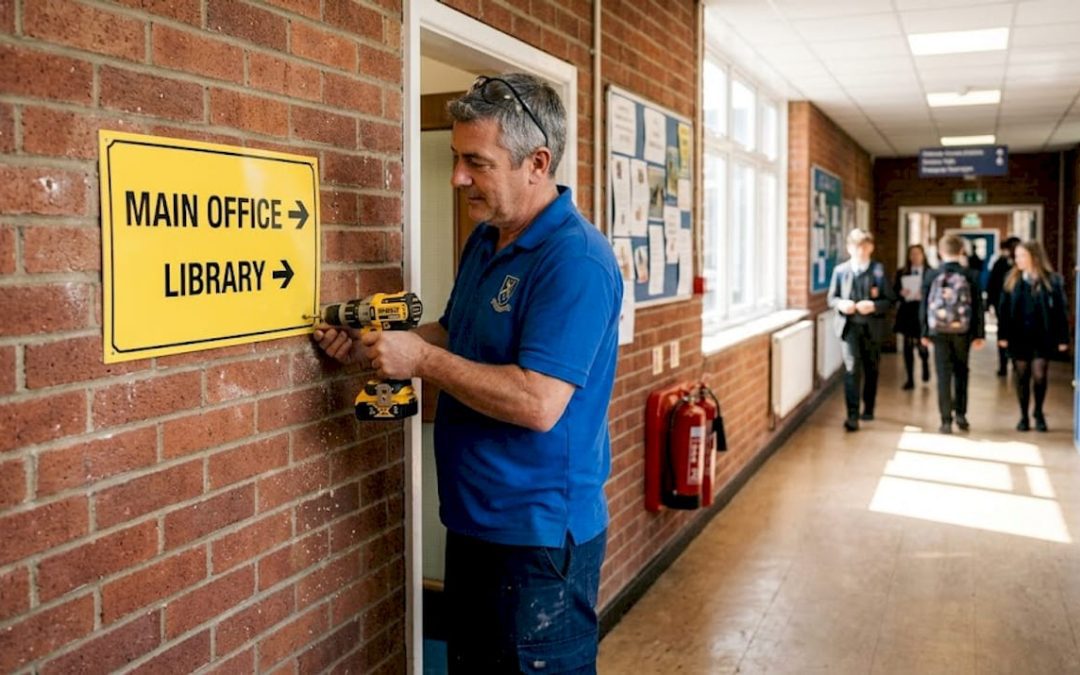
TL;DR:
- School signage must comply with health, fire safety, accessibility, and planning regulations to ensure safety and legality.
- Proper planning, site audits, and early supplier engagement prevent costly errors and delays.
- Post-installation inspections and documentation are essential for ongoing compliance and safety assurance.
Getting school signage wrong is not simply an aesthetic problem. Incorrectly installed or non-compliant signage in educational settings can create genuine safety hazards, breach fire and equality legislation, and even attract scrutiny during Ofsted inspections. UK regulations covering health and safety, planning permission, disability access, fire safety, and DfE technical standards all apply to school signage projects. As a school administrator or decision-maker, understanding what is required before you commission a single sign can save significant time, money, and risk. This guide walks you through every stage, from compliance mapping and preparation through to installation and post-install verification.
Table of Contents
- Understanding requirements and compliance for school signage
- Preparing for installation: planning, permissions, and procurement
- Step-by-step installation process for school signage
- Inspecting, verifying, and documenting your new signage
- Why a methodical process makes the difference for schools
- Find a trusted partner for your school signage project
- Frequently asked questions
Key Takeaways
| Point | Details |
|---|---|
| Know compliance rules | Regulations covering safety, planning, and accessibility must guide every step of installation. |
| Plan installation process | Thorough planning, permissions, and professional help streamline the signage project and avoid delays. |
| Inspect and document | Regular checks and proper documentation are essential for maintaining safe and legal school signage. |
| Choose trusted partners | Working with accredited signage professionals de-risks your project and ensures quality results. |
Understanding requirements and compliance for school signage
Before any installation work begins, you need a clear picture of the regulatory landscape. UK compliance requirements for school signage span several distinct areas, and overlooking even one of them can result in costly remediation or legal exposure.
The key regulatory frameworks to understand are:
- Health and Safety at Work Act 1974: Covers safe installation practices and ongoing physical safety of all signage, including fixings and structural integrity.
- Fire Safety Order 2005: Requires compliant fire exit signs, fire action notices, and emergency directional signage throughout the building.
- Equality Act 2010: Mandates accessible signage for people with disabilities, including appropriate font sizes, colour contrast, and tactile or Braille elements where needed.
- Town and Country Planning Act (Advertisement Regulations): External signs typically require advertisement consent from your local planning authority.
- DfE Technical Standards: Schools undergoing new builds or significant refurbishments must meet Department for Education specifications on signage, wayfinding, and building identity.
For signage compliance guidance specific to your situation, it is worth consulting both your local authority and a specialist signage provider who understands the education sector.
Regulatory requirements by signage type
| Signage type | Planning permission | Fire safety rules | Equality Act | DfE standards |
|---|---|---|---|---|
| External (fascia, entrance) | Usually required | Not applicable | Required | Required for new builds |
| Internal wayfinding | Not required | Partially | Required | Required for new builds |
| Fire safety signs | Not required | Required | Required | Required |
| Temporary or event signs | Sometimes required | Not applicable | Recommended | Not applicable |
Compliance checks to complete before proceeding:
- Confirm whether advertisement consent is required for external signs with your local authority.
- Verify fire safety signage meets current British Standard BS 5499 requirements.
- Assess all signage for Equality Act accessibility compliance.
- Check whether your school falls under DfE technical standards for new builds or major refurbishments.
- Review your school’s existing documentation to identify any outstanding compliance gaps.
Pro Tip: Start your compliance documentation as early as possible. Local authority planning decisions alone can take eight to thirteen weeks, and delays here will push back your entire project timeline.
Preparing for installation: planning, permissions, and procurement
With your compliance responsibilities mapped out, the next task is preparing the groundwork before any signage arrives on-site. Rushing this stage is one of the most common mistakes schools make, and it typically creates far bigger problems later.
A thorough site audit is your starting point. Walk every area where signage will be installed and assess wall construction, surface materials, existing fixings, cable routes for illuminated signs, and sight lines for wayfinding. This information directly informs your specifications and helps avoid surprises during installation.

Planning permission for external signs and adherence to DfE standards are required for qualifying projects. Submit your advertisement consent application early, and where DfE standards apply, ensure your signage brief references the relevant technical guidance documents.
When selecting a supplier, look for:
- Demonstrable experience working in educational or public sector environments.
- In-house design capability so compliance requirements are built into artwork from the start.
- Clear documentation of manufacturing processes and material standards.
- Accredited installation teams familiar with school environments and DfE expectations.
- References or case studies from comparable school signage projects.
Example project timeline
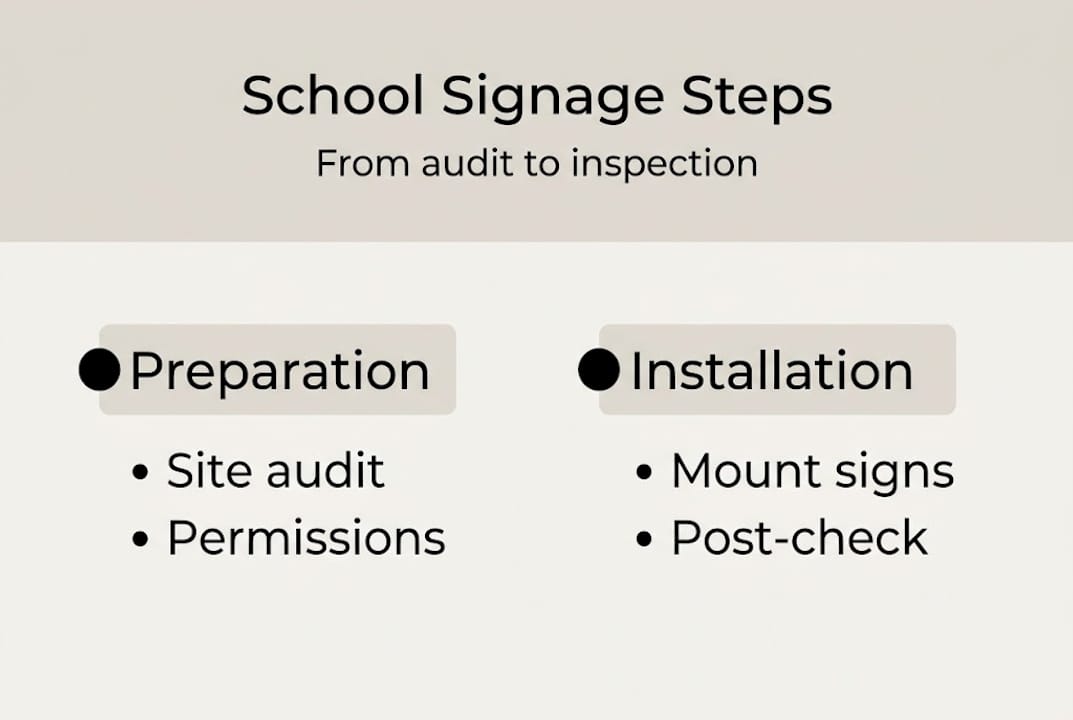
| Stage | Estimated lead time |
|---|---|
| Site audit and brief | 1 to 2 weeks |
| Planning permission application | 8 to 13 weeks |
| Design and approval | 2 to 3 weeks |
| Manufacturing | 3 to 5 weeks |
| Installation | 1 to 3 days (site dependent) |
Common procurement mistakes to avoid:
- Selecting a supplier based solely on price without checking their compliance knowledge.
- Failing to confirm lead times before locking in an installation date.
- Not involving your facilities manager in the site audit and specification process.
- Overlooking the need for a formal sign-off process on design artwork before manufacture.
- Assuming internal signage does not require accessibility review.
Pro Tip: Bring your facilities manager and any appointed contractors into the planning conversation early. Their input on building access, working hours, and structural constraints will prevent unnecessary delays. You can also use the school property signage guide to help structure your procurement approach.
Step-by-step installation process for school signage
With preparations complete, you can move to the installation itself. A structured process here protects both the people on-site and the quality of the finished result.
Installation of school signage must comply with health and safety, fire, and equality legislation throughout every stage of the physical works. Keep a copy of all relevant standards accessible on-site during installation.
Installation steps:
- Delivery inspection: Check every sign against the confirmed specification. Look for damage in transit, incorrect dimensions, and colour or finish discrepancies before accepting delivery.
- Site preparation: Confirm that all surfaces are clean, level, and structurally sound. Mark fixing positions accurately using the approved installation drawings.
- Safety briefing: The installation team lead should confirm all on-site health and safety procedures before work begins, including lone working protocols, working at height requirements, and access restrictions relevant to a live school environment.
- Sign installation: Fix signs in accordance with manufacturer guidelines and the agreed installation method. Use only the specified fixings for each substrate to ensure long-term structural integrity.
- Cable and electrical work: For illuminated or digital signage, all electrical connections must be carried out by a qualified electrician and tested before handover.
- Alignment and quality check: Stand back and confirm all signs are correctly aligned, well-lit where required, and unobstructed from the key viewing positions identified during the site audit.
- Post-install inspection: Carry out a formal walk-through with the facilities manager to confirm every element matches the specification and complies with all relevant standards.
“The most common installation errors in educational buildings involve inadequate fixings for the substrate, failure to maintain required fire exit sign visibility, and signs positioned outside the accessible height range for wheelchair users. Address these in your inspection checklist before sign-off.”
To minimise disruption, schedule installation outside of pupil-facing hours where possible. For guidance on effective school signage strategies, including wayfinding and zoning, plan your signage layout to support both operational flow and safeguarding requirements. Refer to safety and compliance in installation for detailed on-site safety protocols. When reviewing mounting signage systems, always match the system specification to the wall construction.
Pro Tip: Only use accredited installers with proven experience in DfE-standard environments. Ask for evidence of relevant accreditations and public liability insurance before work begins.
Inspecting, verifying, and documenting your new signage
Installation is not the final step. A rigorous post-install inspection and clear documentation process ensures your school remains compliant and that any issues are caught before they become problems.
Inspection should confirm that all signage meets DfE technical and safety standards, as well as fire and equality requirements. Do not treat this as a formality. Walk every signed area methodically.
Key inspection checks:
- All external signs have the required advertisement consent in place.
- Fire exit and fire action signs are correctly positioned, clearly visible, and illuminated where required.
- Accessible signage meets required height, contrast, and tactile specification.
- All fixings are secure with no movement or gaps at the wall interface.
- Illuminated signs are functional and all electrical connections are certified.
- Wayfinding signs direct users clearly from all key entry points.
For additional inspection guidance, the essential signage tips resource provides a practical framework that translates well to educational settings.
Documentation and sign-off:
- The responsible person (usually the headteacher or business manager) should formally sign off the completed installation.
- Retain a copy of the planning consent, any fire safety certificates, and the installer’s health and safety documentation.
- Store the original design artwork and specifications for future reference.
- Record the installation date and the names of the installer and supervising member of staff.
Post-installation compliance summary
| Area | Action required | Frequency |
|---|---|---|
| Fire safety signs | Visual check and illumination test | Annually and after any works |
| Accessible signage | Height and contrast audit | Annually |
| External signs | Structural integrity check | Annually |
| Planning documents | Filed and accessible | Ongoing |
Annual reviews are strongly recommended. Signage can deteriorate, be obscured by building works, or become non-compliant as regulations are updated. A quick spot check programme run by your facilities team costs very little and significantly reduces compliance risk.
Why a methodical process makes the difference for schools
In our experience working across public sector and educational environments, the signage projects that encounter problems almost always share the same root cause: steps were skipped in the early stages, not corners cut on materials.
Schools sometimes treat compliance as a box-ticking exercise. But poor signage in an educational setting carries consequences that go far beyond a fine. Inadequate fire exit signage can directly affect safeguarding. Inaccessible wayfinding can breach the Equality Act. And if an Ofsted inspection surfaces a pattern of compliance gaps, signage is one area that is examined. These risks are genuine and preventable.
The contrarian insight worth sharing is this: investing in process at the front end of a signage project is consistently more cost-effective than remediating problems after installation. Audits repeatedly show that post-install remediation costs two to three times more than getting it right the first time.
For schools looking to improve their external presence as well as internal navigation, outdoor signage best practices offers a practical starting point for thinking about visibility, durability, and brand coherence alongside compliance.
Pro Tip: Involve a signage specialist from the brief stage, not just at the point of installation. Their input on materials, layout, and regulatory requirements will de-risk the entire project and frequently saves money on redesign.
Find a trusted partner for your school signage project
Managing school signage well requires more than finding a supplier who can print signs. It requires a partner who understands the full regulatory picture, can advise on design and accessibility from the start, and delivers installation that stands up to inspection.

At Pik Pik POW!, we work with schools and educational facilities to deliver compliant, well-designed signage from site audit through to aftercare. Our team handles everything from planning permission support and compliance consulting to manufacturing and accredited installation. Whether you need a full campus wayfinding system via our professional signage systems or are exploring digital signage solutions for modern learning environments, we can help. Contact us to arrange a free consultation or site survey.
Frequently asked questions
Do schools need planning permission for all new signage installations?
Planning permission is usually required for external signage but not always for internal signs. Always check with your local authority before starting any external installation to confirm what advertisement consent is needed.
What are the main compliance risks if school signage is installed incorrectly?
Incorrectly installed signage can result in safety hazards, legal fines, and non-compliance with disability and fire legislation, all of which carry serious consequences for schools.
How often should school signage be inspected for compliance?
School signage should be checked immediately after installation and then at least once a year to confirm it meets DfE standards and remains safe and effective.
Who should schools contact for advice on signage regulations?
Start with your local authority for planning and advertisement consent queries, and engage a professional signage specialist with education sector experience for design, compliance, and installation guidance.