TL;DR:
- Illuminated signage boosts visibility, attracts foot traffic, and enhances brand professionalism after dark.
- Selecting the right type, such as face-lit or halo-lit, depends on brand identity and location needs.
- Ensuring compliance with electrical and planning regulations is crucial for safety and long-term effectiveness.
Illuminated signage is one of the most powerful tools available to retail and commercial businesses, yet it is frequently misunderstood. Many business owners assume that any lit-up sign will do the job, but the reality is far more nuanced. The type of illumination you choose, the technology behind it, and how well it meets safety regulations all determine whether your sign builds brand recognition or creates problems down the line. This guide cuts through the confusion and gives you a clear, practical understanding of illuminated signage so you can make informed decisions that genuinely benefit your business.
Table of Contents
- What makes illuminated signage essential for modern businesses?
- Types of illuminated signage and how to choose
- Compliance and safety: understanding key regulations
- Design and installation: practical steps to maximise your sign’s impact
- Why a truly effective illuminated sign blends technology, compliance and creativity
- Illuminate your brand with expert signage solutions
- Frequently asked questions
Key Takeaways
| Point | Details |
|---|---|
| Signage impact | Effective illuminated signage instantly boosts brand visibility and draws customers in. |
| LED technology benefits | Switching to LEDs means lower energy bills and much longer-lasting signs. |
| Compliance is crucial | Meeting safety and regulatory standards protects your investment and prevents legal pitfalls. |
| Tailored sign selection | Choosing the right sign type for your brand ensures you stand out day and night. |
What makes illuminated signage essential for modern businesses?
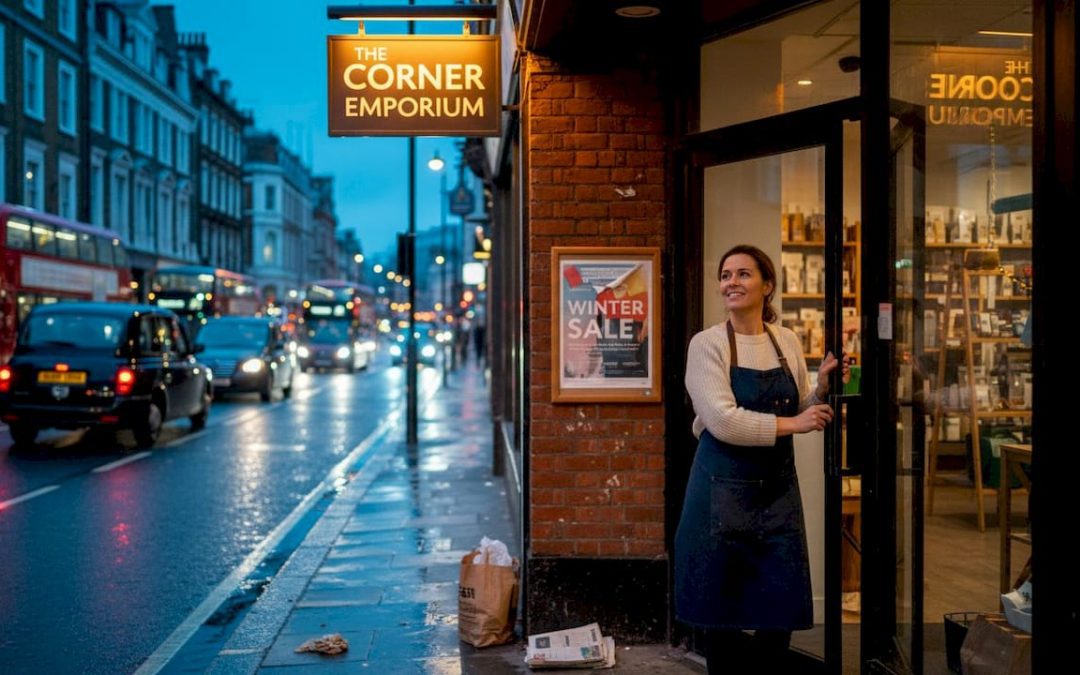
For any business operating on a high street or in a commercial district, visibility is everything. An illuminated sign does not just tell people where you are. It signals that you are open, active, and worth paying attention to. That matters enormously, especially after dark or in low-light conditions when unlit competitors simply disappear from view.
The psychological impact is real and measurable. Research consistently shows that well-lit signage increases footfall, particularly during evening trading hours. Shoppers are drawn to brightness and clarity. A sign that is easy to read from a distance, with strong contrast and consistent illumination, communicates professionalism before a customer even steps through your door.
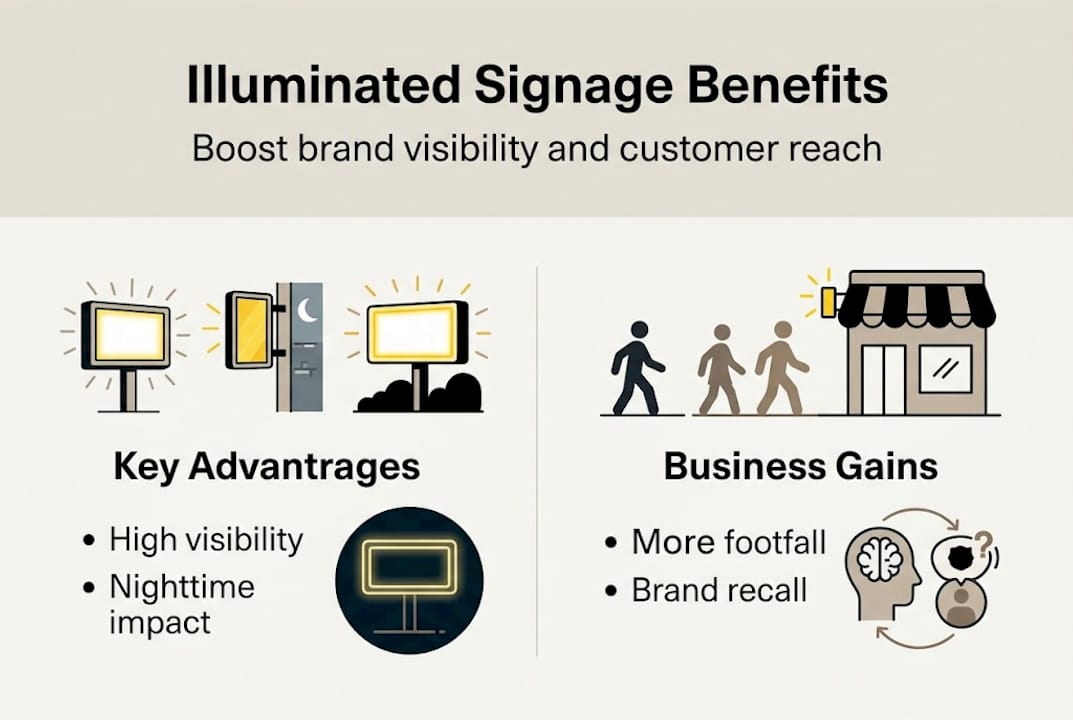
From a practical standpoint, LED technology has transformed what illuminated signage can achieve. LEDs are preferred over neon and fluorescent alternatives for their energy efficiency, longevity, and even light distribution across a sign face. This is not just a cost saving. It means your sign looks better for longer and requires less maintenance over its lifespan.
Different illumination techniques also serve different brand purposes:
- Face-lit signs project light directly through the lettering or graphic, creating bold, high-visibility impact ideal for busy retail environments
- Halo-lit signs cast light behind the lettering onto the mounting surface, producing a refined glow that suits premium or modern brand identities
- Backlit signs illuminate from behind a translucent panel, offering consistent, even brightness across the entire sign face
- Hybrid designs combine techniques to achieve layered visual effects that stand out in competitive locations
Pro Tip: If your business trades heavily in the evening, prioritise signs with high luminance output and good colour rendering. A sign that looks great in daylight can appear washed out or dull at night if the lighting specification is not matched to the environment.
The right illumination technique reinforces your brand identity rather than working against it. Understanding the options is the first step to making a sound investment.
Types of illuminated signage and how to choose
Choosing the right type of illuminated sign starts with understanding what each format actually does and where it performs best. The four core categories are face-lit, halo-lit, backlit, and illuminated lightboxes. Each has distinct characteristics that make it more or less suitable depending on your brand, location, and budget.
Here is a straightforward comparison to help you assess your options:
| Sign type | Best for | Key benefit | Typical location |
|---|---|---|---|
| Face-lit | High-street retail, fast food | Maximum visibility, bold impact | Shopfronts, fascias |
| Halo-lit | Luxury brands, modern offices | Premium appearance, subtle glow | Reception areas, commercial exteriors |
| Backlit | Wayfinding, menus, displays | Even, consistent illumination | Indoor retail, hospitality |
| Illuminated lightbox | Advertising, promotions | Interchangeable graphics | Shopping centres, transport hubs |
As noted in guidance on architectural sign types, the choice of sign format should align with both the architectural context and the brand’s visual identity. A halo-lit sign that looks stunning on a sleek commercial building may feel out of place on a traditional high-street shopfront.
When evaluating your options, consider these practical factors:
- Maintenance requirements: Face-lit and halo-lit channel letters are generally easier to service than sealed lightbox units
- Installation complexity: Larger backlit panels require more structural support and careful electrical planning
- Design flexibility: Lightboxes allow you to update graphics without replacing the entire sign, which suits businesses that run seasonal promotions
- Brand alignment: Lighting and sign design work together. The warmth or coolness of your LED choice affects how your brand colours appear at night
The energy efficiency and longevity of LEDs make them the standard choice across all sign types today. Choosing the right format is not about picking the most impressive option. It is about matching the sign to your specific business context and long-term goals.
Compliance and safety: understanding key regulations
This is the area where many sign projects run into trouble. Compliance is not optional, and cutting corners on electrical safety or planning permissions can result in costly remediation work, fines, or even forced removal of your sign.
In the UK, illuminated signage must comply with a range of standards covering electrical installation, planning consent, and structural safety. While the National Electrical Code (NEC) is a US standard, its principles are widely referenced internationally. NEC Article 600 mandates dedicated 20A circuits, listed equipment, approved wiring methods such as EMT conduit and THHN/THWN-2 cable, proper grounding, and wet-location protection for all exterior signs. UK regulations follow similar logic under BS 7671 (the IET Wiring Regulations) and local planning frameworks.
Here is a practical compliance checklist for illuminated sign installation:
- Confirm planning permission requirements with your local authority before ordering
- Ensure all electrical work is carried out by a qualified, Part P registered electrician
- Specify UL or CE listed components appropriate to the installation environment
- Use weatherproof rated enclosures and fittings for all exterior installations
- Verify that your circuit capacity supports the sign’s power draw without overloading
- Schedule a post-installation inspection and retain documentation for future reference
Familiarising yourself with signage safety terminology before briefing a supplier will help you ask the right questions and avoid misunderstandings.
Common pitfalls include using undersized cabling, failing to weatherproof junction boxes, and neglecting to account for voltage drop over long cable runs. Each of these issues can cause premature failure or create a genuine safety hazard.
The signage compliance guide produced by our team outlines the specific requirements relevant to UK installations in detail. Guidance on modern sign wiring also reinforces why certified installation is non-negotiable for any permanent illuminated sign.
Pro Tip: Always request a wiring schematic and component specification sheet from your signage supplier before installation begins. This documentation is essential if you ever need to carry out repairs or upgrades.
Understanding your signage systems requirements early in the project prevents the most common and costly compliance failures.
Design and installation: practical steps to maximise your sign’s impact
Even a technically excellent sign will underperform if it is poorly positioned or badly installed. The design and installation phase is where good planning pays off most visibly.
Follow these steps to get the best outcome from your illuminated signage project:
- Assess your location carefully. Consider sightlines from the street, competing visual elements, and the distance from which your sign needs to be readable. A sign that works at 5 metres may be illegible at 20 metres if the lettering is too small or the contrast is insufficient.
- Determine the correct scale. Oversized signs can breach planning restrictions. Undersized signs fail to attract attention. Work with your designer to establish the optimal dimensions based on your fascia width and viewing distance.
- Choose colours and fonts for legibility. High contrast between lettering and background is essential, particularly for backlit formats where colour bleed can reduce clarity.
- Plan your electrical supply route early. Retrofitting cabling after installation is expensive and disruptive. Agree the supply route with your electrician before any fixing work begins.
- Conduct a lighting test before sign-off. View the sign at night, from multiple distances and angles, before accepting the installation. Issues with hot spots, uneven illumination, or colour inconsistency are far easier to resolve at this stage.
- Schedule regular maintenance. Clean sign faces twice yearly, check fixings annually, and inspect electrical connections every two to three years.
For detailed guidance on positioning and visibility, outdoor signage best practices covers the key principles that apply to most retail and commercial installations. If you are starting from scratch, site signage design walks through the full briefing and design process.
The longevity of LED-based signs means that a well-maintained installation can serve your business for a decade or more. That makes the upfront investment in quality design and installation genuinely worthwhile.

Pro Tip: Mounting height is one of the most frequently overlooked variables. A sign mounted too high loses impact at street level. A sign mounted too low may be obscured by parked vehicles or pedestrian activity. Eye level to slightly above eye level is the optimal range for most shopfront applications.
Why a truly effective illuminated sign blends technology, compliance and creativity
After working on illuminated signage projects across retail, commercial interiors, and construction environments, one pattern stands out clearly. The projects that succeed are not necessarily the ones with the biggest budgets or the most ambitious designs. They are the ones where technical, regulatory, and creative decisions were made together, from the very beginning.
The most common point of failure is a disconnect between the design team and the installation team. A designer produces something visually striking without accounting for wiring constraints. An installer makes practical decisions on site that alter the intended visual effect. Neither party is wrong in isolation, but the result is a sign that falls short of its potential.
Specifying your signage early, as outlined in guidance on early signage specification, allows compliance requirements, structural considerations, and creative ambitions to be resolved before they become conflicts. Creativity is not limited by regulation. It is actually strengthened when you know exactly what you are working within.
Illuminate your brand with expert signage solutions
If this guide has clarified what illuminated signage can do for your business, the next step is working with a team that brings design, compliance, and manufacturing expertise together under one roof.
At Pik Pik POW!, we work with retail and commercial clients across the UK to design and install bespoke illuminated signage that performs from day one. Whether you need architectural signage for a premium shopfront, digital signage solutions for dynamic in-store displays, or a full review of your signage systems, our team handles every stage of the process. Get in touch today to arrange a free consultation and find out how we can help your brand stand out.
Frequently asked questions
What are the main types of illuminated signage?
The main types are face-lit, halo-lit, backlit, and illuminated lightboxes. Each suits different branding goals, with halo-lit suiting premium brands and face-lit delivering bold retail visibility.
Are illuminated signs energy efficient?
Modern illuminated signs using LEDs are highly energy efficient and can last 50,000 hours or more, making them a cost-effective long-term investment compared to neon or fluorescent alternatives.
What safety regulations apply to illuminated signage in the UK?
Illuminated signage must meet wiring, circuit, and equipment standards. NEC Article 600 mandates dedicated circuits, approved wiring, grounding, and wet-location protection, with UK installations governed by BS 7671 and local planning requirements.
How do I choose the best illuminated sign for my business?
Consider your location, brand identity, visibility requirements, and planning constraints. Face-lit suits bold retail impact while halo-lit works well for modern or premium commercial environments.