

Choosing the right signage can transform your business presence and customer experience. Effective exterior signage boosts brand recognition by up to 75%, yet many UK businesses struggle to understand the distinct roles and requirements of exterior versus interior signage. This guide clarifies the differences between these signage types, their materials, legal compliance needs, and how they work together to strengthen your brand whilst meeting UK regulations.
Table of Contents
- Introduction To Exterior And Interior Signage
- Material And Durability Considerations In UK Environments
- Legal And Regulatory Compliance For UK Businesses
- Design Principles And Branding Implications
- Common Misconceptions And Practical Frameworks
- Installation, Maintenance, And Long-Term Considerations
- Enhance Your Business Signage With Pik Pik Pow
Key takeaways
| Point | Details |
|---|---|
| Exterior signage attracts customers outdoors whilst interior signage guides them inside | Exterior signs focus on visibility and brand recognition, interior signs support navigation and compliance |
| Material choices must withstand UK weather conditions or suit indoor aesthetics | Aluminium and acrylic work outdoors, PVC foam board suits interiors |
| UK planning permission and accessibility laws govern signage decisions | Around 15% of businesses face enforcement for non-compliant illuminated signs yearly |
| Integrated design across both signage types reinforces brand consistency | Coordinated colours, fonts and materials create cohesive customer experiences |
| Installation and maintenance requirements differ significantly by location | Exterior signage needs 30% more frequent upkeep due to environmental exposure |
Introduction to exterior and interior signage
Exterior signage encompasses all visible business signage installed outdoors, designed primarily for brand recognition and customer attraction from street level or vehicle traffic. These include shopfront fascias, projecting signs, illuminated boxes, and building-mounted lettering that target passers-by and establish your business identity in the commercial landscape.
Interior signage operates within your premises, serving navigation, safety compliance, and brand reinforcement functions. The role of signage in commercial interiors shows how indoor signs guide visitors through spaces, display regulatory information, and maintain brand presence throughout customer journeys.
Common exterior signage examples include:
- Illuminated shopfront signs and lightboxes
- Projecting blade signs perpendicular to building facades
- Window graphics and vinyl lettering
- Freestanding pylons and post-mounted directional signs
- Building-mounted dimensional letters
Typical interior signage comprises:
- Wayfinding and directional signage for navigation
- Safety and fire exit signs meeting regulatory standards
- Room identification and door plates
- Wall-mounted brand messaging and decorative graphics
- Compliance notices and accessibility information
These signage types work complementarily: exterior signs attract customers to your premises, whilst interior signs assist their navigation and ensure you meet legal obligations. Staying current with signage industry updates helps you optimise both for maximum business impact.
Material and durability considerations in UK environments
The UK climate demands careful material selection for outdoor signage to withstand rain, UV exposure, frost, and urban pollution. Aluminium composite panels offer exceptional weather resistance and lightweight structural benefits, though they cost more initially. Acrylic provides excellent clarity for illuminated signs and resists yellowing, but requires UV-protective coatings for longevity. Weatherproof vinyl suits temporary applications and offers cost efficiency, yet degrades faster than rigid materials under constant environmental stress.
Interior signage materials prioritise aesthetics, ease of installation, and cost efficiency over extreme durability. PVC foam board delivers lightweight, budget-friendly solutions perfect for wall-mounted directional signs and compliance notices. Acrylic sheets create premium finishes for reception areas and branded displays without weatherproofing needs. Aluminium composite works equally well indoors when sophisticated, modern aesthetics matter, offering consistency if you want matching interior and exterior visual languages.
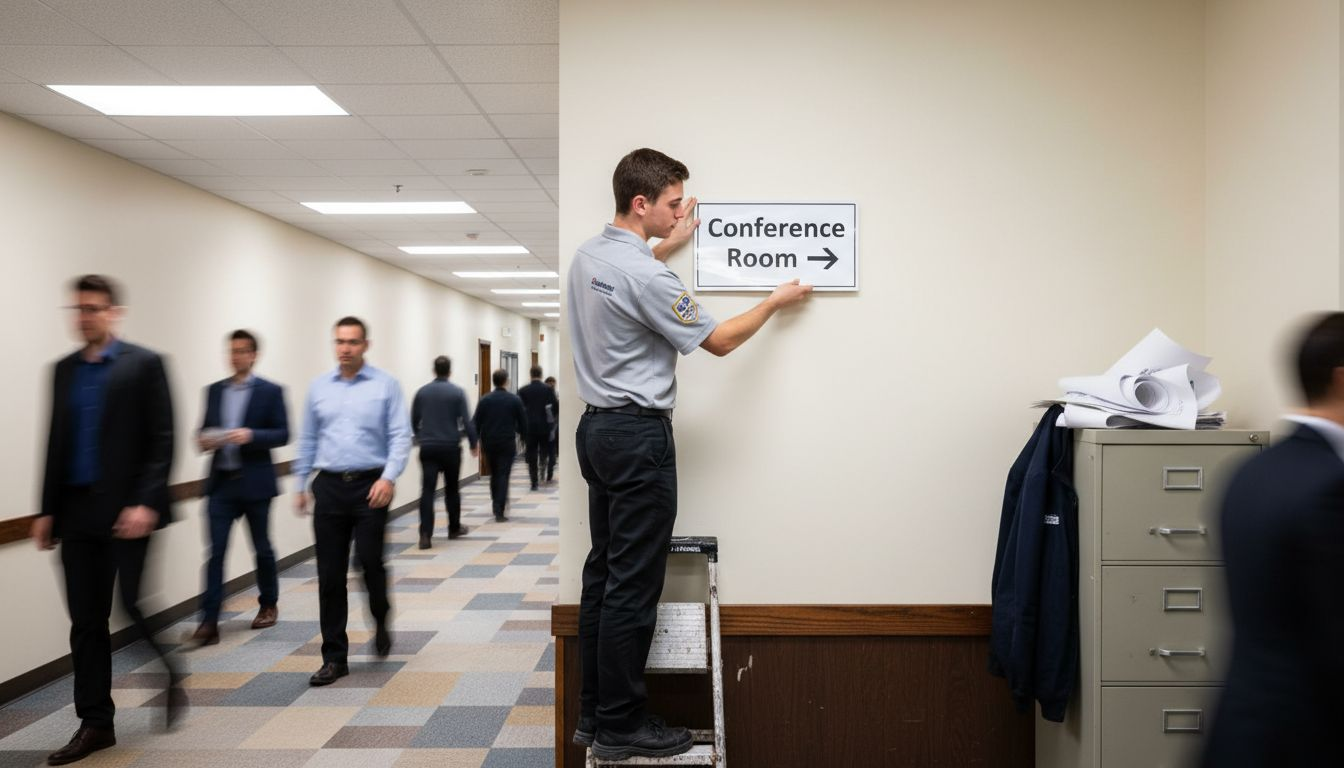
Durability requirements diverge sharply between locations. Exterior signs must resist UV degradation that fades colours and weakens materials, withstand freeze-thaw cycles causing expansion and contraction, and repel moisture preventing warping or corrosion. Interior signs face minimal environmental stress but must maintain appearance under artificial lighting and occasional cleaning.
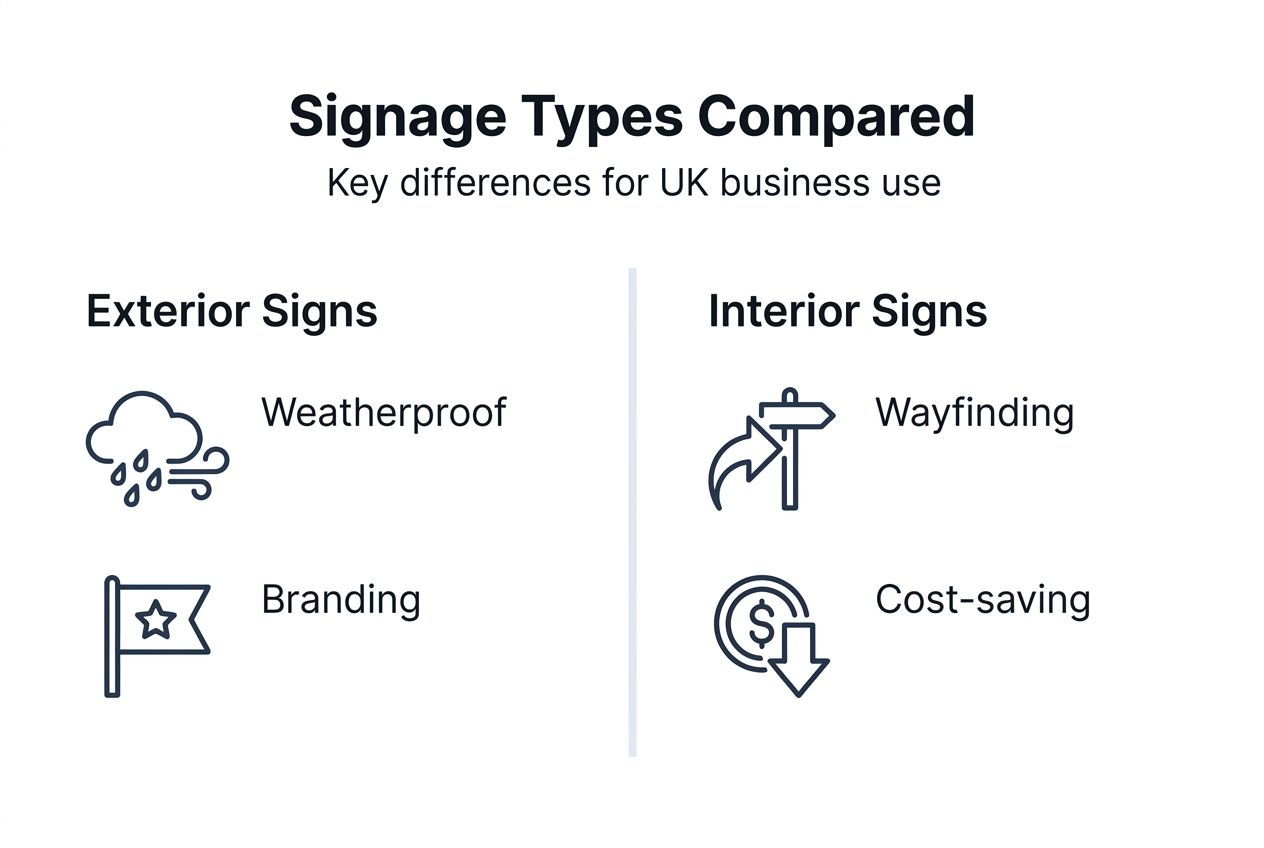
Choosing signage materials wisely balances initial investment against replacement frequency. Exterior signage requires 30% more frequent maintenance than interior equivalents due to environmental exposure, adding significant lifecycle costs.
Pro Tip: Calculate total cost of ownership over five years rather than focusing solely on initial material prices. A premium exterior material costing 40% more upfront may prove cheaper overall if it eliminates two replacement cycles and reduces annual maintenance visits.
| Material | Exterior suitability | Interior suitability | Durability | Cost |
|---|---|---|---|---|
| Aluminium composite | Excellent | Excellent | High | Medium to high |
| Acrylic | Good with UV coating | Excellent | Medium to high | Medium |
| PVC foam board | Poor | Excellent | Low outdoors, medium indoors | Low |
| Weatherproof vinyl | Good short term | Poor | Medium | Low |
Consider how signage design for UK retail influences material choices, as high-traffic retail environments demand different durability standards than office settings.
Legal and regulatory compliance for UK businesses
Most exterior signage installations require planning permission from local authorities, particularly if signs exceed specific size thresholds, use illumination, or sit within conservation areas. The Town and Country Planning Act governs advertisement consent, and non-compliance risks enforcement notices requiring immediate removal. Around 15% of UK businesses with illuminated exterior signs face enforcement actions yearly for failing to secure proper permissions.
Illuminated signage faces additional scrutiny under lighting regulations designed to prevent light pollution and nuisance to neighbours. Your illuminated signs must:
- Comply with brightness limits set by local planning policies
- Avoid direct light spill into residential properties
- Meet energy efficiency standards under building regulations
- Turn off during specified hours if required by planning conditions
Interior signage must satisfy Equality Act 2010 requirements ensuring accessibility for disabled visitors. This mandates tactile and Braille elements on certain wayfinding signs, appropriate colour contrast ratios for visually impaired users, and clear, jargon-free language. Fire safety regulations require specific exit signage meeting British Standard BS 5499, with illuminated or photoluminescent options in buildings lacking sufficient emergency lighting.
Follow these steps for legal compliance:
- Contact your local planning authority before designing exterior signage to understand specific restrictions
- Review conservation area designations and listed building constraints affecting your property
- Verify accessibility requirements with building control for interior wayfinding projects
- Engage qualified signage professionals familiar with UK signage compliance terminology
- Document all approvals and maintain records of compliance certificates
- Schedule regular inspections ensuring ongoing regulatory adherence
Failing to secure planning permission before installation can result in enforcement action requiring sign removal, retrospective application fees, and potential prosecution for persistent non-compliance. Budget time for the approval process, typically 8 to 12 weeks for straightforward applications but longer for complex or contentious proposals.
Design principles and branding implications
Exterior signage serves as your primary brand ambassador to passing trade, establishing immediate recognition and communicating business personality before customers enter. High-contrast colour schemes ensure visibility from distance and moving vehicles, whilst distinctive typography differentiates you from neighbouring businesses. Location and mounting height critically affect sightlines, requiring careful consideration of viewing angles and pedestrian flow patterns.
Interior signage transitions customers from attraction to engagement, maintaining brand consistency whilst prioritising functional navigation. Clear wayfinding reduces frustration and improves satisfaction, particularly in complex environments like shopping centres or corporate offices. Thoughtful interior graphics reinforce brand values through material choices, colour palettes, and messaging tone aligned with your exterior presence.
An integrated signage strategy creates seamless brand experiences. Consider:
- Matching colour systems across exterior and interior applications
- Consistent typography families maintaining readability at different scales
- Coordinated material finishes suggesting quality and attention to detail
- Unified graphic styles from street presence through to internal departments
Pro Tip: Create a signage style guide documenting approved colours (with specific Pantone or RAL references), fonts, logo usage rules, and material specifications. This ensures consistency when installing new signage or refreshing existing elements, preventing brand dilution through inconsistent execution.
Poor exterior design fails to capture attention in visually cluttered high streets, wasting investment in premium locations. Confusing interior wayfinding frustrates visitors, damages customer experience, and may breach accessibility obligations. The signage brand impact in corporate environments demonstrates how cohesive signage programmes strengthen professional perception and employee pride.
Understanding design impact in signage solutions helps you balance aesthetic ambitions with practical functionality, ensuring signs serve both branding and operational needs effectively.
Common misconceptions and practical frameworks
Many business owners mistakenly believe interior signage holds less strategic importance than exterior equivalents. This overlooks how interior signs directly influence customer behaviour once attraction succeeds, guiding purchasing journeys and ensuring regulatory compliance that protects your business from liability.
Another misconception treats exterior signage purely as attention-grabbing tools without considering their role in communicating brand values, business credibility, and professional standards. Cheap, poorly maintained exterior signs actively repel potential customers regardless of the quality of products or services inside.
Selecting appropriate signage requires a systematic framework:
- Define primary objectives (brand visibility, customer navigation, regulatory compliance, or combination)
- Assess environmental conditions (outdoor weather exposure versus controlled indoor settings)
- Review legal requirements early, consulting planning authorities and accessibility standards
- Establish realistic budgets covering design, materials, installation, and ongoing maintenance
- Choose materials balancing durability needs, aesthetic goals, and lifecycle costs
- Develop integrated design concepts maintaining brand consistency across locations
- Plan installation logistics considering structural requirements and business disruption
- Schedule maintenance programmes appropriate to material and location demands
Specifying signage early in construction or refurbishment projects prevents costly retrofitting and ensures proper structural provision for mounting systems.
Common pitfalls include:
- Underestimating planning permission timelines, delaying project completion
- Selecting materials based solely on initial cost without considering replacement frequency
- Ignoring accessibility requirements until enforcement notices arrive
- Designing signage in isolation from overall brand strategy
- Failing to budget for professional installation and ongoing maintenance
Explore comprehensive signage systems that integrate exterior and interior elements within unified programmes. The ultimate guide to choosing signage materials provides detailed comparisons supporting informed decisions, whilst designing site signage for brand impact offers practical frameworks for construction and development projects.
Installation, maintenance, and long-term considerations
Exterior signage installation presents significant complexity requiring specialist equipment and expertise. Structural surveys verify building capacity to support sign weight and wind loading, particularly for large fascias or projecting elements. Weatherproofing details prevent water ingress damaging both signs and building fabric. Health and safety regulations mandate proper access equipment, traffic management for street-facing work, and qualified electrical installation for illuminated signs.
Interior installation proves considerably simpler in most cases. Wall-mounted signs require basic fixings suitable for plasterboard or masonry, with minimal structural intervention. Freestanding systems offer flexibility for reconfiguration as space usage evolves. Electrical requirements for illuminated interior signs typically involve straightforward connections to existing circuits rather than external weatherproof installations.
Maintenance frequency and costs vary substantially:
| Signage type | Cleaning frequency | Inspection interval | Repair likelihood | Annual cost estimate |
|---|---|---|---|---|
| Exterior illuminated | Quarterly | Every 6 months | Medium to high | £400 to £800 |
| Exterior non-illuminated | Bi-annually | Annually | Low to medium | £150 to £300 |
| Interior illuminated | Annually | Every 2 years | Low | £100 to £200 |
| Interior non-illuminated | As needed | Every 3 years | Very low | £50 to £100 |
Pro Tip: Establish maintenance contracts with signage specialists ensuring regular inspections, prompt repairs, and priority emergency callouts. Preventive maintenance costs significantly less than emergency replacements following catastrophic failures, and maintains consistent brand presentation.
Long-term planning should account for typical signage lifespans. Quality exterior signs last 7 to 12 years with proper maintenance, though illumination components may need replacement every 5 to 7 years as LED technology evolves. Interior signs often function for 10 to 15 years unless business rebranding or space reconfiguration necessitates earlier replacement.
Consider future-proofing through modular signage systems allowing panel replacements without complete reinstallation. This proves particularly valuable for businesses anticipating brand evolution or expanding product ranges requiring updated messaging.
Budget realistically for the complete lifecycle:
- Initial design and planning (10 to 15% of total project cost)
- Materials and fabrication (40 to 50%)
- Installation and commissioning (25 to 35%)
- Annual maintenance and inspections (5 to 8% of initial capital cost)
- Replacement reserves over expected lifespan
Reviewing material selection guidance helps optimise this investment, balancing upfront costs against maintenance demands and replacement frequency.
Enhance your business signage with Pik Pik Pow
Navigating the complexities of exterior and interior signage demands expertise in design, compliance, and installation across diverse UK business environments. Pik Pik Pow specialises in bespoke signage systems tailored to your brand requirements, from compliant illuminated architectural signs that capture attention on busy high streets to sophisticated internal wayfinding signage enhancing customer experience throughout your premises.
Our integrated approach ensures visual consistency from shopfront to internal departments, combining strong design with precision manufacturing to create impactful, durable solutions. Whether you need planning permission support for exterior installations or accessibility-compliant interior wayfinding, our team delivers professional signage that elevates your brand and meets UK regulatory standards. Contact us to discuss how customised signage systems can transform your business presence.
FAQ
What are the main differences between exterior and interior signage?
Exterior signage is engineered for outdoor visibility and durability, often requiring planning permission and weatherproof materials to withstand UK environmental conditions. Interior signage focuses on navigation, compliance, and brand reinforcement within controlled indoor environments, prioritising accessibility features and aesthetic integration. Material choices, installation methods, and maintenance requirements differ substantially based on environmental exposure and regulatory frameworks governing each location.
Do I need planning permission for exterior signage in the UK?
Most exterior signs require planning permission from local authorities, particularly those exceeding size limits, using illumination, or located in conservation areas. Approval processes typically take 8 to 12 weeks for standard applications. Consult your local planning department early in the design process to understand specific restrictions, and review UK signage compliance terminology to navigate requirements effectively.
How can interior signage improve customer experience?
Clear interior signage reduces visitor confusion and facilitates intuitive navigation, directly enhancing satisfaction and reducing staff time spent providing directions. Effective wayfinding demonstrates attention to customer needs, improving overall brand perception whilst ensuring compliance with Equality Act accessibility requirements. Understanding the role of signage in commercial interiors helps optimise these benefits across retail, corporate, and hospitality environments.
What materials work best for outdoor signage in the UK climate?
Aluminium composite panels, UV-protected acrylic, and weatherproof vinyl are preferred for their proven durability against rain, frost, pollution, and UV exposure typical of UK weather patterns. Quality materials extend lifespan substantially, reducing the 30% higher maintenance frequency exterior signs require compared to interior equivalents. Detailed guidance on choosing signage materials helps balance performance requirements against budget constraints for optimal long-term value.