TL;DR:
- Construction site branding can coexist with safety signage through expert planning that respects regulatory boundaries. Key branding areas include perimeter hoardings, fencing banners, vehicles, and entrance signs, which provide high visibility without conflicting with mandatory safety signs. Treating signage as an integral part of project planning from the start and using mock-ups helps ensure compliance, maximizes branding impact, and avoids common mistakes.
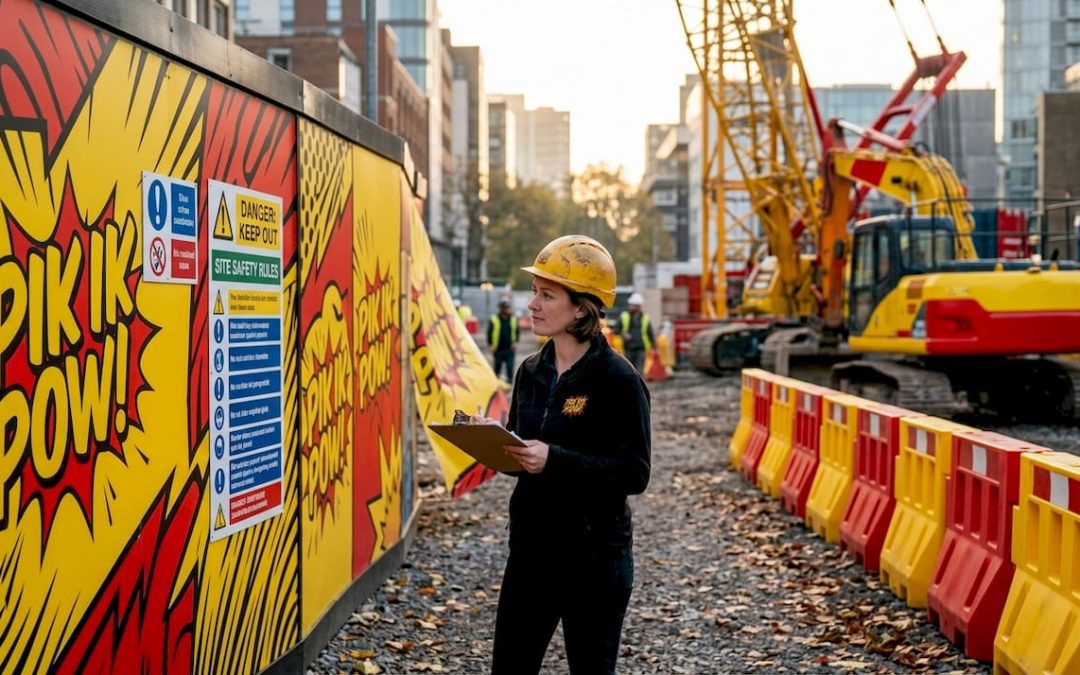
Many construction company owners assume their site branding is severely limited by safety signage requirements. The thinking goes: regulations take up all the prime real estate, so there is little room left for anything meaningful. That is not accurate. Branding in construction must coexist with mandatory safety signage, yes, but expert planning creates genuine space for both. This article gives you a practical, step-by-step framework to achieve strong, compliant construction site branding that turns every perimeter panel, vehicle, and banner into a visible marketing asset.
Table of Contents
- Understanding signage regulations and branding opportunity
- The expert workflow for branding construction sites
- Common mistakes: what undermines your construction branding
- Types of construction signs and branding opportunities
- Why most construction branding fails and what actually works
- Enhance project visibility with expert signage solutions
- Frequently asked questions
Key Takeaways
| Point | Details |
|---|---|
| Know the regulations | UK construction sites require safety signage that complies with strict standards, but branding can be added legally and safely. |
| Work with constraints | Effective branding starts with a site survey that balances all physical limits and legal requirements for signage. |
| Avoid common errors | Never cover or obscure safety signage with logos or branding elements; always follow prescribed sign layouts. |
| Choose high-impact locations | Use site hoardings, fencing, and vehicles for branding while keeping mandatory safety signs visible. |
| Get expert support | Professional signage providers can help blend brand design with all necessary compliance checks. |
Understanding signage regulations and branding opportunity
Having set the challenge, let’s clarify exactly what rules govern your site signage and where branding possibilities emerge.
UK construction site signage is governed by the Health and Safety (Safety Signs and Signals) Regulations 1996 and British Standard BS EN ISO 7010. These rules are not optional. They specify the exact pictograms, colours, shapes, and placement requirements for safety signs across all construction environments. Prohibition signs are round with a red border, mandatory signs are blue circles, and warning signs are yellow triangles. These formats cannot be altered or branded over.
What the regulations do not restrict, however, is everything else on your site. That is where the real opportunity lies.
“Signage must remain clearly visible and unobstructed, often at eye level where practical.”
This means you need to work around mandatory sign placement rather than in competition with it. And once you understand that boundary, a large portion of your site becomes available for brand communications. Here are the key areas where branding has the greatest impact:
- Perimeter hoardings: Large flat panels that run around the entire site perimeter, offering consistent, high-visibility brand display
- Fencing and mesh banners: Printed fabric or vinyl banners attached to Heras fencing, visible from passing traffic and pedestrians
- Vehicle graphics: Vans, lorries, and site vehicles wrapped or decal-branded with company identity
- Entrance structures: Project name boards, welcome signs, and contractor information boards that can carry strong brand design
- Temporary site offices: External cladding and window graphics on site cabins and welfare units
For more detail on how to balance regulation with brand expression, our signage tips for UK sites and signage compliance guide cover both sides of the equation in depth.
The expert workflow for branding construction sites
Now that you know what’s possible, here’s how a proven workflow ensures branding and compliance work together from the outset.
One of the biggest mistakes construction businesses make is treating signage as an afterthought. Branding ordered in the final weeks before a project opens often results in rushed decisions, missed opportunities, and compliance gaps. The better approach is to treat branding as a planned communications deliverable that begins before works start on site.
A benchmark workflow for owners and project managers runs through the following stages:
Site survey: Walk the full perimeter and key interior zones. Measure all available panel and fencing areas. Photograph sightlines from the pavement, road, and nearby buildings. Note access restrictions, overhead obstructions, and areas with high pedestrian or vehicle flow.
Safety sign mapping: Plot the exact locations where mandatory safety signs must appear. Note minimum sizes required under BS EN ISO 7010 and mark these zones as fixed constraints. These must not be touched by brand graphics.
Brand zone identification: With safety sign locations confirmed, identify every remaining surface and structure that can carry brand content. This includes hoardings, fencing panels, vehicle sides, cabin exteriors, and entrance boards.
Design integration: Brief your design team with the site survey data and brand guidelines. Your brand system, including colour palette, typography, logo usage rules, and calls to action, should be applied consistently across all identified brand zones. Each zone should serve a purpose: awareness, wayfinding, or project information.
Production and compliance checks: Before fabrication begins, run a final check against the regulations. Confirm that no branded graphics overlap or obscure mandatory signs. Check that pictogram sizes comply with BS EN ISO 7010. Only then proceed to production and installation.
Installation coordination: Arrange installation sequencing so safety signs go up first and are fully operational before branded graphics are applied around them.
Pro Tip: Use annotated site photographs as your coordination document. Mark up each image with planned sign types, sizes, and positions. Share this with your signage supplier, site manager, and safety officer so everyone is working from the same picture before a single panel is printed.
Our guide on custom signage steps expands on this process with practical advice on briefing suppliers and managing production timelines.
Common mistakes: what undermines your construction branding
Even with the right process, mistakes do happen. Let’s cover common errors and how to avoid them.
Branded graphics must coexist with legally required safety signage that meets UK rules and remains unobstructed. This is the non-negotiable starting point. Yet many construction sites still get it wrong, and the consequences range from enforcement notices to serious on-site incidents.
Here are the most frequent mistakes to avoid:
Overlaying branding on safety signs: This is the most serious error. Placing a company logo, colour wash, or graphic element over a mandatory safety sign renders it non-compliant. Always keep a clear exclusion zone around every regulated sign.
Ignoring pictogram standards: BS EN ISO 7010 specifies exact pictogram designs. Using a slightly different icon because it fits the brand aesthetic is not acceptable. The symbol must be the correct one, at the correct size, in the correct colour format.
Generic hoarding panels: Using plain white or unbranded hoarding is a missed marketing opportunity. Your site perimeter is visible to hundreds or thousands of people daily. An unbranded hoarding communicates nothing about your business or the quality of your work.
Poor sightline planning: Placing signage behind skips, vehicles, or scaffolding structures means it cannot be seen. If your hoarding graphic faces away from the main pedestrian route, or is hidden at ground level rather than raised, it will have no impact regardless of how good the design is.
Crowding at entrances: Stacking multiple boards at the site entrance creates visual noise rather than clarity. Visitors and pedestrians cannot process too many competing messages at once. Prioritise key information and brand identity, and give each element space to breathe.
Skipping mock-ups: Committing to full production without reviewing a mock-up in context is a common and costly error. A design that looks strong on screen may have proportion or contrast problems when viewed at full scale on site.
Pro Tip: Always request a scaled mock-up or digital render placed onto a photograph of the actual site location before approving production. This catches placement conflicts, size issues, and readability problems before they become expensive mistakes.
For detailed guidance on getting your site design right from the start, our resource on brand impact signage design is well worth reading before you brief your supplier.
Types of construction signs and branding opportunities
To make planning even clearer, here’s a rundown of signage types and where branding has greatest impact.
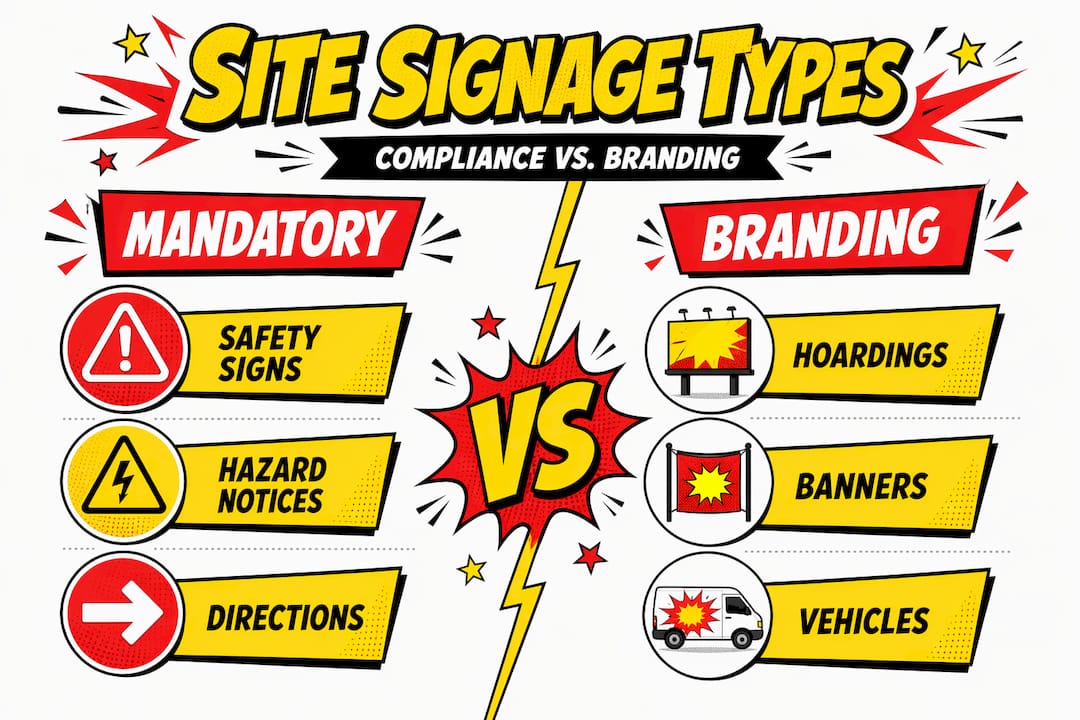
Construction sites use several distinct categories of signage, each with different compliance requirements and different levels of branding flexibility. Understanding this helps you allocate design effort and budget where it will have the strongest effect.
Signage must remain clearly visible and unobstructed, often at eye level where practical. With that in mind, here is how each sign type breaks down:
| Sign type | Compliance requirement | Branding flexibility |
|---|---|---|
| Mandatory safety signs | Strictly regulated: specific pictograms, colours, minimum sizes under BS EN ISO 7010 | None, must follow standard exactly |
| Directional and wayfinding signs | Must be clear and legible; no specific regulation on design beyond readability | Moderate: can use brand colours and fonts if legibility is maintained |
| Hoarding panels | Must not obstruct public rights of way; planning permission may apply | High: full brand graphics, imagery, project messaging |
| Fencing and mesh banners | Should not reduce structural integrity of fencing; fire safety materials where relevant | High: full brand graphics, contact details, social media |
| Vehicle graphics | Must not obscure driver vision or registered vehicle markings | High: full or partial wraps, decals, contact information |
| Branded banners and flags | Must be safely fixed and not obstruct pedestrian or traffic sightlines | High: project identity, developer and contractor branding |
The practical takeaway here is straightforward. Focus creative investment on hoardings, fencing banners, and vehicle graphics. These three areas offer the largest surface area, the highest public visibility, and the greatest freedom to express your brand without compliance restrictions.
For a deeper look at each category, our guide to construction sign types provides detailed specifications and real-world examples from UK projects.
Why most construction branding fails and what actually works
Based on our experience working with construction businesses across the UK, here is a reality check on what we see regularly and what actually delivers results.
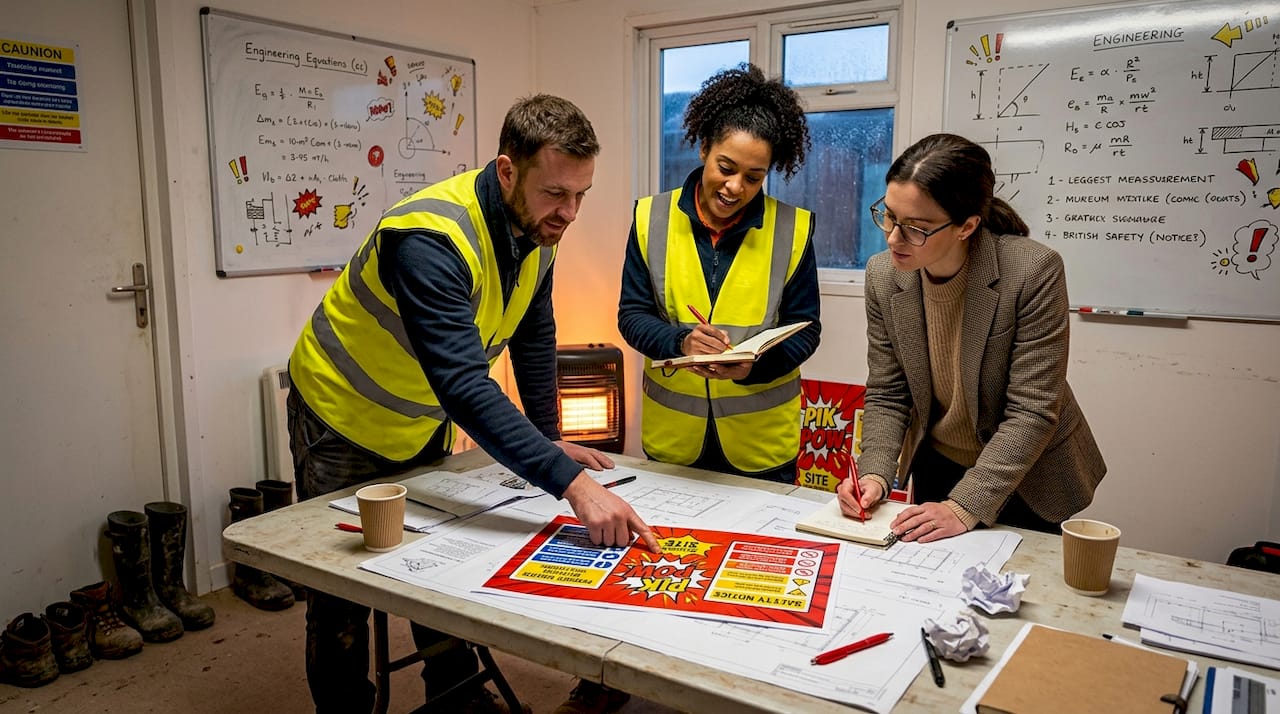
The most common failure pattern is not a lack of budget or ambition. It is timing. Branding is treated as the last item on a very long pre-opening checklist. By the time someone turns their attention to the hoardings, the site is already active, access for installation is complicated, and the design brief is rushed. The result is generic, low-impact signage that does not represent the quality of the project behind it.
The second failure pattern is checkbox thinking. Some project managers approach signage as a compliance task: get the safety signs up, tick the box, move on. Branding is an afterthought layered on top. This approach produces incoherent results where safety signs and brand graphics fight for attention rather than working together.
What actually works is treating your signage programme as a communications asset from day one. When you integrate modern signage systems into the project plan at the same stage as structural or welfare facilities, you gain access to better locations, simpler installation, and a design process that has time to be thorough.
We have also seen consistently better outcomes when construction businesses use modular signage systems rather than commissioning everything bespoke in one format. Modular systems allow panels to be reconfigured as the project progresses, safety information to be updated without replacing entire hoarding sections, and branding to be adapted as the site layout changes. This reduces waste and keeps the site looking current throughout the build programme.
The most important mindset shift, though, is this: every sign location is a customer touchpoint. Your site perimeter is seen by future residents, investors, local business owners, planning committees, and potential future clients every single day. The quality of your signage communicates the quality of your business before anyone sets foot inside the hoarding. Poor planning is the only real limitation here. The regulations give you more room to work with than most businesses realise.
Enhance project visibility with expert signage solutions
If you’re ready to apply the principles shared in this article, working with a specialist signage partner takes the complexity out of the process entirely.
At Pik Pik POW!, we work with construction companies and project managers across the UK to deliver signage that is both fully compliant and genuinely impactful. From initial site audits and bespoke design through to compliant production and installation, we manage the full process so you can focus on the build. Our construction signage systems are designed for durability and flexibility across the full project lifecycle. We also offer digital construction signage for sites where dynamic information displays are needed, and our vehicle branding graphics turn your site fleet into a mobile brand presence. Get in touch to discuss your next project.
Frequently asked questions
What are the UK’s legal requirements for construction site signage?
UK construction site signage requirements fall under the Health and Safety (Safety Signs and Signals) Regulations 1996 and British Standard BS EN ISO 7010, which specify approved pictograms, colours, and minimum sizing for all regulated signs. Both sets of rules are non-negotiable and apply to every construction site in the UK regardless of size.
Can I add my company logo to safety signage?
Yes, but your logo or branding cannot cover, obscure, or reduce the visibility of the mandatory symbols and wording on regulated safety signs. Signage must remain clearly visible and unobstructed, so any brand identity should be placed in a distinct area separate from the regulated safety information.
Which parts of a construction site offer the most branding potential?
Perimeter hoardings, fencing, banners, and vehicle graphics are ideal for strong branding because they offer large surface areas and significant public visibility. Branded graphics must coexist with legally required safety signage, but these areas sit outside the constraints that apply to regulated sign types.
How can I avoid compliance issues when branding construction sites?
Start with a detailed site survey, consult the relevant signage regulations, and use scaled mock-ups to confirm both compliance and design quality before committing to production. Treating branding as a planned deliverable that begins at project inception, rather than an afterthought, is the single most effective way to avoid costly compliance errors.