

TL;DR:
- Construction signage in 2026 relies on AI-driven safety systems, real-time digital integration, and durable, compliant materials. These innovations enable proactive hazard alerts, unified data displays, and phase-specific signage management to enhance site safety and operational efficiency. Proper placement and lifecycle planning are critical to maintaining signage effectiveness throughout construction projects.
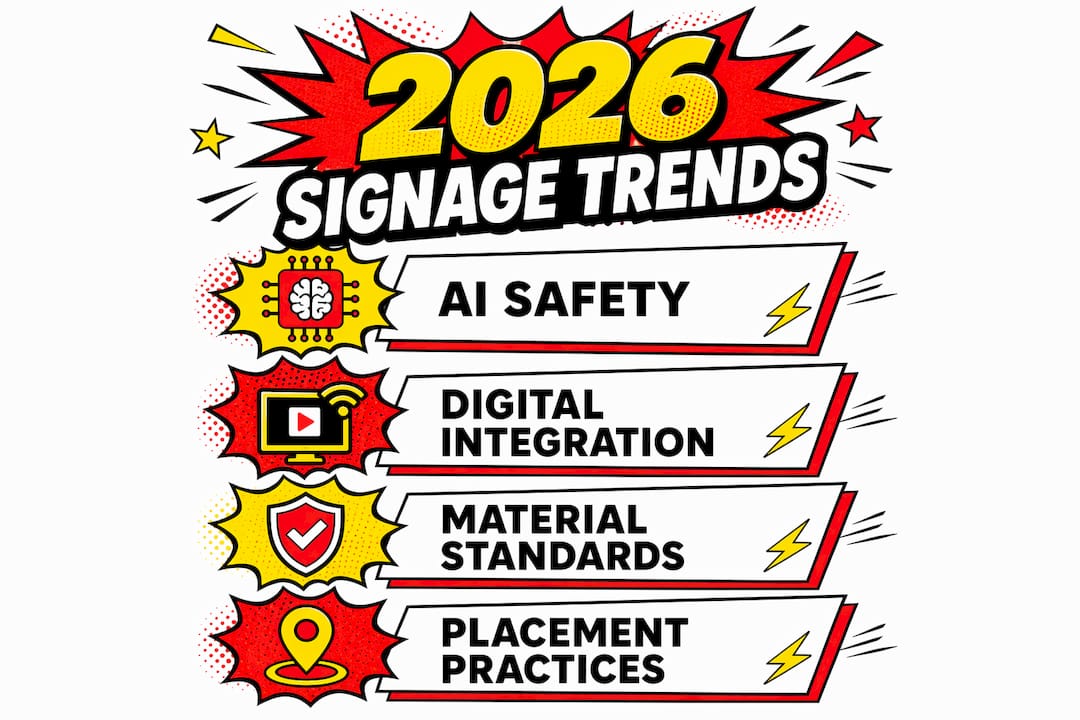
Construction signage in 2026 is defined by three converging forces: AI-driven safety systems, real-time digital integration, and a firm shift toward durable, sustainable materials. The trends in construction signage 2026 professionals need to understand go well beyond updated colour schemes or larger fonts. They represent a fundamental change in how sites communicate, protect workers, and manage compliance across every project phase. Whether you manage a single urban development or a portfolio of infrastructure projects, these changes affect your procurement, your safety obligations, and your bottom line.
What are the key trends in construction signage 2026?
The most significant shift in construction signage is the move from passive warning boards to active, intelligent systems that respond to site conditions in real time. Traditional signage told workers what to watch out for. The new generation of site signage watches out for them. This distinction matters because reactive signage depends entirely on human attention, which is unreliable in high-pressure, high-noise environments. Proactive systems remove that dependency.
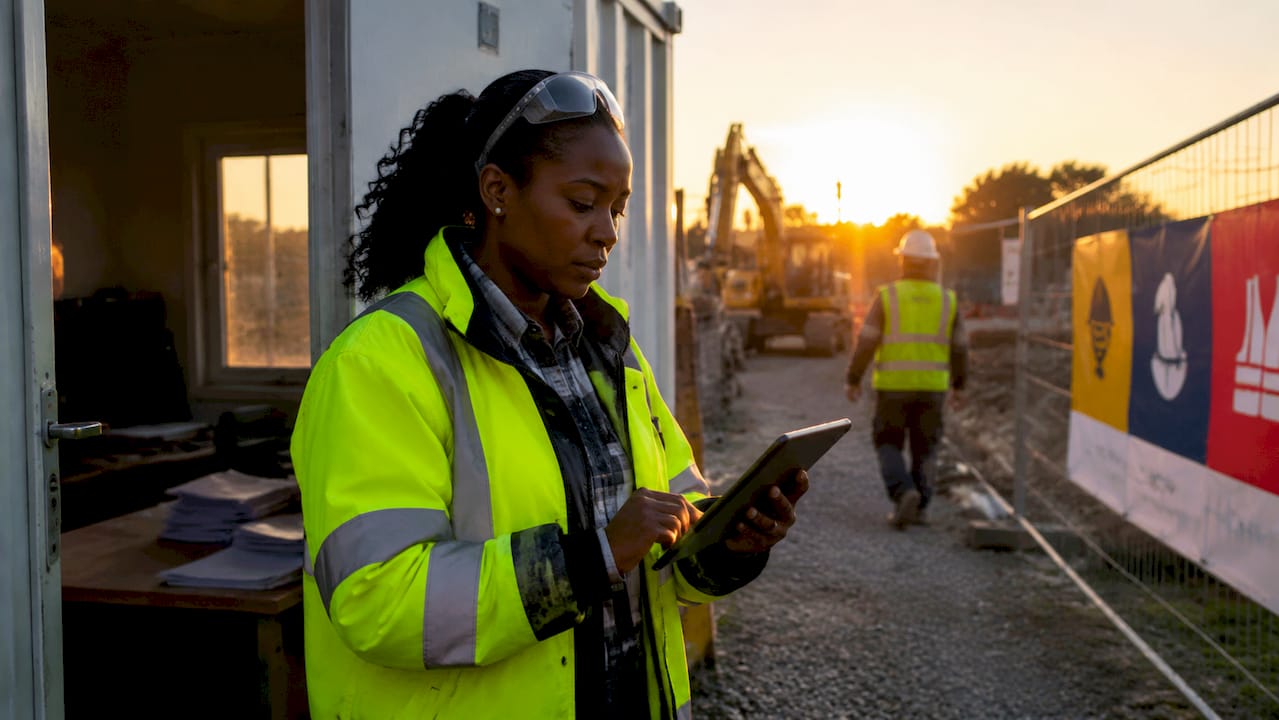
Three named developments define this shift. The Omnisight FusionBLADE™ integrates cameras, radar, and speed detection into a single AI-powered unit. The RoadDefender system, developed by SmartCone and Samsung, delivers vehicle intrusion alerts directly to workers’ smart watches. BANKEN digital signage, integrated with the BizStack IoT platform, displays live environmental and operational data across the site. Each of these represents a different dimension of the same underlying trend: signage that does more than display information.
Material standards are also tightening. ASTM D4956 retroreflectivity requirements and MUTCD 11th Edition compliance are now the baseline for procurement decisions, not optional extras. Alongside this, lifecycle planning and strategic placement have become recognised professional standards rather than afterthoughts. The construction signage innovations arriving in 2026 are not incremental. They are structural changes to how sites operate.
How is AI transforming safety on construction sites?
AI-enabled safety signage addresses the most persistent problem in work zone safety: the gap between a hazard appearing and a worker responding. The Omnisight FusionBLADE™ processes data locally within 100 milliseconds, issuing alerts before a collision occurs rather than after a near-miss is logged. Mounted on safety equipment like truck-mounted attenuators, it replaces several separate devices with one unit, reducing hardware clutter and the associated installation complexity.
The RoadDefender system takes a different approach. Rather than relying on workers to see a warning sign, it alerts workers via smart watches the moment radar detects an incoming vehicle. Early 2026 deployments report a fourfold increase in worker response times compared to traditional measures. That improvement is not marginal. It is the difference between a worker stepping clear and a serious incident.
Key capabilities these AI systems bring to construction site signage include:
- Real-time threat detection using radar and video analytics, active regardless of lighting or weather conditions
- Wearable integration that delivers alerts directly to individuals rather than broadcasting to a general area
- Local data processing that removes dependence on site connectivity and reduces latency
- Multi-function consolidation that replaces several separate devices with a single intelligent unit
“The shift from reactive to proactive safety signage is the single most consequential development in work zone protection in a decade. Systems that alert before impact rather than record after the fact change the risk profile of an entire site.”
Pro Tip: When specifying AI safety signage, confirm whether the system processes data locally or relies on cloud connectivity. Local processing, as used by FusionBLADE™, maintains performance even when site Wi-Fi is unreliable.
The impact of technology in signage extends beyond safety alerts. Consolidating multiple functions into a single device also simplifies maintenance schedules and reduces the number of suppliers a project manager needs to coordinate.
How does digital signage integrate with site management platforms?
Digital signage on construction sites has moved beyond displaying static safety notices. The integration of BANKEN signage with the BizStack IoT platform, launched in April 2026, demonstrates what is now possible: a single display showing wind speed, dust levels, machinery status, and access permissions, all updated in real time from sensors across the site.
This matters because construction sites generate enormous amounts of operational data that currently sits in separate systems. A project manager checking weather conditions, equipment availability, and zone access status typically consults three or four different tools. Unified digital signage collapses that into one visible, shared display that every worker on site can read. Real-time operational data displayed through digital signage accelerates decision-making among construction personnel in ways that email updates and morning briefings cannot match.
The practical benefits of this integration follow a clear sequence:
- Sensors collect live data on environmental conditions, equipment status, and zone activity across the site
- The IoT platform aggregates this data into a single feed, removing the need for manual data entry or cross-system checks
- Digital signage displays the relevant data at the point where workers need it, whether at site entrances, welfare facilities, or zone boundaries
- Project managers receive the same data on dashboards, enabling remote monitoring without requiring a site walkthrough
The future potential of this approach extends to displaying delivery schedules, crane lift windows, and permit-to-work status. Construction management services are already integrating signage systems with broader project coordination tools, and the direction of travel is clear: the site sign of 2026 is as much a data terminal as a warning board.
What materials should you specify for construction signs in 2026?
Material selection for construction signage in 2026 is governed by two non-negotiable standards: ASTM D4956 retroreflectivity and MUTCD 11th Edition compliance. Both set minimum performance thresholds for visibility and durability that procurement decisions must meet. Specifying below these thresholds creates compliance risk and, more practically, produces signs that fail before the project ends.
The industry preference for 5052-H38 aluminium is based on its 35,000 PSI tensile strength, which makes it suitable for permanent and long-duration installations exposed to weather, vehicle wash and physical impact. It does not corrode, it holds retroreflective sheeting reliably, and it withstands the kind of incidental contact that is unavoidable on active construction sites.
| Material | Best use case | Key advantage | Limitation |
|---|---|---|---|
| 5052-H38 aluminium | Permanent and long-duration signs | 35,000 PSI tensile strength, weather resistant | Heavier than composite alternatives |
| Aluminium composite panel (ACP) | Temporary and relocatable signage | Lightweight, impact resistant, easy to cut | Less suited to permanent outdoor exposure |
| Corrugated plastic (Coroplast) | Short-term notices and low-traffic zones | Very low cost, easy to print | Degrades quickly in UV and wind |
Aluminium composite panels offer a practical middle ground for temporary signage that still needs to look professional and withstand several months of exposure. They are lighter than solid aluminium, easier to handle on site, and can be produced quickly by a specialist signage materials supplier. The trade-off is longevity: ACP is not the right choice for signs that will remain in place for the duration of a multi-year project.
Pro Tip: Match material specification to project phase, not just project duration. A sign needed only during groundworks does not require the same substrate as one that will remain through structural and finishing phases. Specifying ACP for short phases and 5052-H38 aluminium for permanent positions reduces cost without compromising compliance.
What are the best practices for placing and managing construction signs?
Placement is where well-specified signage most often fails in practice. Signs must be readable before critical decision points, not at them. A sign positioned at the entrance to a restricted zone gives a worker no time to change course. The same sign positioned 10 to 15 metres before the zone boundary gives them the time and space to respond correctly.
Site conditions change continuously, and sign placement must change with them. Lifecycle phase mapping is now considered a professional standard in 2026, meaning signage requirements are assessed and updated at each major project phase: site preparation, structural works, and finishing. Signs that were correctly positioned during groundworks may be obscured by scaffolding during the structural phase, or irrelevant once a zone is no longer active.
Best practices for placement and lifecycle management include:
- Conduct a site walkthrough before each phase begins, specifically to identify where materials, equipment, or layout changes will affect sign visibility
- Mount signs at a height that avoids obstruction by vehicles, stored materials, and temporary structures, typically at eye level for pedestrians and higher for vehicle-facing signs
- Use modular ballast systems such as Sign Pig for temporary signs in urban environments. Sign Pig is more compact and lower maintenance than traditional sandbag methods, reducing the number of maintenance visits required to keep signs stable and compliant
- Remove signs promptly when the hazard or restriction they communicate no longer applies. Outdated signs erode trust in the entire signage system and create confusion about which warnings are current
- Map signage to specific hazards identified during risk assessment, rather than working from a generic list. Generic lists produce coverage gaps that only become apparent after an incident
The essential signage guidance for UK construction sites reinforces that placement audits should be a standing agenda item in site safety reviews, not a one-off exercise at project start.
Key takeaways
Construction signage in 2026 requires AI-enabled safety systems, real-time digital integration, compliant material specification, and phase-aligned placement to meet both safety and operational standards.
| Point | Details |
|---|---|
| AI safety systems | FusionBLADE™ and RoadDefender deliver proactive alerts, improving response times by up to 400%. |
| Digital integration | BANKEN and BizStack combine to display live site data, replacing multiple disconnected tools. |
| Material compliance | 5052-H38 aluminium meets MUTCD and ASTM D4956 standards for permanent construction signage. |
| Lifecycle planning | Phase-aligned signage reviews prevent coverage gaps and reduce unnecessary procurement costs. |
| Placement discipline | Signs must be visible before decision points and adjusted as site conditions change throughout the project. |
Pikpikpow’s view on where construction signage is heading
The most common mistake we see from construction clients is treating signage as a procurement tick-box rather than a live safety system. They specify signs at the start of a project, install them, and then leave them in place regardless of what changes around them. By the time a phase review happens, half the signs are obscured, outdated, or in the wrong location entirely.
The AI and digital integration developments of 2026 make this approach increasingly untenable. When a system like FusionBLADE™ is processing threat data in 100 milliseconds and a RoadDefender alert is reaching a worker’s wrist before a vehicle enters a zone, a static sign that nobody has checked in three weeks looks like a liability rather than a safety measure.
What we have found works is combining high-quality physical signage with a clear review schedule tied to project phases. The physical substrate matters: a sign printed on the right material, mounted correctly, and updated at each phase transition does its job reliably. The technology layer adds capability on top of that foundation, not instead of it. Investing in better materials and smarter systems upfront consistently costs less than managing the consequences of a signage failure mid-project.
Our honest advice is to work with a supplier who understands both the material standards and the placement logic, not just one or the other. Bespoke signage planning, where the sign specification is built around your specific site hazards and project phases, produces better outcomes than ordering from a standard catalogue.
— PikPikPOW!
How Pikpikpow supports construction signage in 2026
Pikpikpow works with construction professionals across the UK to deliver signage that meets 2026 compliance standards and performs across every project phase.
From durable aluminium and ACP substrates to fully integrated digital signage systems, Pikpikpow combines design expertise with precision manufacturing to produce signs built for active construction environments. Whether you need phase-specific temporary signage, permanent site identification, or a complete signage system that scales with your project, the team can advise on materials, placement, and compliance from the outset. Get in touch to discuss your project requirements and receive a bespoke signage specification tailored to your site.
FAQ
What is the biggest trend in construction signage for 2026?
The most significant development is the integration of AI-driven safety systems, such as Omnisight FusionBLADE™ and RoadDefender, which deliver proactive alerts before incidents occur rather than recording them after the fact.
Which materials comply with MUTCD 11th Edition for construction signs?
5052-H38 aluminium is the preferred material for permanent construction signage, offering 35,000 PSI tensile strength and full compliance with ASTM D4956 retroreflectivity standards. Aluminium composite panels are suitable for temporary and relocatable signs.
How does digital signage improve construction site management?
Digital signage integrated with IoT platforms such as BizStack displays real-time data including wind speed, dust levels, and machinery status, giving site teams and project managers a unified view of operational conditions without consulting multiple systems.
How often should construction sign placement be reviewed?
Sign placement should be reviewed at the start of each major project phase, specifically during site preparation, structural works, and finishing, to account for layout changes that may obstruct or invalidate existing sign positions.
What is lifecycle phase mapping for construction signage?
Lifecycle phase mapping is the practice of aligning signage specifications and placement reviews with each stage of a construction project, preventing coverage gaps, reducing unnecessary costs, and maintaining compliance throughout the build.