
TL;DR:
- Choosing the appropriate signage material is crucial for longevity and cost-effectiveness in UK business environments. Proper material selection and maintenance ensure signs resist weather, UV, impact, and chemical factors, reducing replacement costs. Comprehensive planning, design, and installation practices extend signage lifespan and uphold safety and branding standards.
Choosing the wrong signage material is a costly mistake that many UK business owners only recognise after the damage is done. A sign that fades within a year, warps in wet weather, or cracks under impact does not just look unprofessional; it actively undermines your brand and forces you to spend on replacements you could have avoided. This guide breaks down the key materials used in UK commercial signage, explains what makes them genuinely durable, and helps you match the right material to your specific environment, whether that is a retail shopfront, a construction hoarding, or a corporate interior.
Table of Contents
- What makes signage material durable?
- Comparing popular signage materials for UK businesses
- How environment and signage location affect material choice
- Maintaining durable signage for long-term results
- A fresh perspective: durability is about more than the material
- Enhance your business with expert signage solutions
- Frequently asked questions
Key Takeaways
| Point | Details |
|---|---|
| Choose purpose-fit materials | The right signage material depends on location, visibility, and environment. |
| Balance durability and cost | Investing in robust signage reduces future replacement and repair expenses. |
| Prioritise maintenance | Regular care and inspections ensure signage stays effective and attractive. |
| Holistic approach wins | Combine smart material choice with quality design and installation to maximise impact. |
What makes signage material durable?
Durability in signage is not a single quality. It is a combination of several performance characteristics that determine how well a sign holds up under real-world conditions. When we talk about a durable signage material, we mean one that resists the factors most likely to degrade it over time.
The core factors include:
- Weather resistance: Tolerance to rain, frost, and moisture ingress
- UV stability: Resistance to colour fading and surface degradation caused by sunlight
- Impact resistance: Ability to absorb knocks without cracking, splitting, or deforming
- Chemical resistance: Tolerance to cleaning agents, pollutants, and graffiti treatments
- Structural integrity: Maintaining shape and strength across temperature changes
Material selection directly affects signage performance and lifespan in UK business environments, and the difference between a well-chosen material and a poor one can mean the gap between five years of solid branding and a replacement bill within twelve months.
Why does this matter practically? Consider a retail fascia sign on a high street. It faces rain every few weeks, direct sunlight in summer, frost in winter, and the occasional impact from passing delivery vehicles. A material that is only weather-resistant but lacks UV stability will hold its shape yet lose its colour. One that is UV-stable but porous may survive the sun and fail in a wet winter. Choosing correctly from the outset reduces replacement costs, supports safety (a failing sign can become a physical hazard), and keeps your brand looking consistent year-round.
“The best signage investment is one you do not have to repeat. Durability is not a premium add-on; it is the baseline for value.”
Understanding how weather affects signage durability is essential before you commit to any material. The UK climate, with its combination of persistent moisture, UV exposure, and temperature swings, tests signage in ways that warmer, drier climates simply do not.
Pro Tip: Always ask your signage supplier for the expected lifespan of the specific material under outdoor UK conditions, not just a general durability rating. The difference between a Mediterranean and a northern UK climate is significant for material performance.
Creating durable signage and safer spaces goes hand in hand. A structurally sound sign is not just a branding asset; it is a safety responsibility, particularly in high-footfall environments.
Comparing popular signage materials for UK businesses
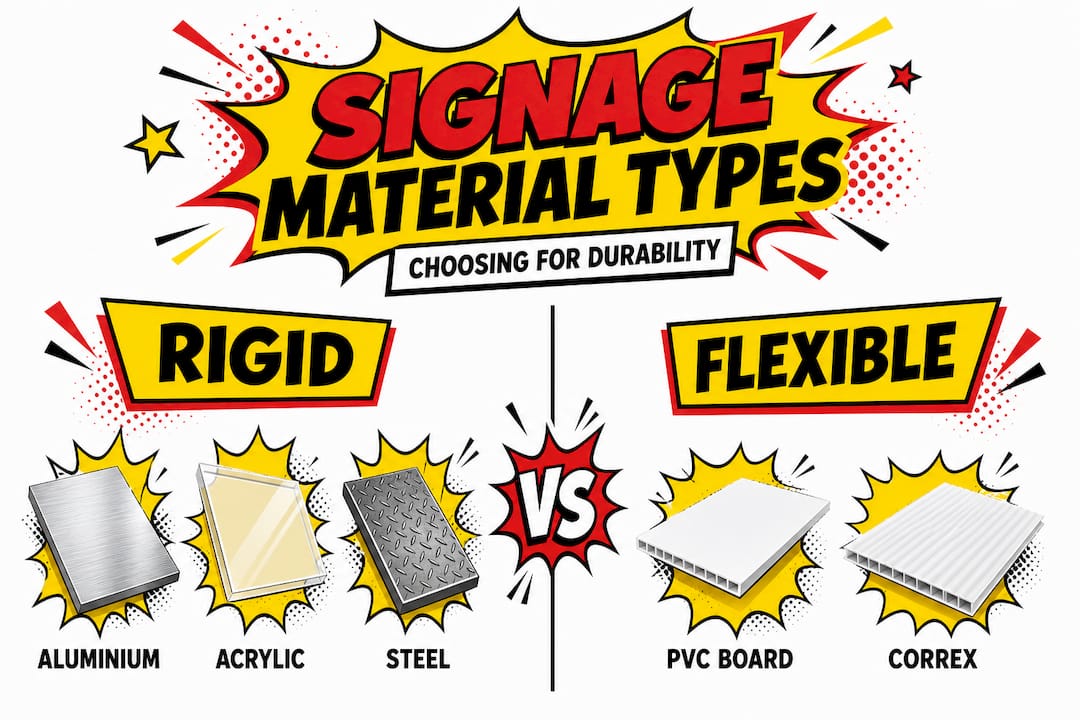
Aluminium composite is widely used for outdoor retail due to its weather resistance, but it is one of several materials worth understanding in detail. Here is how the most common options compare for UK business applications.
| Material | Weather resistance | UV resistance | Durability | Best use |
|---|---|---|---|---|
| PVC foam board | Moderate | Moderate | 2–4 years | Indoor, short-term outdoor |
| Aluminium composite | Excellent | Excellent | 10+ years | Shopfronts, external fascias |
| Acrylic | Good | Good (with UV coat) | 5–8 years | Interior displays, illuminated signs |
| Steel | Excellent | Good (with treatment) | 10–15 years | Safety signage, architectural |
| Correx/fluted polypropylene | Low to moderate | Low | 6–18 months | Temporary site signage, hoardings |
1. PVC foam board
PVC is lightweight, easy to cut, and relatively affordable. It works well for indoor retail displays, point-of-sale signage, and short-term outdoor use. However, it is not a long-term outdoor solution; extended UV exposure causes yellowing and surface degradation. For a pop-up or a seasonal promotion, PVC is practical. For a permanent shopfront, it is a false economy.
2. Aluminium composite panels (ACP)
Aluminium composite panels consist of two thin aluminium sheets bonded to a polyethylene core. This structure gives them excellent rigidity without excessive weight. They resist rain, UV, and temperature change very effectively, making them the standard choice for exterior retail fascias, building signage, and long-term outdoor applications across the UK. Their flat, smooth surface also holds printed graphics exceptionally well.
3. Acrylic
Acrylic offers a premium appearance and works particularly well for illuminated signage, internal displays, and branded reception areas. It is available in a range of colours and finishes, including clear, frosted, and mirrored. While durable indoors, acrylic exposed to outdoor conditions without UV-protective coatings can yellow and become brittle over time. With the right protective treatment, outdoor use is viable for five to eight years.
4. Steel
Steel is the material of choice when you need maximum robustness, such as for safety signage in industrial environments, architectural wayfinding, or permanent external installations. It is heavy, requires industrial-grade protection solutions such as powder coating or galvanisation to prevent corrosion, and costs more than most alternatives. However, a properly treated steel sign can last fifteen years or more with minimal attention.
5. Correx (fluted polypropylene)
Correx is the familiar corrugated plastic sheet seen on estate agents’ boards and construction site temporary signage. It is low-cost, lightweight, and simple to install. Its durability is limited: expect a lifespan of six to eighteen months outdoors depending on conditions. For temporary applications such as site hoardings, event signage, or short-term promotions, Correx is a sensible choice. For anything intended to last, it is not.
Understanding these differences through a thorough signage materials guide allows you to match your material to your actual requirements, rather than defaulting to the cheapest option and paying for it later.
How environment and signage location affect material choice
Environmental factors such as rain, wind, and UV radiation all contribute to signage wear and directly affect which material will perform best in a given location. Two businesses in different settings may have entirely different signage needs, even if their brand requirements are similar.
Here is how location should inform your material selection:
| Setting | Key environmental challenges | Recommended materials |
|---|---|---|
| Exterior retail (urban) | Rain, pollution, UV, occasional impact | Aluminium composite, treated steel |
| Roadside or highway | Wind loading, vehicle vibration, UV | Aluminium composite, steel |
| Construction hoarding | Wind, rain, temporary use | Correx, PVC, aluminium composite |
| Interior lobby or reception | Temperature stability, aesthetics | Acrylic, PVC, aluminium composite |
| Industrial or warehouse | Chemical exposure, impact | Steel, aluminium composite |
Consider a retail unit on a busy high street in Manchester. The persistent rainfall, moderate UV exposure, and risk of accidental impact from pedestrians and deliveries make aluminium composite the natural starting point. A corporate reception in London, on the other hand, faces none of those challenges; here, acrylic’s premium finish and design flexibility make it a far better fit.
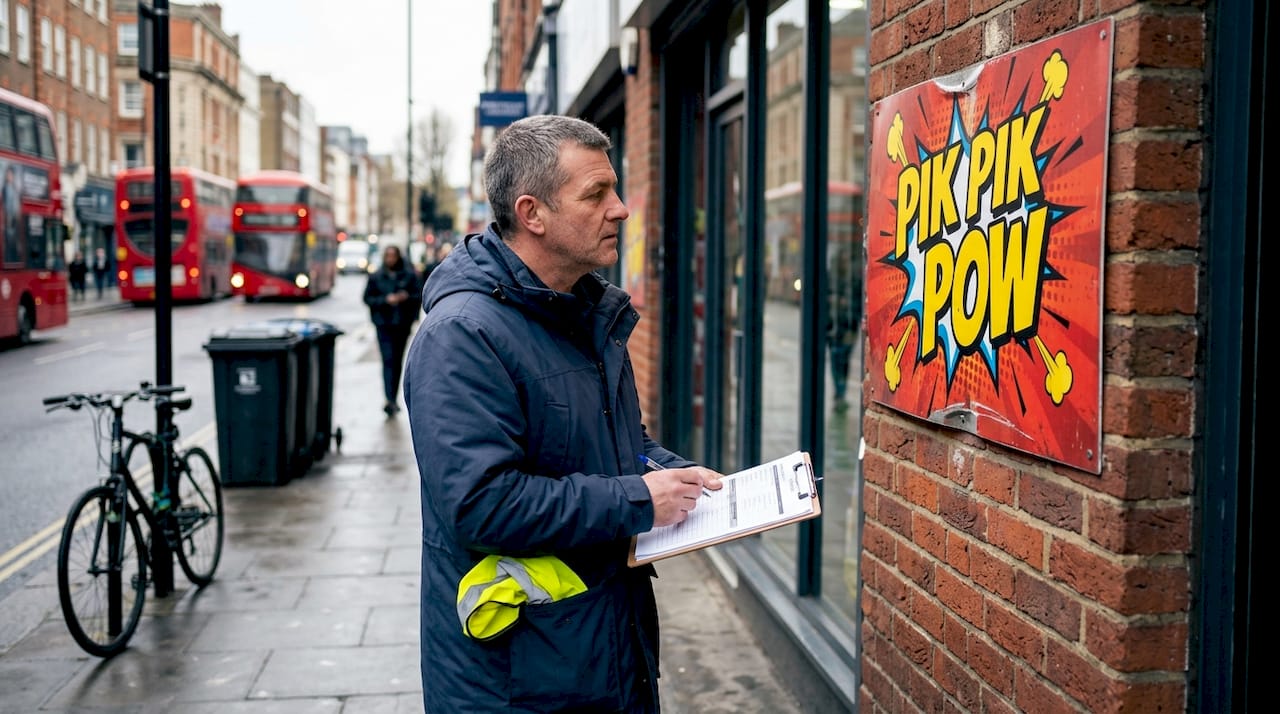
Construction sites present a unique set of requirements. Signage safety tips for construction environments emphasise the importance of both visibility and material integrity under site conditions. Correx handles temporary directional signage efficiently, while aluminium composite is better suited for anything that needs to last the duration of a longer project. For mandatory health and safety signage, material quality is particularly important; degraded safety signs are not just a branding problem, they present a legal and safety risk.
The key environmental factors to weigh include:
- Rainfall and moisture: Persistent UK rain demands water-resistant materials and sealed edges to prevent moisture ingress
- Wind loading: Roadside and elevated signs need materials that resist flexing and can support secure mounting
- UV exposure: South-facing signs receive significantly more UV than north-facing ones; material choice should reflect this
- Vandalism risk: High-traffic areas may warrant harder, scratch-resistant materials or anti-graffiti laminates
- Temperature cycling: Materials that expand and contract with temperature changes can develop edge cracking over time if not designed for it
Understanding surface protection strategies relevant to your environment gives you an additional layer of assurance when specifying materials, particularly for high-exposure outdoor installations.
Pro Tip: If your sign will be mounted on a south-facing elevation, ask specifically about UV-resistant inks and laminates for the printed graphics layer, not just the base material. The graphic overlay often degrades before the substrate does.
Maintaining durable signage for long-term results
Selecting the right material is just the first step. Even the most robust aluminium composite sign will underperform if it is neglected. Regular maintenance can add years to the working life of both outdoor and indoor signage, protecting your branding investment and ensuring compliance in safety-critical environments.
Here is a practical maintenance approach:
- Monthly visual inspection: Check for any visible cracks, lifting edges, fading, or damage to fixings. Early identification means low-cost repair rather than full replacement.
- Quarterly cleaning: Use appropriate cleaning products for the material. Aluminium composite and acrylic both respond well to mild soapy water and a soft cloth. Avoid abrasive cleaners, which can scratch surfaces and accelerate UV degradation.
- Annual structural check: Examine mounting brackets, fixings, and any illuminated components. Loose mountings are a safety hazard. Check that seals around edges remain intact to prevent moisture ingress.
- Post-storm review: After severe weather, inspect outdoor signs for wind damage, displaced fixings, or waterlogging behind the sign face.
- Graphic layer assessment: Printed vinyls and overlays have their own lifespan. Assess these annually and replace graphics before they begin to peel or fade visibly, which happens well before the substrate reaches the end of its life.
“Reactive maintenance always costs more than proactive maintenance. A small repair carried out early is far less disruptive than a full replacement at an inconvenient time.”
Following a structured signage maintenance checklist ensures nothing is overlooked. Coating maintenance tips are also relevant here, particularly for steel signs where protective coatings are the primary defence against corrosion. If the coating develops chips or scratches, treat them promptly to prevent rust from spreading beneath the surface.
One frequently overlooked aspect of maintenance is record-keeping. Keeping a simple log of inspection dates, any issues found, and actions taken helps you track the overall condition of your signage portfolio over time and plan replacements before they become urgent.
A fresh perspective: durability is about more than the material
Most articles on signage materials focus almost entirely on the substrate. Aluminium composite versus PVC, acrylic versus steel. And while material choice genuinely matters, this framing misses something important: the material is only one component of a sign’s long-term durability.
In our experience at Pik Pik POW!, the signage that fails prematurely often does so not because the material was wrong, but because other elements were not given equal attention. Mounting systems are a prime example. A correctly specified aluminium composite panel installed with undersized or corroded fixings will fail at the mounting point long before the material itself degrades. Edge protection is another overlooked factor; exposed edges on cut panels, particularly with PVC or acrylic, allow moisture to penetrate the core and accelerate failure from the inside out.
The graphic overlay layer is also frequently underestimated. A business might invest in a high-quality aluminium composite panel and then apply a standard vinyl graphic without UV lamination. The substrate survives fifteen years; the graphics look poor after three. The sign is technically intact, but the branding impression is ruined.
The design factor in signage is equally critical. A sign designed without consideration for how it will be installed, what loads it will carry, or how water will drain away from its face is inherently more vulnerable regardless of material. Good signage design is an engineering decision as much as a creative one.
The uncomfortable truth is that trying to save money on installation or specification often destroys the value of an investment in quality materials. We have seen businesses spend well on aluminium composite panels, then compromise on the installation to cut costs, only to have signs show movement and edge cracking within two years. The full investment, material plus design plus installation plus maintenance, is what delivers durable, effective signage.
Enhance your business with expert signage solutions
Investing in the right signage material from the start delivers real returns: fewer replacements, stronger brand presence, and lower total cost over time. At Pik Pik POW!, we work with retailers, construction companies, and corporate clients across the UK to specify, design, and manufacture signage that genuinely lasts.
Whether you need a long-term solution from our professional signage systems or clear directional solutions through our wayfinding signage options, we can help you select the right material for your environment and ensure the design and installation match that quality. Get in touch with our team for bespoke advice tailored to your site, brand, and budget. We take the guesswork out of signage so you can focus on running your business.
Frequently asked questions
How do I know if a signage material is suitable for outdoor use?
Check for weather resistance features such as UV protection, water resistance, and durability ratings for wind and impact. Aluminium composite is widely used for outdoor retail specifically because it meets all of these criteria reliably.
Which material is best for construction site signage?
Correx and aluminium composite panels are widely used for temporary and durable signage on construction sites. The right choice depends on how long the sign needs to last, with aluminium composite better suited for longer construction projects requiring robust, weather-resistant boards.
How long can durable signage last outdoors?
Top-quality materials such as aluminium composite and steel can last 10–15 years outdoors with proper installation and care. Even so, material selection directly affects lifespan, and poor installation or neglected maintenance will shorten even the most robust material’s performance.
Can eco-friendly signage still be durable?
Yes, many modern eco-signage options provide both sustainability and durability comparable to traditional materials. Recycled aluminium and sustainably sourced substrates are increasingly available with equivalent performance ratings to their standard counterparts.
How often should business signage be inspected or maintained?
Inspect external signage every 6–12 months as a minimum, and clean or service as needed for best performance. Regular maintenance adds years to the working life of your signs and prevents small issues from becoming costly failures.