
TL;DR:
- Signage influences campus perception and should be part of strategic branding efforts.
- Effective signage improves navigation, accessibility, safety, and behavioral engagement for all users.
- Regular audits, stakeholder involvement, and adaptive planning ensure signage remains functional and relevant.
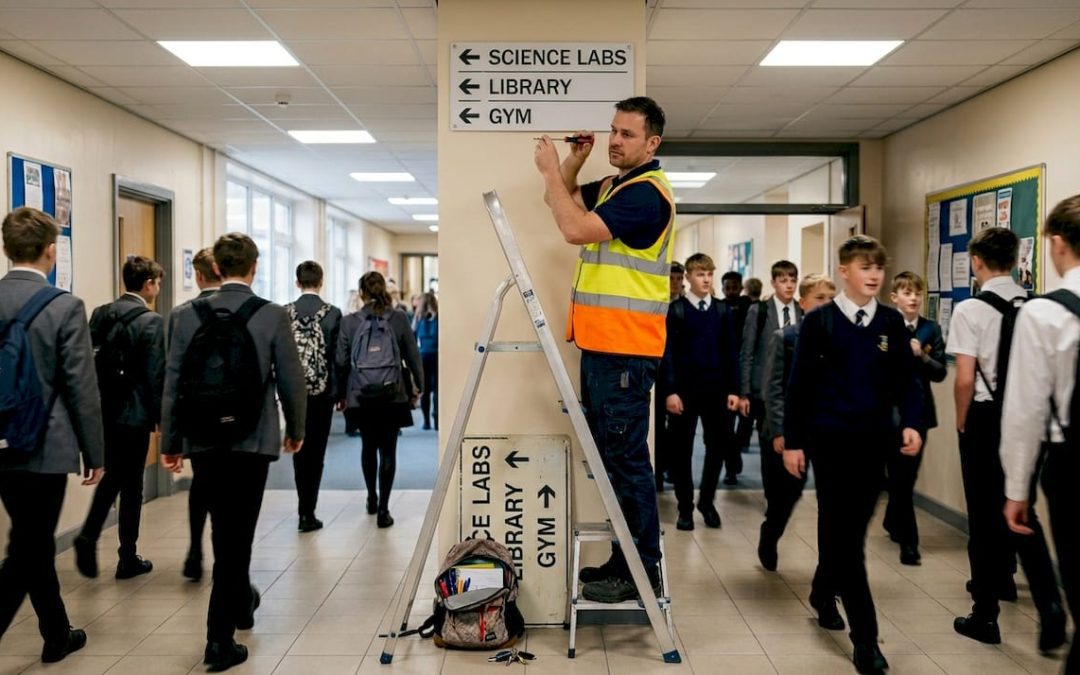
Signage is easy to overlook. Most schools and universities treat it as a background detail, something to sort out once the buildings are built and the timetables are set. But that view misses something important. Your signage system is one of the first things a prospective student, a nervous fresher, or a visiting parent encounters. It shapes how people feel about your institution before they’ve spoken to a single member of staff. This guide covers the types of signage that matter in education, how to use them strategically, and how to measure whether they’re working.
Table of Contents
- Understanding the types and purposes of educational signage
- How signage facilitates campus navigation and accessibility
- Signage as a driver of branding and positive campus experience
- Signage for engagement, behaviour change, and safety
- What most schools overlook about signage: our perspective
- Ready to transform your campus with effective signage?
- Frequently asked questions
Key Takeaways
| Point | Details |
|---|---|
| Signage boosts navigation | Well-placed signs reduce campus confusion and enhance accessibility. |
| Branding through visual cues | Consistent, branded signage strengthens school identity and student pride. |
| Dynamic signs drive engagement | Digital and motivational signage increase student participation and safety. |
| Audit for lasting impact | Strategic planning and ongoing measurement maximise signage effectiveness. |
Understanding the types and purposes of educational signage
Before diving into how signage impacts experience, it’s essential to identify the main types and their specific educational roles. Most campuses rely on several distinct categories, each serving a different function.
Core purposes of each sign type:
- Identification signs mark buildings, rooms, and facilities so users know exactly where they are
- Directional signs guide people toward destinations, particularly at junctions and decision points
- Informational signs provide context: opening hours, maps, event listings, and policy notices
- Regulatory signs communicate rules, safety requirements, and legal obligations
- ADA and multilingual signs ensure accessibility for users with disabilities and those whose first language isn’t English
Placement is as important as the sign itself. Signage best practices recommend positioning directional signs before decision points, not after them, so users can make confident choices rather than doubling back.
| Sign type | Typical location | Primary users | Key function | Best practice |
|---|---|---|---|---|
| Identification | Building entrances, room doors | All campus users | Confirm location | Consistent naming conventions |
| Directional | Corridors, junctions, car parks | Visitors, new students | Guide movement | Place before decision points |
| Informational | Noticeboards, lobbies | Students, staff | Communicate updates | Keep content current |
| Regulatory | Entrances, labs, fire exits | All users | Enforce rules | High contrast, clear language |
| ADA/Multilingual | All key locations | Disabled users, international students | Ensure access | Follow BS 8300 and relevant standards |
Well-designed signage systems use visual hierarchy to guide the eye naturally from primary to secondary information. According to wayfinding guidance for schools, hierarchical sign systems including identification, directional, informational, and regulatory signs placed at decision points with consistent design and ADA compliance significantly improve campus navigation.
“Effective signage isn’t about putting up more signs. It’s about putting the right information in the right place at the right moment for the right person.” A principle that applies as much to a multi-site university as it does to a single-building independent school.
For historic or multi-site campuses, site signage design requires extra care. Older buildings may restrict fixing methods, and multiple sites need a coherent system that still feels locally relevant.
How signage facilitates campus navigation and accessibility
With a clear view of sign types, we can now explore how they specifically address navigation and access for all campus users. Navigation problems on large or historic campuses are common, and they have a real cost in time, frustration, and first impressions.
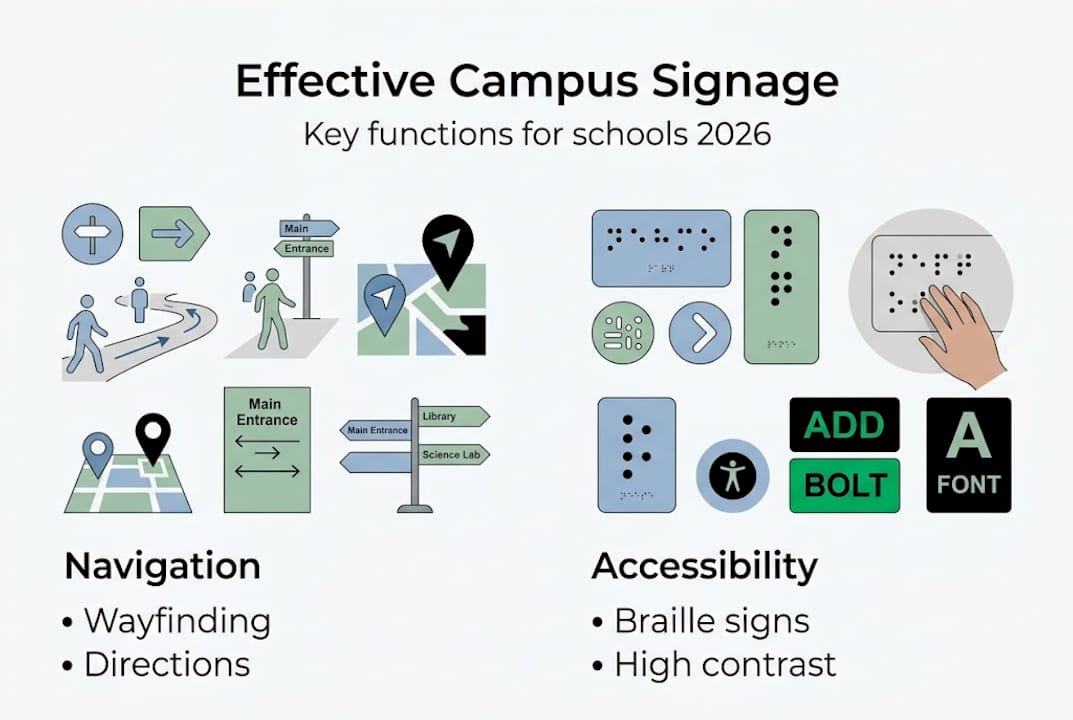
Research into indoor signage salience confirms that floor plan complexity, lighting, and colour contrast all affect how easily users locate and process signs. A poorly lit corridor with low-contrast signage will fail even the most well-intentioned wayfinding plan.
| Navigation barrier | Signage-based solution |
|---|---|
| Complex floor plans | Zoned maps at key entry points |
| Low lighting | Illuminated or backlit signs |
| Language barriers | Multilingual and pictogram-based signs |
| Disability access | Braille, tactile, and audio-supported signs |
| Multi-site confusion | Consistent colour coding across locations |
Steps to audit and upgrade your navigation signage:
- Walk every key route as a first-time visitor and note where you feel uncertain
- Identify all decision points and check whether directional signs are present before each one
- Test contrast ratios and lighting levels against accessibility standards
- Gather feedback from students, staff, and visitors through short surveys
- Prioritise upgrades by impact, starting with main entrances and high-traffic corridors
- Review hierarchical wayfinding strategies to benchmark your system against current best practice
Your wayfinding solutions should address the full range of users, not just the majority. International students, visitors with visual impairments, and wheelchair users all navigate differently.
Pro Tip: Involve students, facilities staff, and accessibility officers in your audit. They’ll spot problems that administrators walking familiar routes will miss entirely.
For institutions managing particularly complex environments, reviewing how signage in complex environments is handled in other sectors can offer useful parallels, particularly around phased rollouts and temporary signage during building works.
Signage as a driver of branding and positive campus experience
Solving navigation is just the start. Well-designed signage also shapes how your school or university is perceived, by prospective students, parents, accreditation bodies, and the wider community.
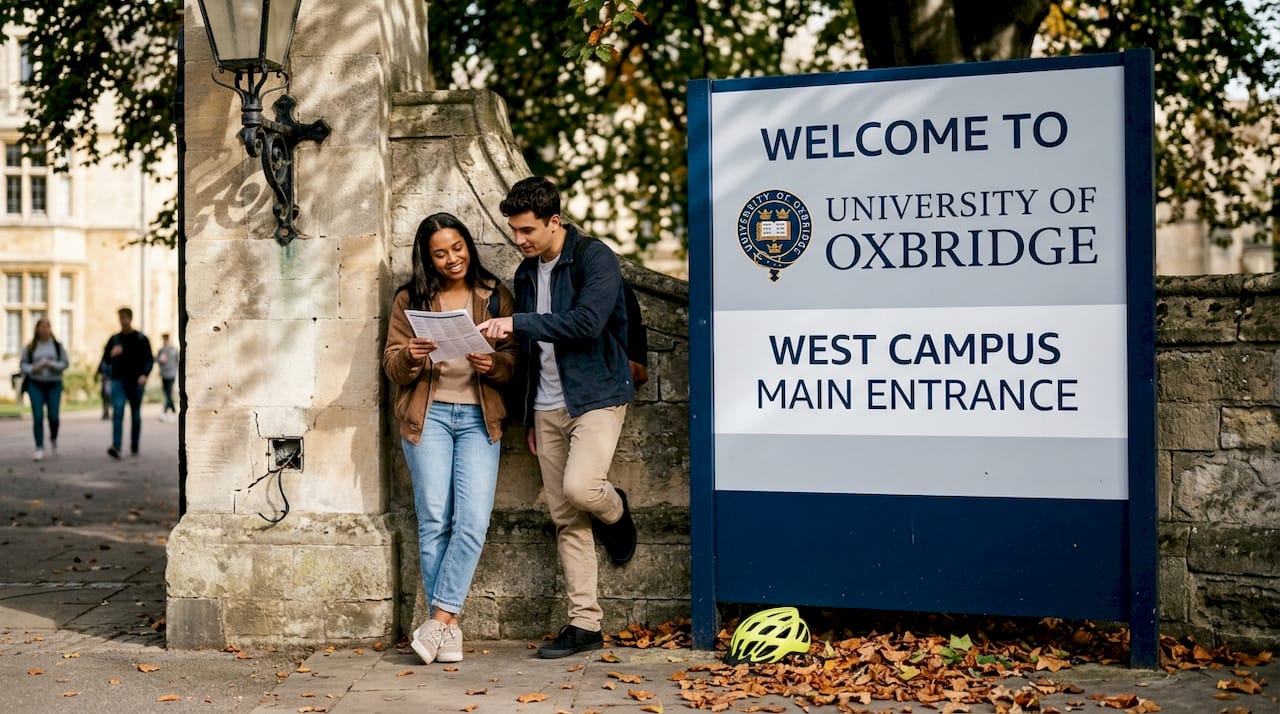
Campus signage strengthens branding by incorporating university logos, colours, and themes consistently, creating cohesive narratives that reinforce institutional identity at every touchpoint. A visitor who sees mismatched fonts, faded colours, and inconsistent naming across your campus will form a less favourable impression, even if they can’t articulate exactly why.
Features of effective branded signage:
- Consistent use of institutional colours, fonts, and logo placement across all sign types
- Tone of voice that reflects your school’s character, whether formal, welcoming, or innovative
- High-quality materials that signal permanence and investment
- Signage that acknowledges heritage, such as naming signs for historic buildings, without feeling outdated
- Clear differentiation between public-facing and internal signage
First impressions matter significantly. Studies on campus experience consistently show that the physical environment, including signage, influences satisfaction and belonging from day one. For prospective students on open days, strong branded signage communicates confidence and care.
For practical guidance on applying your brand to physical spaces, our branding signage tips offer a useful starting point, particularly around colour consistency and material selection.
Pro Tip: Whenever you update your brand guidelines, schedule a signage audit at the same time. Outdated signs undermine new branding efforts faster than almost anything else.
The most effective branded signage programmes treat every sign as part of a wider visual identity, not as an isolated practical item. When your campus looks coherent, it feels intentional. That matters to students choosing between institutions and to staff who take pride in where they work. Explore campus branding case studies to see how other institutions have approached this.
Signage for engagement, behaviour change, and safety
Moving beyond branding, signage is also a silent influencer of how people act, move, and respond every day. This is where the evidence becomes particularly compelling for school administrators.
Digital signage boosts student engagement through dynamic content, real-time updates, interactive wayfinding, safety alerts, and event promotions, consistently outperforming static signage in visibility and retention. A screen displaying today’s events in the main hall captures attention in a way a pinned notice simply cannot.
Steps for integrating digital signage into your campus:
- Identify high-footfall locations where dynamic content will have the greatest reach
- Define content categories: events, safety alerts, wayfinding, wellbeing messages
- Establish a content management workflow so screens stay current and relevant
- Integrate with existing school systems where possible, such as timetabling or emergency alerts
- Review performance regularly using engagement metrics and student feedback
The behavioural impact of signage extends beyond screens. Motivational signs increase stair use by 7 to 14% in studies measuring active behaviour, and library signage has been shown to reduce inactive study breaks.
Behaviour changes supported by research:
- Increased stair use with motivational point-of-decision prompts
- Reduced littering with well-placed, clearly worded environmental signs
- Greater hand hygiene compliance in washrooms with visual cue signage
- Improved fire drill response times with clear, rehearsed emergency signage
Safety signage effectiveness improves significantly with dynamic designs, saturated colours, and strong visual cues, with a systematic review confirming enhanced compliance across multiple settings.
For schools managing health and safety signage, this research is directly applicable. Compliance isn’t just about putting up the legally required signs. It’s about designing them so they actually work. And for institutions exploring digital signage in education, the opportunity to combine safety messaging with engagement content on the same platform is worth serious consideration. You can also review motivational signage research directly to understand the evidence base.
What most schools overlook about signage: our perspective
From our experience working with institutions across the UK, the most common mistake isn’t choosing the wrong sign material or the wrong font. It’s skipping the strategy altogether.
Schools often invest in new signage reactively, replacing what’s broken or adding signs when complaints arise. The result is a patchwork system that grows messier over time. What actually works is starting with an audit and a master plan before a single sign is ordered. Measuring success via navigation time, satisfaction, and impressions is how you know whether your investment is delivering, and it’s how you make the case for future spend.
We also see institutions treat signage as a one-time project rather than an evolving system. Student demographics change. Accessibility standards are updated. New buildings alter circulation patterns. Your strategic signage evaluation process should be built into your facilities planning cycle, not treated as a separate, occasional task.
The schools that get the most value from signage are the ones that involve diverse stakeholders from the start: students, support staff, accessibility officers, and senior leadership. Each group uses the campus differently, and each will identify gaps the others miss.
Pro Tip: Set a review date when you install new signage. Twelve months in, walk the campus again and measure what’s changed. You’ll make better decisions next time.
Ready to transform your campus with effective signage?
If you’re ready to move from theory to action, expert support makes all the difference. At Pik Pik POW!, we work with schools and universities across the UK to design, produce, and install signage systems that genuinely improve campus life.
Whether you need a full wayfinding audit, branded exterior signage, or a digital content strategy, we bring both design expertise and practical manufacturing knowledge to every project. Our signage systems for education are built around your institution’s specific needs, not off-the-shelf solutions. Explore our digital signage solutions or speak to our wayfinding signage experts to arrange a discovery conversation. We’re here to help you build a signage system that works today and adapts as your campus evolves.
Frequently asked questions
How does digital signage differ from traditional signage in schools?
Digital signage offers dynamic, real-time content and interactive wayfinding, whereas traditional signage is static and requires manual updates to stay relevant.
What are the most important factors for effective school wayfinding?
Key factors include clear visual hierarchy, consistent design across all sign types, strategic placement before decision points, and full accessibility for all users. Hierarchical systems and consistent design are the foundation of any effective wayfinding programme.
Can signage really improve campus safety and behaviour?
Yes. Safety and motivational signage with dynamic designs and clear visual cues increases compliance, and point-of-decision prompts have been shown to encourage more active behaviours among students and staff.
How can schools measure the effectiveness of their signage?
Track navigation time, orientation errors, user satisfaction scores, and engagement with digital content. Navigation time, satisfaction, and impressions are the three most reliable indicators of whether your signage system is performing as intended.