TL;DR:
- Lighting is crucial for signage visibility and brand perception, as it draws attention day and night. Illuminated signs last longer and are viewed as premium, but they cost more upfront and require careful compliance with UK regulations. A hybrid lighting approach offers a cost-effective balance by combining illuminated logos with unlit secondary information.
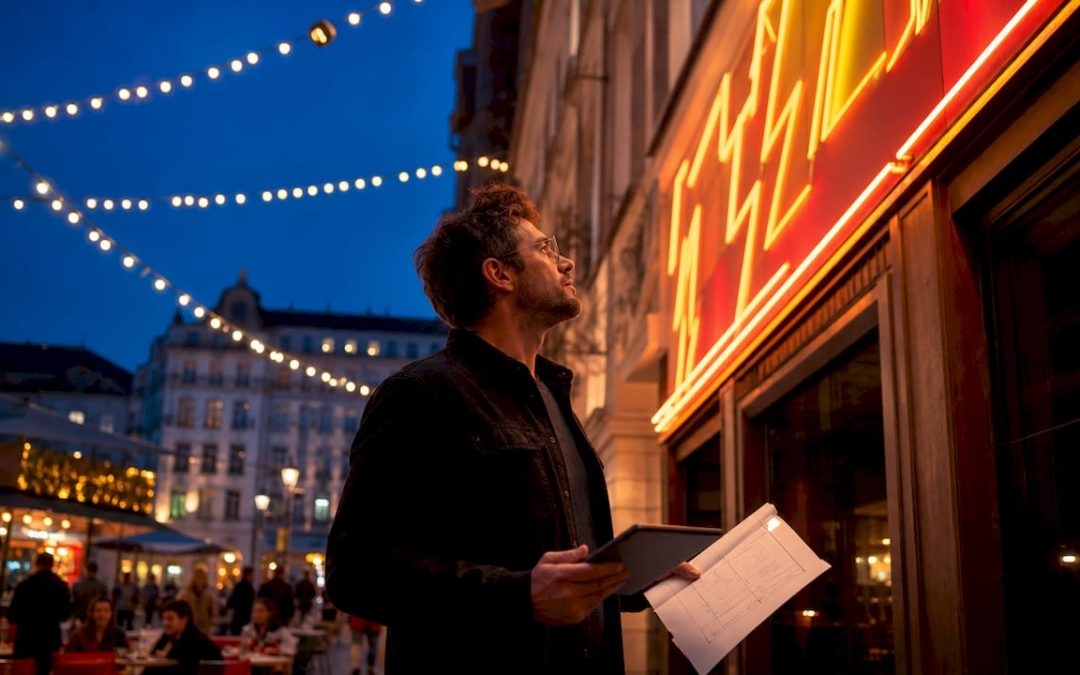
Lighting is the single most powerful variable in signage display, determining whether your sign gets noticed or ignored. The role of lighting in signage display extends well beyond visibility after dark. It shapes brand perception, signals quality, and draws footfall at every hour. Illuminated signage can increase the perceived price tier of a business by 12–18% through 3D channel letters and backlit elements alone. That figure means lighting is not a cosmetic upgrade. It is a brand positioning decision with measurable commercial consequences.
How does lighting enhance signage visibility and brand perception?
Signage illumination, the industry term for applying controlled light to sign faces and structures, gives your display a presence that flat, unlit graphics simply cannot match. A well-lit sign works at 2 PM and at 10 PM. That 24-hour visibility extends your brand’s working hours without any additional effort on your part.
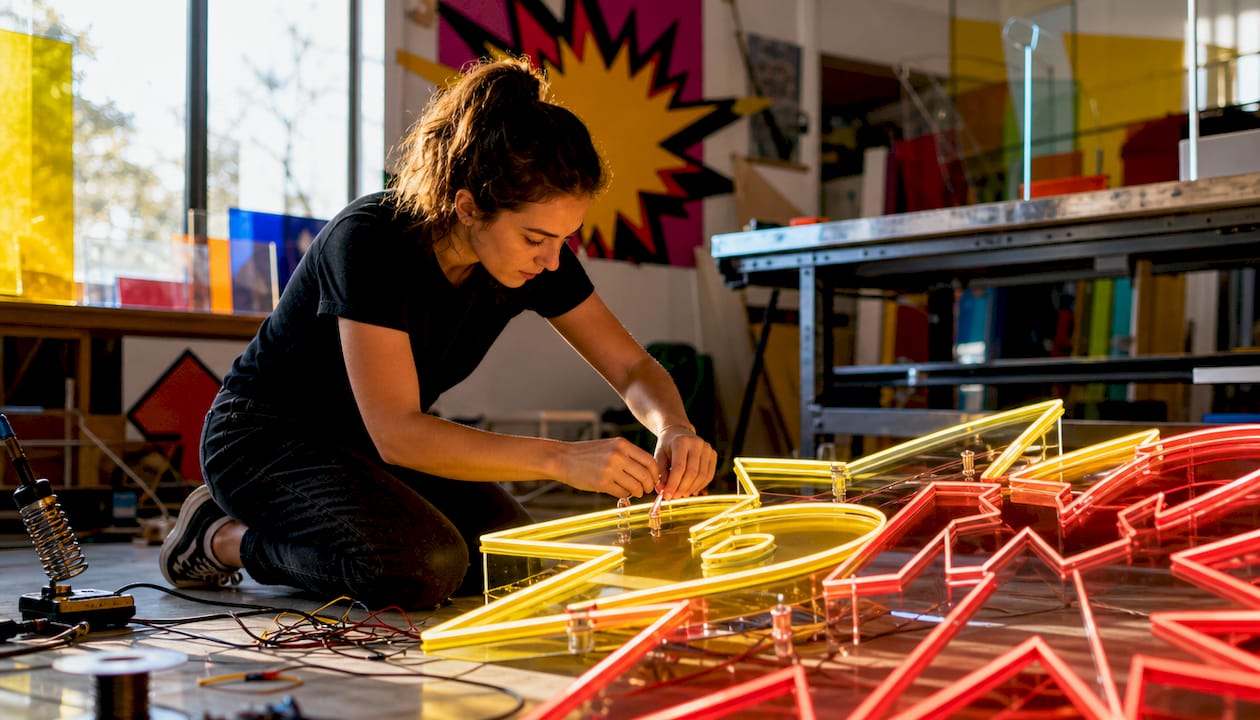
Illumination also creates depth. A backlit acrylic panel pushes letters forward visually. LED neon flex bends into custom shapes that printed vinyl cannot replicate. Channel letters with internal LED modules cast a halo effect on the wall behind them, adding dimension that draws the eye from a distance. These are not decorative choices. They are attention mechanics.
The psychological impact is equally direct. Lit signage reads as premium. Customers associate brightness and definition with investment and confidence. That association is why 3D illuminated elements consistently lift perceived brand quality, particularly in retail and hospitality settings where first impressions drive footfall decisions.
The most common signage illumination techniques used in the UK include:
- LED neon flex: Flexible, energy-efficient, and available in a wide colour range. Suited to bars, salons, and creative retail.
- Backlit (lightbox) panels: Aluminium frames with translucent faces lit from behind. Reliable for large fascia areas.
- Halo-lit channel letters: Letters mounted proud of the wall with rear-facing LEDs. Creates a soft glow effect without direct light exposure.
- Front-lit channel letters: LEDs face outward through a translucent face. High brightness, strong legibility at distance.
- Edge-lit acrylic panels: Light enters from the edge and disperses across the face. Clean, minimal aesthetic for interior or window applications.
Pro Tip: Choose your illumination technique based on viewing distance first, then aesthetics. A halo-lit sign looks refined up close but loses impact beyond 20 metres. Front-lit channel letters maintain legibility at 50 metres or more.
Illuminated vs non-illuminated signage: costs, lifespan, and brand impact
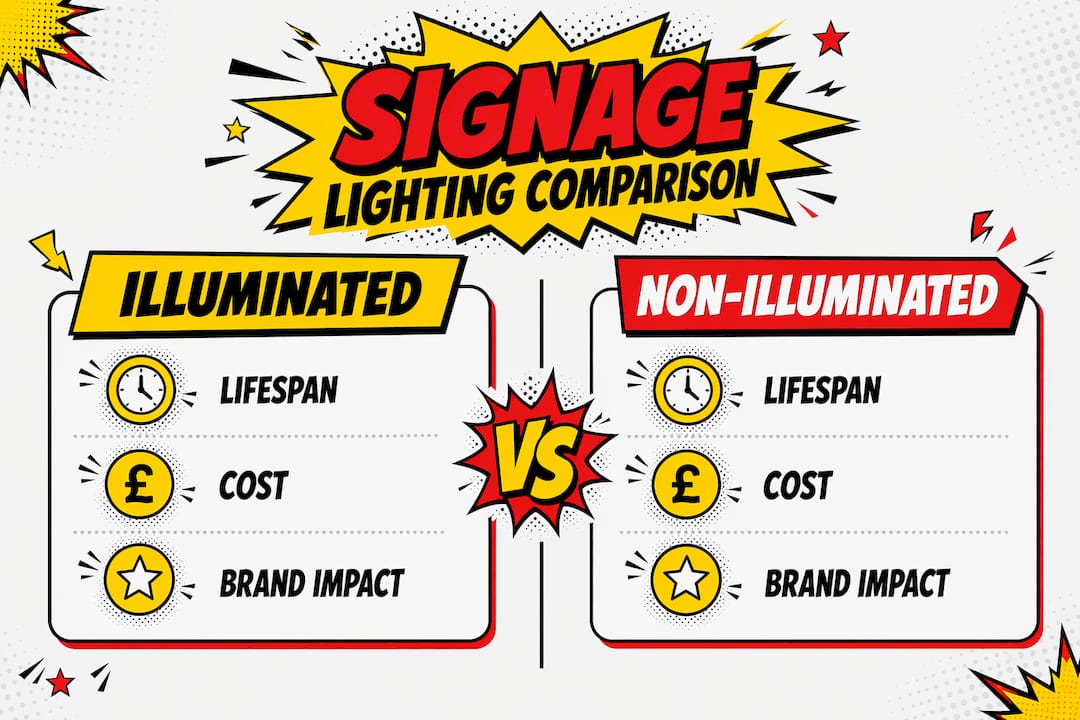
The cost difference between illuminated and non-illuminated signage is significant and worth understanding before you commit to a specification. Illuminated fascia signs typically cost between £649 and £1,490. Non-illuminated equivalents cost between £120 and £380. That gap reflects the additional materials, electrical components, and installation complexity involved.
However, the total cost of ownership tells a different story. Lifespan matters as much as purchase price.
| Factor | Illuminated signage | Non-illuminated signage |
|---|---|---|
| Typical lifespan | 10–15 years | 3–7 years |
| Maintenance cycle | Driver replacement every 5–8 years | Vinyl reskin every 3–5 years |
| Upfront cost | £649–£1,490 | £120–£380 |
| Brand perception lift | High (premium signal) | Moderate |
| After-dark visibility | Full | None |
Illuminated signs last 10–15 years with driver maintenance every 5–8 years. Non-illuminated signs last 3–7 years and need a vinyl reskin every 3–5 years. Over a 10-year period, the cost gap narrows considerably once you factor in replacement and labour.
Non-illuminated signage remains a sound choice in specific situations. Office buildings with daytime-only footfall, indoor wayfinding environments, and internal signage applications rarely need illumination to perform well. The decision should follow your trading hours and your audience’s behaviour, not a default preference.
Businesses trading after dark, particularly in hospitality and retail, gain the most from illuminated signage. A restaurant, bar, or late-night retailer without lit signage is effectively invisible to passing trade after sunset.
Pro Tip: If budget is tight, prioritise illuminating your brand name or logo and leave secondary information, such as a strapline or address, unlit. You capture the brand impact without the full cost of an all-illuminated fascia.
What are the UK regulations for illuminated signage?
UK planning rules govern illuminated signage directly, and getting this wrong is costly. UK regulations require static-only illumination for most commercial signage. Animation, flashing, and scrolling displays require express Advertisement Consent and are frequently rejected, particularly in conservation areas and residential zones.
Luminance limits apply to all illuminated signs. The rules are specific:
- Smaller signs must not exceed 600 cd/m² (candelas per square metre).
- Larger signs must not exceed 300 cd/m².
- Conservation areas impose stricter limits, often requiring unlit or halo-lit solutions to preserve visual amenity.
- Residential proximity triggers additional scrutiny. Signs near homes must demonstrate they will not cause light pollution or disturbance.
- Advertisement Consent is required for any sign that falls outside Deemed Consent categories, including most illuminated fascia signs above a certain size.
Luminance thresholds at 600 cd/m² for smaller signs and 300 cd/m² for larger signs exist to prevent glare and protect residential amenity. Exceeding these limits can result in enforcement action and removal orders.
Local authorities and conservation areas impose the strictest controls. If your premises sit within a conservation zone, assume you will need to use halo-lit or completely unlit signage unless you receive explicit consent for something brighter. Always confirm luminance specifications with your supplier before ordering, and consult your local planning authority before installation. You can find detailed guidance on UK signage compliance to help you navigate the process.
Design strategies to get the most from signage lighting
The most effective signage lighting strategies balance visual impact with cost and compliance. A hybrid approach delivers the best results for most businesses. A lit 3D logo acts as the focal point, while unlit flat fascia carries secondary information such as a strapline or contact details. This combination delivers around 80% of full illuminated sign impact at 50–60% of the cost. That is a meaningful saving without a meaningful sacrifice in brand presence.
Selecting the right lighting type for your environment matters as much as the sign design itself. Consider these principles:
- High-footfall retail streets: Front-lit channel letters or lightbox panels perform best. They are bright, legible, and durable in high-exposure locations.
- Premium or boutique brands: Halo-lit letters create a refined, understated effect that suits luxury positioning without appearing garish.
- Creative or lifestyle brands: LED neon flex offers flexibility in shape and colour, making it well suited to brands that want a distinctive, handcrafted feel.
- Conservation areas or listed buildings: Unlit dimensional letters or subtle edge-lit panels are often the only compliant option. Work within the constraint rather than against it.
- Indoor environments: Edge-lit acrylic or backlit panels work well for reception signage, wayfinding, and branded interiors where ambient light is controlled.
Energy consumption is a practical consideration that designers and business owners often underestimate. LED-based illumination uses significantly less power than older fluorescent or neon gas systems. For businesses interested in sustainable building and energy efficiency, LED signage aligns with energy-efficient building practices that reduce operational costs over time. Specifying LED from the outset also future-proofs your signage, as LED drivers are widely available and straightforward to replace when maintenance is due.
Colour temperature is another detail worth specifying deliberately. Warm white (around 3,000K) suits hospitality and retail environments that want to feel welcoming. Cool white (5,000K and above) suits professional services and healthcare settings where clarity and precision matter. Getting this wrong produces a sign that looks technically correct but feels tonally off for the brand.
Pro Tip: Ask your signage supplier for a luminance certificate before installation. This confirms your sign meets UK planning limits and protects you if a local authority queries the installation later.
Explore the full range of signage systems and lighting options to understand which approach suits your building type and brand identity.
Key takeaways
Effective signage lighting combines the right illumination technique, a clear understanding of costs, and compliance with UK planning rules to deliver lasting brand impact.
| Point | Details |
|---|---|
| Lighting lifts brand perception | Illuminated 3D signage increases perceived price tier by 12–18%, signalling premium quality. |
| Illuminated signs cost more upfront | Illuminated fascia signs cost £649–£1,490 versus £120–£380 for non-illuminated equivalents. |
| Lifespan offsets the price gap | Illuminated signs last 10–15 years; non-illuminated signs last 3–7 years, narrowing the cost difference over time. |
| UK regulations require static lighting | Animation and flashing displays need express Advertisement Consent and are often refused. |
| Hybrid strategies reduce cost | A lit logo with unlit secondary copy delivers around 80% of full illuminated impact at 50–60% of the cost. |
Pikpikpow’s view: what most businesses get wrong about signage lighting
The most common mistake we see is treating lighting as the last decision rather than the first. Businesses finalise their sign design, choose their colours, and then ask whether it can be lit. That sequence produces compromised results. Lighting should shape the design from the start, because the technique you choose determines the letter depth, the material specification, and the fixing method.
The second mistake is chasing brightness. More lumens do not mean more impact. A sign that exceeds the 600 cd/m² luminance limit does not just risk enforcement action. It looks aggressive and out of place, which undermines the brand signal you are trying to create. The businesses with the most effective signage we have worked on chose restraint deliberately.
The third pitfall is ignoring future maintenance. LED drivers fail. Faces yellow. Fixings corrode. A sign specified without a maintenance plan becomes an expensive liability within five years. Ask your supplier about driver access, replacement part availability, and expected service intervals before you sign off on a design. The signs that perform best over a decade are the ones that were designed to be serviced, not just installed.
— PikPikPOW!
Pikpikpow’s illuminated signage solutions
Pikpikpow works with businesses across retail, construction, commercial interiors, and the TV and film industry to design and manufacture signage that performs from day one.
Whether you need a fully illuminated fascia, a hybrid lit logo with unlit secondary copy, or a compliant solution for a conservation area, Pikpikpow’s team handles design, manufacture, and installation. Every sign is built to meet UK planning requirements, with luminance specifications confirmed before production begins. Browse Pikpikpow’s full range of signage systems to find the right solution for your building and brand, or get in touch directly for a bespoke consultation.
FAQ
What is the role of lighting in signage display?
Lighting maximises sign visibility across all hours and conditions, adds depth to the design, and signals brand quality to passing customers. Illuminated signage extends a business’s brand presence beyond daylight hours without any additional effort.
How much does illuminated signage cost in the UK?
Illuminated fascia signs typically cost between £649 and £1,490, compared to £120–£380 for non-illuminated equivalents. The gap narrows over time because illuminated signs last 10–15 years versus 3–7 years for non-illuminated signs.
Do I need planning permission for illuminated signage?
Most illuminated fascia signs require Advertisement Consent under UK planning rules. Static lighting is generally permitted; animation, flashing, and scrolling displays are frequently refused, particularly in conservation areas.
What luminance limits apply to illuminated signs in the UK?
UK planning rules set a maximum of 600 cd/m² for smaller signs and 300 cd/m² for larger signs. Conservation areas and residential locations impose stricter limits, often requiring halo-lit or unlit solutions.
What is a hybrid signage lighting strategy?
A hybrid strategy uses a lit 3D logo as the primary focal point and unlit flat copy for secondary information. This approach delivers around 80% of full illuminated sign impact at 50–60% of the cost.