
TL;DR:
- Production design signage plays a crucial role in storytelling by creating signs that support narrative immersion and world-building. It involves deliberate design choices for various sign types, with a focus on camera-readiness, period accuracy, and effective collaboration during planning, design, and installation phases. Properly managed signage enhances visual authenticity and prevents costly on-set issues, ensuring cohesive storytelling in film, television, and events.
Production design signage is defined as the strategic creation and placement of signs within film, television, and event environments to support narrative immersion and spatial storytelling. Unlike commercial signage, which serves a business or wayfinding function in isolation, production signage is a deliberate storytelling device. It shapes how audiences read a scene, a world, and a character’s reality. Whether you are a production designer working on a period drama or an event producer building an immersive brand experience, understanding what is production design signage is the foundation of every credible visual environment you create.
What is production design signage and why does it matter?
Production design signage is the purposeful design and fabrication of signs that serve the visual and narrative goals of a production. The industry term used across film and television is set signage, though it sits within the broader discipline of production design. Expert Ethan Tobman describes signage as active storytelling, not mere decoration. A wrong sign style breaks audience immersion immediately.
The importance of production signage extends well beyond aesthetics. Signs tell audiences where a scene is set, what era it belongs to, and what kind of world the characters inhabit. A neon diner sign in a 1950s American drama communicates period, class, and geography in a single frame. A corporate wayfinding system in a sci-fi thriller signals bureaucracy, control, and scale. These are not incidental choices.
Colour, typography, imagery, and layout work cohesively in production design to create a distinctive visual identity that influences audience perception. This means every font choice, material selection, and colour palette on a sign is a deliberate narrative decision. The production designer, art director, and set decorator all have a stake in getting it right.
What are the essential elements and types of production design signage?
Production design signage covers a wide range of sign types, each serving a different function within the production environment. Understanding these categories helps you plan budgets, allocate fabrication time, and assign responsibility within the art department.
Common signage types in production include:
- Wayfinding signs: Direct cast, crew, and audiences through physical spaces. On event sets, these also guide attendees and reinforce spatial logic.
- Branding and identity signs: Establish fictional businesses, organisations, or institutions within the story world. Think shop fascias, corporate logos, and branded merchandise visible on screen.
- Thematic and atmospheric signs: Posters, billboards, and notices that build period authenticity or genre tone. A hand-painted pub sign reads differently from a backlit acrylic panel.
- Safety and regulatory signs: Required on working sets and event venues. These must comply with UK health and safety regulations regardless of the production’s fictional setting.
- Directional and informational signs: Used both within the story world and operationally on set to manage cast and crew movement.
The design elements that underpin all of these types are consistent. Signage design prioritises legibility and contrast for viewers moving at varying speeds under different lighting conditions, placing function above aesthetics. For production contexts, this principle applies both to the audience watching a screen and to the crew navigating a live set.
One distinction that catches many newcomers off guard is the difference between signage as set decoration and signage as a prop. Fixed signs differ from handheld props that require stunt versions, close-up duplicates, and separate insurance coverage. A street sign bolted to a wall is set decoration. A sign that an actor picks up, tears down, or interacts with physically becomes a prop and must be handled accordingly.
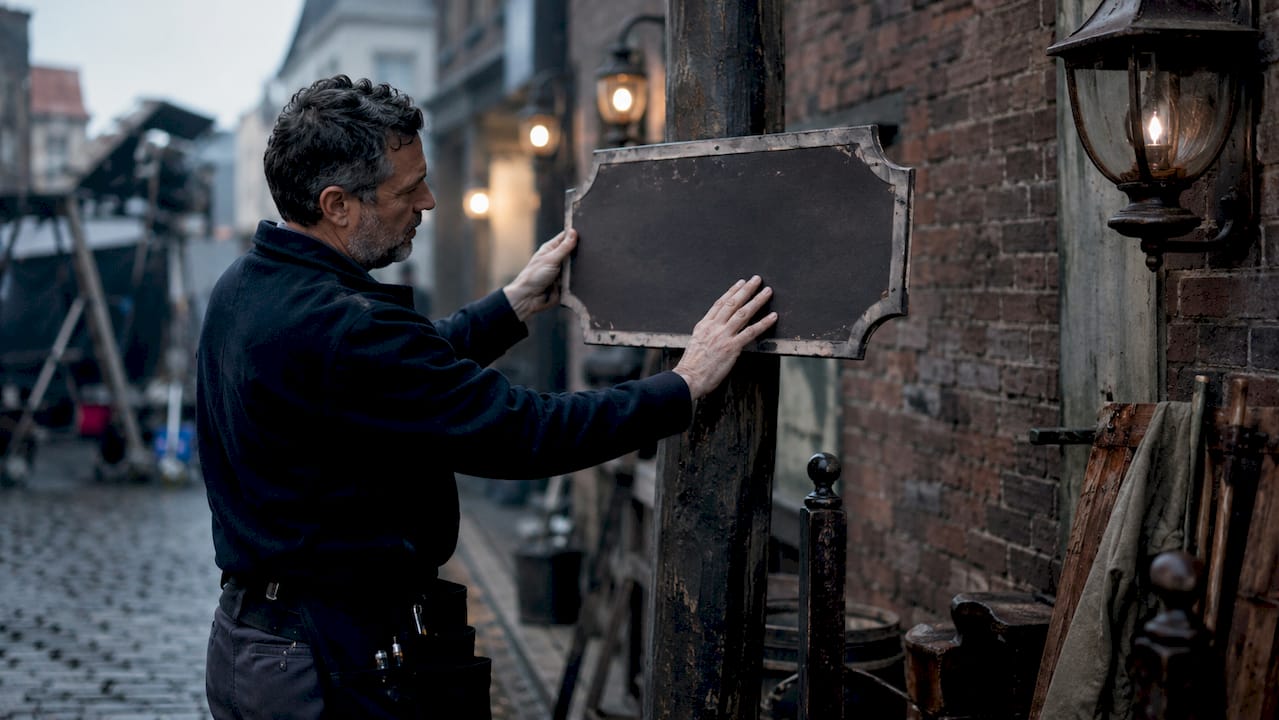
Pro Tip: Brief your prop master and set decorator simultaneously when a sign has any chance of being physically handled on camera. Waiting until the shoot day to reclassify it as a prop creates delays and budget pressure.
How does the production design signage workflow operate in practice?
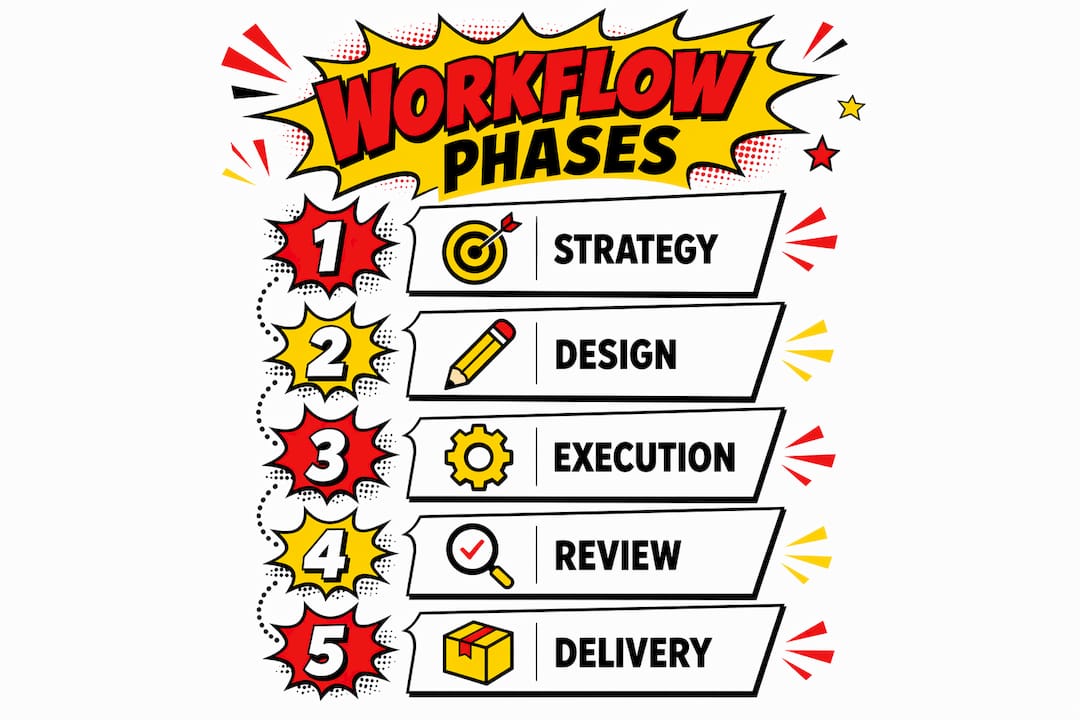
The production signage workflow follows three mandatory phases: strategy, design, and execution. Skipping the strategy phase is a primary cause of budget overruns and ineffective on-set visuals. Each phase has distinct tasks and deliverables.
Phase 1: Strategy
- Conduct a full site survey to understand viewing distances, lighting conditions, and mounting surfaces.
- Research permit requirements for any exterior or public-facing signage, particularly on location shoots.
- Establish the signage budget as a line item within the art department budget, not as an afterthought.
- Align with the director and director of photography (DP) on the visual language and tone the signage must support.
Phase 2: Design
- Produce concept sketches and mood boards that reflect the production’s period, genre, and narrative requirements.
- Develop CAD technical drawings and vector files with precise colour matching. Fabrication-ready files require technical CAD and vector graphics to ensure the final product meets design intent under production lighting conditions.
- Build physical or digital prototypes for director and DP approval before committing to full fabrication.
- Confirm material specifications: substrate, finish, illumination type, and weatherproofing where relevant.
Phase 3: Execution
- Manage fabrication timelines against the production schedule, building in contingency for reprints or adjustments.
- Oversee installation on set or at the event venue, checking alignment, legibility, and camera-frame compatibility.
- Conduct post-installation inspections before each shooting day to catch damage, misalignment, or continuity issues.
- Maintain a signage log that tracks every sign’s location, version, and condition throughout the production.
| Phase | Key Deliverable | Common Risk |
|---|---|---|
| Strategy | Approved signage brief and budget | Underestimating permit lead times |
| Design | Fabrication-ready CAD and vector files | Colour drift between screen and print |
| Execution | Installed, inspected, and logged signs | Continuity errors between shooting days |
Pro Tip: Share your signage brief with the DP before the design phase begins. Lighting choices directly affect how colours and materials read on camera, and a sign that looks perfect to the naked eye can wash out or create unwanted reflections under set lighting.
How does production signage differ from commercial or interior signage?
Signage design differs from general graphic design by binding to physical environment constraints like viewing distance, lighting, and materiality. Production signage adds a further layer: it must serve the camera, not just the human eye. This distinction shapes every decision from font size to substrate choice.
| Factor | Commercial Signage | Production Design Signage |
|---|---|---|
| Primary audience | Pedestrians and customers | Camera lens and viewing audience |
| Legibility standard | Clear at walking pace | Clear within a specific focal length and frame |
| Material choice | Durability and weather resistance | Camera-friendliness, period accuracy, and weight |
| Colour accuracy | Brand consistency | Colour grading compatibility under set lighting |
| Lifespan | Years of continuous use | Duration of shoot or event, often days or weeks |
The AFI stresses that signage details define story-world reality and must align with directors and DPs early. This is the defining difference. A commercial sign designer answers to a brand manager. A production sign designer answers to the story.
“Production design is the visual thesis of a film. Every sign, every texture, every colour choice is an argument about the world the characters inhabit.”
Ethan Tobman, Production Designer
Period accuracy is another area where production signage diverges sharply from commercial practice. A 1940s street scene requires hand-painted lettering styles, aged substrates, and period-accurate colour palettes. Getting the typography wrong by even a decade pulls an audience out of the story. Commercial signage has no equivalent constraint. The architectural signage approach used in contemporary branding projects can inform production work, but the priorities are fundamentally different.
How can production designers apply signage principles effectively?
Practical application is where theory meets the realities of a working set or live event. The following principles apply whether you are dressing a film location, building a television studio set, or designing signage for a large-scale corporate event.
Collaborate early and specifically:
- Meet with the director and DP before the design phase, not after. Bring reference images and material samples to that conversation.
- Share your signage plan with the gaffer. Lighting and signage interact constantly, and a backlit sign that was not in the lighting plan can create problems on the day.
- Loop in the location manager if any signage will be installed on a location property. Permission and reinstatement requirements affect your timeline and budget.
Choose materials for the camera, not the eye:
- Gloss finishes create reflections that can ruin a shot. Matte or satin substrates are generally safer for on-camera use.
- Foam board and lightweight composites are practical for interior sets where structural load is not a concern.
- For exterior or event signage that must withstand weather, aluminium composite panels and UV-stable vinyl are reliable choices. Good signage design principles around legibility and durability apply here directly.
Maintain continuity rigorously:
- Photograph every sign in its installed position before shooting begins. Use these reference images to reset signs between shooting days or after any movement.
- Keep spare copies of all printed signs on set. Damage, spills, and accidental removal happen on every production.
- Log any changes to sign placement or condition in the continuity notes shared with the script supervisor.
Pro Tip: For sci-fi and futuristic productions, avoid the temptation to make every sign digital or illuminated. Real environments mix analogue and digital signage, and that mix reads as more authentic on screen than a uniformly high-tech approach.
Period pieces, sci-fi productions, and corporate events each present distinct signage challenges. A Victorian street scene requires hand-lettered signs with period-accurate materials. A near-future thriller needs signage that feels plausible rather than fantastical. A corporate product launch event needs signage that reinforces brand identity while directing hundreds of attendees through a venue. The underlying workflow is the same across all three. The design decisions are entirely different.
Key takeaways
Production design signage is a storytelling tool first and a practical sign second, and treating it as anything less produces sets and events that fail to convince their audiences.
| Point | Details |
|---|---|
| Definition and purpose | Production design signage serves narrative immersion, not just wayfinding or decoration. |
| Three-phase workflow | Strategy, design, and execution are all mandatory; skipping strategy causes budget overruns. |
| Props versus set decoration | Signs that actors handle physically require separate versions, insurance, and prop department involvement. |
| Camera-first design | Material, colour, and finish choices must account for how signs read on camera under set lighting. |
| Early collaboration | Aligning with the director and DP before the design phase prevents costly rework and continuity errors. |
What we have learned from working with production teams
The most common mistake we see in production signage is treating it as a last-minute task. Art departments under pressure will often order signs in the final week before a shoot, which forces compromises on material quality, colour accuracy, and fabrication precision. The signs that end up on screen are then a fraction of what was possible with proper planning.
What surprises many production designers is how much signage affects mood without the audience consciously registering it. A slightly wrong font on a background sign does not read as “wrong font” to a viewer. It reads as “something feels off about this world.” That subliminal dissonance is far more damaging to immersion than a visible continuity error, because viewers cannot articulate it and directors cannot easily fix it in post.
The other thing worth saying plainly: the distinction between set decoration and props for signage is not a bureaucratic technicality. We have seen productions where a sign intended as set dressing ended up being grabbed by an actor in a spontaneous performance moment. Without a prop version available, the shot was unusable. That is a preventable problem, and it starts with the signage brief being specific about every sign’s intended use.
Technology is shifting the production signage space in 2026. Digital signage solutions are increasingly being integrated into set builds, allowing content to be updated between takes without physical reprinting. That flexibility is genuinely useful, but it does not replace the need for physical fabrication expertise. Most productions still require a mix of physical and digital signage, and the physical elements demand the same precision they always have.
— PikPikPOW!
How Pikpikpow supports production and event signage projects
Pikpikpow works directly with TV and film productions, event producers, and art departments across the UK to deliver bespoke signage that meets the specific demands of production environments.
From wide-format printing and architectural sign fabrication to custom indoor displays, Pikpikpow combines design expertise with precision manufacturing to produce signage that performs on camera and on location. Whether you need period-accurate set dressing, branded event signage, or fabrication-ready files produced to your art department’s specifications, the team understands the timelines and quality standards that production work demands. Explore Pikpikpow’s indoor signage solutions or visit pikpikpow.co.uk to discuss your next production project.
FAQ
What is production design signage in film and TV?
Production design signage is the design and fabrication of signs used within film and television sets to support narrative immersion and visual storytelling. It differs from commercial signage because it must serve the camera and the story, not just the viewer in the space.
How does production signage differ from standard commercial signage?
Production signage is designed for camera legibility, period accuracy, and narrative consistency, whereas commercial signage prioritises brand durability and customer-facing clarity. Material choices, colour grading compatibility, and fabrication lifespan are all assessed differently in a production context.
When should a sign be treated as a prop rather than set decoration?
A sign becomes a prop when an actor physically interacts with it on camera. Props require separate handling, including stunt versions, close-up duplicates, and specific insurance coverage, which affects both budget and on-set procedures.
What are the three phases of a production signage workflow?
The three phases are strategy, design, and execution. The strategy phase covers budgeting, site surveys, and stakeholder alignment; the design phase covers concept development and fabrication-ready files; and the execution phase covers fabrication, installation, and continuity management.
Why does early collaboration with the director and DP matter for signage?
The AFI confirms that signage details must align with the director and DP early to maintain visual language cohesion. Lighting choices, camera angles, and colour grading decisions all affect how a sign reads on screen, making early input from both essential.