

TL;DR:
- Architectural signage is purposefully integrated into built environments to communicate brand identity, guidance, and compliance.
- Proper assessment and design ensure signage aligns with brand, space, legal standards, and customer journey needs.
- Investing in bespoke signage enhances professionalism, trust, and long-term brand differentiation.
Uninspired signage costs businesses more than they realise. When a shopfront blends into the street, when a commercial interior lacks clear direction, or when a construction hoarding fails to communicate a brand’s identity, real opportunities are lost. Customers form impressions within seconds, and signage is often the first physical touchpoint they encounter. This guide walks you through every stage of creating bespoke architectural signage, from understanding what it is and why it matters, to assessing your site, designing for impact, managing installation, and measuring results over time.
Table of Contents
- Understanding architectural signage and its impact
- Preparation: assessing your site and brand requirements
- Designing architectural signage: balancing form and function
- Installation and integration: executing your signage vision
- Verification and ongoing improvement
- What most guides miss about architectural signage
- Enhance your business with bespoke architectural signage
- Frequently asked questions
Key Takeaways
| Point | Details |
|---|---|
| Architectural signage defines space | Customised signage seamlessly integrates wayfinding and brand presence for greater business impact. |
| Preparation ensures success | Thorough site and brand assessment are essential steps before design or installation begins. |
| Balance design and functionality | Effective signage combines clarity, compliance, and creativity without overwhelming the architecture. |
| Ongoing review maximises results | Regularly reviewing signage effectiveness secures ongoing branding and navigational benefits. |
Understanding architectural signage and its impact
Architectural signage is not simply a sign attached to a building. It is signage that is purposefully integrated into the built environment, designed to work with the physical space rather than sit awkwardly on top of it. This includes everything from exterior fascia signs and entrance totems to interior wayfinding systems, room identification plaques, and compliance notices. The key distinction from standard signage is intent: architectural signage is planned as part of the space, not added as an afterthought.
For business owners and project managers in retail, construction, and commercial interiors, this distinction matters enormously. Standard off-the-shelf signs communicate basic information. Architectural signage, by contrast, communicates brand identity, guides customer journeys, and shapes how people feel within a space. It serves three core roles simultaneously: wayfinding, branding, and compliance.
The three roles of architectural signage:
- Wayfinding: Directing people efficiently through a space, reducing confusion and improving the customer experience.
- Branding: Reinforcing visual identity through consistent use of colour, typography, materials, and tone.
- Compliance: Meeting legal requirements for accessibility, fire safety, and planning permissions.
Understanding how these roles interact is where many businesses fall short. As noted in research on building personality through wayfinding, subtle integration of colour-coded floors and bespoke icons builds brand personality without overwhelming the architecture. This is the balance that separates good architectural signage from great architectural signage.
The business case for investing in this type of signage is well established. Studies consistently show that first impressions of a physical space are formed within moments of arrival, and signage plays a central role in that perception. Poor or inconsistent signage signals disorganisation and erodes trust. Cohesive, well-designed architectural signage, on the other hand, signals professionalism and attention to detail. You can read more about architectural signage explained and the bespoke signage benefits for your business.
| Signage type | Primary function | Customisation level | Brand integration |
|---|---|---|---|
| Standard signage | Information only | Low | Minimal |
| Architectural signage | Wayfinding, branding, compliance | High | Full integration |
| Bespoke architectural signage | All of the above, tailored to space | Maximum | Seamless |
For reference, businesses working with architectural drafting services during the planning stage consistently achieve better alignment between their signage and the built environment, reducing costly revisions later.
With an understanding of why architectural signage matters, it is important to assess what resources and preparation are needed before beginning your own project.
Preparation: assessing your site and brand requirements
Before a single design decision is made, you need a clear picture of your site and your brand. Skipping this stage is one of the most common mistakes businesses make, and it almost always leads to signage that looks mismatched or fails to serve its purpose effectively.
Step-by-step site and brand assessment:
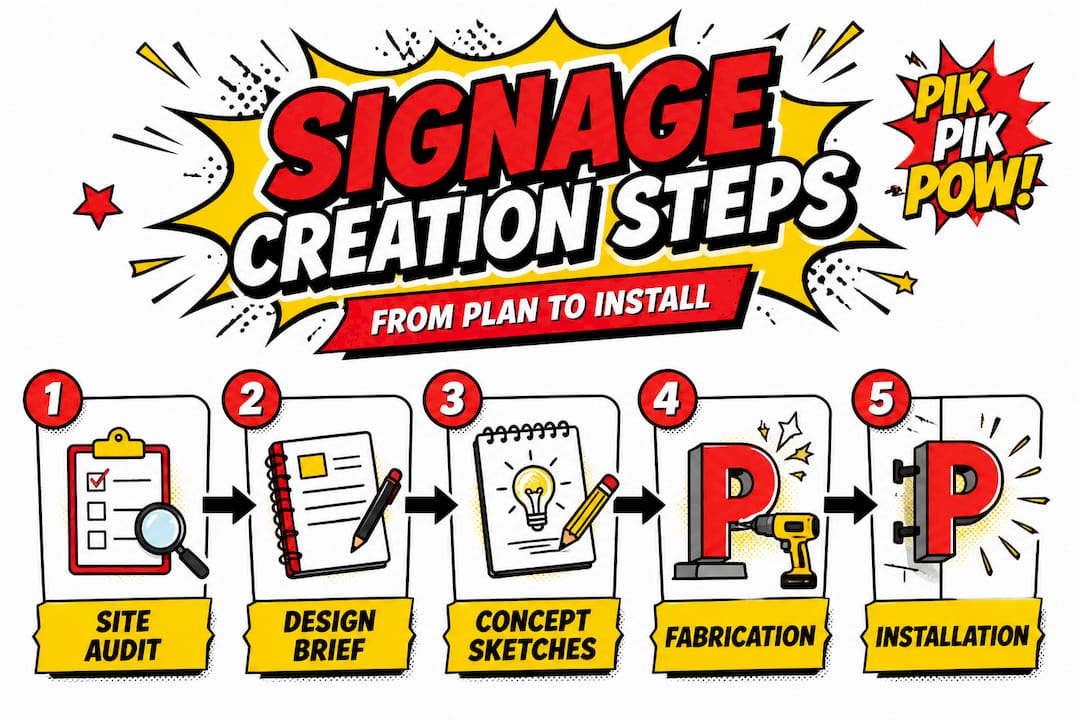
- Conduct a signage audit. Walk through your site as a visitor would. Note every point where you need information, direction, or reassurance. Record what signage currently exists and where the gaps are.
- Document your brand guidelines. Gather your approved colour palette, typefaces, logo files, and any brand tone-of-voice documentation. If these do not exist, create them before proceeding.
- Map your customer journey. Identify the route a customer or visitor takes from arrival to their destination. Mark every decision point where signage is needed.
- Assess legal and safety requirements. Check planning permission requirements for external signage, accessibility standards for internal wayfinding, and fire safety compliance for exit and hazard signage.
- Set a realistic budget. Factor in design, materials, fabrication, installation, and ongoing maintenance. Bespoke signage requires more investment than off-the-shelf solutions, but the return in brand perception is significant.
| Factor | Ready-made signage | Bespoke signage |
|---|---|---|
| Cost | Lower upfront | Higher upfront, better ROI |
| Brand alignment | Generic | Fully tailored |
| Durability | Variable | Specification-led |
| Compliance | May require adaptation | Built-in from the start |
| Lead time | Fast | Longer, but worth it |
Aligning your signage with your brand values and customer journey is not a creative luxury. It is a functional requirement. A retail environment where signage contradicts the brand’s visual identity creates cognitive dissonance for customers, even if they cannot articulate why. Consistency builds trust.
Pro Tip: When reviewing your site, photograph every existing sign and note the material, size, and condition. This audit becomes your baseline document and makes briefing a signage specialist far more efficient.
Our wayfinding signage guide covers the customer journey mapping process in detail, and you can also explore the full bespoke signage process to understand what to expect when working with a specialist.
Once you have a clear picture of your site and objectives, you can move onto designing your signage for maximum impact.
Designing architectural signage: balancing form and function
Design is where architectural signage either succeeds or fails. The challenge is producing something that is visually distinctive, practically useful, and consistent with your brand, all at once. This is harder than it sounds, and it is why working with experienced designers and fabricators makes such a significant difference.

Start with your brand’s visual language. Your signage should feel like a natural extension of your brand, not a separate element applied to the space. This means using your approved typefaces, colour palette, and logo consistently. It also means considering the materials and finishes that reflect your brand’s positioning. A luxury retail environment calls for different materials than a construction site hoarding or a commercial office interior.
Key design considerations for architectural signage:
- Legibility at distance: Typeface choice and size must account for how far away a viewer will typically be.
- Colour contrast: Particularly important for accessibility. The contrast between text and background must meet accessibility standards.
- Material suitability: External signage must withstand weather. Internal signage can use more delicate finishes.
- Lighting: Consider whether signs will be viewed in natural light, artificial light, or both. Illuminated signage may be necessary in certain environments.
- Scale and proportion: Signage should feel proportionate to the architecture it is placed on or within.
As highlighted in research on building personality through wayfinding, subtle artistic integration, such as bespoke icons or colour-coded zones, adds personality without overwhelming the space. This is a practical design principle, not just an aesthetic preference. When wayfinding feels natural and even enjoyable, people navigate more confidently and associate that positive experience with your brand.
“The most effective architectural signage disappears into the space while doing its job perfectly. Visitors follow it without noticing they are being guided.”
Working with architects or interior designers during this phase is strongly recommended. They understand how the space will be used, how light moves through it, and how structural elements might affect signage placement. Explore interior signage design options for commercial spaces, and review our guidance on shop sign design for retail environments. Using visualisation services before fabrication allows you to see exactly how signage will look in context, saving time and money.
Pro Tip: Always request rendered visuals before approving final designs. Seeing signage in context, at scale, within the actual space, prevents costly surprises during installation.
With your designs finalised, the next step is to ensure a smooth installation and integration with your space.
Installation and integration: executing your signage vision
Installation is where planning meets reality. Even the best-designed signage can underperform if installation is poorly managed. This phase requires careful coordination between your signage supplier, contractors, and site management team.
A structured installation process:
- Pre-installation site survey. Your signage supplier should conduct a detailed survey before fabrication is completed. Wall materials, fixing points, cable routes for illuminated signs, and access requirements all need to be confirmed.
- Contractor liaison. Identify who is responsible for each element: electrical work, structural fixings, decorating around sign positions. Miscommunication here causes delays and additional costs.
- Compliance checks. Confirm that all signage meets planning conditions, building regulations, and accessibility standards before installation begins. This is especially important for external signs, which may require planning permission.
- Phased installation where necessary. In occupied retail or commercial spaces, signage installation may need to be phased to avoid disruption to customers or staff.
- Post-installation testing. Check visibility from all key viewpoints, test illuminated elements, and confirm that wayfinding logic works as intended by walking through the space as a first-time visitor would.
Research consistently shows that building personality through wayfinding requires integration of signage into the spatial experience from the outset, not as a retrofit. This reinforces why installation should be treated as a collaborative process, not simply a delivery.
Accessibility is a legal requirement, not an optional extra. Signage must comply with the Equality Act 2010 in the UK, which means considering font size, contrast ratios, tactile elements for visually impaired visitors, and positioning at appropriate heights. Our site signage installation guidance covers these requirements in practical detail, and the wayfinding signage steps resource provides a useful checklist for the full process.
After your architectural signage is installed and operational, it is important to regularly evaluate performance and adapt as needed.
Verification and ongoing improvement
Installing signage is not the end of the process. Signage that worked well at launch may become less effective as your business evolves, your space changes, or your brand is refreshed. Building a review cycle into your signage strategy ensures it continues to deliver value.
Methods for assessing signage performance:
- Customer feedback: Ask customers directly whether they found the space easy to navigate. Short surveys at exit points or on receipts can gather useful data.
- Observation: Watch how visitors move through your space. Where do they hesitate or look confused? These are likely signage gaps.
- Staff input: Your team sees the space every day. They will know which signs generate repeated questions from customers, which is a clear indicator that the sign is not doing its job.
- Footfall data: In retail environments, footfall tracking can reveal whether customers are reaching all areas of the store or avoiding certain sections.
| Issue | Likely cause | Recommended action |
|---|---|---|
| Customers frequently ask for directions | Wayfinding gaps or unclear signs | Review and supplement signage at decision points |
| Signs look faded or damaged | Material or finish not fit for environment | Replace with more durable specification |
| Brand refresh has occurred | Signage no longer matches new identity | Plan a phased signage update |
| New layout or services added | Signage does not reflect current offer | Commission additional or replacement signs |
Refresh cycles vary by environment. Retail signage in high-traffic areas may need reviewing every two to three years. Architectural signage in more stable commercial interiors can last considerably longer, provided materials were specified correctly at the outset. Research on building personality through wayfinding confirms that ongoing refinement of wayfinding and brand integration is what separates businesses that lead in customer experience from those that simply manage it.
Explore our signage systems overview for guidance on planning a cohesive, scalable signage system, and review examples of plaza signage integration for large-scale commercial environments.
Having walked through the full process, let us consider a fresh viewpoint on architectural signage from a practitioner’s perspective.
What most guides miss about architectural signage
Most resources on architectural signage focus almost entirely on compliance and wayfinding logistics. They treat signage as a functional problem to be solved: put the right sign in the right place, meet the regulations, move on. That approach misses the most commercially valuable aspect of architectural signage entirely.
Signage is a brand asset. In the same way that a well-designed product or a considered retail layout communicates brand values, so does every sign in your space. The businesses that understand this use signage as a deliberate tool for differentiation. They choose materials that reflect their positioning. They commission bespoke icons that are unique to their brand. They use colour not just for compliance, but to create mood and guide emotion.
The insight from research on building personality through wayfinding is worth repeating: subtle integration of artistic elements builds personality without overwhelming the architecture. This is not about making signage decorative for its own sake. It is about recognising that every touchpoint in a physical space communicates something, and signage is one of the most consistent and controllable of those touchpoints.
For project managers in construction and commercial interiors, this is an important argument to make internally. Budget decisions around signage are often made on the basis of minimum viable compliance. The counterargument is straightforward: why bespoke signage works is not just about aesthetics, it is about the cumulative effect of every brand interaction on customer loyalty and perception. Businesses that invest in considered architectural signage consistently present a more professional, trustworthy image. That is a commercial advantage worth quantifying.
Enhance your business with bespoke architectural signage
At Pik Pik POW!, we work with businesses across retail, construction, and commercial interiors to design, fabricate, and install architectural signage that genuinely elevates brand visibility. Whether you are starting from scratch or refreshing an existing system, our team provides specialist support at every stage.
From initial site assessment and concept design through to precision fabrication and professional installation, we manage the full process. Our signage systems are built to perform over time, and our internal wayfinding signage solutions are designed to guide your customers while reinforcing your brand at every turn. If you are ready to invest in signage that works as hard as your business does, explore our architectural signage expertise and get in touch with our team today.
Frequently asked questions
What is architectural signage?
Architectural signage refers to custom signage that is integrated into buildings and spaces, serving wayfinding, branding, and compliance functions through design that is tailored to the physical environment. As research on building personality through wayfinding shows, effective architectural signage builds brand personality through subtle, purposeful integration.
How does architectural signage support branding?
By applying a business’s brand colours, typography, and visual language consistently across all signage within a space, architectural signage reinforces identity and strengthens customer recognition. Consistent wayfinding and brand integration creates a cohesive experience that builds trust.
What are the key steps in creating architectural signage?
The key steps are: conducting a site and brand audit, defining functional and aesthetic requirements, designing for both wayfinding and brand identity, managing professional installation, and reviewing performance on an ongoing basis.
Can architectural signage be updated after installation?
Yes. Architectural signage can be refreshed or replaced in phases to reflect new branding, layout changes, or updated compliance requirements, without necessarily replacing the entire system at once.
Is it necessary to work with a signage specialist?
Working with a specialist ensures your signage is correctly specified for the environment, compliant with relevant regulations, and designed to deliver long-term brand value, which is difficult to achieve with a generalist supplier or off-the-shelf solutions.