

Outdoor signage drives customer decisions in UK retail, with 58% of shoppers noticing store signage and nearly half allowing it to influence purchases. For marketing managers overseeing multi-site retail operations, selecting the right signage types involves balancing visibility, durability, regulatory compliance and budget. This guide explores outdoor signage options, materials, UK legal requirements and strategic selection to maximise brand presence and foot traffic across your retail locations.
Table of Contents
- Introduction To Outdoor Signage For UK Retail
- Types Of Outdoor Signage And Their Characteristics
- Regulatory Compliance And Legal Considerations In The UK
- Impact Of Illumination And Digital Signs On Retail Visibility
- Emerging Trends And Sustainability In Outdoor Signage
- Common Misconceptions About Outdoor Signage
- Design Considerations And Best Practices For Retailers
- Conclusion: Implementing Effective Outdoor Signage Across Multi-Site Retail Chains
- Explore Pik Pik Pow’s Retail Signage Solutions
- Frequently Asked Questions
Key takeaways
| Point | Details |
|---|---|
| Signage types vary by function | Fascia signs, A-boards, projecting signs and digital displays each serve distinct visibility and engagement needs. |
| UK regulations require compliance | Most outdoor signage needs advertisement consent, with stricter rules in conservation areas. |
| Illumination extends visibility | LED and neon lighting enhance 24/7 brand presence, justifying higher costs through extended customer engagement. |
| Sustainability trends shape choices | Eco-friendly materials like recycled aluminium align with brand values without sacrificing durability. |
| Strategic placement outweighs size | Effective signage balances location, readability and brand consistency over sheer scale. |
Introduction to outdoor signage for UK retail
Outdoor signage encompasses all external displays identifying and promoting retail locations, from traditional shop fascias to contemporary digital screens. In UK retail environments, these signs serve as the primary touchpoint attracting pedestrian and vehicular traffic whilst reinforcing brand identity. Retail signage directly affects sales through increased shopper notice rates and purchase influence.
The UK’s variable weather patterns demand signage materials that withstand rain, wind and temperature fluctuations without fading or deteriorating. Coastal retail locations face additional challenges from salt air corrosion, whilst urban centres require designs that cut through visual clutter. Understanding your types of business signage for retail success starts with assessing these environmental and contextual factors.
Several elements determine signage effectiveness for your retail chain:
- Visibility range from key pedestrian and vehicle routes
- Foot traffic patterns around store entrances
- Competing visual elements in the immediate vicinity
- Weather resilience requirements for your specific locations
- Brand consistency needs across multiple sites
“Effective outdoor signage transforms passive storefronts into active customer magnets, but only when materials, placement and design align with local conditions and brand strategy.”
The right signage choice depends on whether you’re targeting commuters, shoppers browsing high streets or customers in retail parks. Each scenario demands different visibility approaches, from bold fascias readable at distance to subtle projecting signs for pedestrian zones.
Types of outdoor signage and their characteristics
Understanding available signage categories helps you match solutions to specific retail objectives and site conditions.
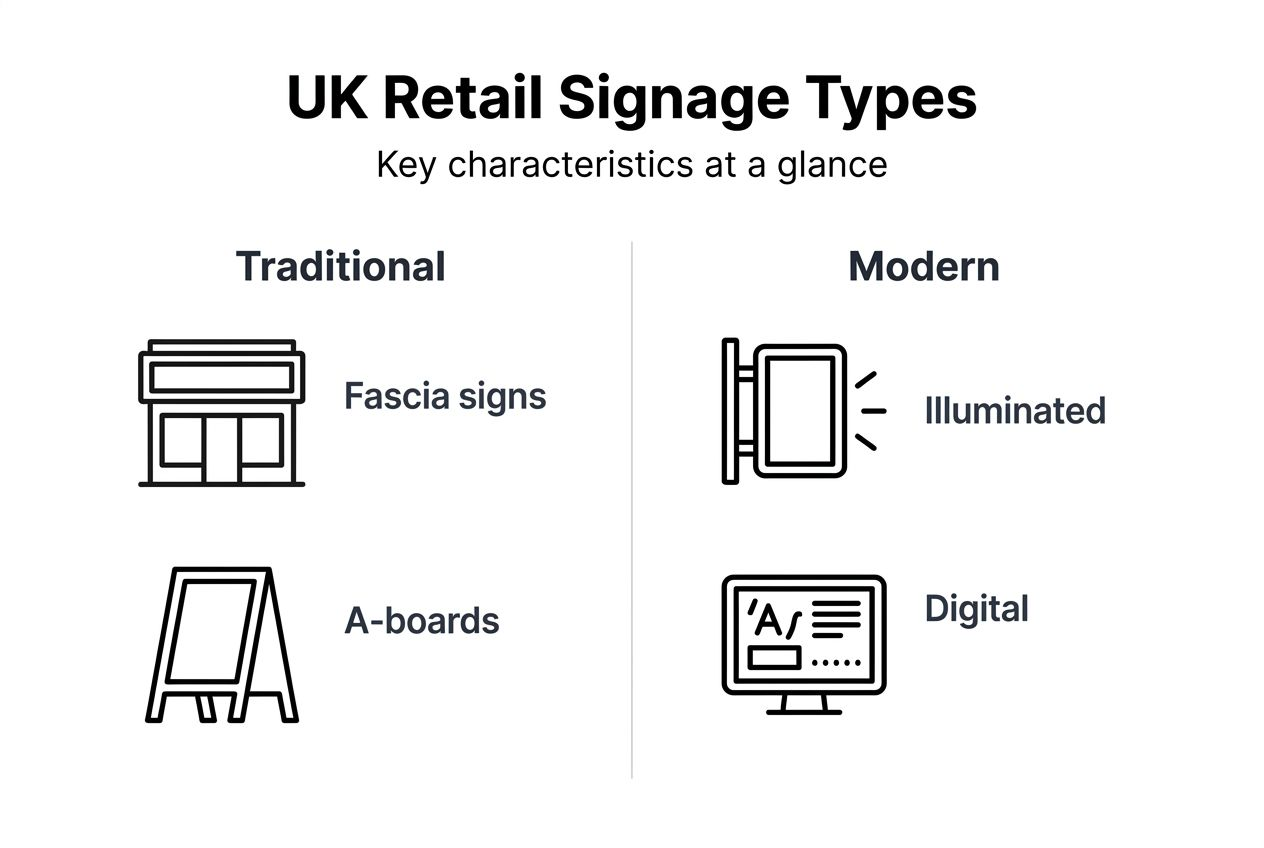
Shop fascia signs mount directly above storefronts, displaying your brand name and logo at the primary sightline. These typically use aluminium frames with acrylic faces, offering durability and professional appearance. Fascia signs cost £300 to £1500+ depending on size and illumination. They work best for high street locations where competing signage requires strong brand presence at eye level.
A-boards provide flexible, relocatable messaging for pavements and forecourts. Starting from £50, these portable signs allow daily message updates promoting sales, new products or seasonal offers. Chalkboard and printed insert versions suit different update frequencies. Position them strategically to catch pedestrian attention without obstructing walkways.
Post-mounted and projecting signs extend perpendicular from building facades, offering visibility to approaching foot traffic from multiple directions. These prove particularly effective in pedestrian shopping areas where fascia signs alone lack sightlines. Expect costs from £400 to £2000 depending on materials and mounting complexity.

Illuminated signs incorporate LED or neon lighting, maintaining visibility during evening trading hours. Illuminated signs range £600 to £3000+ but deliver extended customer engagement windows. LED options offer energy efficiency and longer lifespans than traditional neon, whilst neon provides distinctive aesthetic appeal for certain brand identities.
Digital signage uses electronic displays for dynamic, remotely updatable content. Initial investment exceeds traditional options, but operational flexibility allows real-time promotional adjustments across multiple sites simultaneously. Digital screens suit retail parks and shopping centres where modern aesthetics align with customer expectations.
| Signage Type | Primary Material | Typical Cost Range | Best Application |
|---|---|---|---|
| Fascia | Aluminium, acrylic | £300 to £1500+ | High street storefronts |
| A-board | Wood, metal, plastic | £50 to £300 | Pavement promotions |
| Projecting | Aluminium, acrylic | £400 to £2000 | Pedestrian zones |
| Illuminated | LED, neon, acrylic | £600 to £3000+ | Evening visibility |
| Digital | LED screen, aluminium | £2000 to £10000+ | Dynamic messaging |
Pro Tip: Match signage materials to your location’s specific weather challenges. Coastal sites need marine-grade aluminium, whilst urban locations benefit from anti-graffiti coatings on lower-mounted signs.
When designing signage for UK retail, consider how each type integrates with your overall brand architecture. Consistency across fascias, A-boards and digital displays strengthens brand recognition. Review shopfront signage ideas to see how successful retailers combine multiple signage types for maximum impact.
Regulatory compliance and legal considerations in the UK
UK planning law requires advertisement consent for most outdoor signage, particularly when signs exceed certain size thresholds or include illumination. Local planning authorities assess applications based on public safety, visual amenity and local character preservation. The process typically takes eight weeks, though designated conservation areas and listed buildings face stricter scrutiny.
Conservation areas impose additional restrictions on materials, colours, illumination and mounting methods to preserve historical character. Signs in these zones often require heritage-appropriate designs using traditional materials and restrained colour palettes. Failing to secure proper consent risks enforcement notices demanding sign removal and potential fines.
Follow these compliance steps for each retail location:
- Contact your local planning authority before designing signage
- Verify whether your premises sit within conservation areas or listed building designations
- Prepare detailed drawings showing sign dimensions, materials, colours and mounting methods
- Submit advertisement consent applications with appropriate fees
- Wait for approval before manufacturing or installing signs
- Retain approval documentation for future reference and inspections
Illuminated and digital signs require additional electrical safety compliance beyond planning consent. Ensure installations meet current wiring regulations and undergo periodic electrical inspections. Digital displays may need separate licensing if showing moving images or video content.
Pro Tip: Engage planning consultants familiar with your local authority’s specific requirements early in the design process. Their expertise prevents costly redesigns and application delays.
Non-compliance consequences extend beyond fines. Enforcement notices require immediate sign removal, disrupting brand visibility at critical trading periods. Some authorities prosecute persistent violators, risking criminal records for responsible company officers. For multi-site operations, establish centralised compliance tracking to ensure all locations maintain current approvals. Check latest signage regulation updates regularly, as rules evolve with planning policy changes.
Impact of illumination and digital signs on retail visibility
Illuminated signs provide continuous visibility especially during darker months when UK daylight hours shrink dramatically. This extended visibility directly correlates with increased customer engagement during evening shopping periods, particularly important for retailers in shopping centres and retail parks with extended opening hours.
Two primary illumination technologies dominate UK retail signage:
- LED lighting offers energy efficiency, long operational life (50,000+ hours) and lower maintenance costs. LEDs produce bright, even illumination across sign faces and allow colour temperature selection matching brand identities. They suit fascia signs, projecting signs and internally illuminated channel letters.
- Neon lighting delivers distinctive visual character with warm, continuous glow appealing to heritage brands and businesses seeking vintage aesthetics. Whilst requiring more maintenance than LED, neon creates unique brand differentiation in crowded retail environments.
Digital signage transforms static messaging into dynamic customer engagement tools. You can update promotions instantly across all locations from central management systems, responding to weather changes, stock levels or competitive pressures in real time. Research shows digital displays capture attention more effectively than static signs, particularly in high-traffic retail environments where movement draws eyes.
“Investment in illuminated and digital signage pays dividends through extended trading hour visibility and messaging flexibility that traditional signs cannot match, particularly for retailers competing in busy urban centres.”
Return on investment considerations balance higher upfront costs against operational benefits. A £2000 illuminated fascia sign lasting 10 years with minimal maintenance costs £200 annually. Compare this to traditional signage requiring more frequent replacement due to fading and weather damage. Digital signage offers additional ROI through eliminated printing costs for promotional updates.
For multi-site retail chains, digital signage solutions enable coordinated campaigns whilst allowing localised messaging addressing specific store needs. Morning commuters see breakfast promotions whilst afternoon shoppers view meal deal offers, all programmed centrally. Explore digital signage for UK retail visibility to understand implementation strategies for your retail network.
Emerging trends and sustainability in outdoor signage
Sustainability concerns increasingly influence UK retail signage decisions as businesses align environmental commitments with customer values. Sustainable materials like recycled aluminium and PVC-free vinyl offer durability whilst reducing environmental footprints. These materials withstand UK weather conditions as effectively as traditional options whilst supporting corporate social responsibility objectives.
Minimalist design trends dominate 2026 signage aesthetics, emphasising clean typography, generous white space and restrained colour palettes. This approach improves readability from distance whilst creating sophisticated brand impressions. Simpler designs also reduce manufacturing complexity and material waste, supporting both aesthetic and sustainability goals simultaneously.
Key sustainability innovations reshaping outdoor signage include:
- Solar-powered illumination reducing grid electricity dependence and operating costs
- Modular signage systems allowing component replacement rather than complete sign disposal
- Biodegradable and recyclable substrate materials for temporary promotional signage
- Water-based and eco-solvent inks minimising volatile organic compound emissions during printing
- Powder coating finishes eliminating solvent-based paints whilst improving weather resistance
These advances prove particularly relevant for retail chains managing signage across dozens or hundreds of locations. Standardising on sustainable materials and manufacturing processes demonstrates environmental leadership whilst potentially reducing total cost of ownership through improved durability and lower maintenance requirements.
Pro Tip: Specify recycled and recyclable materials in your signage procurement guidelines. Many suppliers now offer comprehensive sustainability credentials for their products, making environmentally responsible choices straightforward.
Market shifts towards sustainability don’t compromise visual impact or brand presence. Modern eco-friendly signage materials match or exceed traditional options for colour vibrancy, weather resistance and longevity. Consider eco solvent printing for signage applications where environmental considerations align with high-quality output requirements.
Common misconceptions about outdoor signage
Several persistent myths undermine effective signage decisions for UK retailers. Understanding these misconceptions prevents wasted investment and missed opportunities.
Misconception: Larger signs always generate better results. Reality shows poor placement and excessive size reduce impact by overwhelming viewers or violating planning regulations. Strategic placement at optimal viewing distances and angles matters far more than sheer scale. A well-positioned 1.5-metre fascia sign often outperforms a 3-metre sign mounted too high or at awkward angles.
Misconception: Illuminated signs cost prohibitively for most retailers. Whilst initial investment exceeds non-illuminated alternatives, illuminated signs deliver measurable returns through extended visibility during profitable evening trading hours. LED technology dramatically reduced operating costs compared to older fluorescent and neon systems, making illumination accessible for budget-conscious retailers.
Misconception: Signage regulations are optional guidelines. UK planning law makes advertisement consent mandatory for most outdoor signage. Treating compliance as optional risks enforcement action, fines and forced sign removal disrupting business operations. Professional retailers prioritise regulatory compliance from project inception.
Misconception: Sustainable materials compromise quality or aesthetics. Modern eco-friendly signage materials match traditional options for durability, colour vibrancy and weather resistance. Recycled aluminium performs identically to virgin material whilst reducing environmental impact. PVC-free vinyl delivers comparable print quality and longevity to conventional alternatives.
“The most effective signage strategies balance visibility, compliance, sustainability and budget considerations rather than maximising any single factor at others’ expense.”
Understanding these realities helps you make informed decisions aligned with actual performance factors rather than assumptions. Review how to design UK retail signage for evidence-based approaches to signage selection and implementation.
Design considerations and best practices for retailers
Effective signage balances placement, material durability, brand strategy and budget alongside regulatory compliance. Follow this systematic approach when planning signage for your retail locations:
Assess each location’s specific context. Document pedestrian and vehicle traffic patterns, competing visual elements, lighting conditions throughout trading hours and weather exposure levels. Different sites within your retail network may require distinct signage strategies.
Define clear objectives for each sign. Determine whether primary goals involve brand awareness, promotional messaging, wayfinding or regulatory compliance. Objectives influence design decisions, material selection and budget allocation.
Establish realistic budgets including installation and maintenance. Factor lifecycle costs beyond initial purchase, including cleaning, electrical costs for illuminated signs and eventual replacement. Quality signage represents investment rather than expense.
Select materials matching environmental demands. Coastal locations need corrosion-resistant materials. Urban sites benefit from anti-graffiti coatings. High-traffic areas require impact-resistant constructions. Match specifications to actual operating conditions.
Coordinate designs with overall brand identity. Maintain consistent typography, colours, logo treatments and messaging hierarchy across all signage types and locations. Consistency strengthens brand recognition and perceived professionalism.
Optimal placement strategies for common signage types:
- Fascia signs: Mount at 3 to 4 metres height for optimal pedestrian visibility without requiring excessive upward viewing angles
- Projecting signs: Position perpendicular to building facades at 2.5 to 3.5 metres height, ensuring clearance for pedestrians beneath
- A-boards: Place at pavement edges without obstructing walkways, angling toward approaching foot traffic
Weather-resistant materials essential for UK climates include marine-grade aluminium for frames, UV-stabilised acrylic for faces and powder-coated finishes for corrosion protection. These specifications ensure multi-year service life despite rain, wind and temperature cycling.
Pro Tip: Photograph your proposed signage locations from multiple viewing distances and angles. These images reveal sightline issues and optimal sizing that drawings alone miss.
Maintenance planning extends signage effectiveness. Schedule regular cleaning to prevent dirt accumulation degrading visibility. Inspect mounting hardware annually for corrosion or loosening. Check illuminated signs for failed bulbs or LED modules promptly. Explore design in signage UK for comprehensive design guidance, and review outdoor signage examples for retail chains showing successful implementation strategies.
Conclusion: implementing effective outdoor signage across multi-site retail chains
Successful outdoor signage for UK retail chains requires systematic planning, regulatory awareness and ongoing management. Marketing managers overseeing multiple locations benefit from centralised standards whilst accommodating site-specific requirements.
Your multi-site signage implementation checklist:
- Conduct comprehensive site assessments documenting traffic patterns, weather exposure and competing visual elements
- Verify planning requirements and conservation area restrictions for each location
- Establish brand guidelines ensuring consistent typography, colours and messaging across all sites
- Select weather-appropriate materials balancing durability, sustainability and budget constraints
- Secure necessary advertisement consents before manufacturing signs
- Schedule regular maintenance inspections and cleaning to preserve impact
- Monitor regulatory changes affecting signage requirements
Consistent compliance across locations prevents enforcement issues whilst maintaining professional brand presentation. Centralised procurement often secures better pricing through volume whilst ensuring quality standards. Leverage sustainable materials and emerging technologies like solar-powered illumination to reduce operating costs and demonstrate environmental leadership.
Regular audits identify maintenance needs, compliance gaps and opportunities for strategic updates keeping your retail signage effective. Stay informed about evolving regulations and design trends through latest signage updates affecting UK retail.
Explore Pik Pik Pow’s retail signage solutions
Your retail signage challenges deserve expert solutions combining design excellence with practical implementation knowledge. Pik Pik Pow specialises in bespoke digital signage and traditional outdoor signage for multi-site UK retailers, delivering scalable signage systems that maintain brand consistency whilst accommodating local requirements.
Our team understands the unique demands facing marketing managers coordinating signage across multiple locations. We handle planning applications, manufacture weather-resistant signs using sustainable materials and provide ongoing maintenance support ensuring your investment delivers lasting value. Review our outdoor signage examples showcasing successful retail implementations.
Pro Tip: Early consultation with signage specialists prevents costly compliance issues and ensures designs maximise brand visibility within regulatory constraints.
Contact Pik Pik Pow to discuss your retail signage requirements and discover how our expertise transforms storefronts into powerful customer engagement tools.
Frequently asked questions
What types of outdoor signage are best for attracting foot traffic to UK retail stores?
Illuminated fascia signs and strategically positioned A-boards prove most effective for foot traffic generation in UK retail environments. Fascia signs establish strong brand presence at primary sightlines, whilst A-boards deliver flexible promotional messaging at pavement level where pedestrians make immediate shopping decisions. Projecting signs add value in busy pedestrian zones by providing visibility from multiple approach angles.
How do UK regulations affect the selection and installation of outdoor signage?
UK planning law requires advertisement consent for most outdoor signage, with applications assessed based on size, illumination, location and visual impact. Conservation areas and listed buildings face stricter restrictions on materials, colours and mounting methods to preserve historical character. Non-compliance risks enforcement notices, fines and forced sign removal.
What are cost-effective materials that withstand the UK climate for outdoor signage?
Marine-grade aluminium frames with powder-coated finishes and UV-stabilised acrylic faces offer excellent weather resistance at reasonable costs. Weather-resistant vinyl provides cost-effective graphics for applied lettering and promotional elements. Recycled materials deliver comparable performance to virgin alternatives whilst supporting sustainability objectives.
Are illuminated or digital signs worth the investment for multi-site retail chains?
Illuminated and digital signs justify higher upfront costs through extended visibility during evening trading hours and flexible messaging capabilities. LED illumination reduces operating costs compared to traditional lighting whilst lasting 50,000+ hours. Digital signage enables real-time promotional updates across multiple locations from central management systems, improving campaign coordination and eliminating printing costs.
How can retail chains ensure consistent and compliant signage across multiple UK locations?
Centralised planning combining standardised brand guidelines with local regulatory consultation ensures consistency and compliance. Establish comprehensive specifications for typography, colours, materials and mounting methods whilst engaging local planning authorities for each site. Regular audits identify maintenance needs and compliance gaps, with documented approval tracking preventing regulatory issues.