
TL;DR:
- Branded wayfinding combines directional signage with a company’s visual identity to guide visitors and reinforce brand recognition. It improves the user experience, operational efficiency, safety, and consistency across multiple sites. Proper planning and early integration ensure an effective, scalable, and cohesive navigation system that enhances brand loyalty.
Branded wayfinding is defined as the integration of directional signage with a company’s visual identity to guide visitors while reinforcing brand recognition simultaneously. The benefits of branded wayfinding extend well beyond pointing people in the right direction. 76% of consumers admit signage has led them to explore new businesses, and emotionally connected customers are up to 50% more valuable than merely satisfied ones. That combination of navigation and brand expression makes wayfinding one of the most practical investments a business can make in its physical environment.
1. Benefits of branded wayfinding for user experience
Clear, consistent signage reduces the mental effort visitors spend working out where to go. When colour, typography, and pictograms align with your brand, visitors process directional information faster and with less hesitation. Up to 87% of visitors in large facilities report that intuitive navigation significantly improves their perception of a space. That figure reflects a direct link between good signage and positive first impressions.
Layered information is the key technique here. Combining colour coding, text labels, and universally recognised pictograms serves visitors with different languages, literacy levels, and visual abilities. This approach also supports accessibility requirements, including considerations aligned with the Equality Act 2010 in the UK, which requires reasonable adjustments for disabled visitors. A well-designed system does not just help the majority. It includes everyone.
- Use high-contrast colour combinations to aid visitors with low vision.
- Place directional signs at decision points, not mid-corridor where choices have already been made.
- Keep text concise: destination names of three words or fewer are processed most quickly.
- Supplement text with pictograms for multilingual environments such as airports, hospitals, and retail centres.
Pro Tip: Test your signage with real visitors before full installation. Ask them to find three specific locations without assistance. Where they hesitate is exactly where a sign is missing.
2. Operational efficiency and safety gains
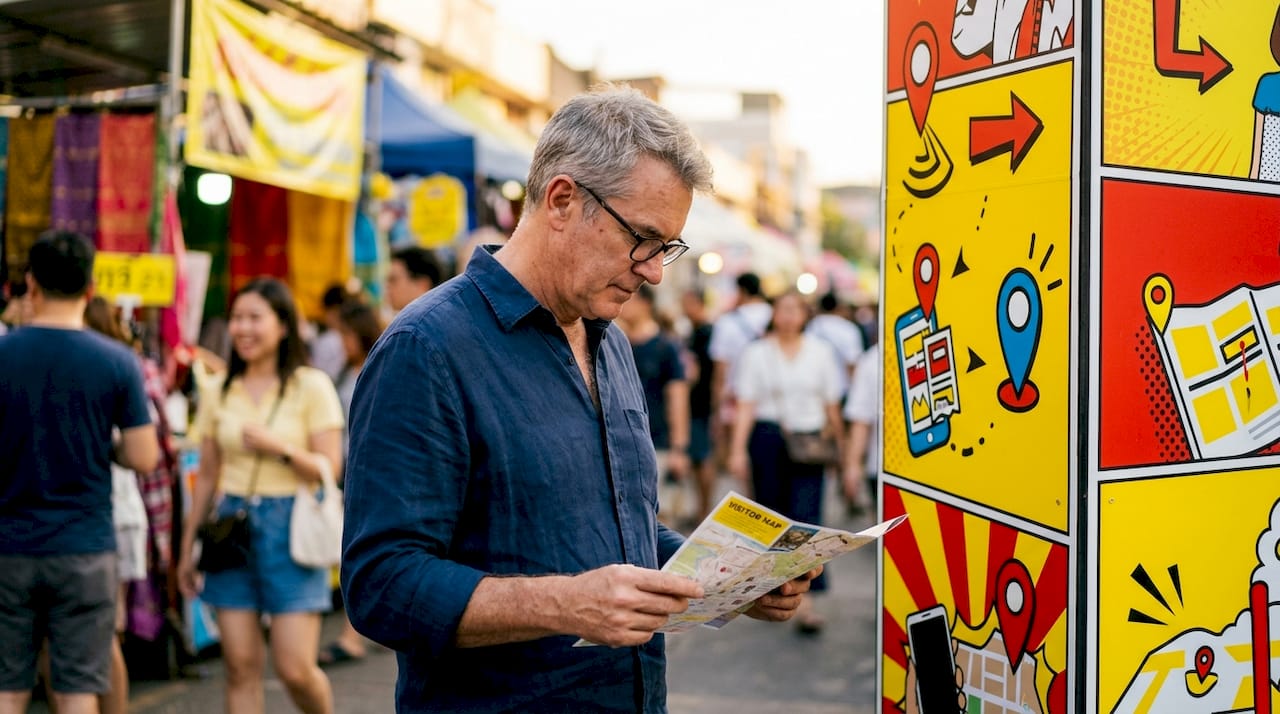
Effective branded wayfinding reduces staff interruptions by empowering visitors to self-navigate. Fewer direction requests mean your team spends more time on their core responsibilities. In a busy retail or commercial environment, that time saving compounds quickly across a working week.
Safety is an equally direct benefit. Clear wayfinding enhances safety by marking fire exits and emergency routes, which is critical for orderly evacuation. In the UK, the Regulatory Reform (Fire Safety) Order 2005 requires clearly marked escape routes in all non-domestic premises. Branded emergency signage can meet that legal requirement while remaining visually consistent with the rest of your environment.
Operational benefits also include reduced visitor bottlenecks. When people move through a space confidently, congestion at lifts, entrances, and service desks decreases. Modular signage systems add a further advantage: individual panels can be updated when layouts change, without replacing an entire installation.
- Reduced direction-giving frees staff for higher-value tasks.
- Marked emergency routes satisfy fire safety legislation.
- Modular panels lower the cost of future updates.
- Faster visitor flow reduces queuing and congestion at key points.
Pro Tip: When specifying a new wayfinding system, ask your supplier for modular panel options. Paying slightly more upfront for interchangeable components saves significant cost when you refurbish or reorganise a space.
3. Strengthening brand identity through integrated signage
Integrated wayfinding reduces decision fatigue by aligning brand expression and navigation as a single system. When visitors see consistent colours, fonts, and iconography throughout a building, they associate that coherence with professionalism and trustworthiness. The signage stops being functional furniture and becomes part of the brand experience.
Experiential wayfinding transforms navigation into a signature experience that reflects brand culture and identity. A retail environment that uses its brand palette across every directional sign, floor graphic, and department marker creates a space that feels considered and intentional. Visitors remember it. That memory supports repeat visits and word-of-mouth recommendation.
A brand-wayfinding guideline document is the practical tool that keeps this consistency intact. It specifies exact colour values, clear space rules, approved iconography, and typography hierarchies. Without it, signage added during a refurbishment or expansion will drift visually from the original system.
| Brand element | Application in wayfinding |
|---|---|
| Colour palette | Zone identification and directional coding |
| Typography | Destination labels and instructional text |
| Iconography | Pictograms for facilities and emergency routes |
| Logo usage | Entry points and primary directories |
The importance of a brand-wayfinding guideline cannot be overstated for organisations managing multiple sites or planning future growth. It is the document that prevents patchwork signage from undermining years of brand investment.
4. Reducing visitor stress and decision fatigue
Decision fatigue occurs when people face too many choices without clear guidance. In complex environments such as hospitals, universities, or large retail parks, poorly signed spaces force visitors to make repeated micro-decisions about direction. Each unresolved decision adds cognitive load and frustration.
Branded wayfinding addresses this directly by treating navigation and brand expression as one system. Consistent visual cues tell visitors they are in the right place and heading in the right direction. That reassurance reduces anxiety, particularly for first-time visitors or those with accessibility needs.
The practical result is a calmer, more positive visitor experience. Calmer visitors spend more time in a space, engage more with products or services, and leave with a better impression of the organisation. For retail businesses, that translates directly into dwell time and conversion.
5. Supporting accessibility and inclusivity
Accessible wayfinding is not an optional extra. The Equality Act 2010 places a legal duty on UK businesses to make reasonable adjustments for disabled people. Signage that uses only small text or low-contrast colours fails that duty and excludes a significant portion of your visitors.
Inclusive wayfinding uses a layered approach: large, high-contrast text; internationally recognised pictograms; tactile elements such as Braille and raised lettering for visually impaired visitors; and logical sign placement at consistent heights. Each layer serves a different need without cluttering the visual environment.
Branded wayfinding can incorporate all of these accessibility features while maintaining visual consistency with your wider identity. The result is a system that serves every visitor and demonstrates a genuine commitment to inclusion. That commitment is increasingly important to customers, partners, and regulators alike.
6. Flexibility and scalability as your space evolves
Planning wayfinding during architectural design improves long-term effectiveness and reduces costly replacements. Signage integrated from the outset uses sightlines, lighting, and architectural features to guide visitors naturally. Signage added as an afterthought often conflicts with the environment and requires expensive remediation.
Modular, scalable wayfinding designs are critical for future-proofing complex and growing environments. A modular system allows you to swap individual panels, update department names, or add new zones without commissioning an entirely new installation. For organisations that expand, rebrand, or reorganise regularly, this flexibility delivers measurable cost savings.
- Commission wayfinding as part of the initial fit-out specification, not after construction is complete.
- Specify modular panel systems that accept updated inserts without full replacement.
- Maintain a brand-wayfinding guideline document and update it whenever the brand identity changes.
- Conduct an annual signage audit to identify damaged, outdated, or missing signs before they affect visitor experience.
- Gather visitor feedback on navigation at least twice a year and use it to identify gaps in the system.
Balancing environmental graphics with navigational clarity is the final consideration. Large-format wall graphics and brand murals add atmosphere, but they must not compete visually with directional signs. The rule is straightforward: brand graphics set the tone, directional signs carry the instruction.
7. Building long-term customer loyalty
Emotionally connected customers are up to 50% more valuable than satisfied ones. Branded wayfinding contributes to that emotional connection by making every visit feel consistent, considered, and easy. A visitor who navigates your space effortlessly associates that positive experience with your brand, not just with the building.
Consistency across multiple sites amplifies this effect. When a customer visits your Manchester office and then your Birmingham branch, identical wayfinding systems signal that the same standards apply everywhere. That reliability builds trust over time. Trust, in a commercial context, converts into repeat business and referrals.
For organisations working across large-scale construction or commercial environments, professional sign installation services ensure that the physical execution matches the design intent. A well-designed system poorly installed undermines the brand impression it was created to reinforce.
Key takeaways
Branded wayfinding delivers the greatest return when navigation and brand identity are designed as a single, consistent system from the outset.
| Point | Details |
|---|---|
| User experience improvement | 87% of visitors report better perception of spaces with intuitive navigation. |
| Operational efficiency | Self-navigating visitors reduce staff direction-giving and ease congestion. |
| Brand consistency | A brand-wayfinding guideline document prevents visual drift across sites and refurbishments. |
| Safety compliance | Clearly marked emergency routes satisfy UK fire safety legislation requirements. |
| Scalability | Modular signage systems allow updates without full replacement as spaces evolve. |
Pikpikpow’s perspective on branded wayfinding
The most common mistake we see in wayfinding projects is treating signage as the last item on a fit-out checklist. It gets specified after the walls are painted and the furniture is in place, which means it fights the architecture rather than working with it. The result is signs bolted to columns at awkward angles, or directional arrows that point visitors towards a wall. Early integration is not a luxury. It is the difference between a system that works and one that creates more confusion than it resolves.
The second mistake is underestimating the value of the brand-wayfinding guideline document. We have worked on projects where a building was extended three years after the original fit-out, and the new signage used a slightly different shade of the brand colour because no one had documented the exact specification. Visitors notice that inconsistency, even if they cannot articulate why the space feels slightly off.
What genuinely transforms a space is wayfinding integrated into fit-outs from day one, using the brand’s full visual language. When that happens, the signage disappears into the environment in the best possible way. Visitors find where they need to go without effort, and they leave with a stronger impression of the brand. That outcome is entirely achievable with the right planning and the right production partner.
— PikPikPOW!
Pikpikpow’s branded wayfinding solutions
Pikpikpow produces internal wayfinding signage for businesses across retail, commercial interiors, construction, and the TV and film industry. Every system is designed to integrate your brand’s colours, typography, and iconography into a coherent navigation experience that works from day one.
Whether you need a modular panel system for a multi-floor office, directional signage for a retail environment, or a full signage system for a new build, Pikpikpow combines design expertise with precision manufacturing to deliver results that last. Get in touch to discuss your project and receive a tailored quote.
FAQ
What is branded wayfinding?
Branded wayfinding is a signage system that combines directional guidance with a company’s visual identity, using consistent colours, typography, and iconography to help visitors navigate while reinforcing brand recognition.
How does branded wayfinding improve customer experience?
Up to 87% of visitors in large facilities report that intuitive navigation significantly improves their perception of a space, making branded wayfinding a direct driver of positive customer experience.
Is branded wayfinding a legal requirement in the UK?
Branded wayfinding is not legally mandated, but UK businesses must comply with the Equality Act 2010 and the Regulatory Reform (Fire Safety) Order 2005, both of which set requirements that a well-designed wayfinding system can help satisfy.
What is a brand-wayfinding guideline document?
A brand-wayfinding guideline document specifies exact colour values, typography hierarchies, iconography standards, and clear space rules to maintain visual consistency across all signage as a property grows or changes.
How often should wayfinding signage be reviewed?
Wayfinding signage should be audited at least once a year to identify damaged, outdated, or missing signs, and visitor feedback should be gathered twice a year to identify gaps in the navigation system.