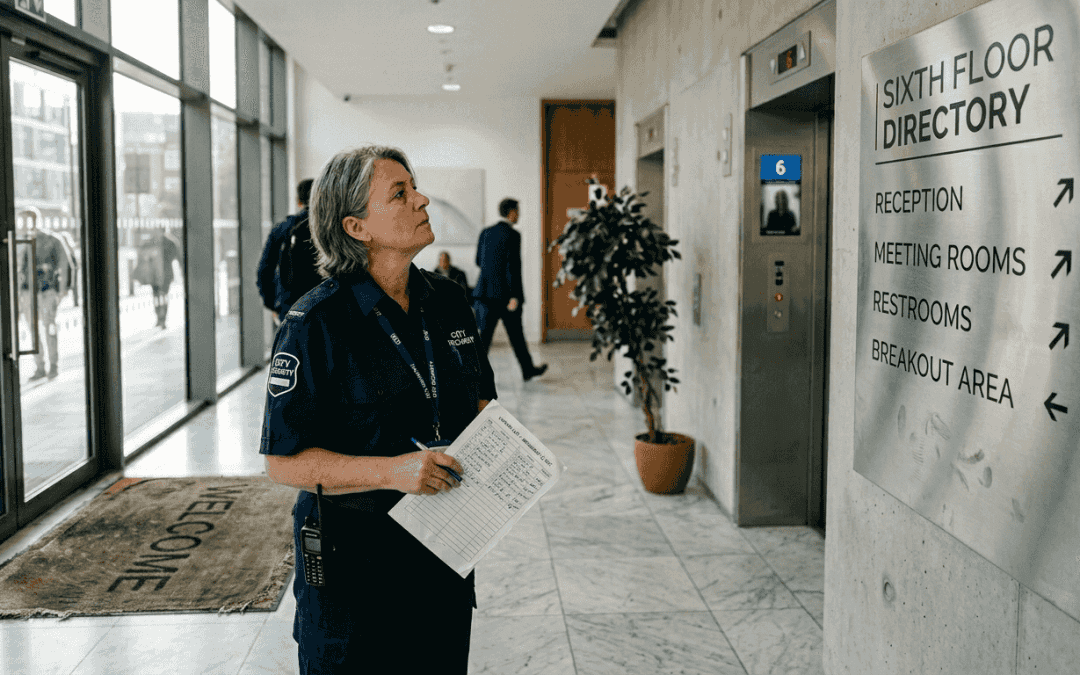
Employee productivity drops by 15% when office navigation systems fail to provide clear direction. This startling figure reveals how poor wayfinding in workplaces and retail spaces silently drains business efficiency every day. Effective wayfinding signage is a critical yet often overlooked solution that guides people through complex environments whilst reinforcing brand identity. This guide explains what wayfinding signage is, why it matters for your business operations, and how to implement systems that improve navigation, safety, and employee productivity across offices, retail spaces, and construction sites.
Table of Contents
- Understanding Wayfinding Signage: Purpose And Key Benefits
- Common Wayfinding Signage Types And Design Principles
- The Impact Of Wayfinding Signage On Business Operations And Brand Presence
- Implementing Effective Wayfinding Signage In Your Business
- Discover Expert Wayfinding Signage Solutions With Pik Pik Pow
- Frequently Asked Questions
Key takeaways
| Point | Details |
|---|---|
| Productivity boost | Wayfinding signage reduces time wasted locating places, improving employee efficiency. |
| Safety enhancement | Properly designed signage prevents accidents by providing clear directional guidance. |
| Brand visibility | Illuminated signs increase brand recognition, particularly in low-light environments. |
| Stress reduction | Professional signage systems minimise employee confusion and operational interruptions. |
Understanding wayfinding signage: purpose and key benefits
Wayfinding signage is a strategic system of visual cues that guides people through physical spaces efficiently and safely. These signs include directional markers, room identifiers, floor plans, and regulatory notices that work together to create intuitive navigation paths. Unlike decorative elements, wayfinding signage serves a functional purpose that directly impacts business operations.
Effective wayfinding signage ensures safe and smooth navigation for visitors and staff throughout complex buildings. When people can locate meeting rooms, facilities, and departments without confusion, organisations experience fewer interruptions and smoother workflows. The system prevents the frustration of getting lost, which particularly affects new employees, clients, and delivery personnel.
The business case for quality wayfinding extends beyond convenience. Poor wayfinding design wastes valuable work time as staff members struggle to locate meeting rooms, facilities, and colleagues. This lost productivity compounds over weeks and months, creating hidden operational costs that many businesses fail to recognise. Clear signage eliminates these inefficiencies by providing instant visual guidance.
Safety represents another critical benefit that justifies investment in professional wayfinding systems. Emergency evacuation routes must be immediately obvious to everyone in a building, regardless of their familiarity with the space. Well-designed signage reduces accidents by directing people away from hazardous areas and towards safe pathways, particularly important in construction sites and industrial facilities.
Consider these key advantages of implementing comprehensive wayfinding signage:
- Reduced employee stress and confusion in daily navigation
- Faster orientation for new staff members and visitors
- Enhanced professional image that reflects organisational competence
- Improved accessibility for people with mobility or visual impairments
- Stronger brand presence through consistent visual identity
Pro Tip: Audit your current space by following a new employee’s journey from entrance to their desk. Every moment of hesitation or wrong turn represents a navigation failure that signage should address.
Investing in internal wayfinding signage transforms it from an afterthought into a strategic asset that supports business goals. The system should evolve with your space, adapting to office reconfigurations, new departments, and changing traffic patterns to maintain its effectiveness over time.
Common wayfinding signage types and design principles
Businesses employ several distinct signage types to create comprehensive wayfinding systems. Directional signs use arrows and distance information to guide people towards specific destinations. Identification signs mark rooms, departments, and facilities once visitors arrive at the correct location. Informational signs provide building directories, floor plans, and general guidance. Regulatory signs communicate rules, restrictions, and safety requirements that users must follow.
Each signage type serves a specific purpose within the broader navigation system. Directional signs work best at decision points where people choose between multiple paths. Identification signs belong at entrances and doorways where confirmation is needed. Informational signs suit lobbies and lift areas where people plan their routes. Understanding these distinctions helps businesses deploy the right signage in optimal locations.

Design clarity forms the foundation of effective wayfinding. Sticking to clarity is the first principle to follow in sign design. Simple language, legible fonts, and universally recognised symbols ensure instant comprehension across diverse user groups. Avoid decorative typefaces that sacrifice readability for aesthetic appeal.
Visibility depends heavily on colour contrast and lighting conditions. Using the right colour contrast can deliver miraculous output for all users to appreciate. Dark text on light backgrounds provides maximum legibility, whilst complementary colours help signs stand out from surrounding environments. Consider how natural and artificial lighting affects visibility throughout the day.
Clutter represents a common design mistake that undermines wayfinding effectiveness. Each sign should communicate one clear message without overwhelming users with excessive information. Ambiguous symbols confuse rather than guide, so stick to standardised icons that people recognise instantly. White space around text and graphics improves readability and creates visual hierarchy.
Accessibility considerations ensure your wayfinding signs serve all users effectively:
- Tactile elements for visually impaired visitors
- Appropriate mounting heights for wheelchair users
- Braille translations on identification signs
- High-contrast colour schemes for low vision users
- Clear sightlines free from obstructions
Pro Tip: Test your signage designs with actual users from different backgrounds and abilities. Their feedback reveals comprehension issues that designers might overlook.
Comparing signage materials helps businesses select appropriate solutions:
| Material | Durability | Best Use | Maintenance |
| — | — | — |
| Acrylic | High | Indoor identification | Low |
| Aluminium | Very high | Outdoor directional | Minimal |
| Vinyl | Moderate | Temporary wayfinding | Low |
| LED illuminated | High | Brand visibility | Moderate |
Professional internal wayfinding signage balances aesthetic appeal with functional clarity. The system should reinforce your brand identity whilst prioritising user needs above decorative considerations. Consistency in fonts, colours, and formatting creates a cohesive visual language that users learn to recognise and trust.
The impact of wayfinding signage on business operations and brand presence
The operational costs of poor wayfinding extend far beyond initial confusion. Research reveals that poorly designed navigation systems waste 15% of employee time during their first month on the job. This productivity loss translates directly into reduced output, missed deadlines, and frustrated staff members who spend valuable work hours searching for locations instead of completing tasks.
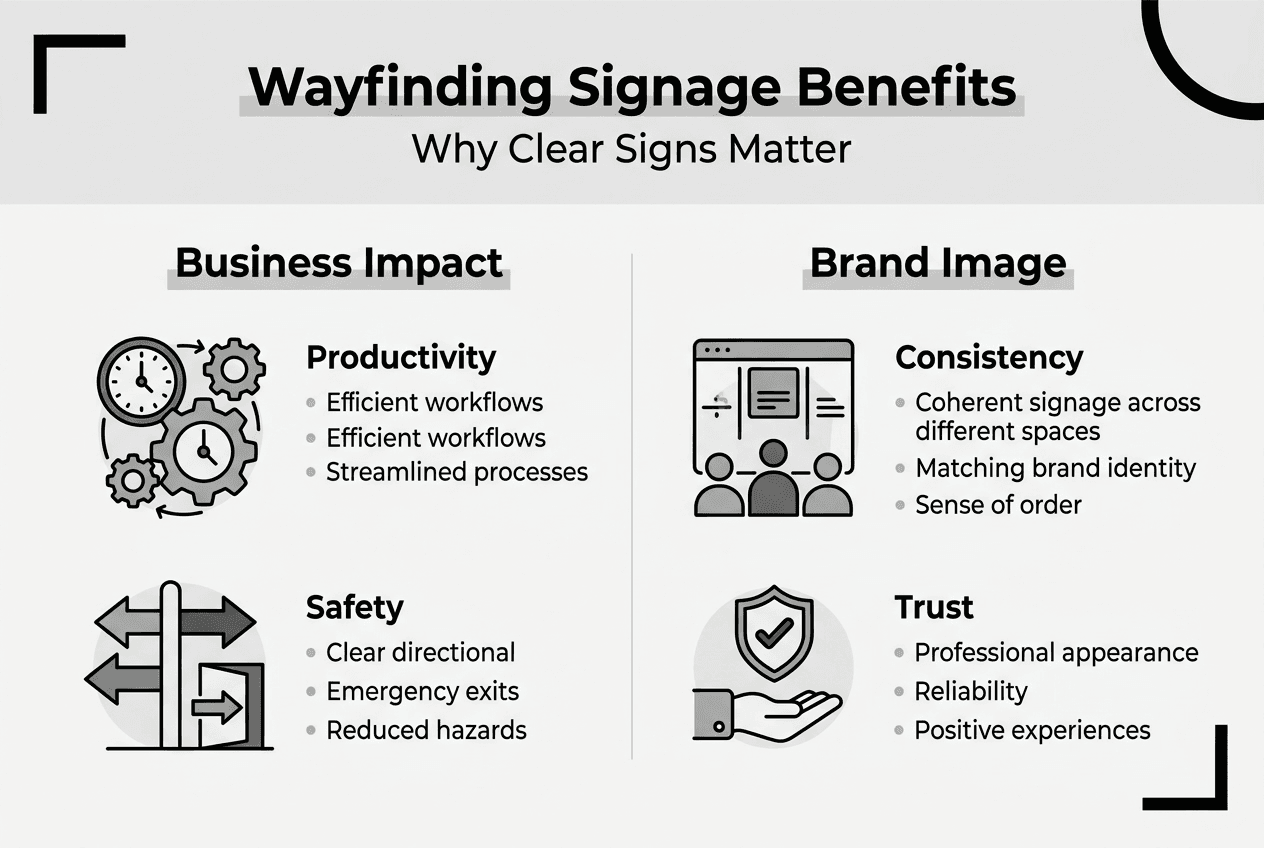
Well-designed signage systems eliminate these interruptions by providing instant visual guidance that employees and visitors can follow independently. Reception staff spend less time providing directions, allowing them to focus on higher-value activities. Meeting attendees arrive punctually because they navigate confidently to the correct rooms. Delivery personnel complete their rounds efficiently without constant assistance.
Employee stress decreases significantly when navigation becomes intuitive rather than challenging. The anxiety of getting lost or arriving late to important meetings creates unnecessary workplace tension that affects morale and job satisfaction. Clear wayfinding removes this stressor, contributing to a more positive work environment where people feel confident and capable.
Brand visibility receives a substantial boost from illuminated signage solutions. Illuminated signs increase brand recall by up to 40%, making them particularly valuable for retail environments and corporate buildings with significant foot traffic. LED technology provides consistent, energy-efficient illumination that maintains visibility during evening hours and in dimly lit corridors.
Consider these operational improvements from effective wayfinding implementation:
- Reduced time spent providing directions to visitors and new employees
- Fewer missed meetings due to navigation difficulties
- Improved first impressions for clients visiting your premises
- Enhanced safety compliance through clear emergency route marking
- Stronger brand consistency across all physical touchpoints
Professional wayfinding signage transforms confusion into confidence, creating spaces where people navigate naturally whilst absorbing your brand identity at every turn.
The role of signage in corporate environments extends beyond mere functionality to shape how employees and visitors perceive your organisation. Outdated, inconsistent, or missing signage suggests poor attention to detail and lack of investment in user experience. Conversely, thoughtful wayfinding systems communicate professionalism, care, and organisational competence.
Safety improvements represent perhaps the most critical operational benefit. Clear directional signage prevents accidents by guiding people away from hazardous areas and towards safe pathways. Emergency evacuation becomes faster and more orderly when escape routes are clearly marked and illuminated. This protection extends to construction sites, warehouses, and industrial facilities where navigation errors can result in serious injuries.
The power of backlit signs becomes evident in complex environments with multiple floors and departments. These illuminated solutions provide consistent visibility regardless of ambient lighting conditions, ensuring wayfinding effectiveness throughout the day. The investment pays dividends through reduced confusion, improved traffic flow, and enhanced brand presence that leaves lasting impressions on everyone who visits your premises.
Implementing effective wayfinding signage in your business
Successful wayfinding implementation begins with thorough assessment of your space and its navigation challenges. Walk through your premises from multiple entry points, noting where people typically hesitate or ask for directions. These decision points represent critical locations for strategic signage placement. Consider traffic patterns during peak hours, emergency evacuation routes, and accessibility requirements for people with disabilities.
Consulting with professional signage designers ensures your system addresses specific business needs whilst maintaining aesthetic coherence. Businesses that invest in professional office interior design for their wayfinding needs experience more efficient daily operations and reduced employee stress. Experts bring experience from diverse projects, helping you avoid common pitfalls and implement proven solutions.
Design priorities should emphasise clarity, accessibility, and brand consistency above decorative flourishes. Every sign must serve a clear purpose within the broader navigation system. Font selection impacts readability from various distances and angles. Colour schemes should provide sufficient contrast whilst aligning with corporate branding guidelines. Symbol choices must be universally understood rather than requiring cultural or linguistic knowledge.
Illuminated signage deserves serious consideration for spaces with challenging lighting conditions or high brand visibility requirements. LED solutions offer energy efficiency, longevity, and consistent illumination that maintains effectiveness throughout operational hours. These systems prove particularly valuable in retail environments, hotels, and corporate lobbies where first impressions matter significantly.
Follow these implementation steps for optimal results:
- Map all destinations that require signage, including rooms, facilities, and departments
- Identify decision points where directional guidance is needed
- Establish a consistent visual language for fonts, colours, and symbols
- Select appropriate materials based on durability requirements and budget
- Plan strategic placements at entrances, corridors, and intersections
- Install signs at consistent heights and viewing angles
- Test the system with representative users before final approval
- Schedule regular reviews to maintain accuracy as spaces evolve
Pro Tip: Create a signage standards manual that documents fonts, colours, sizing, and placement rules. This resource ensures consistency when adding new signs or updating existing ones.
Strategic placement maximises wayfinding effectiveness whilst minimising visual clutter. Directional signs belong at every point where people must choose between multiple paths. Identification signs should be visible from approaching corridors, not just directly in front of doorways. Informational signs work best in areas where people naturally pause to orient themselves.
Regular maintenance and updates keep your signage systems functioning effectively as your business evolves. Office reconfigurations, departmental moves, and new facilities require corresponding signage changes. Damaged or faded signs undermine the entire system’s credibility, so establish inspection schedules that identify issues before they impact user experience.
Accessibility compliance ensures your wayfinding serves all users regardless of physical abilities. Tactile elements help visually impaired visitors navigate independently. Appropriate mounting heights accommodate wheelchair users. Braille translations on identification signs provide essential information to blind users. These considerations reflect legal requirements whilst demonstrating organisational commitment to inclusive design.
Investing in professional internal wayfinding signage delivers returns through improved productivity, enhanced safety, and stronger brand presence. The system becomes an invisible infrastructure that supports daily operations whilst creating positive experiences for everyone who navigates your spaces.
Discover expert wayfinding signage solutions with Pik Pik Pow
Navigating the complexities of professional wayfinding implementation becomes straightforward when you partner with specialists who understand both design principles and practical installation requirements. Pik Pik Pow offers comprehensive signage systems tailored specifically for corporate environments, retail spaces, and construction sites across the UK.
Our internal wayfinding signage solutions combine strategic design with precision manufacturing to create navigation systems that improve operational efficiency whilst reinforcing your brand identity. We work closely with businesses to assess their unique challenges, develop custom signage strategies, and install durable systems that serve users effectively for years.
Explore our digital signage solutions for dynamic wayfinding experiences that adapt to changing needs. These modern systems provide flexibility for organisations with frequently updated information, temporary events, or multiple messaging requirements within a single space.
Frequently asked questions
What is wayfinding signage?
Wayfinding signage is a coordinated system of visual cues that guide people through physical spaces efficiently and safely. It includes directional signs, identification markers, informational displays, and regulatory notices working together to create intuitive navigation paths. The system serves functional purposes beyond decoration, directly impacting business operations and user experience.
Why is wayfinding signage important for businesses?
Effective wayfinding reduces the 15% productivity loss that occurs when employees waste time navigating poorly marked spaces. It minimises stress, prevents accidents through clear safety guidance, and creates positive first impressions for visitors. Professional signage systems enhance brand visibility whilst demonstrating organisational competence and attention to user needs.
What are the key elements of effective wayfinding signage design?
Successful wayfinding prioritises simple, legible fonts and universally recognised symbols that communicate instantly. Strong colour contrast ensures visibility across diverse lighting conditions and user abilities. Clear, uncluttered layouts prevent information overload whilst maintaining visual hierarchy. Accessibility features including tactile elements, appropriate mounting heights, and Braille translations ensure the system serves all users effectively.
How can I choose the right wayfinding signage for my workspace or retail environment?
Begin by evaluating your space’s specific navigation challenges through user journey mapping and observation of common confusion points. Partner with experienced signage professionals who can recommend solutions based on your traffic patterns, brand requirements, and budget constraints. Prioritise visibility, brand harmony, and accessibility compliance whilst selecting materials appropriate for your environment’s durability needs.
Are illuminated signs worth the investment for wayfinding?
Illuminated signage delivers substantial value through enhanced visibility in low-light conditions and complex environments. Illuminated signs increase brand recall by up to 40%, making them particularly effective for retail spaces and corporate lobbies with high foot traffic. LED technology provides energy-efficient, long-lasting illumination that maintains consistent visibility throughout operational hours whilst projecting a modern, professional image.