
TL;DR:
- Outdoor signs offer continuous brand visibility and credibility without recurring costs for UK businesses. Properly designed and installed signage can significantly increase foot traffic, build trust, and target local audiences effectively. Choosing the right sign type, materials, and professional installation maximizes ROI and long-term value.
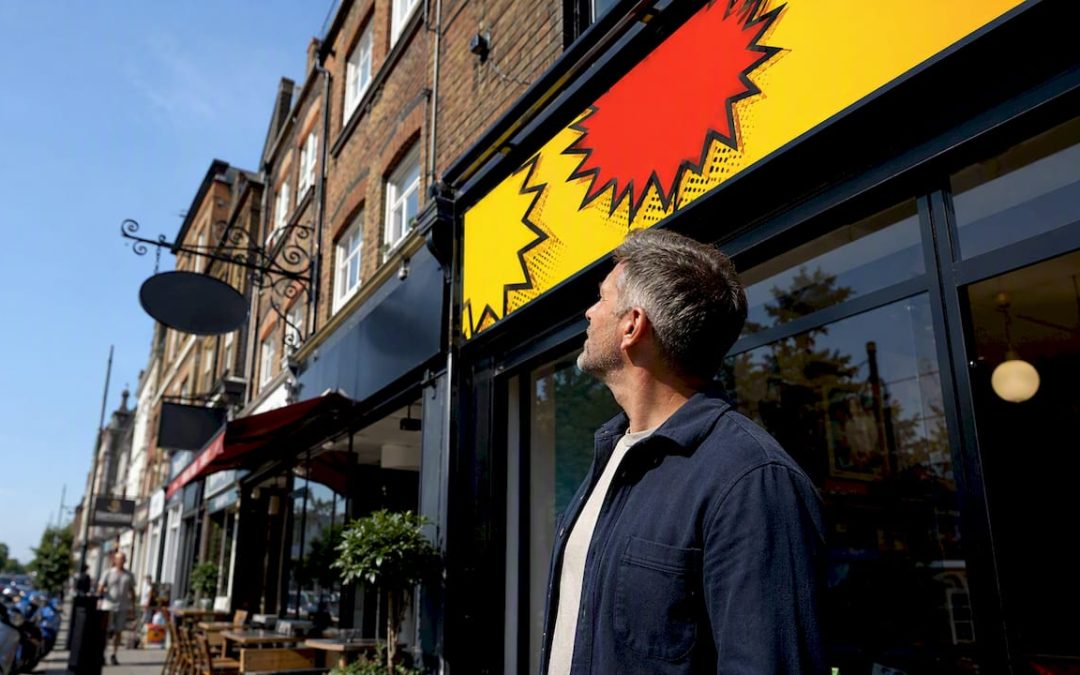
Outdoor signs are one of the most cost-effective marketing assets a UK business can own: a single, well-made sign delivers brand impressions continuously, builds credibility with passing trade, and directs new customers through your door without any recurring spend. The core advantages of outdoor signs include:
- Always-on visibility — your sign works 24 hours a day, seven days a week, with no media budget attached
- Brand awareness — consistent, professional signage communicates who you are before a customer sets foot inside
- Footfall lift — 76% of UK consumers say they will visit a business they have never heard of if its signage looks professional
- Wayfinding — clear directional signs reduce friction and help customers find you in complex locations
- Cost-effectiveness — unlike paid digital ads, a durable sign is a one-time investment that keeps generating impressions for years
- Credibility and trust — a polished shopfront signals quality before any conversation takes place
- Local market reach — exterior signage targets the exact geographic audience most likely to convert
Table of Contents
- What the advantages of outdoor signs actually mean for your business
- Which outdoor sign types suit your business best?
- What outdoor signs cost and how long they last
- How to get the most from your outdoor signage
- Why a bespoke signage specialist delivers better results
- Key takeaways
- The mistake most businesses make with outdoor signage
- Bespoke outdoor signage from Pikpikpow
- Useful sources
What the advantages of outdoor signs actually mean for your business
Each benefit above has a direct commercial outcome. Here is how they translate in practice.
Visibility that never switches off
Exterior signage works continuously as an always-on advertisement, delivering repeated brand impressions without ongoing media spend. A retailer on a busy high street might pass in front of thousands of commuters daily; every one of those passes is a free impression. For businesses in competitive locations, that cumulative exposure compounds over months and years in a way no pay-per-click campaign can replicate at the same cost.
First impressions and brand credibility
Consumers use your sign as a proxy for business quality. 70.5% of consumers say they will not enter a business if its external sign fails to give a professional first impression. That is a significant filter operating before you have had any chance to speak to a potential customer. For hospitality businesses, independent retailers, and professional services firms, a faded or poorly made sign actively costs you trade.
Footfall and new customer acquisition
Signage is often the deciding factor for impulse visits. The 76% figure cited above is particularly relevant for businesses in areas with high pedestrian traffic, such as town centres, retail parks, and food and drink districts. A refreshed shopfront can produce measurable uplifts in walk-in traffic, as retail case studies consistently show when businesses upgrade their exterior presence.

Wayfinding and reducing lost customers
If your premises are set back from the road, located in a business park, or share a building with other tenants, directional signage is not optional — it is functional. A customer who cannot find you will not wait; they will move on. Directional signage reduces that friction and ensures the footfall you have already earned through other marketing channels actually arrives at your door.
Cost-effectiveness compared with recurring ad spend
Paid digital advertising requires a continuous budget to maintain visibility. A durable exterior sign, by contrast, is a one-time investment that continues to deliver impressions year after year. When you compare the total cost of ownership over three to five years against equivalent digital reach, outdoor signage as a long-term investment often delivers a lower cost per impression than almost any other channel. For small and medium-sized businesses managing tight marketing budgets, that distinction matters practically, not just theoretically. For a broader view of how this compares with local advertising channels, it is worth understanding what recurring media spend actually costs before committing to either route.
Pro Tip: Track footfall or enquiry volumes before and after a sign installation or refresh. Even a simple tally counter or a note of weekly enquiries gives you a baseline to measure against, turning an anecdotal improvement into a figure you can report to stakeholders.
Which outdoor sign types suit your business best?
Outdoor signage covers several distinct formats, each suited to different locations, audiences, and business types. Matching the right format to your situation is where most of the ROI is won or lost.
| Sign type | Best use case | Typical placement |
|---|---|---|
| Fascia / shopfront sign | Primary brand identification for retail and hospitality | Above the entrance, spanning the shopfront width |
| Blade / projecting sign | High-street visibility where pedestrians approach from the side | Perpendicular to the building façade |
| Pavement board / A-board | Daily offers, menus, and impulse-driven messaging | Pavement directly in front of the premises |
| Freestanding / monument sign | Business parks, forecourts, and multi-tenant buildings | Ground level at the site entrance |
| Illuminated channel letters | Evening and night-time visibility for retail, leisure, and food | Fascia or wall-mounted, internally lit |
| Vehicle graphics | Mobile brand exposure across a wide geographic area | Vans, cars, and fleet vehicles |
| Window graphics | Promotional messaging and privacy for retail and offices | Glazed shopfront or office windows |
Fascia signs are the foundation of most retail and hospitality identities. They establish your brand name at the point where a customer decides whether to enter.
Blade signs are particularly effective on busy pedestrian streets where sightlines run parallel to the building rather than towards it. A projecting sign catches the eye of someone walking along the pavement in a way a flat fascia cannot.
Pavement boards work especially well for cafés, restaurants, and independent retailers because they intercept pedestrian sightlines at eye level and can be updated daily to reflect offers or specials. They trigger immediate action rather than building long-term awareness.
Vehicle graphics extend your reach well beyond your fixed location. A branded van travelling across a city generates impressions in postcodes you would never reach with a static sign. Pikpikpow’s vehicle graphics service covers full wraps, partial graphics, and fleet branding for businesses that want mobile visibility.
Window graphics serve a dual purpose: they communicate promotional messages to passing trade while also managing privacy and light levels inside. For retail, they are one of the most flexible and cost-accessible formats available. Pikpikpow’s window graphics range covers everything from cut vinyl lettering to full-colour printed films.
What outdoor signs cost and how long they last
Budgeting for exterior signage requires understanding both the upfront cost drivers and the total cost of ownership over the sign’s working life.
Key cost drivers
- Size and complexity — a larger sign with multiple elements costs more to fabricate and install than a simple flat panel
- Materials — aluminium composite, exterior-rated acrylic, and stainless steel carry different price points and lifespans
- Illumination — internally lit channel letters or LED-backlit panels add fabrication and electrical installation costs
- Site access and installation — high-level installations requiring scaffolding or a cherry picker increase labour costs significantly
- Planning and advertising consent — some sign types require consent from your local authority, which may involve application fees and lead time
- Design and artwork — bespoke design work is a separate cost from fabrication; a professional supplier will typically include this within the project scope
Ballpark pricing shapes
Entry-level flat fascia signs in PVC or aluminium composite tend to sit at the lower end of the market and suit businesses with straightforward requirements and standard dimensions. Mid-range projects involving acrylic lettering, illumination, or custom fabrication occupy a broader price band. Premium architectural signage, large-format illuminated installations, or projects requiring significant access equipment sit at the top of the range.
Exact figures vary considerably by specification, location, and supplier. The most reliable way to budget is to request a detailed quote based on your specific brief and site conditions.
Lifespan by material
Weatherproof materials such as aluminium composite, UV-coated vinyl, and exterior-rated acrylic are the industry standard for extended outdoor durability. Aluminium composite panels typically perform well for many years with minimal maintenance. UV-coated vinyl graphics on a well-prepared substrate can last five years or more before colour fade becomes noticeable. Acrylic faces and channel letters, when correctly sealed and installed, routinely outlast cheaper alternatives by a significant margin.
Investing in professionally made, weatherproof signage reduces the frequency of replacement and avoids the credibility damage that comes from a sign that visibly deteriorates. A sign that looks tired communicates the same message about your business.
Statistic to note: A durable, bespoke sign continues to deliver brand impressions year after year without ongoing media spend — making it one of the few marketing investments where the cost per impression decreases over time rather than increasing.
How to get the most from your outdoor signage
Good design and correct placement determine whether a sign delivers its potential. Here is a practical checklist to follow before ordering or installing.
- Apply the one-message rule. A sign that tries to communicate three things communicates none of them clearly. Choose one primary message: your name, your offer, or your direction.
- Use high-contrast colour combinations. Dark text on a light background, or light text on a dark background, reads at distance. Low-contrast combinations fail in bright sunlight and at night.
- Size lettering for your viewing distance. A general design rule of thumb is to place critical text within sightlines of 30–60 inches for pedestrian readability, and to scale letter height proportionally for vehicle-speed viewing distances.
- Position at the right eye line. For pedestrians, the primary message should sit between 1.5 and 2 metres from ground level. For drivers, higher placement and larger lettering are necessary.
- Check sightlines before finalising placement. Walk the approach routes your customers use. Identify any obstructions — parked vehicles, trees, adjacent signage — that could block the view.
- Confirm planning and advertising consent requirements. Many sign types, including illuminated projecting signs and pavement boards, are subject to local authority advertising consent or pavement licensing. Check with your council before installation to avoid removal or fines. A professional signage supplier can advise on what is likely to require consent for your specific sign type and location.
- Choose materials appropriate for your environment. A coastal location, a north-facing wall, or a high-pollution urban environment each place different demands on materials. Specify accordingly.
- Plan for maintenance access. If your sign is illuminated or at height, factor in how it will be cleaned, relamped, or repaired over its working life.
Pro Tip: Before briefing a supplier, photograph your premises from every approach angle a customer might use. Share those images with your designer — they reveal sightline constraints and scale relationships that are impossible to judge from a floor plan alone.
Why a bespoke signage specialist delivers better results
A professional signage supplier does considerably more than print a panel and bolt it to a wall. The difference between a generic sign and a bespoke installation shows up in durability, compliance, and commercial impact.
What a specialist supplier brings to a project:
- Site survey — a physical assessment of your premises, sightlines, substrate conditions, and any planning constraints before a single design decision is made
- Custom design — artwork developed specifically for your brand, your building, and your audience rather than adapted from a template
- Materials expertise — specification of the right substrate, finish, and fixings for your environment and expected lifespan
- In-house fabrication — control over quality at every stage, from cutting and printing to assembly and finishing
- Certified installation — experienced installers working safely at height, with the right equipment and liability cover
- Aftercare and warranty — a clear commitment to the sign’s performance after handover, including remediation if something fails
The typical project process runs from an initial discovery conversation through design approval, fabrication, installation, and a post-installation check. Lead times vary by complexity, but a well-run supplier will give you a clear programme at the outset and flag any planning consent timelines that could affect it.
For sector-specific examples of how professional signage works across different environments, Pikpikpow’s construction site signage guide illustrates how the same principles of visibility, compliance, and durability apply beyond the high street.
Key takeaways
Outdoor signs remain one of the highest-return, lowest-ongoing-cost marketing investments available to UK businesses, provided the specification, design, and installation are handled correctly.
| Point | Details |
|---|---|
| Always-on visibility | Exterior signage generates impressions continuously with no recurring media spend. |
| Consumer trust threshold | 76% of UK consumers will visit an unfamiliar business if its signage looks professional. |
| Material and lifespan | Aluminium composite, UV-coated vinyl, and exterior acrylic deliver multi-year performance when correctly specified. |
| Legal compliance | Illuminated and pavement signs often require local authority advertising consent — check before installation. |
| Pikpikpow | Pikpikpow offers bespoke design, fabrication, and installation of outdoor signage for UK businesses, with site surveys and aftercare included. |
The mistake most businesses make with outdoor signage
Most businesses underestimate scale. A sign that looks substantial on a design proof often disappears against a busy building façade in real life. The single most common error we see is lettering that is too small for the viewing distance — a problem that is entirely avoidable with a proper site survey and a designer who understands how signage reads in context rather than on screen.
The second most common mistake is choosing materials on price alone. A cheaper substrate might save a few hundred pounds upfront, but a sign that fades, warps, or delaminate within two years costs more in replacement and reputational damage than the saving was ever worth. Aluminium composite and exterior-rated acrylic cost more for a reason: they hold their appearance through British weather cycles that would destroy lesser materials within a season.
Small design choices produce outsized results. Switching from a low-contrast colour combination to a high-contrast one, or reducing a cluttered sign to a single clear message, can increase readability at distance by a factor that no amount of additional spend on size would achieve. The businesses that treat signage as a considered design decision, rather than a procurement task, consistently get more from the same budget.
Bespoke outdoor signage from Pikpikpow
Pikpikpow designs, manufactures, and installs bespoke outdoor signage for UK businesses across retail, hospitality, construction, and commercial property. The concrete difference from a generic print supplier is that every project starts with a site survey, not a template: your building, your sightlines, and your brand are the brief.
From shopfront fascia signs and illuminated channel letters to architectural signage and full signage systems, Pikpikpow handles design, fabrication, and installation in-house, with clear lead times and aftercare built into every project. You get a single point of contact from brief to handover, and a sign built to last rather than built to a price.
To get a quote or arrange a site survey, visit the Pikpikpow signage systems page and submit your enquiry. A member of the team will be in touch to discuss your requirements and next steps.
Useful sources
These resources provide further reading on outdoor signage effectiveness, design guidance, and UK market context:
- Exterior Signage Benefits: How Shopfront Signs Increase Footfall, Trust And Local Business Visibility — practical overview of how exterior signs generate impressions and support business growth
- Stats that prove how important signage is for your business — UK consumer statistics on signage and purchasing behaviour, useful for making the business case internally
- Retail signage in 2026: a complete guide to design and strategy — covers sign types, design principles, and material selection for retail environments
- The power of signage, why outdoor branding still matters in retail — industry perspective on signage as a brand-building tool with case study references
- Why good signage drives customer action — covers pavement signage, pedestrian sightlines, and local authority consent requirements