

Well-placed and consistent signage can increase brand recognition by up to 80% across UK retail, construction, and entertainment sectors. Yet many businesses still view signage as mere decoration rather than a strategic asset that drives customer behaviour and commercial success. This article explores how signage design expertise transforms brand visibility, navigates UK compliance requirements, and delivers measurable returns through tailored solutions for your sector.
Table of Contents
- Understanding Signage Design Expertise
- How Signage Enhances Brand Visibility And Customer Engagement
- Sector-Specific Applications Of Signage Design Expertise
- Technical And Regulatory Considerations For UK Signage Projects
- Design Principles And Material Innovations In Signage
- Common Misconceptions About Signage Design Expertise
- Bridging Theory To Practice: Implementing Expert Signage Solutions
- Transform Your Brand Presence With Expert Signage Solutions
- Frequently Asked Questions
Key takeaways
| Point | Details |
|---|---|
| Signage expertise combines creative, technical, and regulatory skills | Effective signage requires multidisciplinary knowledge spanning design, materials, illumination, and UK compliance. |
| Strategic signage boosts brand recognition and customer engagement | Consistent design elements and optimal placement create memorable brand touchpoints that guide purchasing decisions. |
| Sector-specific solutions address unique visibility challenges | Retail, construction, and entertainment sectors each demand tailored signage approaches for maximum impact. |
| UK regulations and material innovations shape modern signage | Planning permissions, health and safety rules, and sustainable technologies drive professional signage specifications. |
| Professional implementation ensures durability and compliance | Expert site surveys, quality materials, and proper installation prevent costly failures and legal issues. |
Understanding signage design expertise
Signage design expertise encompasses far more than aesthetic appeal. It represents a multidisciplinary blend of creative vision, technical execution, and regulatory awareness essential for UK businesses seeking competitive advantage. True expertise coordinates graphic design, structural engineering, illumination technology, and legal compliance into cohesive brand statements.
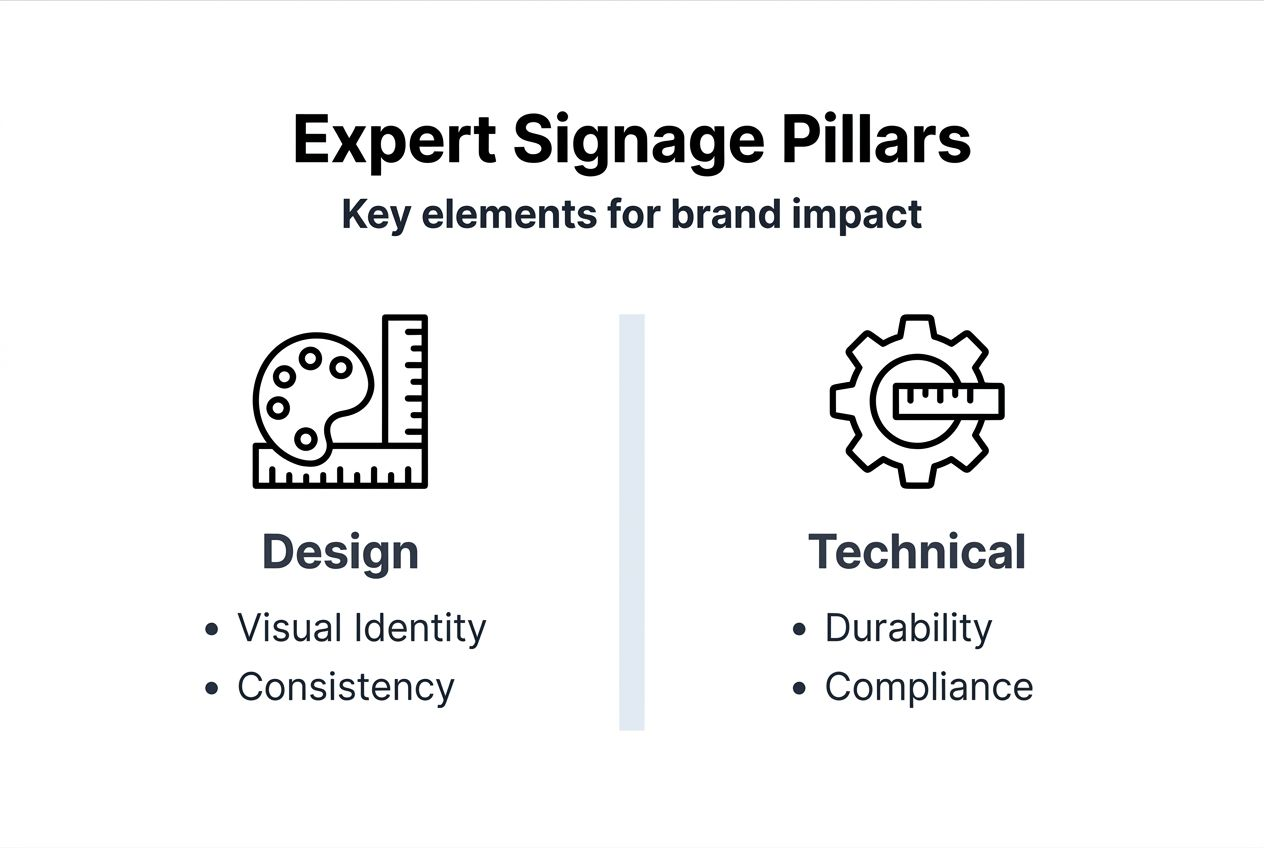
The role of design in signage extends across three critical pillars. Creative design establishes visual identity through colour, typography, and composition that resonates with target audiences. Technical execution translates concepts into durable physical installations using appropriate materials, fixings, and weatherproofing. Strategic application positions signage where it delivers maximum visibility and guides customer behaviour effectively.
Material considerations prove equally vital for longevity and performance. Outdoor signage demands UV-resistant substrates like aluminium composite panels or marine-grade plywood. Indoor applications allow lighter materials such as acrylic, foam board, or fabric systems. Illumination choices range from LED modules to solar-powered systems, each affecting energy costs and maintenance requirements.
Sector relevance shapes every specification decision. Retail environments prioritise customer flow and impulse purchasing triggers. Construction sites balance safety compliance with brand presence. Entertainment venues create immersive experiences through signage in commercial interiors that enhance spatial storytelling.
Key expertise areas include:
- Graphic design principles adapted for large-scale viewing distances and environmental conditions
- Material science covering substrates, adhesives, protective coatings, and structural supports
- Illumination technologies including LED efficiency, colour rendering, and power management
- UK planning permissions, building regulations, and health and safety compliance frameworks
- Installation techniques ensuring secure fixing, weatherproofing, and long-term structural integrity
The design in signage solutions directly impacts business outcomes through enhanced brand recognition, improved customer navigation, and measurable increases in footfall and sales conversion rates.

How signage enhances brand visibility and customer engagement
Signage represents the first physical brand touchpoint for most customers, creating immediate impressions that influence purchasing decisions and long-term loyalty. Effective signage design transforms passive viewers into engaged customers through strategic visual communication that guides behaviour and reinforces brand values.
Consistency in signage design including logo, colour, and typography reinforces brand recognition and builds consumer trust and credibility. When design elements align across shopfronts, internal displays, and promotional materials, businesses create cohesive brand experiences that customers remember and recommend. This consistency proves particularly crucial in competitive UK high streets where visual differentiation determines market share.
Strategic placement amplifies visibility through careful consideration of sightlines, lighting conditions, and pedestrian flow patterns. Site signage design that accounts for viewing angles, distance, and environmental context ensures messages reach intended audiences at optimal moments. Illuminated fascias extend visibility into evening trading hours, whilst directional signage reduces customer confusion and improves conversion rates.
Brand visibility mechanisms include:
- High-contrast colour schemes that stand out against urban backgrounds and competitor installations
- Scale-appropriate typography ensuring readability from target viewing distances in varied lighting
- Reflective and illuminated elements extending visibility during low-light conditions and adverse weather
- Architectural integration creating landmark status that aids navigation and word-of-mouth promotion
Customer engagement deepens through wayfinding systems that reduce frustration and create positive spatial experiences. Shop and exterior signage guides foot traffic towards entrances, highlights promotional offers, and reinforces brand personality through visual storytelling. Internal signage continues this journey by directing customers to product categories, services, or amenities with minimal cognitive effort.
Professional signage transforms passive storefronts into active marketing assets that work 24/7 to attract attention, communicate value propositions, and convert browsers into buyers through strategic visual messaging.
The measurable impact includes increased footfall, longer dwell times, higher average transaction values, and improved customer satisfaction scores. Businesses investing in expert signage design typically see returns within months through enhanced brand recognition and streamlined customer journeys.
Sector-specific applications of signage design expertise
UK retail, construction, and entertainment sectors each demand tailored signage approaches that address unique operational challenges and audience expectations. Understanding sector-specific requirements ensures signage delivers functional performance alongside brand impact.
Retail sector applications:
- Shopfront fascias and projecting signs establish street presence and attract passing trade through bold branding and illumination that extends visibility into evening trading hours.
- Window graphics balance promotional messaging with product visibility, using perforation ratios that maintain internal sightlines whilst creating external impact.
- Point-of-sale displays guide purchasing decisions through strategic placement of promotional messages, pricing, and product information at key decision points.
- Wayfinding systems in larger stores reduce customer confusion and improve conversion rates by clearly marking departments, facilities, and checkout locations.
- Totem signs in retail parks provide landmark visibility from road networks, helping customers locate stores within complex mixed-use developments.
Signage design for UK retail prioritises rapid communication in high-distraction environments where businesses compete for limited attention spans. Material choices favour durability and easy updating to accommodate seasonal campaigns and promotional cycles.
Construction sector applications:
Site hoardings combine safety compliance with brand promotion, transforming necessary barriers into marketing opportunities that maintain visibility throughout project durations. Construction signage terminology covers regulatory requirements including health and safety warnings, contact details, and planning permission notices.
Contractors use site signage to demonstrate professionalism, reassure neighbouring businesses, and attract future clients through proof of active projects. Temporary installations require weather-resistant materials and secure fixing systems that withstand wind loading and vandalism attempts.
Entertainment sector applications:
Venue signage creates immersive brand environments that enhance patron experiences through atmospheric lighting, thematic design elements, and intuitive wayfinding. Theatres, cinemas, and event spaces use architectural signage to establish identity whilst directing audiences through complex layouts with minimal staff intervention.
Emergency exit signage and accessibility information meet legal requirements whilst maintaining design consistency that supports overall venue aesthetics. Modular systems allow rapid updates for changing programming without compromising visual cohesion.
Technical and regulatory considerations for UK signage projects
Successful signage projects balance creative ambition with technical realities and legal obligations. Professional implementation begins with thorough site assessment and continues through compliant installation and quality assurance.
Full site surveys and annotated graphic concepts are essential before production to ensure signage aesthetics and functionality in varied environments. Surveys capture critical data including mounting surface conditions, power supply locations, sightline obstructions, and environmental factors like wind exposure or corrosive atmospheres.
UK planning permissions vary by location and signage type. Conservation areas and listed buildings face stricter controls requiring detailed applications and heritage-sensitive designs. Standard commercial signage often falls under permitted development rights, though size limits, illumination restrictions, and safety clearances still apply. Local planning authorities provide specific guidance for each jurisdiction.
Health and safety regulations govern installation practices and ongoing maintenance requirements. Working at height demands proper access equipment, risk assessments, and qualified personnel. Electrical installations for illuminated signage require Part P certification and periodic inspection to maintain safety standards.
Material selection balances performance requirements with budget constraints:
| Material | Durability | Weather Resistance | Typical Applications | Approximate Lifespan |
|---|---|---|---|---|
| Aluminium composite | Excellent | High | Fascias, panels, architectural signage | 15-20 years |
| Acrylic | Good | Medium | Internal displays, illuminated letters | 10-15 years |
| Vinyl graphics | Fair | Medium | Vehicle wraps, window graphics, temporary signage | 3-7 years |
| Dibond | Excellent | High | External panels, directional signs | 15-20 years |
| Marine plywood | Good | High (when sealed) | Painted fascias, traditional signage | 10-15 years |
Site signage design must account for mounting methods appropriate to substrate conditions. Brick and concrete allow various fixing options, whilst curtain walling and composite cladding demand specialist systems that avoid structural damage. Wind loading calculations ensure fixings withstand extreme weather without failure or safety risks.
Illumination technologies affect both initial costs and operational expenses. LED systems offer energy efficiency and long service lives exceeding 50,000 hours. Solar-powered options eliminate electrical infrastructure costs in suitable locations. Halo lighting creates premium aesthetics through indirect illumination that highlights signage edges.
Construction signage terminology includes load-bearing calculations, IP ratings for weatherproofing, and lux level specifications ensuring adequate visibility without light pollution. Professional suppliers provide technical drawings, structural calculations, and installation manuals supporting compliant implementation.
Design principles and material innovations in signage
Effective signage design applies psychological principles and material innovations to maximise impact whilst meeting practical performance requirements. Understanding these elements separates amateur attempts from professional solutions that deliver measurable business results.
Colour psychology influences customer perception and response rates. Red creates urgency and attracts attention, making it effective for promotional signage and clearance messaging. Blue conveys trust and professionalism, favoured by financial services and healthcare providers. Green suggests sustainability and wellbeing, increasingly popular across retail and hospitality sectors. High-contrast combinations like black-on-yellow ensure maximum legibility in challenging viewing conditions.
Visual hierarchy guides viewer attention through deliberate size, colour, and positioning relationships. Primary messages use larger type and prominent placement at natural eye levels. Secondary information appears in smaller sizes, allowing quick scanning without overwhelming main communications. Negative space prevents visual clutter and improves comprehension rates.
Typography choices balance brand personality with functional readability:
- Sans-serif fonts provide clean, modern aesthetics with excellent legibility at distance and in varied lighting conditions
- Serif faces convey tradition and authority, appropriate for established brands in professional services sectors
- Letter spacing adjustments compensate for viewing distance, with tighter tracking for close viewing and expanded spacing for roadside signage
- Stroke weight variations ensure visibility against diverse backgrounds without compromising design refinement
Material innovations expand creative possibilities whilst improving sustainability:
- LED technology delivers energy savings exceeding 80% compared to fluorescent alternatives, with colour consistency and dimming capabilities supporting dynamic displays
- Solar-powered systems eliminate electrical infrastructure costs and ongoing energy expenses in suitable locations with adequate daylight exposure
- Recycled aluminium and reclaimed timber reduce environmental impact without compromising durability or weather resistance
- Water-based inks and solvent-free adhesives minimise VOC emissions during production and installation phases
Illuminated and architectural signs combine aesthetic impact with practical performance through integrated lighting that enhances visibility whilst creating distinctive brand presence after dark. Halo-lit letters produce premium effects through indirect illumination that highlights craftsmanship and dimensional depth.
Pro Tip: Balance aesthetic preferences with energy efficiency by specifying LED systems with adjustable colour temperature and dimming controls, allowing you to optimise visibility and atmosphere whilst minimising operational costs and environmental impact throughout signage lifespan.
Digital signage platforms enable dynamic content updates and responsive messaging that adapts to time, weather, or promotional schedules. Cloud-based management systems allow remote control of multiple locations, reducing staff time and enabling coordinated campaigns across entire business networks.
Common misconceptions about signage design expertise
Several persistent myths undermine signage effectiveness and waste business investment. Clarifying these misconceptions helps organisations make informed decisions that deliver genuine returns.
Misconception: Signage is purely aesthetic decoration
Reality: Effective signage requires integrated technical, regulatory, and experiential knowledge; poor planning reduces impact by up to 40%. Professional design coordinates visual appeal with structural integrity, regulatory compliance, and strategic placement that guides customer behaviour and supports business objectives.
Misconception: DIY or budget signage delivers comparable results
Reality: Professional signage ensures durability, compliance, and measurable performance through expert material selection, proven installation techniques, and quality assurance processes. Amateur installations frequently fail within months due to inadequate weatherproofing, structural weaknesses, or regulatory non-compliance requiring costly remediation.
Misconception: Design consistency across touchpoints is unimportant
Reality: Brand recognition depends on consistent visual language across all customer interactions. Inconsistent signage confuses audiences, dilutes brand equity, and reduces marketing effectiveness by fragmenting the cohesive identity that builds trust and loyalty.
Misconception: Signage requires minimal maintenance once installed
Reality: Regular cleaning, inspection, and proactive repairs extend lifespan and maintain appearance. Neglected signage accumulates dirt, suffers weather damage, and projects negative brand impressions that undermine marketing investments and customer confidence.
| Misconception | Reality | Business Impact |
|---|---|---|
| Signage is only decoration | Strategic asset requiring technical expertise | Professional design increases recognition by up to 80% |
| DIY achieves similar quality | Professional installation ensures compliance and durability | Amateur attempts often fail within 12 months requiring replacement |
| Consistency doesn’t matter | Unified design builds recognition and trust | Inconsistent branding reduces marketing effectiveness by 23% |
| Maintenance is unnecessary | Regular upkeep preserves appearance and function | Neglected signage projects negative impressions damaging brand perception |
| Cheap materials suffice | Quality substrates resist weather and wear | Premium materials deliver 3-5x longer lifespan reducing total cost |
These misconceptions often stem from underestimating the complexity involved in effective signage delivery. Businesses viewing signage as a one-time cosmetic expense rather than strategic investment miss opportunities for enhanced visibility, improved customer experience, and competitive differentiation.
Bridging theory to practice: implementing expert signage solutions
Transforming signage knowledge into successful installations requires systematic approaches that coordinate design, production, and installation phases. Following proven processes ensures projects meet objectives whilst avoiding common pitfalls that waste time and resources.
Step-by-step implementation process:
- Conduct comprehensive site surveys documenting physical conditions, regulatory requirements, viewing angles, and environmental factors affecting material choices and installation methods.
- Develop design concepts translating brand guidelines into signage specifications, incorporating stakeholder feedback and refining proposals through iterative reviews.
- Select appropriate materials and fabrication techniques balancing performance requirements, budget constraints, aesthetic objectives, and maintenance considerations.
- Produce technical drawings and structural calculations supporting planning applications, building control submissions, and contractor coordination.
- Coordinate installation logistics including access arrangements, power connections, traffic management, and health and safety provisions.
- Implement quality assurance inspections verifying structural integrity, finish quality, illumination performance, and regulatory compliance before project handover.
- Establish maintenance schedules covering cleaning protocols, inspection intervals, and proactive repair procedures preserving appearance and function.
Successful projects depend on effective collaboration between stakeholders. Designers translate brand vision into practical specifications. Fabricators ensure production quality meets design intent. Installers deliver secure mounting and proper commissioning. Project managers coordinate timelines, budgets, and communication flows.
Signage systems benefit from modular approaches allowing phased implementation and future expansion without compromising visual consistency. Standardised components reduce production costs, simplify maintenance, and enable rapid updates responding to changing business needs or seasonal campaigns.
Internal and wayfinding signage requires particular attention to user experience and accessibility. Clear hierarchies, intuitive symbols, and consistent placement reduce cognitive load and improve navigation efficiency. Accessibility provisions including tactile elements and appropriate contrast ratios ensure inclusive design serving diverse user needs.
Pro Tip: Involve signage experts during early project planning rather than treating signage as an afterthought, allowing design integration with architectural elements, budget allocation for quality materials, and coordination with electrical and structural works that avoid costly modifications and delays.
Ongoing maintenance planning prevents deterioration and preserves investment value. Scheduled cleaning removes environmental soiling that dulls appearance. Regular inspections identify emerging issues before they escalate into safety hazards or require complete replacement. Proactive repairs address minor damage quickly, extending overall lifespan and maintaining professional presentation.
Digital asset management systems help businesses coordinate signage across multiple locations, ensuring consistent implementation of brand standards, efficient approval workflows, and centralised documentation supporting maintenance and future updates.
Transform your brand presence with expert signage solutions
Understanding signage design principles is only the first step. Implementing solutions that deliver measurable business impact requires partnering with specialists who combine creative vision with technical precision. Pik Pik POW! brings decades of experience helping UK businesses across retail, construction, and entertainment sectors elevate their brand presence through bespoke signage that works.
Our signage systems expertise spans shopfronts, architectural installations, vehicle graphics, and branded merchandise. We handle everything from initial site surveys through design development, fabrication, and professional installation. Whether you need eye-catching fascias for high street retail, compliant construction site signage, or immersive venue graphics, we deliver solutions engineered for UK conditions and regulations.
Modern businesses increasingly benefit from digital signage platforms enabling dynamic content updates and responsive messaging. Our team specifies appropriate technologies, manages installation, and provides ongoing support ensuring your digital displays maintain peak performance. Internal and wayfinding signage improves customer experience through intuitive navigation that reduces confusion and supports positive brand interactions.
Contact Pik Pik POW! today to discuss how expert signage design can transform your brand visibility and deliver measurable returns through strategic implementation tailored to your sector and objectives.
Frequently asked questions
What is signage design expertise?
Signage design expertise combines creative graphic design skills with technical knowledge of materials, structural engineering, and UK regulatory compliance. It ensures signage is visually effective, physically durable, and legally compliant. Professional expertise delivers solutions that withstand weather, attract attention, and support business objectives through strategic placement and consistent brand messaging.
How does signage design impact brand visibility in UK retail?
Retail signage creates immediate brand recognition through consistent use of logos, colours, and typography across shopfronts, windows, and internal displays. Strategic placement at key sightlines increases footfall by attracting passing trade. Clear wayfinding and point-of-sale signage improve customer experience, encouraging longer visits and higher transaction values that directly boost sales performance.
What UK regulations affect signage design and installation?
Planning permissions control signage size, illumination, and placement, with stricter rules in conservation areas and for listed buildings. Building regulations govern structural safety and electrical installations. Health and safety legislation covers working at height during installation and ongoing maintenance obligations. Material choices must comply with fire safety standards for internal applications.
Can I design my own signage without expert help?
DIY signage often lacks proper weatherproofing, regulatory compliance, and strategic placement that professional solutions provide. Amateur installations typically fail prematurely due to inadequate fixings, unsuitable materials, or planning violations requiring costly removal. Professional design ensures your investment delivers lasting impact whilst avoiding legal complications and safety hazards that undermine business reputation.