
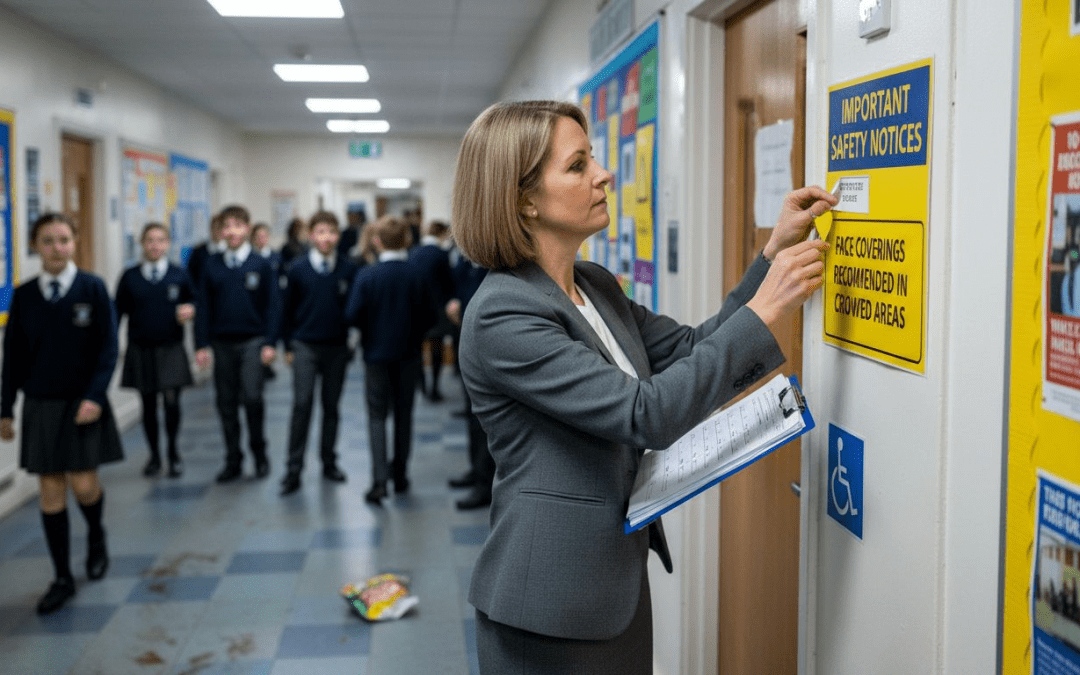
Poor signage in UK schools leads to confusion, late arrivals, and serious safety risks during emergencies. Many administrators struggle with unclear layouts, poor placement, and non-compliant accessibility features. This guide shows you how to design effective, compliant school signage that enhances navigation, safety, and communication across your campus.
Table of Contents
- Prerequisites And Safety Compliance
- Design Principles And Accessibility
- Types Of School Signage And Their Functions
- Implementation Steps For Effective Signage
- Materials And Durability Considerations
- Common Mistakes And Troubleshooting
- Project Timelines And Cost Considerations
- Expected Results And Outcomes
- Discover Professional School Signage Solutions
- How To Design School Signage: FAQs
Key Takeaways
| Point | Details |
|---|---|
| Legal compliance is critical | UK schools must follow Health and Safety Regulations 1996 and BS EN standards for safety signage. |
| Accessibility cannot be optional | Signs must include high contrast, clear fonts, and tactile elements for all users. |
| Poor placement is the top mistake | Over 40% of school audits find inadequate positioning causing confusion. |
| Material choice affects longevity | Weather-resistant materials reduce maintenance costs and extend sign lifespan in UK climates. |
| Student involvement improves outcomes | Engaging students in design increases buy-in and reduces vandalism by up to 20%. |
Prerequisites and Safety Compliance
Before designing compliant signage, you need to understand the UK legal framework governing school safety signs. The Health and Safety (Safety Signs and Signals) Regulations 1996 require schools to display warning, prohibition, and mandatory signs wherever hazards exist.
Your safety signage must conform to BS EN 1716 and BS EN ISO 7010 standards. These define specific colours, shapes, and symbols that communicate urgent information universally. School safety signage should be positioned at decision points, especially near stairs, exits, and hazardous areas, to ensure clear evacuation routes.
To prepare for your signage project, gather these baseline tools:
- Current site maps showing building layouts and traffic flow patterns
- Accessibility audit data identifying areas requiring additional support
- Recent safety inspection reports highlighting compliance gaps
- Student and staff movement data to identify congestion points
Accessibility and inclusivity form the foundation of effective school signage. Your signs must work for students with visual impairments, learning difficulties, and mobility challenges. This means incorporating tactile elements, braille, and high-contrast colour schemes from the start, not as afterthoughts.
“Effective school signage begins with understanding legal requirements and accessibility needs, then builds design around those non-negotiable standards to create safe, inclusive environments.”
Design Principles and Accessibility
Legible signage depends on high-contrast colour combinations meeting WCAG 2.1 guidelines. Dark text on light backgrounds or light text on dark backgrounds ensures readability from distance. Avoid grey-on-grey or pastel combinations that fade in bright corridors or outdoor settings.
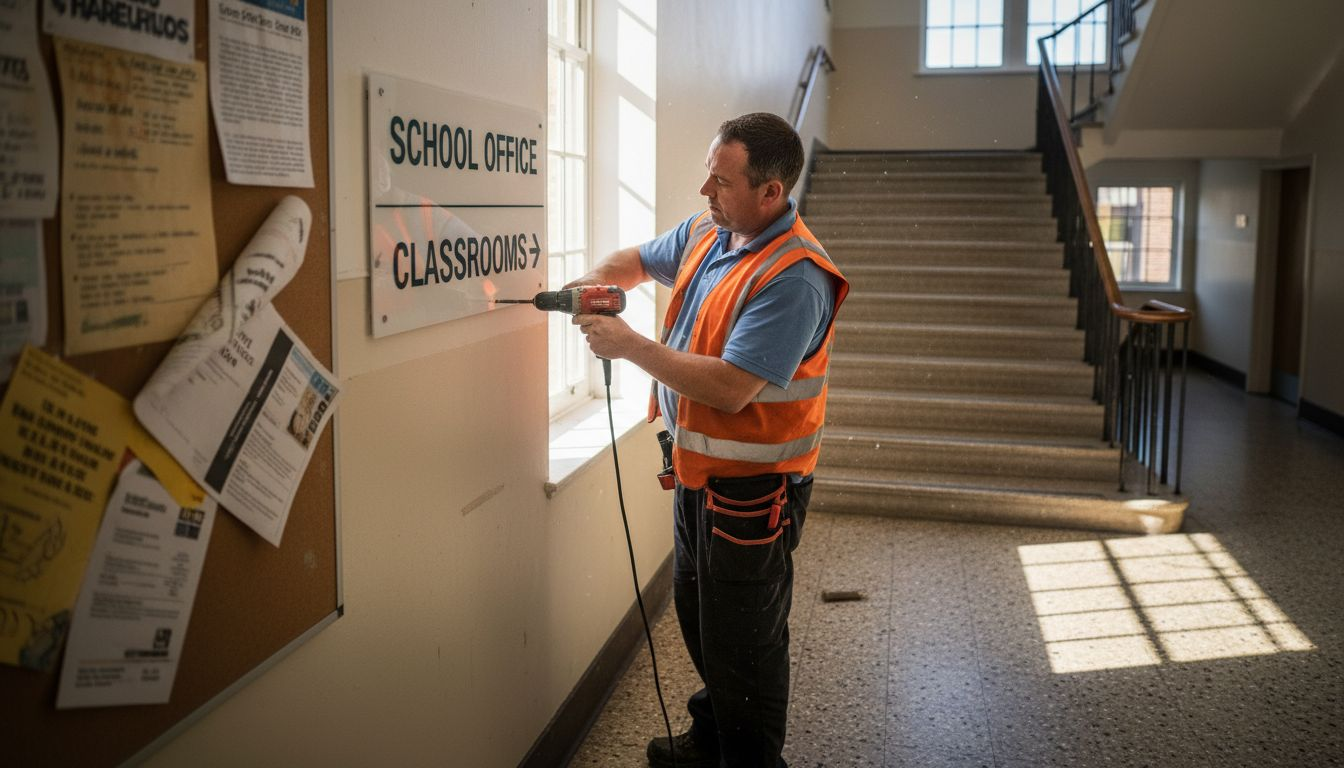
Font selection matters more than most administrators realize. Sans-serif typefaces like Arial, Helvetica, or specialist accessibility fonts perform best. Minimum letter heights should be 15mm for every metre of viewing distance. Complex decorative fonts slow reading speed and confuse readers with dyslexia or visual processing challenges.
Iconography must conform to ISO 7010 standards for safety symbols. These universal pictograms communicate across language barriers, crucial in diverse school populations. Custom graphics work for branding signs but stick to standardized symbols for safety and wayfinding.
Tactile and braille elements transform signage accessibility. Raised letters and symbols help visually impaired users navigate independently. Position tactile signs at consistent heights, typically 1400-1600mm from floor level, on the latch side of doors.
Involve students and staff in design decisions. This engagement creates buy-in, reduces vandalism, and surfaces insights about confusing layouts you might miss. Student councils can help select colours, review clarity, and test prototypes before full production.
Pro Tip: Test your sign designs in actual lighting conditions at different times of day. Overhead fluorescents, natural light, and evening visibility all affect legibility differently.
Compliant, accessible design delivers concrete benefits. Navigation becomes intuitive, reducing late arrivals and staff interruptions for directions. Legal compliance protects against liability claims. Most importantly, inclusive signage demonstrates your commitment to supporting every member of your school community.
Explore more design and accessibility guidelines to refine your approach and ensure compliance across all signage types.
Types of School Signage and Their Functions
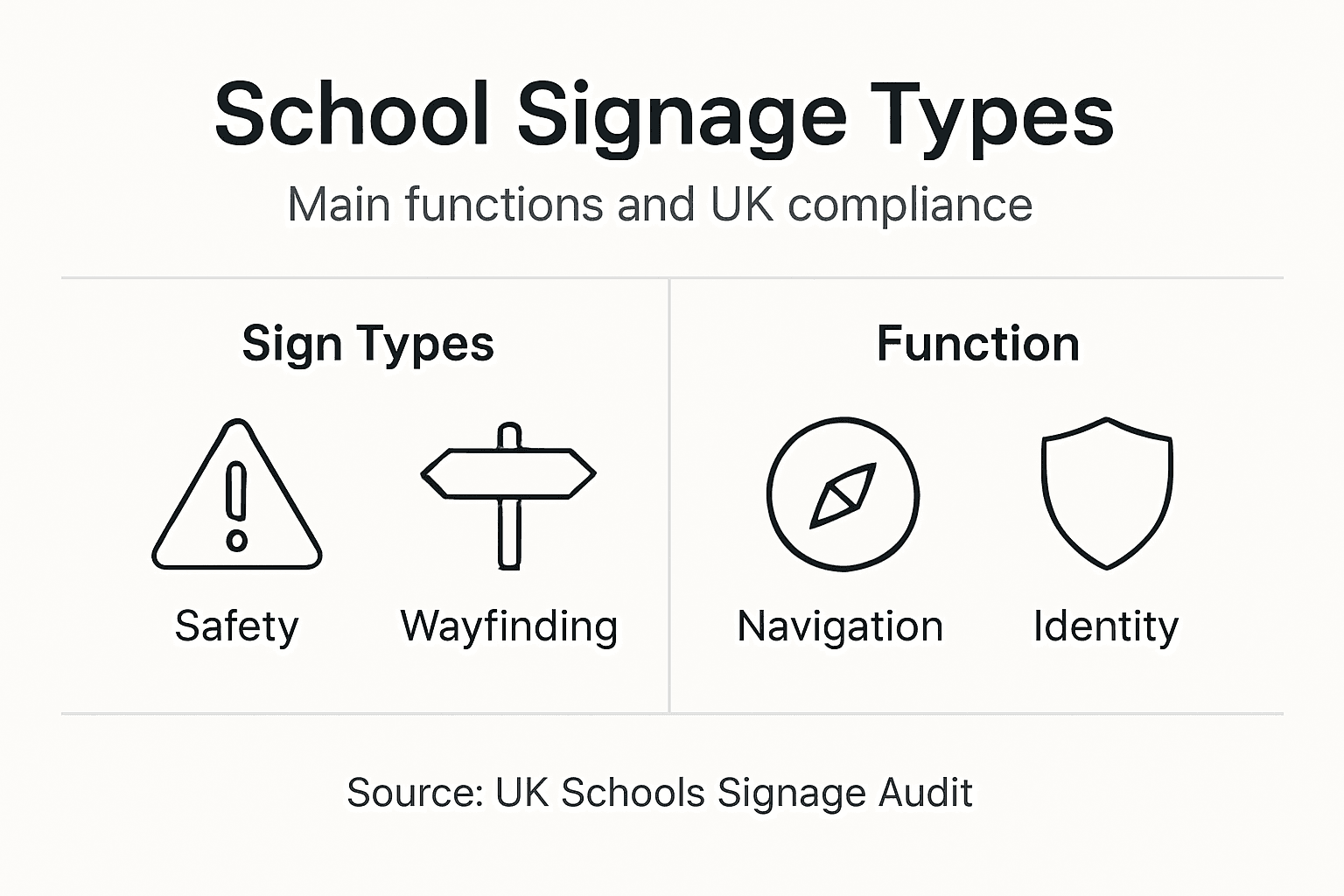
Directional signage forms your wayfinding backbone, guiding visitors, new students, and substitute teachers through your campus. Clear arrows, room numbers, and building names reduce congestion in corridors and eliminate the frustration of wandering lost during transitions.
Safety and emergency signs serve critical legal and protective functions:
- Fire exit markers showing quickest evacuation routes
- Fire extinguisher and assembly point locations
- Hazard warnings near laboratories, workshops, and maintenance areas
- First aid station identifiers for quick emergency response
Informational signs communicate policies, schedules, and school news. These include visitor check-in instructions, drop-off procedures, term calendars, and achievement displays. Strategic placement near entrances and reception areas ensures maximum visibility.
Branding signs build school identity and community pride. Welcome messages, mission statements, house colours, and achievement boards create visual culture. These enhance the environment while reinforcing values and traditions.
Digital signage complements traditional signs by displaying dynamic content like daily announcements, event countdowns, and emergency alerts. Screens work well in reception areas and main corridors where information changes frequently. However, static signs remain essential for permanent wayfinding and safety information that must function during power outages.
Balance your mix based on facility size and needs. Smaller primary schools may prioritize safety and basic wayfinding, while larger secondary campuses benefit from comprehensive directional systems and digital updates.
Implementation Steps for Effective Signage
Successful signage projects follow a structured process from audit to installation. Skip steps and you risk compliance gaps or wasted budget on ineffective signs.
- Conduct a comprehensive signage audit walking every corridor, entrance, and stairwell to identify missing or damaged signs.
- Map key decision points where users choose between routes, especially near stairs, lifts, and building connections.
- Define sign categories aligning with legal requirements and school-specific needs like house systems or specialized facilities.
- Develop design specifications documenting fonts, colours, sizes, and mounting heights for consistency.
- Select materials appropriate for each location, considering indoor versus outdoor exposure and vandalism risk.
- Coordinate signage production and installation with experienced professionals who understand school environments.
- Train reception staff and premises teams on the new system so they can direct visitors confidently.
- Schedule quarterly inspections to identify damage, fading, or areas requiring additional signs.
Planning signage for impact requires balancing regulatory compliance with user experience. Your audit data drives decisions about where signs add most value.
| Implementation Phase | Typical Duration | Key Activities |
|---|---|---|
| Audit and Planning | 1-2 weeks | Site survey, stakeholder input, compliance review |
| Design Development | 1-2 weeks | Specifications, prototyping, approval cycles |
| Production | 2-3 weeks | Manufacturing, quality checks, delivery |
| Installation | 1 week | Mounting, positioning verification, cleanup |
Pro Tip: Install temporary directional signs immediately after facility changes or renovations. Permanent replacements can follow once you verify the new layout works effectively.
Involve students in familiarization activities, especially after major signage updates. Scavenger hunts or orientation activities help embed the new system while making navigation feel approachable rather than intimidating.
Find additional signage design insights to refine your implementation approach and avoid common pitfalls that delay projects.
Materials and Durability Considerations
Material selection directly impacts signage lifespan and maintenance costs. UK weather demands durability, especially for outdoor signs facing rain, UV exposure, and temperature fluctuations.
Aluminium composite panels offer excellent weather resistance and rigidity for outdoor directional and entrance signs. These lightweight panels resist warping and maintain appearance for 10+ years with minimal maintenance. UV-resistant vinyl graphics on composite backing work well for car park signs and external wayfinding.
For indoor corridor signs, rigid PVC or acrylic provides durability against knocks from bags and trolleys. Acrylic delivers a premium appearance suitable for reception areas and administrative offices. Dibond aluminium composite balances cost and quality for high-traffic internal wayfinding.
Weather resistance matters even indoors in poorly heated older buildings where condensation and temperature swings affect adhesives. Mechanical fixings outperform adhesive-only mounting in challenging environments.
Cost factors extend beyond initial purchase:
- Aluminium composite: higher upfront cost, minimal maintenance, 10+ year lifespan
- Rigid vinyl: moderate cost, replacement every 5-7 years, easier DIY updates
- Digital screens: significant upfront investment, ongoing electricity and content management costs
- Printed paper/card: lowest cost, requires frequent replacement, suitable only for temporary notices
| Material Type | Indoor Lifespan | Outdoor Lifespan | Maintenance Level | Relative Cost |
|---|---|---|---|---|
| Aluminium Composite | 15+ years | 10-12 years | Low | High |
| Acrylic | 10-12 years | 5-7 years | Low | Medium-High |
| Rigid PVC | 8-10 years | 3-5 years | Medium | Medium |
| UV-Resistant Vinyl | 5-7 years | 3-5 years | Medium | Low-Medium |
Smaller schools with limited budgets should prioritize durable materials for permanent safety and wayfinding signs, using cost-effective options for informational signs that update regularly. Larger campuses benefit from investing in premium materials across all categories to minimize replacement cycles.
Explore our comprehensive signage materials guide for detailed specifications and recommendations tailored to UK educational environments.
Common Mistakes and Troubleshooting
Poor positioning tops the list of signage failures. Signs mounted too high, obscured by notice boards, or placed after decision points arrive too late to help. Over 40% of UK school audits identify inadequate placement and accessibility non-compliance as critical issues.
Ignoring accessibility needs excludes significant portions of your community. Missing tactile elements, insufficient contrast, or inconsistent positioning creates barriers for visually impaired users. These oversights expose schools to discrimination claims and fail your duty of care.
Unclear language and symbols confuse rather than clarify. Jargon-heavy room names, inconsistent terminology, or non-standard symbols force users to guess meanings. A “Faculty Hub” means nothing to a parent visiting for the first time. “Staff Room” communicates clearly.
Lack of maintenance undermines even excellent initial installations:
- Faded outdoor signs become illegible after 3-5 years without UV protection
- Damaged signs send messages of neglect and poor facility management
- Outdated information erodes trust in all signage, even current signs
- Loose fixings create safety hazards from falling signs
Solutions start with comprehensive compliance audits identifying gaps against current regulations. Involve diverse stakeholders including students with disabilities, ESL parents, and new staff to surface usability issues you might overlook.
“Effective signage systems require ongoing stewardship, not one-time installation. Schedule quarterly inspections and annual comprehensive reviews to maintain safety and effectiveness.”
Establish clear maintenance schedules with your premises team. Quarterly visual inspections catch damage early. Annual deep reviews assess whether signage still matches facility use and student needs as your school evolves.
Document common signage mistakes and solutions specific to your campus so new facilities staff understand priorities and standards.
Project Timelines and Cost Considerations
Realistic planning prevents rushed decisions and budget overruns. Typical school signage projects span 4 to 8 weeks from initial audit to final installation, depending on scope and complexity.
Smaller projects replacing 20-30 corridor signs complete faster, often within 4-5 weeks. Comprehensive campus-wide systems for large secondary schools require 8-12 weeks, especially when coordinating around term schedules to minimize disruption.
Average costs range from £2,000 to £10,000 based on these factors:
- Number of signs needed across buildings and grounds
- Material quality and durability requirements
- Custom design work versus template solutions
- Installation complexity including height access and surface preparation
- Digital signage integration and content management systems
Phased implementation helps manage budgets and reduce operational impact. Start with critical safety signage and main entrance wayfinding, then expand to secondary corridors and external areas as budget allows. This approach also lets you refine designs based on real-world feedback before full rollout.
Include future maintenance and updates in financial planning. Set aside 10-15% of initial costs annually for repairs, replacements, and system expansion as facilities change. This prevents deferred maintenance that compromises safety and appearance.
Early planning during budget cycles improves outcomes. Starting conversations 6-9 months before desired installation allows proper procurement, stakeholder consultation, and scheduling around term breaks when access is easier.
Expected Results and Outcomes
Well-designed signage delivers measurable improvements across safety, efficiency, and school culture. Schools report up to 15% reduction in late arrivals after implementing clear wayfinding systems that help students and staff navigate confidently.
Emergency evacuation becomes faster and safer when exit routes are clearly marked at every decision point. Regular fire drills show improved assembly times and reduced confusion, particularly for visitors and new students unfamiliar with buildings.
Compliance improvements protect against liability while demonstrating duty of care:
- Safety audits show fewer gaps in hazard warnings and emergency information
- Accessibility compliance increases, reducing discrimination risks
- Insurance assessments recognize improved risk management
Stakeholder involvement in design reduces vandalism significantly. Schools engaging students in signage planning report 20% fewer damaged signs because students feel ownership over the system they helped create.
Maintenance audits reveal longer-lasting signs when proper materials match environmental conditions. UV-resistant outdoor signs maintain legibility 40% longer than standard materials, reducing replacement frequency and costs.
School identity strengthens through consistent, professional branding signs. Parents and visitors report more positive first impressions, while students express greater pride in well-maintained, attractive facilities.
Communication effectiveness improves as information reaches target audiences reliably. Digital screens in reception areas ensure current information displays, while static signs provide permanent reference points that build familiarity over time.
Explore the benefits of effective signage design and review signage impact statistics demonstrating return on investment across various educational settings.
Discover Professional School Signage Solutions
Transform your school’s safety, navigation, and identity with professional signage designed specifically for UK educational environments. Pik Pik POW! delivers custom signage systems combining compliance expertise with impactful design that elevates your campus.
Our internal wayfinding signage solutions reduce confusion and late arrivals while meeting all accessibility requirements. Complement traditional signs with our digital signage solutions for dynamic announcements and emergency alerts. Professional design and installation streamline compliance and maximize impact across your entire campus.
How to Design School Signage: FAQs
What are key safety signage standards schools must follow?
UK schools must comply with Health and Safety (Safety Signs and Signals) Regulations 1996, requiring specific warning, prohibition, and mandatory signs. All safety signage should conform to BS EN 1716 and BS EN ISO 7010 standards, which define colours, shapes, and universal symbols for hazard communication.
How often should school signage be inspected and maintained?
Conduct visual inspections quarterly to identify damage, fading, or missing signs that compromise safety. Perform comprehensive annual audits reviewing compliance, positioning effectiveness, and whether signage matches current facility use and regulatory updates.
Can students be involved in signage design and what benefits does it bring?
Student involvement increases buy-in and reduces vandalism by up to 20% because learners feel ownership over systems they help create. Students provide valuable insights about confusing layouts and can test prototypes, ensuring designs work for primary users before full production.
What are cost-effective materials suitable for UK school environments?
UV-resistant vinyl on rigid PVC backing offers durability at moderate cost for indoor corridor signs. Aluminium composite panels provide excellent weather resistance for outdoor signs with 10+ year lifespans. Prioritize premium materials for permanent safety signs, using economical options for frequently updated informational displays.
How can digital signage complement traditional school signs?
Digital screens excel for dynamic content like daily announcements, event schedules, and emergency alerts in reception areas and main corridors. However, maintain static signs for permanent wayfinding and safety information that must function during power outages or technical failures.
What viewing distances should inform sign sizing decisions?
Calculate letter height using the 15mm per metre rule: signs viewed from 5 metres need minimum 75mm letters. Position directional signs at decision points where users have time to read and process information before choosing routes, typically 3-5 metres before intersections or turns.