

TL;DR:
- Effective shopfront signage influences first impressions, guides customer decisions, and increases foot traffic. Well-designed signs build trust, reinforce brand identity, and can significantly boost sales and customer engagement. Combining static and digital signage strategies maximizes visibility and return on investment over time.
Most business owners think of shopfront signage as decoration. A name above the door, a logo on the window. Nice to have, but not something that moves the needle. That assumption is costing businesses customers every single day. Understanding why invest in shopfront signage goes well beyond aesthetics. Your sign is working for you around the clock, shaping first impressions, guiding decisions, and influencing whether someone walks through your door or keeps walking. This article covers the psychological, commercial, and operational case for taking your signage seriously.
Table of Contents
- Key takeaways
- Why invest in shopfront signage: the strategic case
- How signage builds brand identity and trust
- Static vs. digital shopfront signage
- Best practices for maximising signage ROI
- The measurable impact of signage on sales
- Our perspective on signage as a business asset
- Upgrade your shopfront with Pikpikpow
- FAQ
Key takeaways
| Point | Details |
|---|---|
| Signage drives foot traffic | 76% of consumers enter a new store because of its signage, making your shopfront your most visible marketing tool. |
| First impressions affect trust | Poor-quality or inconsistent signage signals low credibility and reduces the likelihood of customers entering. |
| Digital and static each have strengths | The right combination of static and digital signage maximises visibility, engagement, and cost efficiency. |
| Design quality affects sales directly | Well-designed signage using correct contrast, spacing, and placement can increase transaction values and reduce shopper anxiety. |
| Signage is a measurable asset | With the right tracking and design approach, shopfront signage delivers a quantifiable return on your investment. |
Why invest in shopfront signage: the strategic case
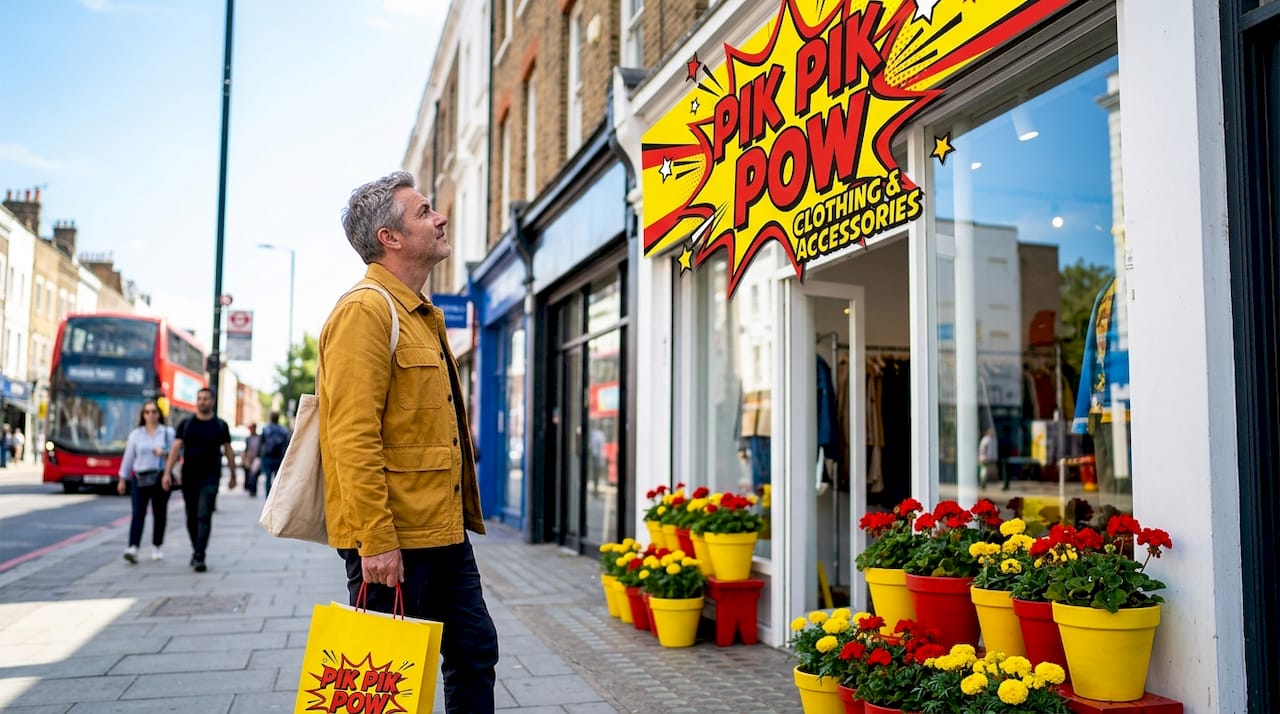
Your shopfront sign is doing more than displaying your name. It is performing a psychological function before a single customer speaks to any member of your team.
Research shows that a sign taking over 1.5 seconds to process works against you, not for you. Effective signage lowers visitor heart rates and creates what designers call “micro-permissions,” unconscious signals that tell a person it is safe and appealing to enter. When your sign fails that test, foot traffic walks past. When it passes, people feel drawn in without fully knowing why.
This matters most for businesses in competitive retail or high-street locations where you have a fraction of a second to catch attention. Here is what well-designed shopfront signage does from a customer acquisition standpoint:
- Reduces cognitive processing time so the brain says “yes” faster
- Signals category clearly so the right customers self-select to enter
- Lowers anxiety for first-time visitors unfamiliar with your business
- Provides wayfinding cues that guide customers through the space once inside
- Creates a consistent visual experience that connects exterior and interior brand
The contrast between effective signage and visual clutter is significant. Cluttered, inconsistent, or poorly lit signs create what designers call “visual noise.” Rather than guiding the eye, they compete for attention and exhaust the viewer. The result is that potential customers disengage before forming any positive association with your brand.
Pro Tip: When reviewing your shopfront, stand at the distance a pedestrian or passing driver would see it from. If you cannot read and understand the sign clearly within 1.5 seconds, it needs redesigning.
Good shopfront signage design also functions as wayfinding. That applies inside as well as outside. Clear directional signage inside your premises reduces shopper stress, keeps customers oriented, and encourages them to spend more time on the floor, which typically translates to a higher transaction value.
How signage builds brand identity and trust
Your signage is the physical expression of your brand. Every material choice, colour decision, and typeface sends a message about who you are and whether you can be trusted.
This is not theoretical. Consider how you react when you see a faded fascia sign, a crooked letter, or a window decal peeling at the edges. Consciously or not, it signals to you that the business may not be well managed. Customers make the same judgement about your premises.
Here is how to use signage to build trust rather than undermine it:
- Use consistent brand colours and fonts across all signage touchpoints, from your external fascia to interior point-of-sale displays. Inconsistency reads as unprofessionalism.
- Choose materials appropriate to your brand positioning. A brushed aluminium built-up letter sign communicates very differently from a foam-backed printed panel. Your materials should match the price point and values of your offering.
- Apply whitespace deliberately. Excessive logo size without whitespace triggers subconscious stress responses. Giving your branding room to breathe actually increases recognition and perceived quality.
- Prioritise luminance contrast. Signs are read through contrast, not just colour. A dark background with light lettering, or vice versa, reads faster and more reliably in varying light conditions.
- Scale your lettering appropriately. Letter height determines legibility at distance. For a busy high street, your primary message needs to be readable from at least 10 metres away.
The long-term commercial impact is real. Customers who form a positive first impression from your signage are more likely to enter, more likely to complete a purchase, and more likely to return. The importance of shop signs for customer lifetime value is frequently overlooked in favour of short-term marketing spend, but the cumulative effect of a professional shopfront is significant.
Pro Tip: Commission a signage audit every two to three years. Materials degrade, brand guidelines evolve, and what worked when you opened may now be working against you.
Static vs. digital shopfront signage
The question is no longer whether to invest in signage. It is which type of signage, and in what combination, delivers the best return for your specific business.
| Feature | Static signage | Digital signage |
|---|---|---|
| Upfront cost | Lower | Higher |
| Ongoing maintenance | Minimal | Requires monitoring and updates |
| Content flexibility | Fixed | Real-time updates from any location |
| Visual impact at distance | Strong | Very strong, especially at night |
| Engagement level | Consistent | Higher, especially with motion content |
| Best use case | Brand identity, fascia | Promotions, events, product highlights |
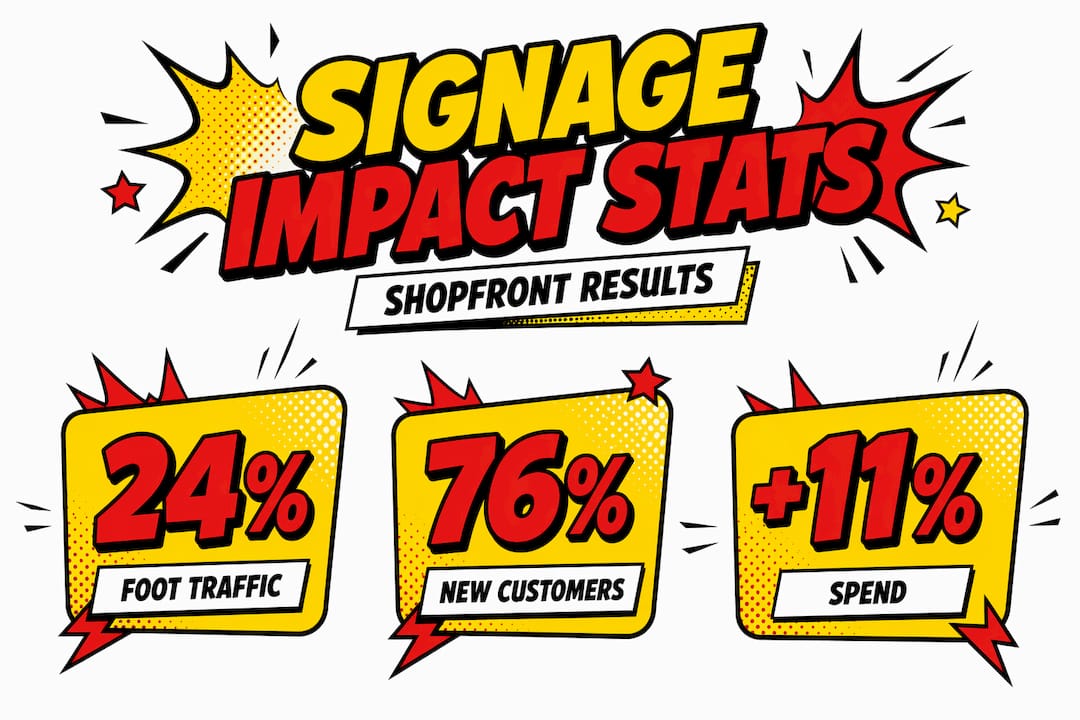
The data behind digital signage is compelling. Retail signage can increase foot traffic by up to 24%, and digital signs increase purchase odds by 8.1% when used to highlight products at the point of decision. The ability to update content instantly from a central location also cuts down on the time and cost of traditional printed materials.
That said, digital signage is not automatically the right answer for every business. Screens can suffer from glare in direct sunlight, require consistent power supply, and need reliable content management to stay effective. A screen displaying outdated or irrelevant content is no better than a blank wall.
Static signage, on the other hand, offers permanence and simplicity. A well-crafted illuminated fascia sign or dimensional lettering can last years with minimal upkeep. It reinforces brand identity reliably and does not depend on software or connectivity to do its job.
The most effective shopfront advertising strategies typically use both. Static elements carry the brand identity and create a recognisable anchor. Digital elements add flexibility, capture attention, and allow you to run time-sensitive content such as seasonal offers or event promotions. You can explore how smart retail displays work in practice to understand how these approaches combine.
Best practices for maximising signage ROI
Getting a strong return from your shopfront signage investment starts well before you order anything. Planning, design, and maintenance all affect the result.
- Align signage with your customer journey. Think about what a first-time visitor needs to see at each stage: from street-level visibility, to entrance, to interior navigation. Zone-based signage strategy matches content and brightness to where the customer is and what they need at that moment.
- Specify materials for your environment. A coastal location needs signage built to resist salt corrosion. A high-footfall entrance needs materials that withstand daily contact. Choosing the wrong substrate increases replacement costs significantly.
- Check planning permission and landlord consent before ordering. In the UK, illuminated signs and projecting signs typically require planning consent. Failing to check this before installation can result in costly removal and replacement.
- Avoid overloading your sign with text. The most effective signs carry a single, clear message. Your business name, category, and one supporting element is enough. More than that and you risk nothing being read at all.
- Use professional design and installation. Poor installation is one of the most common ways a good-quality sign ends up looking cheap. It also creates safety risks if fixing points are inadequate.
- Consider clipless installation systems for interior signage. Clipless sign systems reduce labour costs significantly over time compared to adhesive or tool-based methods, making content updates faster and more cost-effective.
For practical inspiration on layout and design approaches, the shopfront signage ideas Pikpikpow has compiled are worth reviewing before you brief any supplier.
The measurable impact of signage on sales
The advantages of effective shopfront signage are not just qualitative. There is a growing body of research that quantifies the commercial return.
| Metric | Impact |
|---|---|
| Foot traffic increase | Up to 24% with well-placed retail signage |
| Purchase likelihood | 8.1% uplift when digital signage highlights products |
| Shopper stress reduction | 18% decrease in cortisol levels |
| Transaction value increase | 11% higher average spend in lower-stress environments |
Research confirms that signage reduces shopper cortisol by 18%, which leads directly to an 11% increase in transaction value. Less stress means customers spend more time browsing, feel more confident in their decisions, and are more likely to add items to their purchase.
The content of your signage matters as much as its placement. Inspirational or emotional messaging consistently outperforms discount-focused signs in driving actual sales. Telling customers a story about your product, or connecting your brand to a value they care about, converts browsers into buyers more reliably than a percentage-off promotion. The most effective ways to attract customers with signage focus on aspiration and clarity rather than urgency and noise.
“Effective signage tells a story that converts browsers into buyers rather than just listing features.”
Tracking performance is the final step many businesses skip. Digital signage platforms offer analytics on dwell time, engagement, and content performance. Even for static signage, running a simple before-and-after footfall count when you update your shopfront will give you data to inform future decisions.
Our perspective on signage as a business asset
I have worked with businesses across retail and commercial sectors for years, and the pattern is consistent. Businesses that treat signage as an afterthought are the same ones wondering why their footfall is flat despite spending heavily on social media and paid advertising.
In my experience, the most damaging thing is not bad signage. It is invisible signage. A sign that blends into the environment, that no one processes consciously, is wasting its position entirely. The goal is not to shout loudest, but to communicate clearly, quickly, and in a way that reduces friction for the customer.
What I have learned is that storefront signage acts as a concierge, setting the pace and mood before anyone enters. When that function is performed well, it reduces the work your staff have to do and increases the quality of customer the sign attracts. Get it wrong, and you are paying for a sign that is either confusing people or actively putting them off.
The hidden cost of poor signage is not just lost foot traffic. It is the cumulative erosion of brand credibility over months and years. I always tell business owners: your sign is the first member of staff a customer meets. Would you send someone out front who was dishevelled, hard to understand, and sending mixed messages about what your business does? No. So do not settle for signage that does the same.
— PikPikPOW!
Upgrade your shopfront with Pikpikpow
If this article has made you reconsider what your current signage is actually doing for your business, that is a good starting point.
At Pikpikpow, we specialise in bespoke shopfront signage solutions designed around your brand, your environment, and your commercial goals. From illuminated fascia signs and architectural lettering to fully managed digital signage systems, we handle design, manufacture, and installation to a consistently high standard. Our team also covers compliance requirements, material selection, and ongoing maintenance so you are not left managing the details alone. If you are ready to treat your shopfront as the performance asset it should be, explore our signage systems or get in touch with us directly to discuss your requirements.
FAQ
Why does shopfront signage matter so much for foot traffic?
76% of consumers enter a new store because of its signage, making it one of the most direct drivers of customer acquisition available to a retail business.
What is the difference between static and digital shopfront signage?
Static signage offers permanence and low maintenance, making it ideal for brand identity. Digital signage allows real-time content updates and drives higher engagement, particularly for promotions and time-sensitive messaging.
How does signage affect customer spending?
Well-designed signage reduces shopper stress by 18%, which correlates with an 11% increase in average transaction value. Calmer, more comfortable shoppers spend more.
What are the most common mistakes with shopfront signs?
Overloading the sign with text, using poor contrast, neglecting maintenance, and failing to obtain planning consent are the most frequent errors that reduce the effectiveness and lifespan of a shopfront sign.
Is digital signage worth the higher upfront cost?
For most retail and service businesses, yes. Digital signage increases purchase likelihood by 8.1% and foot traffic by up to 24%, and the ability to update content centrally reduces long-term print and labour costs significantly.