
TL;DR:
- Exterior gym signage enhances member acquisition by transforming local foot traffic into prospects through visibility and clear communication. Well-designed signs attract attention, deliver targeted offers, and guide new visitors, ultimately increasing trial rates and memberships. Proper signage, combined with measurement and compliance, delivers a measurable return on investment while reinforcing brand recognition in the community.
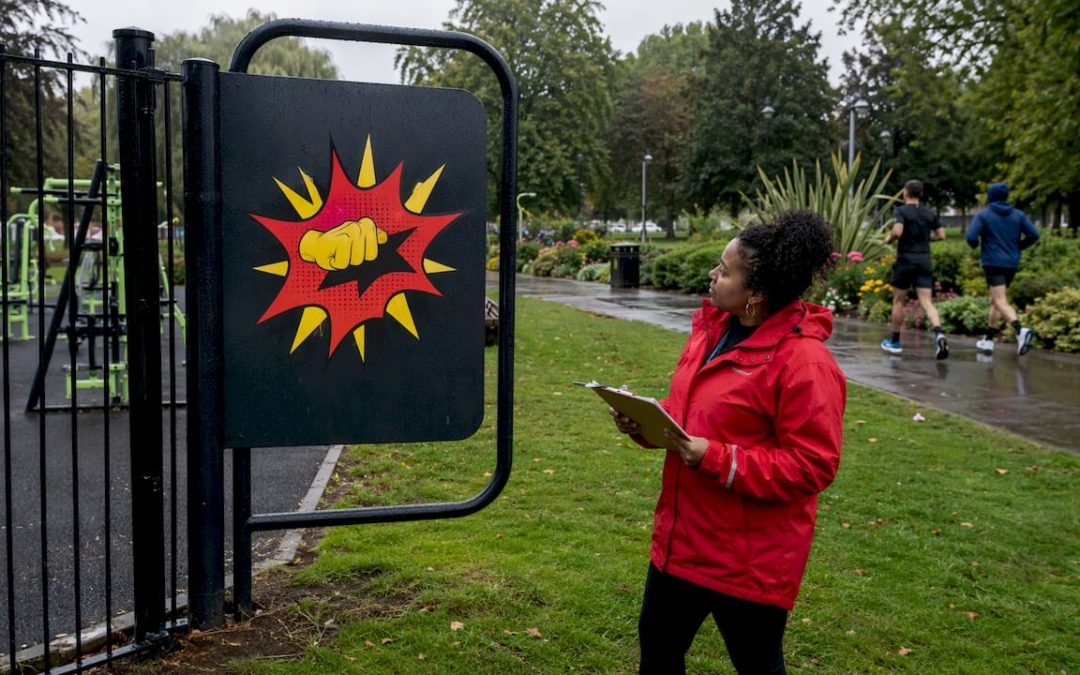
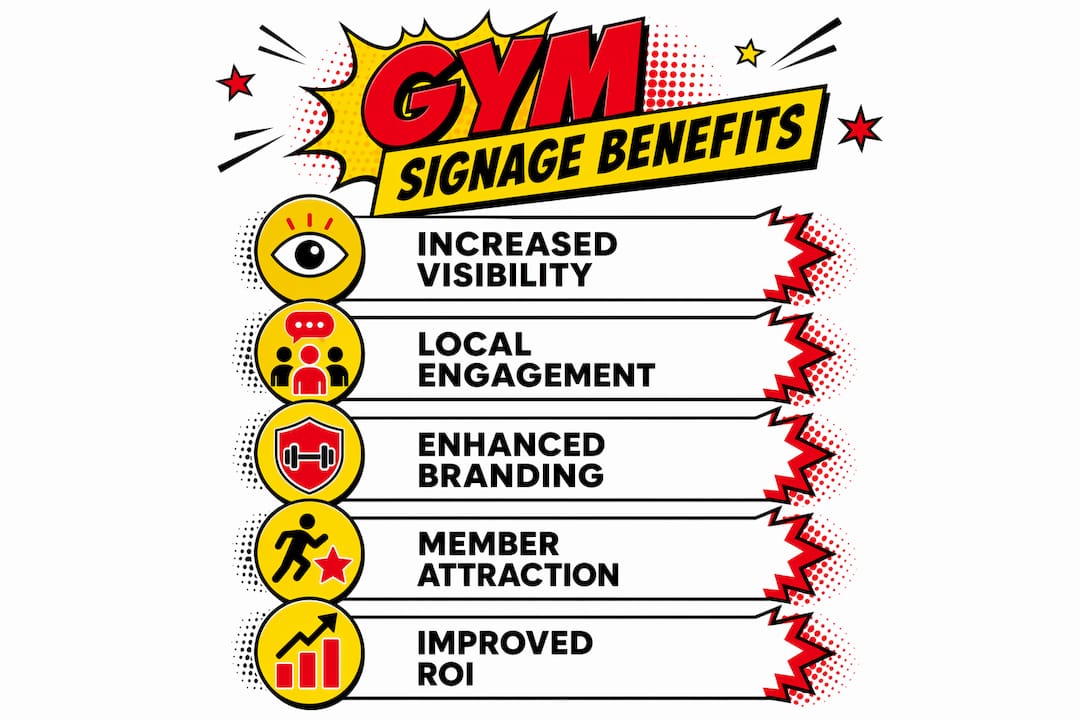
Exterior gym signage attracts members because it converts local foot traffic into qualified prospects by signalling credibility, communicating your offer, and providing a frictionless route to trial. A well-executed fascia sign or illuminated display does three things simultaneously: it makes your facility visible to people already nearby, it tells them what you offer and at what price point, and it removes the hesitation that stops a curious passer-by from walking through the door. Integrated programmatic DOOH campaigns using day-parting and proximity targeting have recorded sign-up intent uplifts of up to +55%, which gives you a sense of the ceiling when signage is done well.
Quick reasons exterior signage matters for gym owners:
- Visibility: puts your brand in front of local prospects every single day, at no recurring cost per impression
- First impression: clean, well-designed signage signals quality before a prospect sets foot inside
- Offer delivery: a rotating panel or window graphic can carry a live promotion directly to the people most likely to act on it
- Wayfinding: removes uncertainty for first-time visitors, reducing drop-off between interest and arrival
Table of Contents
- Why does exterior gym signage attract members in the first place?
- Seven things your exterior signage actually does
- How do you make exterior signage readable and persuasive?
- What materials and lighting work best in the UK climate?
- What do exterior gym signs typically cost, and what ROI should you expect?
- How do you measure whether your signage is working?
- How to brief a signage supplier: a practical checklist
- Key takeaways
- A signage specialist’s perspective
- Pikpikpow’s gym signage service
- Useful sources and further reading
Why does exterior gym signage attract members in the first place?
The commercial case for exterior signage rests on one straightforward principle: the people most likely to join your gym live or work within a short distance of it. Every day they walk or drive past your building. Whether they notice you, trust you, and eventually try you depends largely on what your exterior communicates.
Treating local visibility and retention as one connected system is the approach that consistently produces long-term member value. Acquisition feeds community, community feeds referrals, and referrals reduce your cost per new member over time. Exterior signage is the opening move in that chain. It is the first handshake between your brand and a prospect who has not yet decided to search for you online.
There is also a timing dimension worth noting. Gyms increasingly function as community hubs, and the most effective operators use their exterior messaging to respond to that role: promoting early-morning classes before the commute, advertising off-peak pricing in the afternoon, and highlighting community events at weekends. Static signage sets the baseline; digital or rotating panels let you adapt the message to the moment.
Seven things your exterior signage actually does
Good exterior signage is not a single-function asset. Each element you place on your building or forecourt performs a specific job, and understanding those jobs helps you plan investment more precisely.
- Attracts attention — bold colour, contrast, and scale pull the eye of someone who was not actively looking for a gym. This is pure awareness, and it compounds daily.
- Communicates your USP — a strapline or short descriptor (“24-hour access,” “women-only studio,” “no contract”) tells a prospect in under three seconds whether you are relevant to them.
- Promotes live offers — window graphics or a digital display panel can carry a time-limited trial offer directly to the people walking past right now, which is something no social media post can replicate for local reach.
- Guides new visitors — wayfinding signage removes the friction of not knowing where to park, which entrance to use, or where reception is. Removing that friction increases the chance a first-time visitor completes the visit.
- Signals safety and compliance — health and safety notices, fire exit markers, and access information are legally required in many contexts and, when well-designed, reinforce a sense of professionalism.
- Builds brand recognition — consistent use of your logo, colours, and typeface across the exterior trains local memory. A prospect who sees your sign ten times before they are ready to join will recognise you instantly when that moment arrives.
- Delivers a call to action — a QR code linking to a free-trial landing page, a short URL, or a phone number gives a motivated passer-by an immediate next step without requiring them to remember anything.
Pro Tip: Avoid loading a single sign with more than two messages. A primary brand message paired with one rotating offer panel is the most effective combination. More than that and you risk diluting both.
How do you make exterior signage readable and persuasive?
Design is where most gym signage either earns its investment or wastes it. The rules are not complicated, but they are frequently ignored.
Typography and copy length
- Use a maximum of two typefaces: one for your brand name, one for supporting copy.
- Body copy on an exterior sign should be no more than seven words for a sign read at 10 metres, and no more than twelve words for a sign read at 5 metres or less.
- Avoid condensed or script typefaces for anything other than the logo itself. At distance, letterform clarity matters more than style.
- Letter height: as a general rule, allow 25mm of letter height per metre of viewing distance for a sign that needs to be read clearly while walking. For a sign read from a moving vehicle, increase that to 40mm per metre.
Contrast and colour
- High contrast between text and background is non-negotiable. Dark text on a light background, or light text on a dark background, both work. Mid-tone combinations do not.
- For night and low-light visibility, illuminated signage or high-reflectivity vinyl significantly outperforms non-illuminated options. If your gym is open before 7am or after 8pm, illumination is not optional.
- Colour choices should align with your brand but also consider the building facade. A sign that clashes with its background loses impact regardless of the design quality.
Calls to action that reduce friction
- QR codes work well on window graphics and lower-mounted signs where a pedestrian can scan comfortably. Place them at 1.2–1.5 metres from ground level.
- Short, memorable URLs (e.g., yourgym.co.uk/trial) outperform long tracking URLs on exterior signage where a prospect cannot click.
- Offer framing matters: “First month free” outperforms “Join today” because it answers the prospect’s implicit question about risk.
What materials and lighting work best in the UK climate?
The UK’s combination of rain, UV exposure, temperature variation, and occasional frost means material choice directly affects both longevity and appearance. Choosing the wrong substrate can mean a sign that looks tired within eighteen months.
Common materials and their trade-offs
- Aluminium composite material (ACM / Dibond): lightweight, rigid, weather-resistant, and easy to fabricate. The standard choice for flat fascia panels. Lifespan of 10+ years with minimal maintenance.
- Acrylic (perspex): excellent for illuminated lettering and light-diffusing panels. Can yellow slightly over time in direct UV; UV-stabilised grades reduce this significantly.
- Aluminium tray signs: the industry standard for illuminated fascia boxes. Durable, accepts LED modules cleanly, and suits most commercial facades.
- Vinyl graphics on substrate: cost-effective for window graphics and temporary promotions. Cast vinyl outperforms calendered vinyl for outdoor longevity; expect 5–7 years from a quality cast film.
- Stainless steel lettering: premium finish, highly durable, suits architectural or high-end gym brands. Higher fabrication cost but very low maintenance.
Lighting options
- Illuminated tray (lightbox fascia): even, consistent illumination across the full sign face. Best for brand panels where clarity at night is the priority.
- LED halo illumination: individual letters or logos backlit to create a glow effect against the wall. Strong visual impact, lower energy consumption than older fluorescent trays.
- LED modules within acrylic letters: front-lit individual letters. High visibility, relatively straightforward to maintain.
For durable outdoor signage choices in the UK, always specify marine-grade fixings and powder-coated or anodised aluminium frames to prevent corrosion.
UK planning permission: what you need to know

Most exterior signs on commercial premises require advertisement consent from your local planning authority (LPA) under the Town and Country Planning (Control of Advertisements) (England) Regulations 2007. Some signs fall under “deemed consent” (meaning no application is needed if they meet size and illumination limits), but illuminated signs, signs on listed buildings, and signs in conservation areas almost always require a formal application. Architectural signage choices in conservation areas may also require non-illuminated fittings or listed-building consent. Check with your LPA before ordering.
Pro Tip: Commission a photomontage from your signage supplier before submitting a planning application. Most LPAs respond more favourably to a visualisation showing the sign in context, and it reduces the risk of a refusal on aesthetic grounds.
What do exterior gym signs typically cost, and what ROI should you expect?
Cost ranges vary considerably depending on size, material, illumination, and whether electrical work is required. The figures below are indicative for UK projects in 2026 and should be treated as starting points for budgeting rather than fixed quotes.
- Non-illuminated flat fascia panel (ACM, up to 2m wide): £400–£900 including design, print, and installation
- Illuminated tray fascia sign (standard commercial size): £1,200–£3,500 depending on size, LED specification, and electrical connection
- Halo-illuminated individual letters (per letter, fabricated aluminium): £80–£200 per letter, plus installation
- Vinyl window graphics (full shopfront): £300–£800 for design, print, and fitting
- Digital display panel (external, weatherproof): £2,500–£8,000+ for hardware, installation, and initial content creation
Typical project timeline
A straightforward non-illuminated fascia sign can move from brief to installation in 3–4 weeks. An illuminated sign requiring advertisement consent typically takes 8–14 weeks: allow 1–2 weeks for site survey and design, 8 weeks for planning determination (standard LPA target), and 1–2 weeks for manufacture and installation. Build in contingency for electrical contractor availability.
ROI factors to model
The combined local-marketing approach of local visibility, low-friction offers, and clear CTAs consistently outperforms any single tactic in isolation. For signage specifically, the metrics that matter are: footfall uplift in the weeks following installation, redemption rate on any promoted offer, and the conversion rate from trial to paid membership. If your average member lifetime value is £600 and your sign generates two additional sign-ups per month, a £2,000 illuminated fascia pays back in under two months.
How do you measure whether your signage is working?
Measurement is where many gym operators fall short. Installing a sign and assuming it is working is not a strategy. A simple measurement framework takes less than a day to set up and gives you data you can act on.
- Establish a baseline before installation: record weekly footfall (door counter or manual count), Google Business Profile views and calls, and any existing trial redemptions.
- Set up a dedicated tracking mechanism for the sign: a unique QR code, a short URL, or a promo code printed on the sign that is not used anywhere else.
- Monitor Google Business Profile for changes in “views” and “calls” in the 4–8 weeks post-installation. A well-placed illuminated sign often produces a measurable uplift in direct searches and calls within the first month.
- Run a before-and-after window: compare the 8 weeks before installation with the 8 weeks after, controlling for seasonality where possible.
- Survey new members at sign-up: a single question (“How did you first hear about us?”) with “walked/drove past” as an option gives you direct attribution data at zero cost.
- Test creative variations if you have a digital or rotating panel: run two different offer messages in alternating weeks and compare QR scan or promo-code redemption rates. This is a simple A/B test that requires no specialist tools.
For cross-channel reinforcement, OOH campaigns combined with mobile retargeting using geo-fencing allow you to serve digital ads to people who have been physically near your sign, creating a second touchpoint that significantly increases conversion probability. A US case study of a major fitness operator recorded 86,000 incremental visits and a visitation uplift of over 260% among exposed audiences after combining OOH with mobile retargeting. The principle translates directly to UK operators running local digital campaigns alongside their physical signage.
How to brief a signage supplier: a practical checklist
A clear brief reduces rework, speeds approval, and almost always produces a better result. Use the fields below as a template when contacting a supplier.
Supplier brief template
- Site address and postcode: needed for a site survey and planning authority check
- Building type and facade material: brick, render, glazed, cladding — affects fixing method and material choice
- Sightlines and viewing distances: where will most people see the sign from, and at what distance?
- Primary message: brand name, strapline, or offer — one clear hierarchy
- Size constraints: any maximum dimensions imposed by the landlord or planning history
- Power access: is there an existing supply near the sign location, or will electrical work be required?
- Brand assets: supply vector files (SVG or EPS format) for your logo; RGB and CMYK colour references
- Desired CTA: QR code, URL, phone number, or offer text
Delivery checklist
- Site survey and accurate measurements confirmed
- CAD proof or photomontage approved before production
- Planning consent confirmed (or deemed consent verified)
- Materials specification and warranty confirmed in writing
- Installation access agreed (scaffolding, MEWP, or ladder access)
- Health and safety method statement provided by installer
- Post-install maintenance schedule agreed
Pro Tip: Supply your brand assets as vector files from day one. Rasterised logos (JPG or PNG) cause delays and can result in a softer finish on large-format signs. If you only have a rasterised file, ask your supplier to redraw it — Pikpikpow includes this as part of the design process.
For a deeper look at what makes the design stage effective, the gym signage design guide covers brief structure, proof stages, and common specification errors in detail.
Key takeaways
Exterior gym signage attracts members by converting daily local foot traffic into qualified prospects through visible, credible, and offer-led communication that removes friction between awareness and trial.

| Point | Details |
|---|---|
| Signage drives qualified local footfall | Prospects who pass your building daily are your highest-conversion audience; signage activates them at no recurring cost per impression. |
| First impression determines trust | Clean, well-designed entrance signage signals quality before a prospect enters, directly influencing whether they proceed to trial. |
| Measure with a dedicated CTA | A unique QR code or promo code on your sign gives you direct attribution data from day one of installation. |
| UK planning consent is often required | Illuminated signs and signs in conservation areas typically need advertisement consent from your local planning authority before installation. |
| Pikpikpow for bespoke gym signage | Pikpikpow designs, manufactures, and installs exterior gym signage across the UK, from illuminated fascias to window graphics and digital displays. |
A signage specialist’s perspective
The most consistent mistake we see gym owners make is trying to say too much on a single sign. A fascia that carries the gym name, a membership price, a class timetable, and a social media handle is not communicating four things. It is communicating nothing, because the eye does not know where to land. The operators who get the best results from their exterior signage treat it the way a good headline writer treats a front page: one dominant message, one supporting detail, one clear next step. Everything else belongs inside the building or online.
There is also a tendency to treat signage as a one-off capital expense rather than a live marketing asset. The gyms that consistently outperform their local competitors on new member acquisition review their exterior messaging at least twice a year, updating offer panels and seasonal CTAs the same way they would update a social media campaign. If your sign has been saying the same thing for three years, it has stopped working.
If you would like a site survey or a photomontage showing how a new sign would look on your building, get in touch with the team at Pikpikpow.
Pikpikpow’s gym signage service
Pikpikpow designs, manufactures, and installs bespoke exterior gym signage across the UK, covering everything from illuminated fascia signs and architectural lettering to window graphics and digital display panels. Every project starts with a site survey and a CAD proof, so you see exactly what you are getting before anything goes into production.
Whether you need a single shopfront sign or a full exterior-to-interior signage programme, the team handles design, planning checks, manufacture, and installation as a single managed project. There are no long-term contracts and no hidden costs: you receive a fixed-price quote based on your brief and site conditions.
To request a quote or book a site survey, visit the signage systems page or contact the team directly. If you are considering digital display options, the digital signage page covers hardware, content management, and installation in detail.
Useful sources and further reading
- Pikpikpow: how to design gym signage that works — practical design guidance, brief structure, and specification advice tailored to fitness facilities.
- Pikpikpow: architectural signage explained — covers facade treatments, mounting options, and UK planning considerations for commercial buildings.
- Pikpikpow: types of gym signage — a catalogue of common signage types with use cases and material notes.
- UKActive: Market Report 2026 — industry trends including the shift to community-hub positioning and responsive messaging strategies.
- Peak Digital: Gym Marketing UK Guide 2026 — overview of acquisition and retention as a connected system, with local visibility guidance.
- OAAA: OOH campaign measurement guidance — operational detail on proximity targeting, geo-fencing, and visitation uplift measurement for OOH campaigns.
- CFOTECH: Winning the fitness-conscious audience with programmatic DOOH — case review of DOOH campaigns achieving sign-up intent uplifts of up to +55% with day-parting and POI targeting.
- Approved Business: Spring Into Action — Leisure Industry Signage — practical commentary on entrance signage, wayfinding, and the role of exterior signs in leisure environments.