
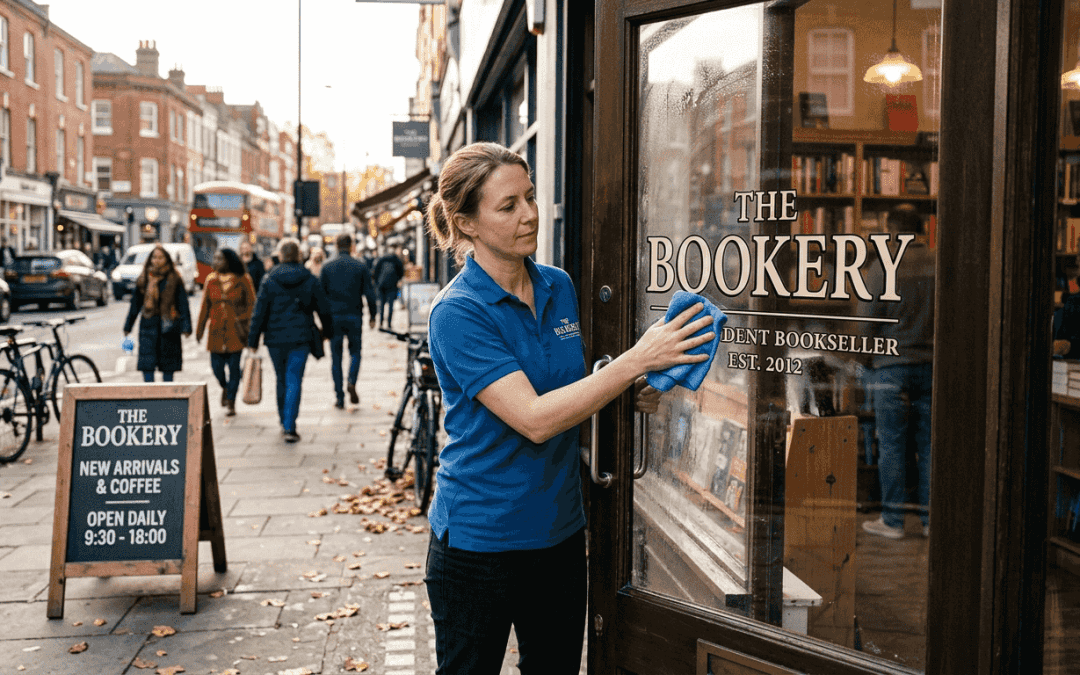
Nearly 60% of shoppers make purchase decisions based on what they see in store, yet many business owners still treat signage as an afterthought. Branded signage is far more than decoration. It serves as a silent salesperson, working around the clock to attract customers, build trust, and drive sales. From digital displays that capture attention to illuminated signs that reinforce brand identity, effective signage directly influences revenue and customer loyalty. This guide explores the measurable impacts of branded signage on brand awareness, sales performance, and purchase behaviour, then provides practical frameworks for selecting and optimising signage solutions that deliver genuine business results.
Table of Contents
- How Branded Signage Boosts Brand Awareness And Trust
- The Impact Of Signage On Sales And Purchase Behaviour
- Types Of Branded Signage And How To Choose The Right Solution
- Optimising Branded Signage For Maximum Effectiveness
- Explore Expert Signage Solutions To Elevate Your Brand
- Frequently Asked Questions
Key takeaways
| Point | Details |
|---|---|
| Brand awareness boost | Digital and illuminated signs increase brand awareness by nearly 50% and significantly improve recall |
| Sales impact | Updating signage drives measurable sales increases, with some retailers reporting 10-34% growth |
| Trust building | Familiar logos foster trust, with 26% of adults trusting businesses more when they recognise the brand |
| Purchase influence | 58% of shoppers notice in-store displays, with nearly half influenced to make unplanned purchases |
| Strategic combination | Mixing digital, illuminated, and traditional signage creates the strongest overall impact |
How branded signage boosts brand awareness and trust
Branded signage functions as a visual shortcut for memory and recognition. When customers repeatedly encounter your logo and brand colours through well-designed signage, they form mental associations that make your business easier to recall when making purchase decisions. This phenomenon is not theoretical. Digital and illuminated signs increase brand awareness by 47-48%, demonstrating that strategic signage investments yield measurable cognitive impact.
Brand recall plays a particularly crucial role in this process. Research shows that brand recall accounts for 38.7% of overall brand lift, meaning customers who remember your brand are substantially more likely to choose your business over competitors. This recall advantage translates directly into commercial outcomes because familiarity breeds preference in purchasing contexts.
The trust dimension is equally compelling. Studies reveal that 26% of adults trust businesses more when they recognise the logo, whilst 25% actively prefer buying from brands with familiar visual identities. This trust premium is particularly valuable in competitive retail environments where customers face abundant choice. Professional signage signals legitimacy, permanence, and investment in customer experience.
Understanding the importance of shop signs helps businesses appreciate how visual branding elements work together to create lasting impressions. The signage brand identity impact extends beyond simple recognition to encompass emotional connections and perceived quality.
Key benefits of branded signage for awareness and trust include:
- Increased brand recognition through consistent visual exposure
- Enhanced recall when customers make purchase decisions
- Greater trust from familiar branding elements
- Stronger purchase intent driven by brand familiarity
- Competitive differentiation in crowded marketplaces
Pro Tip: Neon and LED signage creates particularly strong brand recall because the illumination and colour vibrancy make logos more memorable than static alternatives.
The impact of signage on sales and purchase behaviour
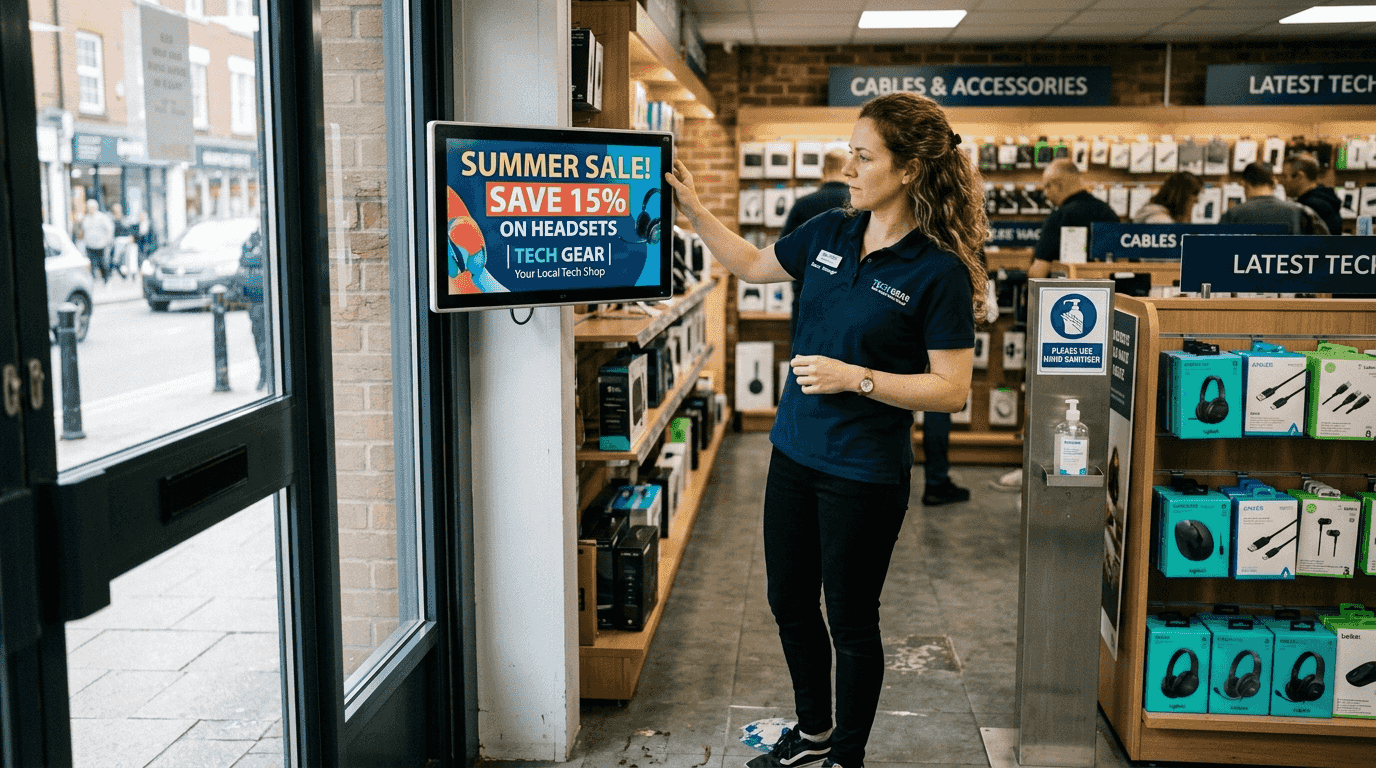
Branded signage does not simply raise awareness. It actively drives purchasing behaviour and measurable sales growth. Recent research demonstrates that 58% of shoppers actively notice in-store displays, with nearly half of those noticing being influenced to make purchases they had not originally planned. This attention-to-action conversion represents significant revenue potential for retailers who invest in strategic signage.
The sales impact becomes even clearer when examining businesses that have updated their signage. Industry data shows that nearly 60% of businesses saw a 10% sales increase after refreshing their signage, demonstrating that even modest investments in visual presentation yield substantial returns. These gains stem from improved visibility, clearer messaging, and enhanced brand perception that collectively drive customer behaviour.
Digital signage amplifies these effects considerably. A compelling case study from QuickStop Markets revealed that implementing digital signage increased basket size by 34% through targeted promotional messaging and dynamic content that captured shopper attention at critical decision moments. This performance is particularly relevant given that 70% of convenience store purchases are impulse buys, making point-of-sale signage exceptionally influential.
The digital signage retail impact extends beyond convenience stores to encompass diverse retail formats. Businesses exploring digital signage insights discover that dynamic displays outperform static alternatives across multiple metrics including dwell time, engagement, and conversion rates.
| Signage Type | Sales Impact | Key Advantage |
|---|---|---|
| Updated traditional signage | 10% average increase | Refreshed brand perception |
| Digital displays | 34% basket size growth | Dynamic, timely messaging |
| Illuminated signs | 47% awareness lift | 24/7 visibility |
| Combined approach | Cumulative benefits | Multi-touchpoint influence |
Signage sales benefits include:
- Increased brand awareness that drives foot traffic
- Higher impulse purchase rates through strategic messaging
- Larger average basket sizes via promotional displays
- Improved conversion from browsers to buyers
- Enhanced customer experience through clear information
Pro Tip: Position digital signage near high-traffic decision points like queue areas and product displays where customers have time to absorb messages and act on promotional offers.
Types of branded signage and how to choose the right solution
Branded signage encompasses multiple formats, each serving distinct strategic purposes. Understanding these categories helps businesses select solutions aligned with their specific goals and environments. Signage is a critical sales tool including digital displays, persuasive promotional signs, interior wayfinding, and exterior brand markers that collectively shape customer experience.
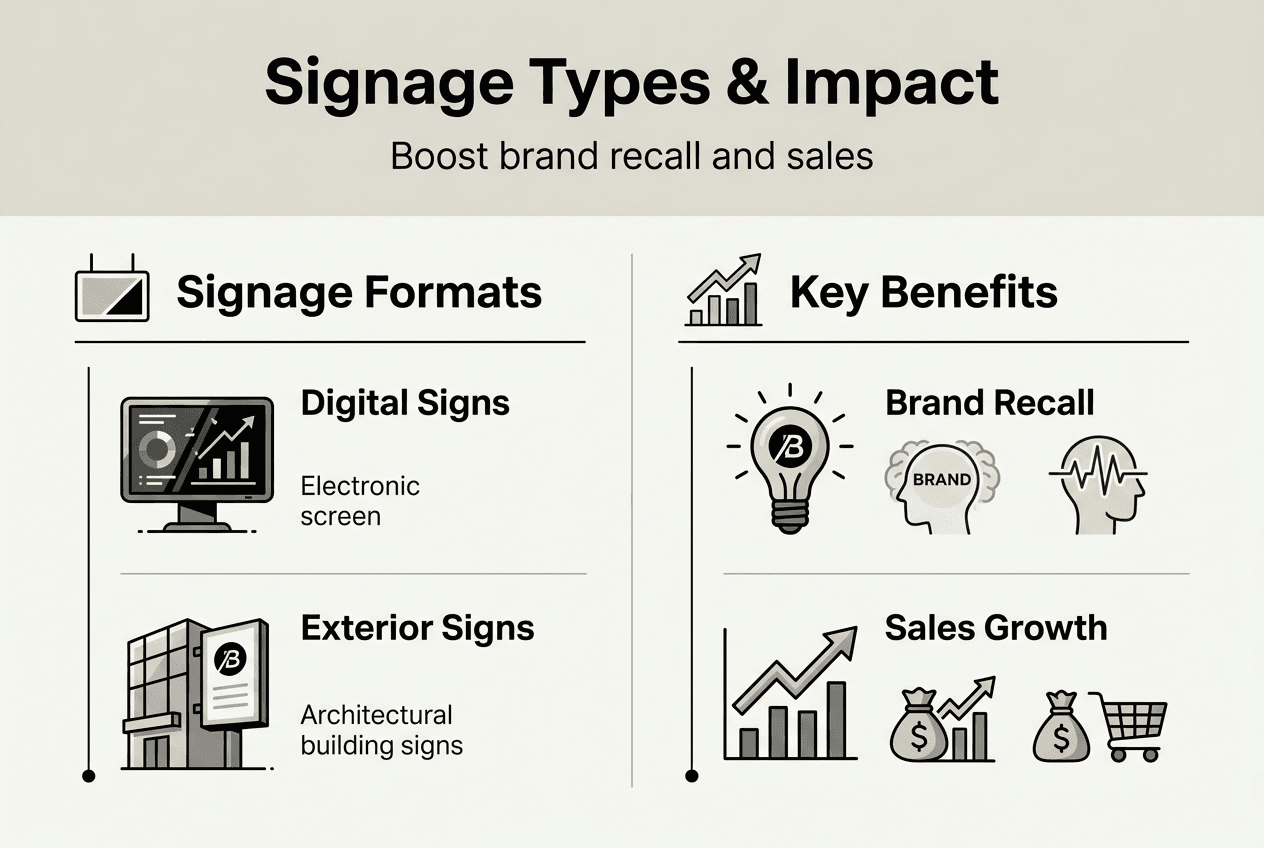
Digital signage uses electronic displays to present dynamic content including promotions, product information, and brand messaging. These systems excel in environments requiring frequent content updates and attention-grabbing visuals. Illuminated signs employ LED, neon, or backlit technologies to ensure visibility during evening hours whilst reinforcing brand identity through distinctive lighting effects. Traditional signage includes fascias, window graphics, and dimensional letters that provide permanent brand presence.
Custom signage design combines graphic design principles, material science, and environmental psychology to create solutions that resonate with target audiences. This multidisciplinary approach ensures signage performs both aesthetic and functional roles effectively.
| Signage Type | Primary Features | Best Applications |
|---|---|---|
| Digital displays | Dynamic content, remote updates | Retail promotions, restaurants, corporate lobbies |
| Illuminated signs | 24/7 visibility, brand emphasis | Shopfronts, building exteriors, hospitality venues |
| Interior wayfinding | Directional guidance, information | Large retail spaces, commercial buildings, healthcare |
| Exterior fascias | Permanent branding, weather resistance | High street shops, business parks, industrial units |
Selecting the right signage solution requires systematic evaluation:
- Define your primary objective (brand awareness, sales promotion, navigation, or credibility)
- Assess your physical environment including lighting conditions, viewing distances, and architectural constraints
- Consider your audience demographics and their typical interaction patterns with your space
- Evaluate budget against expected lifespan and maintenance requirements
- Determine content update frequency to decide between static and dynamic solutions
Exploring signage systems reveals how modular approaches allow businesses to combine multiple signage types for comprehensive coverage. Illuminated architectural signs provide particularly strong brand presence for businesses operating during evening hours, whilst internal wayfinding signage enhances customer experience in complex environments.
Pro Tip: Combining signage types creates the greatest impact. Use illuminated exterior signs for visibility, digital displays for promotions, and traditional interior signage for wayfinding to cover all customer touchpoints.
Optimising branded signage for maximum effectiveness
Designing and positioning signage strategically amplifies its business impact substantially. Recent research reveals that emotional messaging outperforms informational content on digital signage, suggesting that appeals to aspiration, lifestyle, and feeling generate stronger responses than purely factual product descriptions. This insight challenges conventional approaches that prioritise features over benefits.
Timing and environmental factors significantly influence signage effectiveness. Studies show that optimal results occur during weekends, evenings, favourable weather conditions, and high-traffic moments when customer receptivity peaks. Aligning promotional content with these windows maximises engagement and conversion. The same research demonstrates that 88% of added revenue from signage initiatives can be directly attributed to digital signage, underscoring the format’s commercial potency.
Maintaining signage quality is equally crucial. Faded, damaged, or outdated signs communicate neglect and undermine brand credibility. Regular audits ensure your signage continues representing your brand accurately. Updating content seasonally or in response to promotions keeps messaging relevant and prevents customer habituation where familiar signs become invisible through overexposure.
“88% of added revenue from signage can be directly attributed to digital signage, demonstrating its exceptional commercial impact when optimised for timing and audience.”
Optimisation strategies for maximum signage effectiveness:
- Prioritise emotional messaging over purely informational content
- Position signs at natural decision points and high-dwell areas
- Update content regularly to maintain novelty and relevance
- Target messaging to specific audience segments and contexts
- Coordinate signage with broader marketing campaigns for consistency
- Monitor performance metrics to identify high-performing placements
- Ensure adequate lighting for visibility during all operating hours
Businesses seeking to maximise their signage investment should explore digital signage solutions that enable rapid content updates and performance tracking. Following established shop sign design tips ensures visual elements align with brand guidelines whilst optimising readability and impact.
Pro Tip: Test different messages and placements systematically. Track which signs generate the most customer enquiries or sales, then replicate successful approaches across other locations.
Explore expert signage solutions to elevate your brand
Transforming signage insights into tangible business results requires professional expertise and quality execution. Pik Pik POW! specialises in creating bespoke signage solutions that combine strategic design thinking with precision manufacturing. Our experience across retail, commercial, and hospitality sectors means we understand how different environments demand tailored approaches to maximise impact.
Whether you need comprehensive signage systems for a new location, dynamic digital signage to drive promotions, or distinctive illuminated architectural signs to enhance visibility, our team delivers solutions aligned with your business objectives. We handle everything from initial concept development through installation and ongoing maintenance, ensuring your branded signage performs consistently.
Frequently asked questions
What is branded signage and why is it important?
Branded signage is any sign featuring your company’s logo, colours, and visual identity elements used to attract and inform customers. It is crucial because it builds brand recognition, establishes trust, and influences purchase decisions, with research showing nearly 60% of shoppers are influenced by what they see in store.
How often should businesses update their signage?
Businesses should review signage at least annually, updating to reflect seasonal promotions, brand evolution, or physical wear. Industry data shows that timely signage updates can increase sales by up to 10%, making regular refreshes a worthwhile investment rather than an optional expense.
What are the key benefits of digital signage over traditional signs?
Digital signage allows dynamic, eye-catching content that adapts quickly to promotions, events, or time of day. It significantly increases customer attention and basket size, with case studies showing up to 34% growth, whilst enabling remote content management across multiple locations simultaneously.
Can small businesses benefit from professional signage?
Absolutely. Professional signage levels the playing field by making small businesses appear established and trustworthy. Even modest signage investments deliver measurable returns through increased foot traffic, improved brand recall, and enhanced credibility that drives customer confidence and sales.
How does signage placement affect its effectiveness?
Placement dramatically influences signage performance. Signs positioned at eye level, near decision points, and in high-traffic areas generate substantially more engagement than poorly positioned alternatives. Strategic placement considers viewing angles, lighting conditions, and customer flow patterns to maximise visibility and impact.