TL;DR:
- Choosing the right illuminated signage enhances visibility, brand recognition, and customer footfall.
- Different types like face-lit, halo-lit, edge-lit, and backlit serve various branding and architectural needs.
- Strategic selection and proper planning ensure signage effectively promotes long-term business success.
Not all illuminated signs deliver the same results. Many business owners assume that any lit sign will do the job, but choosing the wrong type can mean your brand goes unnoticed even in the busiest locations. Illuminated signage refers to any sign that uses a light source to make lettering, logos, or graphics visible, particularly after dark or in low-light conditions. Getting this choice right has a direct impact on customer footfall, brand recognition, and your overall commercial presence. This article breaks down the main types, key considerations, and real-world benefits to help you make a confident, informed decision for your business.
Table of Contents
- What is illuminated signage?
- Types of illuminated signage and how they work
- Key considerations when choosing illuminated signage
- Real-world results: how illuminated signage impacts business visibility
- Why illuminated signage is your brand’s silent ambassador
- Ready to upgrade your signage?
- Frequently asked questions
Key Takeaways
| Point | Details |
|---|---|
| Know your options | Different types of illuminated signage offer distinctive looks and benefits, so choose the one that fits your brand best. |
| Mind local rules | Always check planning and zoning restrictions, especially for listed buildings and busy areas. |
| Design for durability | Opt for weatherproof and compliant materials to ensure your signage lasts and performs. |
| Measure real impact | Track business metrics like visibility and footfall to see how your signage affects results. |
What is illuminated signage?
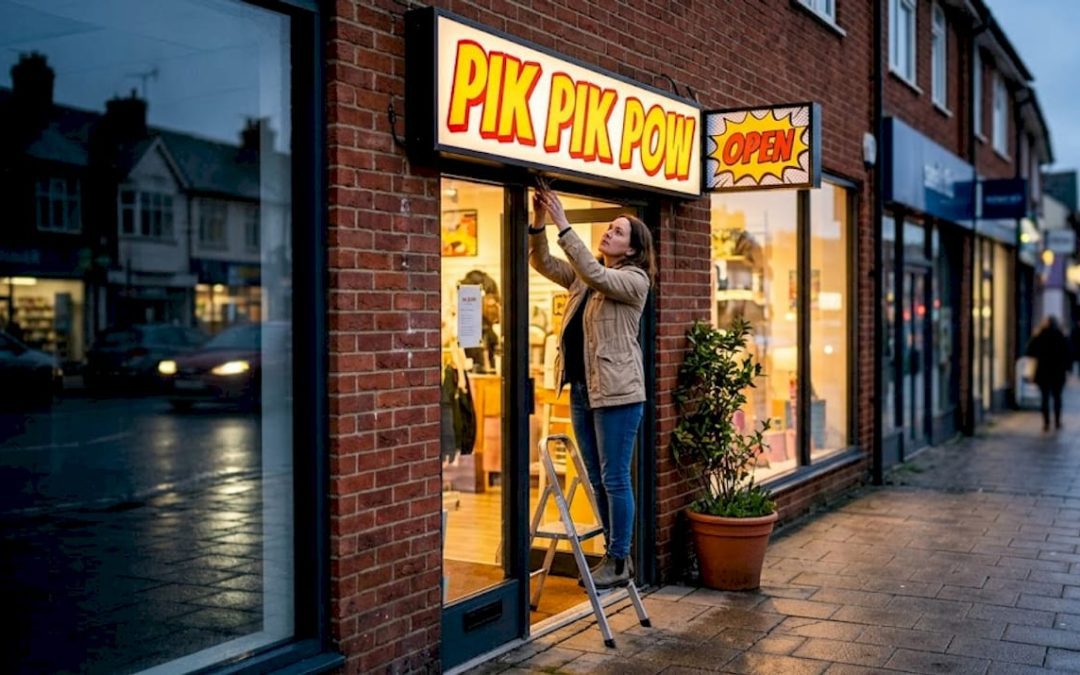
Illuminated signage is any sign that incorporates a light source to enhance visibility and legibility. Unlike standard printed or carved signs, illuminated options remain clear and eye-catching around the clock. For retail businesses, restaurants, hotels, and commercial properties, this constant visibility is not just an aesthetic bonus. It is a practical business tool.
At its core, illuminated signage uses LED strips, neon tubes, or internal light boxes to project or reflect light through or around a sign face. The result is a display that reads clearly in daylight, at dusk, and well into the night. For businesses operating beyond standard daytime hours, such as hospitality venues or convenience stores, this is particularly valuable.
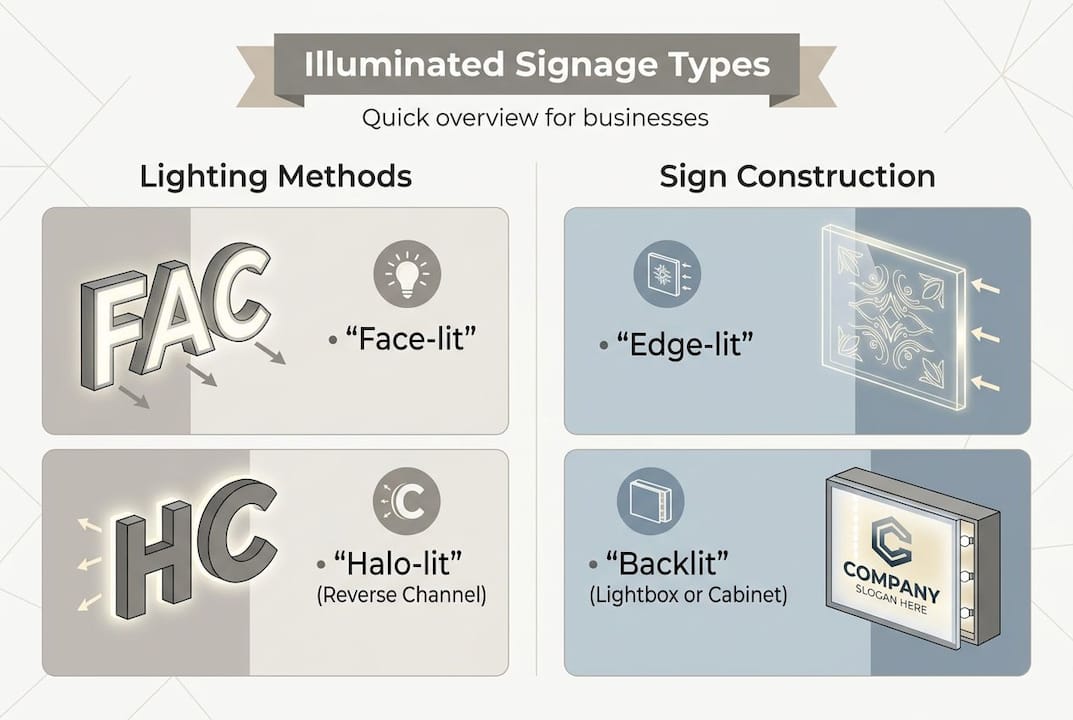
Illuminated signage explained covers the topic in detail, but here is a practical overview of the key variations. As confirmed by signage guidance, illuminated signage comes in various forms such as halo-lit, internally lit, and backlit options, each suited to different brand styles and site conditions.
The core benefits of illuminated signage for your business include:
- 24-hour visibility, so your brand is working for you even when you are closed
- Increased footfall from pedestrians and passing traffic who notice your sign at a glance
- Stronger brand identity through consistent, well-lit presentation of your logo and colours
- Professional appearance that communicates quality and credibility to potential customers
- Versatility across retail fascias, restaurant frontages, hotel signage, and commercial lobbies
“Effective signage is one of the most cost-efficient forms of advertising available to businesses, offering continuous exposure without recurring media costs.”
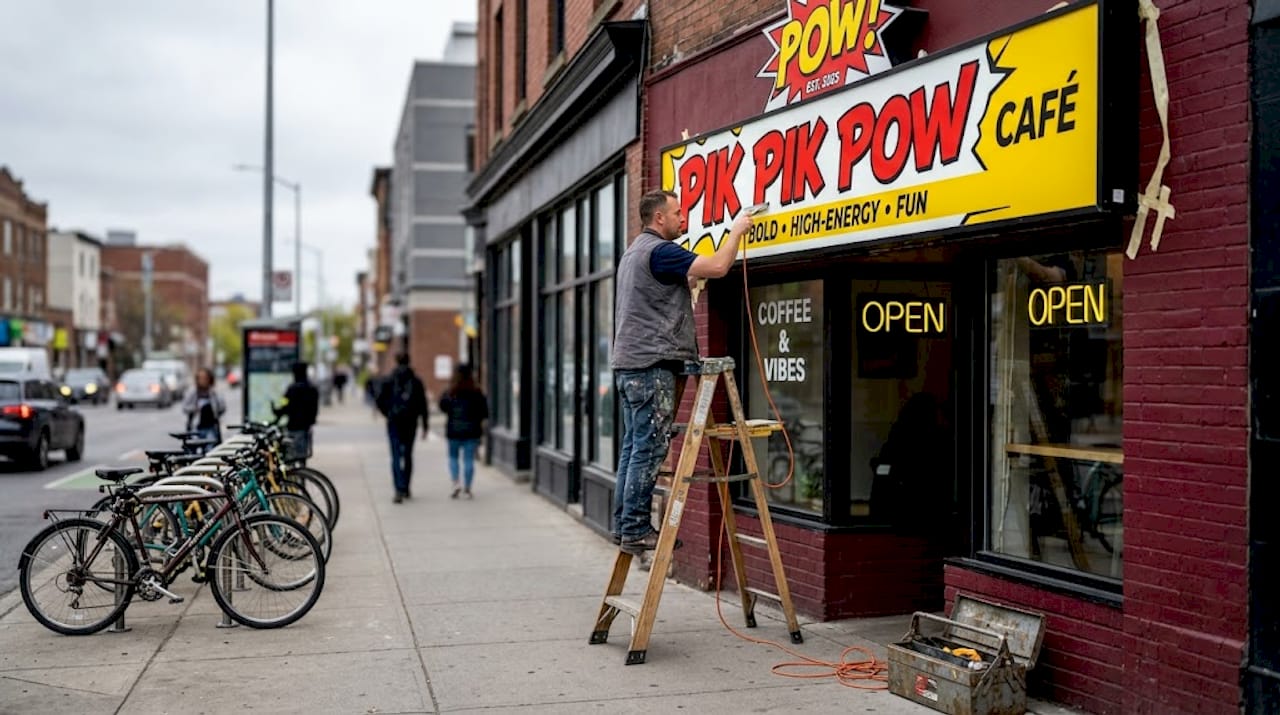
For shops operating in high-street settings, illuminated fascia signs (the name board fixed to the front of a building) are among the most common and impactful applications. For hospitality businesses, entrance signs, projecting signs, and canopy lighting all contribute to a welcoming, visible brand identity. The key is matching the illumination method to your brand’s look, your building’s architecture, and your operational hours.
Types of illuminated signage and how they work
Understanding the different types of illuminated signage helps you select the right option for your brand, your budget, and your building. Each type uses a different illumination method and creates a distinct visual effect.
Face-lit signs are the most common type. Letters or panels are made from acrylic or other translucent materials, with LED strips fitted inside. Light shines through the face of the sign, making the text or logo glow directly. These are widely used in retail because they are bright, cost-effective, and work well in most locations.
Halo-lit signs (also called reverse-lit or back-lit halo signs) use solid, opaque letters mounted away from the wall, with LEDs hidden behind. The light projects onto the wall behind the letters, creating a soft glow or halo effect around each character. As guidance notes, halo-lit signs are favoured by premium brands but require sufficient wall space, and intricate designs can lose detail with backlighting. This makes them ideal for upmarket retail, hotels, and professional services where a refined, subtle look is the priority.
Edge-lit signs use a clear acrylic panel with LEDs fitted along the edges. Light travels through the panel and is scattered by engraved or printed graphics, making the design appear to glow. These are popular for interior directional signage, reception areas, and point-of-sale displays.
Backlit signs use a light box behind a printed or translucent panel. The panel diffuses the light evenly across the graphic, producing a clean, uniformly bright surface. Explore backlit sign options if you want a high-impact, cost-controlled solution for large format graphics or window displays.
| Type | Illumination method | Best for | Visual effect |
|---|---|---|---|
| Face-lit | LEDs inside letters | Retail, fast food, leisure | Bright, direct glow |
| Halo-lit | LEDs behind letters | Premium brands, hotels | Soft halo, upmarket |
| Edge-lit | LEDs along panel edges | Interiors, reception | Subtle, modern glow |
| Backlit | Light box behind panel | Window displays, large graphics | Even, uniform brightness |
How to choose the right type for your business:
- Define your brand positioning. Premium and luxury brands often suit halo-lit; bold retail brands suit face-lit.
- Assess your building’s architecture. Some illumination types need a set depth of projection or wall space.
- Consider your operating environment. External signs need weatherproof construction; internal signs have more flexibility.
- Set your budget. Face-lit and backlit options are generally more cost-effective than halo-lit at scale.
- Check planning restrictions. Some locations limit the brightness or type of illumination permitted.
Pro Tip: A common mistake is choosing a sign type based on appearance alone without checking whether your brand’s logo or typeface works in that illumination style. Fine serif fonts, for example, can lose legibility when halo-lit at smaller sizes. Always review a scaled sample or digital mock-up before committing to production.
Key considerations when choosing illuminated signage
Selecting the right illuminated signage is not only about visual preference. Several practical, legal, and technical factors need to be assessed before you proceed.
Site considerations are the starting point. Your building’s wall depth, available power supply points, and the material of the facade all influence which sign types are feasible. A listed building or one in a conservation area will have far stricter requirements than a modern retail unit. The distance your sign can project from the wall, the maximum permitted area, and the illumination intensity are all variables that affect your choice.
Planning rules and zoning are particularly important in the UK. Illuminated signs generally require advertisement consent from your local planning authority. In historic or conservation areas, zoning restrictions can limit brightness and internal lighting significantly, and weatherproofing for outdoor signs is essential, with a minimum IP67 rating recommended for full outdoor exposure. IP67 means the sign is dust-tight and can withstand temporary immersion in water, which is important given the UK’s climate.
Always consider lighting and signage design early in your project planning, as retrofitting to meet planning conditions after installation is costly. For practical guidance on choosing materials and specification for retail frontages, backlit shop signs tips provides useful starting points.
Design details matter more than many businesses realise. Your logo, typeface, and colour palette need to be reviewed specifically for illuminated applications. High-contrast designs work well. Gradients and complex photographic imagery can be harder to reproduce accurately in lit formats.
Use this checklist when specifying your illuminated sign:
- Confirm wall depth and projection clearance available at your site
- Identify nearest power supply point and any electrical installation requirements
- Check whether advertisement consent is needed and apply in good time
- Specify IP rating appropriate to the installation environment
- Obtain a digital mock-up showing the sign in both daylight and after-dark conditions
- Confirm your chosen typeface and logo remain legible at the planned viewing distance
- Review material durability and expected lifespan, particularly for high-traffic locations
Pro Tip: Apply for planning consent before committing to production costs. In conservation areas, the process can take eight weeks or longer, and conditions imposed at approval stage may change your design. Building this timeline into your project plan avoids expensive delays.
Real-world results: how illuminated signage impacts business visibility
The investment in quality illuminated signage translates directly into commercial outcomes. The evidence across retail and hospitality consistently points to stronger performance from businesses that prioritise their exterior signage.
Take a high-street fashion retailer replacing a flat, non-illuminated fascia with a face-lit LED sign. The improved visibility after dark leads to measurable increases in evening footfall, particularly in autumn and winter months when daylight hours are shorter. A restaurant adding halo-lit lettering to its entrance sees greater recognition from passing traffic and improved return visit rates from customers who can locate the venue easily on repeat visits.
As signage research confirms, premium visible signage delivers stronger brand presence and increased customer attention. This is not simply about aesthetics. Visibility at the point of decision, when a customer is walking past or searching for somewhere to stop, is a genuine commercial driver.
For examples of illuminated signs in practice across sectors, there is a wide range of applications to consider. When it comes to building a full choosing a signage system strategy, illuminated signage sits at the centre of most successful retail and commercial fitouts.
| Signage scenario | Before illumination | After illumination |
|---|---|---|
| High-street retailer | Limited after-dark visibility | Increased evening footfall |
| Restaurant entrance | Difficult to locate at night | Higher return visit rates |
| Hotel exterior | Low brand differentiation | Stronger first impressions |
| Commercial office lobby | Generic, low-impact reception | Professional brand presence |
Additional brand benefits supported by research include:
- Improved customer recall of brand name and logo when signage is consistently lit
- Reduced reliance on other forms of local advertising when exterior signage performs strongly
- Greater perceived quality and trustworthiness associated with well-maintained, illuminated frontages
- Higher conversion rates from passing trade in retail locations with illuminated fascias
“A well-designed and consistently lit sign communicates that a business is professional, open, and confident in its brand. That impression is formed in seconds and influences whether a potential customer walks in or walks past.”
The return on investment for illuminated signage tends to be long-term. LED-based signs have an operational lifespan of 50,000 hours or more, meaning a properly installed sign can perform effectively for a decade or longer with minimal maintenance. When you spread the initial installation cost across that operational lifespan, the cost per day of brand exposure is extremely low compared with most other forms of advertising.
Why illuminated signage is your brand’s silent ambassador
Here is an opinion you will not often hear from a signage supplier: many businesses are investing in the wrong type of sign, not because they did not spend enough, but because they did not think strategically about what the sign needs to do.
We see it regularly. A business owner chooses a sign that looks impressive in a brochure but does not match the brand, the building, or the behaviour of their target customers. Or they cut corners on specification, opting for a cheaper unit that needs replacing within three years rather than investing in a durable, well-engineered solution.
Illuminated signage is not just a decoration. It is a working part of your branding through signage strategy. It communicates your values before a customer steps through the door. A well-executed sign that is consistently bright, clearly branded, and appropriate to its setting builds trust over time. A poorly chosen or poorly maintained sign does the opposite.
The businesses that get the most from their illuminated signage are the ones that treat it as an investment requiring the same rigour as any other brand decision. Think about viewing distance, operational hours, local planning context, and long-term maintenance. Get those decisions right, and your sign will work hard for your brand every single day.
Ready to upgrade your signage?
If this article has helped you think more clearly about illuminated signage, the next step is straightforward. At Pik Pik POW!, we work with businesses across retail, hospitality, and commercial sectors to design and manufacture signage that performs.
Whether you are starting from scratch or replacing an existing frontage, we can guide you through the options. Browse our range of solutions to get started: choose a signage system that suits your building and brand, explore digital signage options for dynamic displays, or review shop sign design ideas to help shape your brief. Our team is ready to help you move from idea to installation with confidence.
Frequently asked questions
What are the main benefits of illuminated signage?
Illuminated signage boosts visibility, attracts more customers, and strengthens brand recognition, especially in busy commercial areas. Research confirms that illuminated signage delivers greater brand presence and sustained customer attention compared with non-lit alternatives.
Is illuminated signage suitable for listed or historic buildings?
Bright or internally lit signs may face restrictions in conservation and historic areas, so always check with your local planning authority before committing to a design. Zoning restricts brightness and internal lighting in these locations, and conditions imposed at approval stage can significantly affect your options.
How do I ensure my outdoor sign is weatherproof?
Select signage rated to at least IP67, which confirms the unit is sealed against dust and can withstand temporary water immersion. Weatherproofing is essential for any sign installed in an exposed outdoor environment, particularly in the UK’s variable climate.
Can intricate designs be illuminated effectively?
Some illumination methods are better suited to simple, bold designs than complex or highly detailed graphics. As guidance confirms, intricate designs lose detail with certain backlighting methods, so always review a scaled mock-up before finalising your sign specification.