

TL;DR:
- A corporate welcome sign is the primary branded display that greets visitors and shapes their perception of a business. It enhances wayfinding, reinforces brand identity, and projects professionalism, thereby building client confidence. Proper selection, placement, and maintenance of the sign are crucial for maximizing its strategic impact.
A corporate welcome sign is a branded display positioned at a business entrance or reception area to greet visitors, confirm their arrival, and communicate the company’s identity before any conversation begins. The term “welcome sign” is widely used, but the industry standard phrase is reception signage or entrance signage, and both terms describe the same purposeful piece of architectural signage. For business managers and office administrators, this sign is not decoration. It is the first physical expression of your brand that a client, partner, or new employee encounters, and it shapes their perception of your organisation from that moment forward.
What is a corporate welcome sign and why does it matter?
A corporate welcome sign is defined as a permanent or semi-permanent branded display that identifies a business, greets visitors, and reinforces visual brand identity at the point of entry. It sits at the intersection of wayfinding and brand communication, serving both a practical and a strategic function.
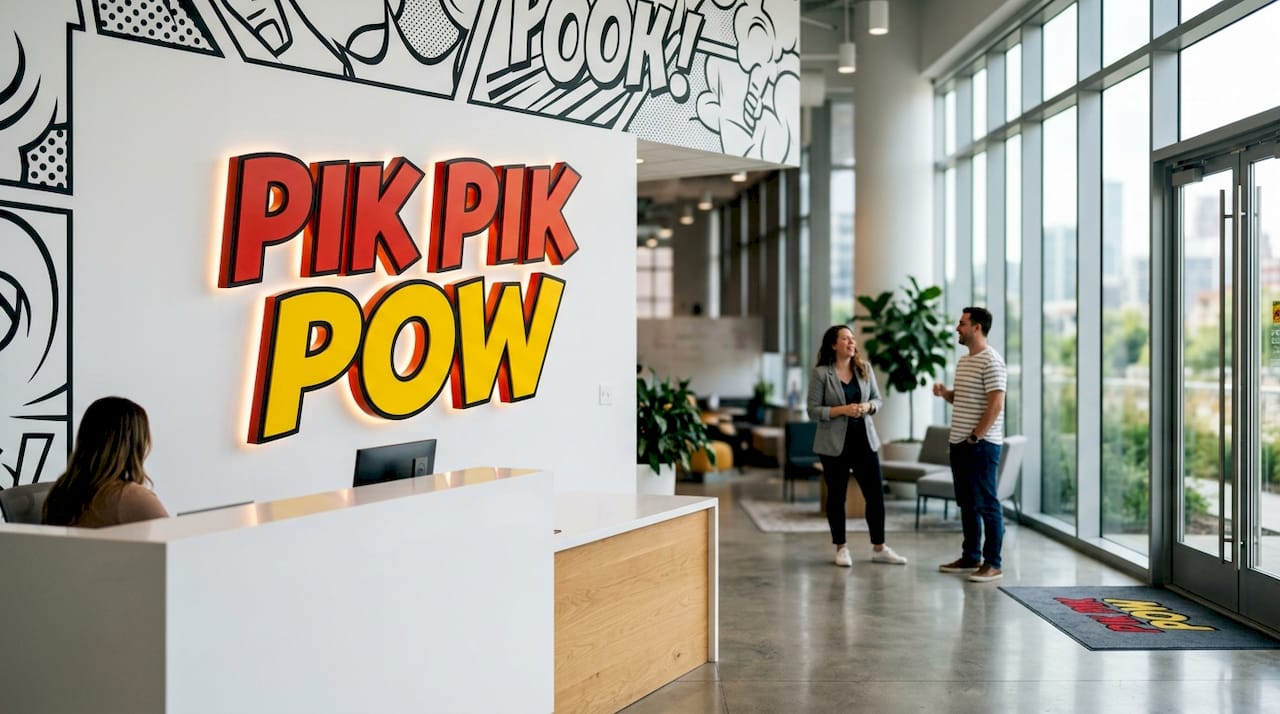
Clients assess credibility immediately based on signage quality, its consistency with brand visual identity, and its placement. That means a poorly produced sign does active damage to your reputation before anyone shakes a hand. A well-executed sign, by contrast, builds confidence and sets a professional tone.
The importance of welcome signs extends beyond aesthetics. Reception signage tells visitors they are in the right place, reduces anxiety in unfamiliar buildings, and signals that your organisation pays attention to detail. For multi-tenant buildings or offices with infrequent visitors, this orientation function is particularly valuable. The sign does the work of a receptionist before the receptionist speaks.
What are the key benefits of corporate welcome signs?
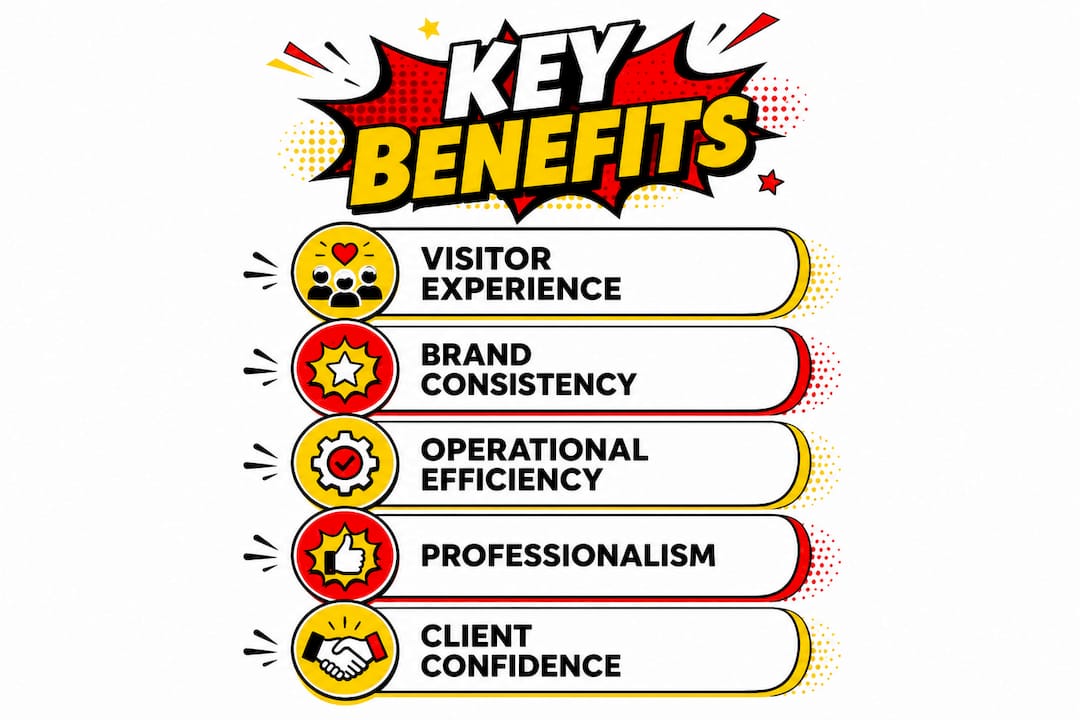
Corporate welcome signs deliver benefits across three distinct areas: visitor experience, brand consistency, and operational efficiency.
Visitor experience and wayfinding
Well-positioned signs facilitate visitor orientation even in complex or multi-tenant buildings. A visitor who spots your sign immediately feels reassured. That reassurance reduces the number of questions your reception staff must field, freeing them for higher-value interactions.
Brand reinforcement
Every branded touchpoint in your office should tell the same visual story. Your welcome sign anchors that story at the entrance. When the sign matches your website, business cards, and internal materials in colour, font, and tone, it signals that your organisation is consistent and considered.
Professionalism and client confidence
Reception areas with well-designed signage form first impressions that shape client trust before any interaction begins. A client walking into a reception with a crisp, well-lit sign feels differently about your business than one walking into a bare wall with a printed A4 sheet taped to the door.
Here is a summary of the core benefits:
- Wayfinding: Guides visitors to the correct entrance, floor, or desk without staff intervention.
- Brand visibility: Reinforces logo, colour palette, and typography at the most-visited point in your office.
- Client confidence: Signals investment in quality and attention to detail.
- Reduced visitor uncertainty: Confirms arrival and sets expectations for the visit.
- Employee pride: A well-presented entrance reinforces organisational identity for staff too.
Pro Tip: If your building has multiple tenants, place a secondary directional sign in the lift lobby or stairwell. Visitors who arrive on the wrong floor will self-correct without needing to call reception.
What makes an effective corporate welcome sign?
The design of your reception signage determines whether it achieves its purpose or simply occupies wall space. Several factors separate a sign that works from one that does not.
Material choices
The material you choose affects durability, appearance, and perceived quality. The three most common options for corporate environments are:
- Acrylic: Lightweight, available in a wide range of colours, and suitable for backlit applications. Works well in modern office interiors.
- Metal (brushed aluminium or stainless steel): Conveys authority and permanence. Suits professional services firms, law practices, and financial institutions.
- Timber: Adds warmth and texture. Suits creative agencies, hospitality businesses, and brands with a sustainability focus.
Each material carries a different message, so your choice should align with your brand personality, not just your budget.
Typography and colour
Custom welcome signs incorporating brand colours, typography, and logos align internal and external representation, reinforcing brand identity consistently. Mismatched signage colours or fonts risk undermining client confidence and create a disconnect with other branded touchpoints. Always supply your signage supplier with your exact Pantone or RAL colour references and your brand font files.
Dimensional and illuminated signage
Dimensional and illuminated signage draws attention, creating a visual anchor in reception spaces that helps visitors feel oriented and reassured. Backlit logos lifted off the wall increase contrast and guide visitors’ eyes, while also signalling investment in quality presentation. If your reception area has variable lighting conditions, illuminated signage is the more reliable choice.
| Design element | Best suited to | Key consideration |
|---|---|---|
| Flat acrylic panel | Modern, open-plan offices | Ensure colour accuracy against brand standards |
| Dimensional metal lettering | Professional services, finance | Requires solid wall fixing; plan installation early |
| Backlit logo box | Low-light or windowless receptions | Electrical supply must be factored into installation |
| Timber panel with engraving | Creative, hospitality, or wellness brands | Seal timber to prevent warping in heated interiors |
Placement and visibility
A sign installed in the wrong position fails regardless of its quality. Position your welcome sign at natural eye level (approximately 1.5 metres from the floor to the centre of the sign) and directly in the sightline of someone entering through the main door. Avoid placing it behind a reception desk where it competes with the receptionist for attention.
Pro Tip: Commission a lighting audit of your reception before finalising sign placement. Natural light shifts throughout the day and can create glare on glossy surfaces, reducing legibility at peak visitor hours.
What corporate signage options are available?
Corporate signage options fall into three broad categories, each suited to different needs and contexts.
Static reception signage
Static signs are the most common form of corporate welcome signage. They are permanently fixed, require no power source (unless illuminated), and deliver a consistent message year-round. They suit businesses with a stable brand identity and a fixed reception location. The signage systems available for static applications range from simple flat-panel displays to complex dimensional installations with multiple components.
Digital welcome signs
Digital signage solutions allow businesses to update messaging in real time. A digital welcome sign can display a personalised greeting for a visiting client, show the day’s meeting schedule, or broadcast company news. This flexibility makes digital signs particularly useful for businesses with high visitor volumes or frequent events. The trade-off is higher upfront cost and ongoing maintenance requirements.
Here is a comparison of the three sign types:
- Static signage: Low maintenance, permanent, consistent branding. Best for: established offices with stable identity.
- Digital signage: Flexible, updatable, personalised messaging. Best for: high-traffic receptions, event venues, multi-purpose spaces.
- Event welcome signs: Temporary, portable, often printed on foam board, fabric, or correx. Best for: conferences, exhibitions, and corporate away-days.
Corporate event welcome sign boards function as essential wayfinding and branding tools, confirming attendee arrival and communicating key information. They are typically positioned at registration areas or external access points to manage visitor flow effectively. For one-off events, a printed fabric banner or a foam-mounted panel is a cost-effective solution that still delivers a professional impression.
Event and temporary signage
Temporary welcome signs serve a specific purpose at corporate events, product launches, and client hospitality days. They do not need to match the permanence of reception signage, but they must match the brand. Inconsistent event signage undermines the credibility that your permanent reception sign has built.
How do you implement a corporate welcome sign effectively?
Implementing reception signage well requires planning before production begins. Follow these steps to get it right.
Assess your space. Measure the wall or surface where the sign will be installed. Note the lighting conditions, the wall material (plasterboard, brick, or glass), and the distance from the main entrance. These factors determine the appropriate sign type and fixing method.
Define your brief. Provide your supplier with your brand guidelines, including logo files in vector format (AI or EPS), Pantone colour references, and approved typefaces. A clear brief reduces revision cycles and protects brand accuracy.
Choose a qualified supplier. Work with a supplier who offers both design and manufacturing. A supplier who only prints cannot advise on dimensional options or installation requirements. Pikpikpow, for example, combines design expertise with precision manufacturing to deliver signage that is both accurate and durable.
Plan the installation. A methodical installation process incorporating lighting strategy and spatial awareness optimises the welcome sign’s impact and visitor experience. Signs installed without lighting consideration or in cluttered spaces fail to draw appropriate attention. Book installation during a low-traffic period to minimise disruption.
Schedule maintenance reviews. Signage fades, chips, and dates over time. Build a review into your annual facilities calendar. If your brand evolves, update your signage to match. Misaligned signage is worse than no signage because it signals neglect.
Pro Tip: When briefing a designer, photograph your reception at three times of day: morning, midday, and late afternoon. Share these images with your supplier so they can account for light changes when recommending materials and finishes.
Key takeaways
A corporate welcome sign is the single most visible expression of your brand in your physical space, and its quality directly shapes how clients perceive your organisation.
| Point | Details |
|---|---|
| Definition and purpose | A corporate welcome sign greets visitors, confirms arrival, and communicates brand identity at the point of entry. |
| Design accuracy matters | Match brand colours, fonts, and logo precisely; mismatched signage actively undermines client confidence. |
| Material choice signals brand values | Acrylic suits modern offices, metal suits professional services, and timber suits creative or hospitality brands. |
| Illumination improves impact | Backlit and dimensional signs draw attention and guide visitors more effectively than flat, unlit panels. |
| Implementation requires planning | Assess space, brief suppliers with vector files, and schedule installation during low-traffic periods. |
What we have learned from years of signage projects
The most common mistake I see from office managers is treating the welcome sign as the last item on a fit-out budget. By the time the furniture is ordered and the IT is installed, the sign budget has been cut to the minimum. The result is a flat, printed panel that looks temporary even when it is permanent.
The businesses that get this right treat the welcome sign as a brand investment, not a facilities cost. A client who walks into a reception with a well-lit, dimensional logo on a quality substrate makes a subconscious decision about your organisation in seconds. That decision is very difficult to reverse later in the meeting.
The other mistake I see regularly is ignoring maintenance. A sign that looked excellent on day one but now has a cracked acrylic panel or a faded colour does more damage than a modest sign in good condition. Build a review cycle into your facilities programme and treat signage the same way you treat any other client-facing asset.
My advice to administrators: brief your signage supplier early, share your full brand guidelines, and do not compromise on material quality at the installation stage. The upfront difference in cost between a good sign and a poor one is small. The difference in client perception is not.
— PikPikPOW!
Pikpikpow can help you get your welcome sign right
Pikpikpow works with businesses across commercial interiors, retail, and professional services to produce reception and entrance signage that reflects brand identity accurately and durably.
Whether you need a static dimensional sign for a corporate reception, a digital signage solution for a high-traffic lobby, or temporary event signage for a client day, Pikpikpow handles design, production, and installation. Every project starts with a proper brief and ends with a sign that matches your brand standards precisely. Visit the signage systems page to see the full range of options available, or get in touch with the team to discuss your specific requirements. Quality signage is not complicated when you work with the right people.
FAQ
What is a corporate welcome sign used for?
A corporate welcome sign greets visitors at a business entrance or reception area, confirms their arrival, and communicates the company’s brand identity. It also serves a wayfinding function, helping visitors orient themselves in unfamiliar buildings.
What materials are best for corporate reception signage?
Acrylic, brushed aluminium, and timber are the most common materials for corporate welcome signs. The right choice depends on your brand identity, the reception environment, and whether you require illumination.
How much does a corporate welcome sign cost?
Costs vary significantly depending on material, size, illumination, and installation complexity. A flat acrylic panel costs considerably less than a dimensional backlit metal installation; your supplier should provide a detailed quote based on your specific brief.
Should a corporate welcome sign be illuminated?
Illuminated signage is the better choice for receptions with variable or low natural light. Backlit logos lifted off the wall increase contrast and guide visitors’ eyes more effectively than unlit flat panels.
How often should corporate signage be updated?
Review your signage annually as part of your facilities programme. Update it whenever your brand identity changes, or when physical wear becomes visible, since damaged signage signals neglect to clients.