TL;DR:
- Vehicle graphics can generate up to 70,000 impressions daily, offering continuous marketing exposure.
- They include full wraps, partial wraps, decals, and perforated films, each suited for different budgets and goals.
- Compared to paint, graphics are more flexible, cost-effective, reversible, and protect vehicle surfaces.
A single well-branded vehicle can generate between 30,000 and 70,000 impressions per day, yet many UK businesses still treat vehicle graphics as an afterthought. If you think vehicle graphics are simply stickers or a small logo on a van door, you are missing a significant marketing opportunity. Vehicle graphics cover a broad range of solutions, from full vinyl wraps to perforated window films, each designed to put your brand in front of new audiences every time your vehicle moves. This guide breaks down the main types, compares them with traditional vehicle paint, and gives you practical steps to extract real value from every pound you invest.
Table of Contents
- Defining vehicle graphics and why they matter
- Types of vehicle graphics explained
- Vehicle graphics vs. paint: A smart business decision?
- How to maximise your return from vehicle graphics
- Why smart businesses see vehicles as mobile billboards
- Ready to elevate your brand with vehicle graphics?
- Frequently asked questions
Key Takeaways
| Point | Details |
|---|---|
| Broad visibility boost | Vehicle graphics turn every journey into an opportunity to reach thousands of potential customers. |
| Flexible, cost-effective branding | Vehicle wraps and decals can be updated or removed as your promotions change for a fraction of paint costs. |
| Strategic design matters | Well-designed graphics with clear messaging and contact information drive brand recognition and new leads. |
| Measure returns | Track impressions and enquiries to understand and maximise your ROI from vehicle graphics. |
Defining vehicle graphics and why they matter
Vehicle graphics is the term used to describe any visual branding or printed material applied directly to a vehicle’s exterior. This includes vinyl graphics, full and partial wraps, cut decals, and magnetic signs. Each option serves a different purpose, budget, and level of commitment, so understanding the category as a whole is the right starting point.
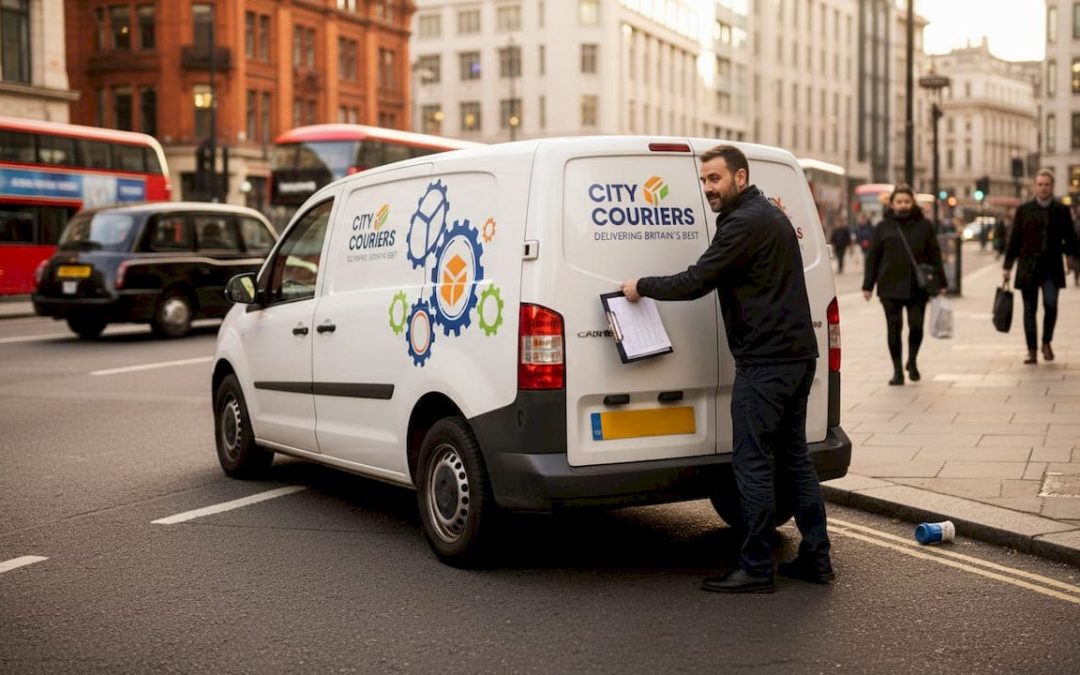
Businesses across a wide range of sectors use vehicle graphics every day. Construction firms mark their vans for site compliance and professional appearance. Delivery companies use fleet livery to build consumer trust. Tradespeople rely on contact details and service listings to generate local enquiries. Retailers and service businesses use vehicle graphics to extend their brand beyond the shopfront and into neighbourhoods where their customers live and work.
The core purposes of vehicle graphics fall into three areas:
- Advertising: Your vehicle becomes a moving advertisement, visible in traffic, on car parks, and parked outside client sites
- Compliance: Certain industries require vehicle identification for regulatory or insurance purposes
- Brand cohesion: A consistent livery across a fleet signals professionalism and builds recognition over time
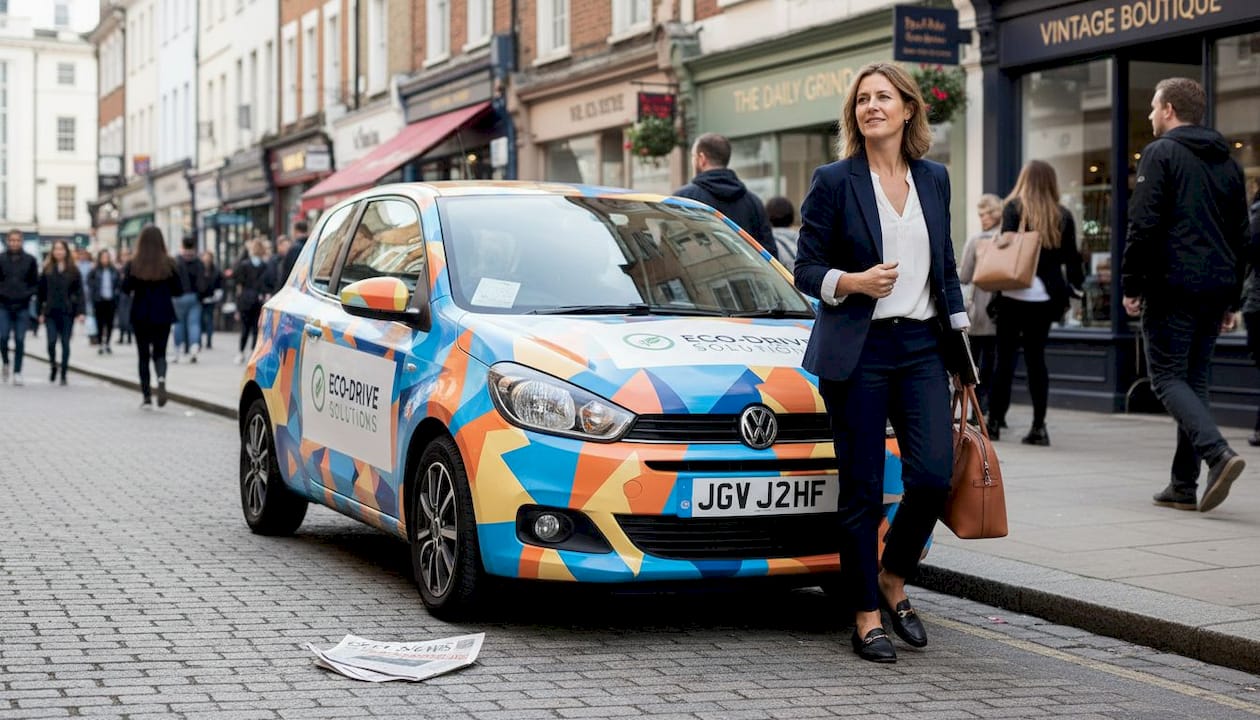
You can see examples of vehicle graphics that demonstrate how effective a well-designed livery looks across different vehicle types and industries.
Vehicle graphics are a key, cost-effective method for promoting brand visibility and reaching wider audiences, making them one of the strongest tools in a local marketing plan.
What makes vehicle graphics particularly compelling is scale. A single van parked in a busy high street or travelling along a commuter route reaches thousands of people without any ongoing cost. Unlike digital advertising, there is no daily budget to manage. Once applied, the graphics work continuously for years.
Having established why vehicle graphics are more than simple embellishments, let’s break down the main types and why they are indispensable for modern marketing.
Types of vehicle graphics explained
Now you have seen how crucial vehicle graphics can be, let’s get specific about the types available and how to select the one that benefits your business most.
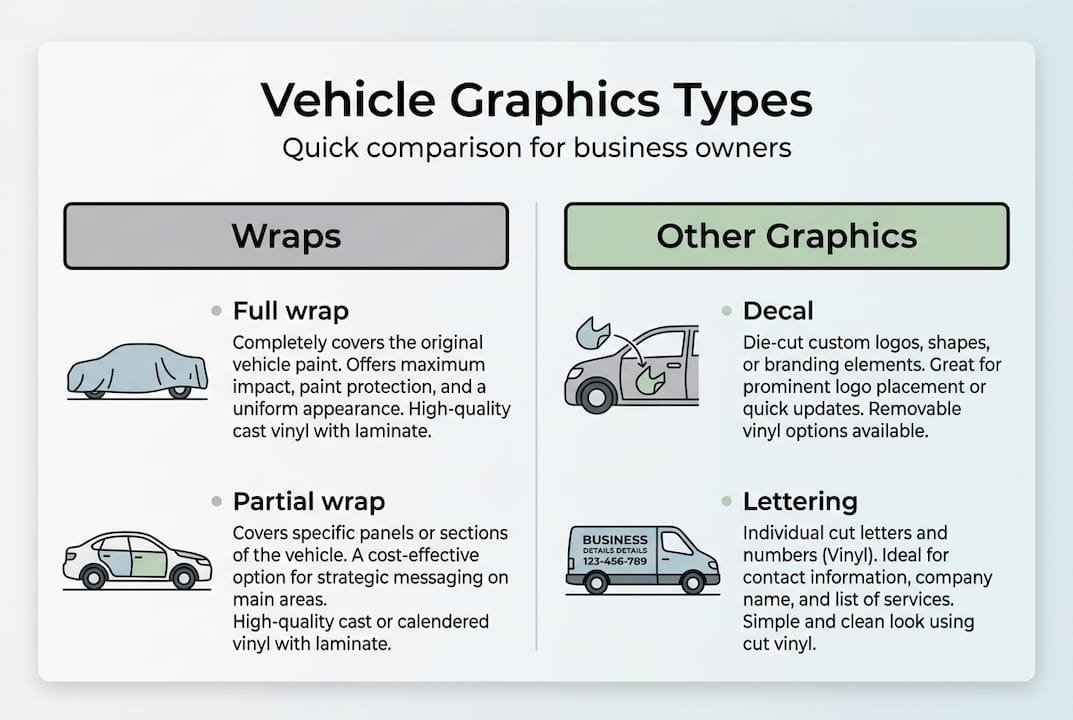
There are four principal types of vehicle graphics used by UK businesses, each with distinct advantages:
- Full wraps: Vinyl material covers the entire vehicle surface, including bonnet, doors, roof, and rear. Ideal for maximum brand impact.
- Partial wraps: Cover specific panels or sections, balancing cost with visual effect. Popular with businesses that want impact without full commitment.
- Decals and cut vinyl: Individual letters, logos, or shapes applied directly to the paintwork. Cost-effective and straightforward to produce.
- Perforated window film: Printed vinyl applied to rear or side windows, allowing visibility from inside the vehicle while displaying graphics on the outside.
| Type | Typical cost | Application time | Durability | Flexibility |
|---|---|---|---|---|
| Full wrap | £1,000 to £3,000 | 1 to 3 days | 3 to 7 years | High |
| Partial wrap | £400 to £1,200 | 4 to 8 hours | 3 to 7 years | High |
| Cut vinyl decals | £50 to £400 | 1 to 4 hours | 5 to 7 years | Moderate |
| Perforated window film | £100 to £500 | 2 to 4 hours | 3 to 5 years | Moderate |
When selecting materials, prioritise cast vinyl over calendered vinyl for vehicles exposed to UK weather. Cast vinyl conforms better to complex curves and lasts significantly longer. Finish choices, whether matte, gloss, or satin, affect both appearance and maintenance requirements. Gloss finishes are easier to clean; matte finishes offer a premium look but require more careful care.
Vinyl wraps are flexible, quick to apply, and can be removed or replaced, protecting the original paintwork, which makes them especially practical for businesses that update their branding or run seasonal promotions regularly. You can review a detailed wrapping vs. signage comparison to see how different approaches suit different fleet and branding needs, and consider choosing the right vehicle before committing to a design.
Pro Tip: If your business runs frequent promotional campaigns or updates its offers seasonally, opt for a partial wrap or decal system rather than a full wrap. This allows you to refresh messaging without replacing the entire livery.
Vehicle graphics vs. paint: A smart business decision?
Understanding the types and their unique strengths, it’s vital to clarify what sets graphics apart from traditional painting, especially when making a business investment.
The comparison between vehicle graphics and traditional paint comes down to four factors: cost, time, flexibility, and long-term value.
| Factor | Vehicle graphics (wrap) | Traditional paint |
|---|---|---|
| Cost | £1,000 to £3,000 | £2,000 to £5,000+ |
| Application time | Days | Weeks |
| Reversibility | Fully removable | Permanent |
| Paint protection | Yes, protects factory finish | N/A |
| Durability | 3 to 7 years | 10+ years |
| Design flexibility | Very high | Low |
Here is a practical checklist to help you decide which is right for your business:
- Budget available: Wraps are the more accessible entry point for most small to medium businesses
- Fleet size: Larger fleets benefit more from the speed and scalability of graphics
- Branding frequency: If you rebrand or update offers regularly, graphics give you far greater flexibility
- Vehicle age and resale: Wraps protect paintwork and can improve resale value by preserving the factory finish
- Timeline: If you need branded vehicles quickly, graphics can be applied in days, not weeks
Paint is more durable (over 10 years) but more expensive and permanent, while wraps are cheaper, reversible, and protect underlying paint. For most UK businesses operating mixed-use fleets or working with tight marketing budgets, vehicle graphics offer a stronger return on investment within a shorter timeframe.
A useful point to consider: wraps also protect the vehicle from minor scratches and UV fading, which can directly support a higher resale price when the time comes to update your fleet. You can explore more about wrapping versus painting to understand which suits your specific situation.
How to maximise your return from vehicle graphics
Once the best graphic solution is chosen, the next step is to implement strategies that ensure every pound invested delivers measurable returns.
Effective vehicle graphics begin with clear, purposeful design. Keep the following principles in mind:
- Logo placement: Position your logo prominently on both sides and the rear of the vehicle for maximum exposure
- Contact details: Include a phone number and website URL in a font size readable at a distance of at least 5 metres
- Colour contrast: Use colours that stand out from the vehicle’s base colour and from common street backgrounds
- Minimal text: Limit copy to three to five words beyond the business name. Drivers have only seconds to absorb information
- Call to action: A short, clear instruction such as “Call us today” or your website address is sufficient
Maintenance is equally important. Clean graphics regularly with a mild soap solution and avoid jet washing at close range or at angles that can lift edges. Park in shade where possible to reduce UV degradation. Inspect graphics every six months for peeling edges or fading, and address minor issues promptly to extend the overall lifespan.
Measuring the value of your graphics does not need to be complicated. Track leads that mention your vehicle or fleet. Use a dedicated phone number or landing page URL on the vehicle to isolate enquiries. Compare enquiry volumes before and after installation. Cost-per-impression for vehicle graphics regularly outperforms print, radio, and many digital channels.
Wraps can be updated or removed easily, letting companies adapt their branding or promotions cost-effectively, which means your investment does not have to feel permanent. You can also explore real-world branding case studies to see how other businesses have structured their vehicle branding for measurable results. For businesses operating in regulated environments, reviewing signage compliance considerations is worth doing before finalising your design, and reading up on signage durability tips will help you plan for longevity.
Pro Tip: Plan a seasonal graphics refresh before peak trading periods. A promotional message applied as a temporary overlay on your existing wrap can be removed after the campaign without affecting your main livery.
Why smart businesses see vehicles as mobile billboards
Most UK businesses invest in vehicle branding once and then forget about it. They apply a logo, a phone number, and call it done. That approach misses the point entirely.
The businesses getting the most from their vehicle graphics treat each vehicle as a genuinely active marketing asset. They update messaging for campaigns. They maintain graphics so nothing looks faded or peeling. They think about route planning as a form of audience targeting. A van consistently parked in the right postcodes, in front of the right businesses, is doing targeted local advertising at no additional cost.
The contrarian view worth considering is this: focusing only on logos and contact details ignores the full potential of the vehicle surface. Bold visuals, a clear value proposition, and consistent brand colours create local recognition over time. That recognition builds trust before a single conversation happens.
Many businesses also underestimate the signalling effect of a well-presented fleet. A clean, professionally wrapped vehicle tells a potential customer something about the quality of your work before you have even spoken. Explore advanced branding options to see how far vehicle branding can go when treated as a serious part of your marketing strategy.
Ready to elevate your brand with vehicle graphics?
If you have been managing your vehicle branding with a basic logo or outdated graphics, now is the time to reconsider. A professionally designed and installed vehicle wrap or livery system puts your brand in front of thousands of potential customers every single day, with no ongoing media spend.
At Pik Pik POW!, we work with businesses across the UK to create vehicle graphics that are designed for impact and built to last. From initial concept through to installation, our team handles the entire process. Whether you are looking to brand a single vehicle or an entire fleet, you can start your vehicle graphics project with us today. If you want to see how vehicle graphics fit into a broader signage strategy, explore integrated signage solutions across our full range of services.
Frequently asked questions
What is the difference between a vehicle wrap and a decal?
A wrap covers all or most of a vehicle with printed vinyl, while a decal is a smaller, targeted design applied to a specific area. Wraps are flexible, cover most or all of a vehicle, and are easily changeable, whereas decals suit businesses needing a cost-effective, targeted approach.
Will vehicle graphics damage my car’s paintwork?
Quality vinyl graphics protect factory paint and can be removed cleanly if installed and maintained properly. Wraps protect underlying paintwork when installed correctly, making them a practical choice for businesses that want to preserve vehicle resale value.
How long do vehicle graphics last in UK weather?
Most high-quality vehicle wraps last 3 to 7 years depending on maintenance, exposure, and material. Paint lasts more than 10 years while wraps typically last 3 to 7 years, though proper maintenance can push wraps towards the upper end of that range.
Can I update vehicle graphics if my branding changes?
Yes, vinyl graphics and wraps can be replaced or updated without damaging the vehicle surface. Wraps are removable and flexible for branding changes, which makes them a practical long-term choice for businesses that evolve their identity over time.