
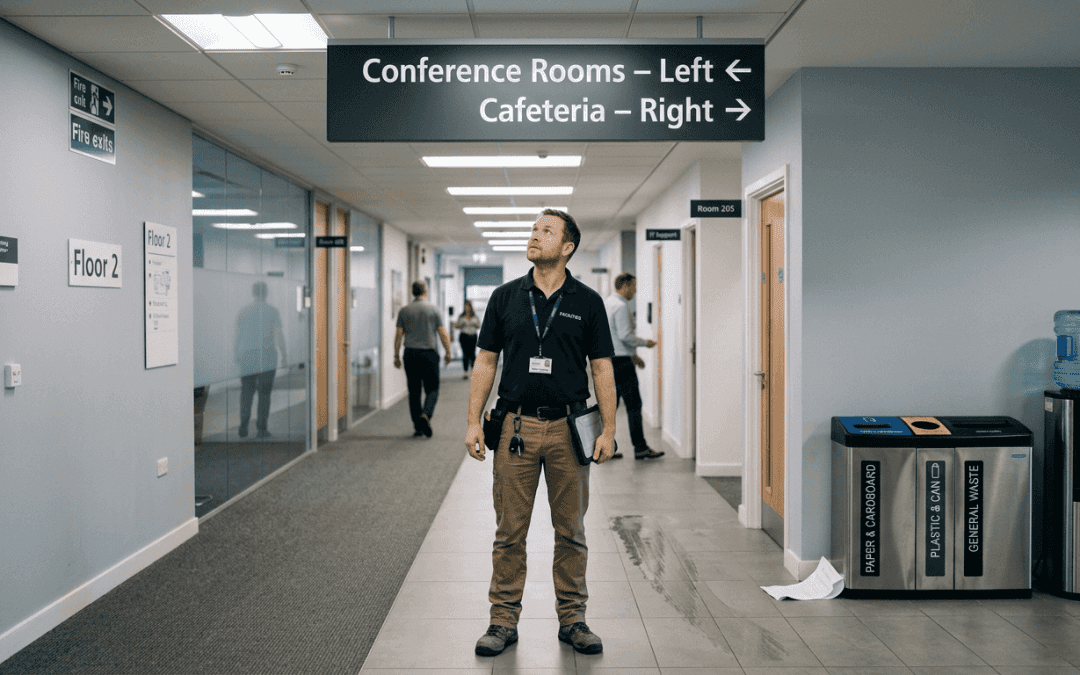
Most businesses lose customers within seconds of entry, not because their products or services disappoint, but because visitors cannot find what they need. Poor signage creates confusion, weakens brand perception, and wastes staff time answering basic directional questions. Yet many facility managers underestimate how strategic indoor signage transforms navigation clarity and reinforces brand identity. This guide explains what effective indoor signage entails, why it matters in 2026, and how to implement systems that genuinely improve customer experience whilst strengthening your brand presence across retail, education, and corporate environments.
Table of Contents
- What Is Indoor Signage And Why It Matters
- How Effective Signage Design Enhances Navigation And Branding
- Incorporating Digital Signage And Accessibility In Indoor Environments
- Choosing And Implementing The Right Indoor Signage System For Your Business
- Enhance Your Business With Expert Indoor Signage Solutions
- Frequently Asked Questions
Key takeaways
| Point | Details |
|---|---|
| Navigation clarity | Effective indoor signage reduces customer confusion, streamlines movement, and minimises time wasted seeking information. |
| Brand reinforcement | Consistent signage design strengthens brand identity through strategic colour, typography, and messaging placement. |
| Accessibility matters | ADA compliance expands audience reach, enhances user experience, and protects against legal risks. |
| Digital advantages | Dynamic digital signage enables real-time updates, improves engagement, and adapts to changing business needs. |
| Strategic implementation | Choosing the right signage system based on budget, environment, and goals delivers measurable operational benefits. |
What is indoor signage and why it matters
Indoor signage encompasses any visual communication displayed inside buildings to inform, direct, promote, or reinforce brand identity. Retail signage is any graphic display in and around your store that communicates messages to target audiences, but the definition extends far beyond retail into education, healthcare, corporate offices, and public facilities. These signs range from static wall-mounted directionals to sophisticated digital displays showing real-time information.
Businesses deploy indoor signage for four primary purposes. Wayfinding signs guide visitors through complex spaces, reducing confusion and improving flow. Branding elements reinforce company identity through logos, colour schemes, and messaging consistency. Compliance signs meet legal requirements for safety, accessibility, and regulatory standards. Promotional displays highlight offers, services, or seasonal campaigns to drive engagement and sales.
The relevance of effective indoor signage varies by sector but remains universally important. Retail environments use signage to direct shoppers towards high-margin products whilst reinforcing brand personality. Educational institutions rely on clear wayfinding to help students, staff, and visitors navigate sprawling campuses efficiently. Corporate offices employ signage to project professionalism, guide clients to meeting rooms, and communicate company values through design choices.
Indoor signage directly influences customer behaviour and operational efficiency. Well-designed systems reduce the number of directional enquiries staff must handle, freeing them for higher-value interactions. Clear navigation decreases visitor frustration, particularly important when first impressions shape overall perception of service quality. Strategic placement of promotional signage increases awareness of specific offerings without requiring active staff involvement.
Common indoor signage types include:
- Directional arrows and room identifiers for wayfinding
- Reception area branding and welcome messages
- Floor graphics guiding traffic flow
- Digital screens displaying schedules, announcements, or promotions
- Wall-mounted informational panels explaining services or processes
- Suspended ceiling signs visible from distance
- Door and window graphics for privacy or branding
The distinction between effective and ineffective signage often comes down to clarity of purpose. Each sign should serve one clear function rather than attempting multiple roles simultaneously. Overloading signs with information creates cognitive burden, defeating the purpose of simplifying navigation or communication.
How effective signage design enhances navigation and branding
Signage design determines whether your investment guides customers effectively or becomes visual clutter they ignore. Effective signage design significantly reduces customer confusion in retail environments, with similar benefits observed across all sectors when design principles align with human perception and behaviour patterns.

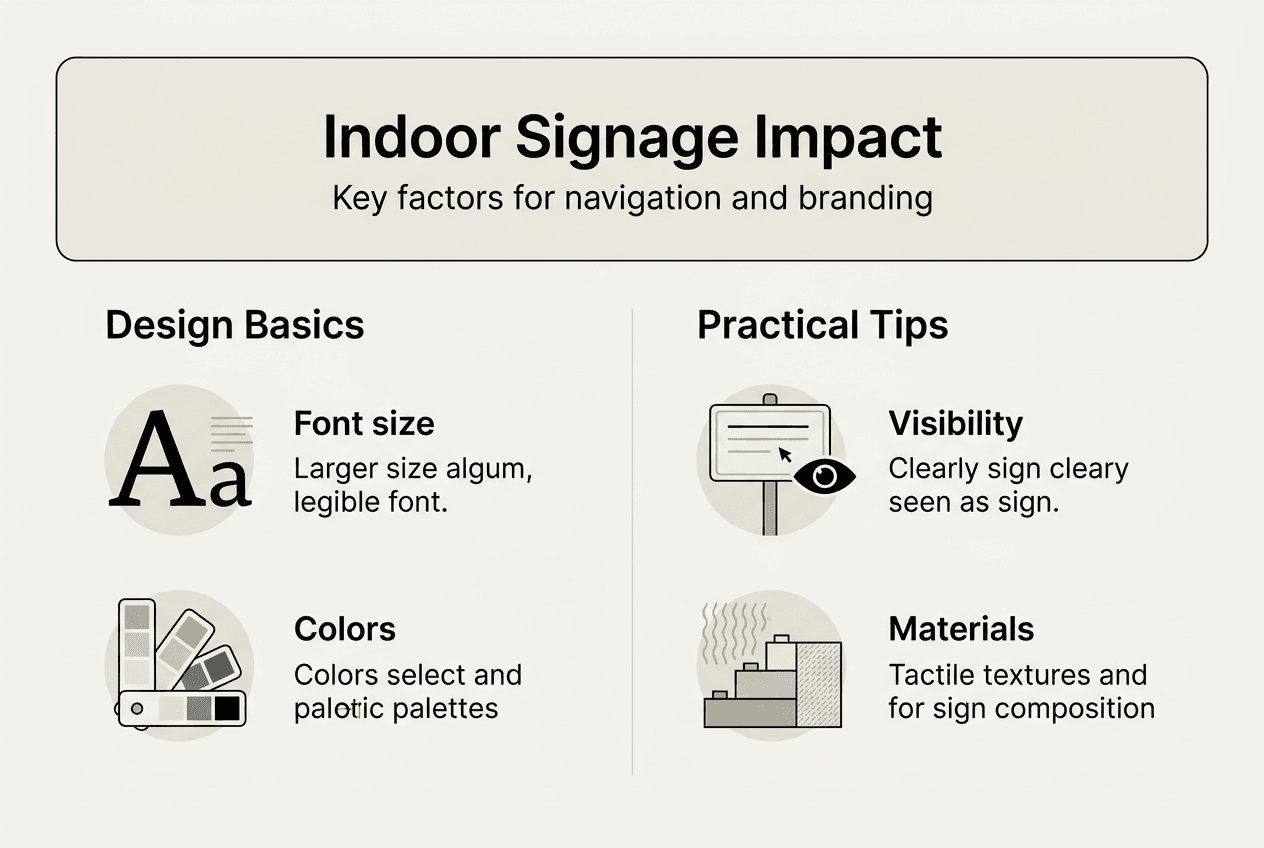
Wayfinding signage combines text, symbols, colour coding, and architectural context to create intuitive navigation systems. The most successful wayfinding signs use hierarchical information presentation, with primary destinations in larger, bolder type and secondary details in smaller fonts. Symbols and icons transcend language barriers, particularly valuable in diverse urban environments or international business settings.
Colour psychology plays a substantial role in signage effectiveness. Blue conveys trust and professionalism, making it popular in corporate environments and financial institutions. Red creates urgency and draws attention, ideal for emergency exits or limited-time promotions. Green suggests growth and wellness, frequently used in healthcare and environmental organisations. Research on colour psychology demonstrates measurable impacts on decision-making speed and emotional response.
Font selection influences readability more than most facility managers realise. Sans-serif typefaces like Helvetica, Arial, and Futura offer superior legibility at distance and in poor lighting conditions. Serif fonts work better for longer text passages but struggle in quick-glance wayfinding applications. Letter spacing, known as kerning, affects how quickly readers process information, with slightly increased spacing improving comprehension for older adults and those with visual impairments.
Consistent signage systems strengthen brand recognition through repetition and visual coherence. When every sign shares the same colour palette, typography, and design language, visitors subconsciously associate these elements with your brand identity. This consistency extends beyond aesthetics to functional benefits, as users learn to recognise your signage style and instinctively know where to look for information.
Pro tip: Create a signage style guide documenting exact colour codes, fonts, sizing standards, and placement rules before installing any signs. This ensures consistency across multiple locations and makes future additions seamless.
| Design element | Impact on effectiveness | Recommended approach |
|---|---|---|
| Font choice | Affects reading speed and comprehension | Use sans-serif for wayfinding, limit to two font families maximum |
| Colour contrast | Determines visibility and accessibility | Maintain 4.5:1 contrast ratio minimum for text |
| Information hierarchy | Guides eye movement and priority | Place most important information in top third of sign |
| Symbol usage | Enables quick recognition | Combine universal symbols with text labels for clarity |
| Placement height | Affects sightlines and readability | Position primary wayfinding at 1.5-1.8 metres from floor |
Size matters significantly in signage effectiveness. A common formula suggests one inch of letter height per ten feet of viewing distance, though this varies based on lighting conditions and font weight. Oversized signage overwhelms spaces and appears unprofessional, whilst undersized signs fail their primary function of conveying information efficiently.
Material selection influences both aesthetics and durability. Acrylic offers modern, sleek appearance with excellent colour vibrancy. Aluminium composite panels provide durability for high-traffic areas. Vinyl graphics enable cost-effective temporary or seasonal messaging. Each material choice communicates something about brand positioning, whether premium, practical, or innovative.
Incorporating digital signage and accessibility in indoor environments
Digital signage transforms static communication into dynamic, responsive systems that adapt to changing needs without physical replacement. The shift towards digital solutions accelerated dramatically in recent years, driven by decreasing hardware costs and increasing demand for flexible messaging capabilities.
84% of decision-makers report workplace communications clearly improved when digital signage deployed, highlighting measurable benefits beyond aesthetic appeal. Digital displays enable real-time updates for meeting room bookings, emergency notifications, wayfinding adjustments during events, and promotional content rotation without printing costs or installation labour.
Key advantages of digital signage solutions include content scheduling based on time of day or audience demographics, integration with data systems for live information feeds, remote management across multiple locations, and analytics tracking viewer engagement. These capabilities prove particularly valuable in corporate environments where information changes frequently and communication speed impacts operational efficiency.
Accessibility compliance ensures signage reaches every visitor regardless of physical abilities or sensory limitations. Following ADA guidelines helps you reach wider audiences, enhance user experience, and avoid potential legal issues that arise from non-compliant installations. The principles extend beyond legal requirements to fundamental design thinking about inclusive communication.
Ensuring internal and wayfinding signage meets accessibility standards involves several practical steps:
- Use high-contrast colour combinations with minimum 70% contrast between text and background
- Include tactile elements like raised letters and Braille for critical wayfinding and room identification
- Position signs at consistent heights between 1.2 and 1.5 metres from floor level
- Provide audio descriptions or QR codes linking to audio content for digital displays
- Ensure adequate lighting without glare that obscures text or creates reading difficulty
- Test signage visibility from wheelchair height and various approach angles
Digital signage accessibility requires additional considerations beyond static signs. Screen readers cannot interpret information displayed only as images, necessitating text alternatives or companion audio. Motion and animation can disorient users with cognitive disabilities, suggesting need for pause controls or static alternatives. Colour-blind users benefit from patterns or textures supplementing colour-coded information.
Pro tip: Install digital signage with adjustable brightness and contrast controls accessible to facility managers, allowing optimisation for different times of day and ambient lighting conditions without requiring technical support.
Hybrid work models emerging in 2026 increase demand for adaptable signage systems that accommodate fluctuating occupancy and changing space usage. Hot-desking environments need dynamic room labelling showing current bookings and availability. Flexible meeting spaces benefit from digital displays indicating current setup and next scheduled use. These applications demonstrate how digital signage solves problems impossible for static solutions to address effectively.
Accessibility extends to cognitive and neurological considerations often overlooked in traditional signage planning. Simple language, clear symbols, and consistent layouts reduce cognitive load for all users, particularly benefiting those with learning disabilities, dementia, or temporary impairments like fatigue. Universal design principles recognise that accessibility improvements benefit everyone, not just those with diagnosed disabilities.
Choosing and implementing the right indoor signage system for your business
Selecting appropriate signage systems requires balancing functional requirements, budget constraints, aesthetic preferences, and long-term flexibility needs. The decision framework starts with defining primary objectives, whether improving navigation, reinforcing branding, enhancing communication, or achieving compliance.
| System type | Primary advantages | Best suited for | Typical cost range |
| — | — | — |
| Static signage | Low maintenance, permanent clarity, no power requirements | Stable environments with consistent messaging needs | £50-£500 per sign |
| Digital displays | Dynamic content, remote updates, analytics capability | High-traffic areas requiring frequent message changes | £800-£5,000 per screen |
| Hybrid systems | Combines permanent wayfinding with flexible promotional zones | Medium to large facilities balancing stability and adaptability | £2,000-£15,000 installed |
Budget considerations extend beyond initial purchase to include installation labour, content creation, ongoing maintenance, and eventual replacement costs. Static signage typically involves higher upfront design and production costs but minimal ongoing expenses. Digital systems require lower per-message costs once installed but involve electricity consumption, software licensing, and periodic hardware updates.
Environmental factors influence material and technology choices significantly. High-humidity areas like pools or spas require waterproof materials and sealed electronics. Direct sunlight exposure demands fade-resistant inks and anti-glare coatings. High-traffic zones need durable surfaces resistant to impacts and frequent cleaning. Temperature extremes affect adhesive performance and electronic component reliability.
Implementing signage systems effectively follows a structured approach:
- Conduct thorough space audit identifying key decision points, bottlenecks, and information gaps
- Map customer journey from entry through primary destinations to exit
- Prioritise signage locations based on traffic volume and confusion frequency
- Develop content hierarchy distinguishing critical wayfinding from supplementary information
- Create mockups and test visibility from relevant approach angles and distances
- Install in phases, gathering user feedback before completing full deployment
- Establish maintenance schedule and responsibility assignments
Integrated solutions offering combined design, production, and installation services often deliver better total cost of ownership and faster deployment timelines. Unified commerce platforms see 22% better total cost and 20% faster implementation compared to piecemeal approaches, with similar principles applying to signage system deployment when working with full-service providers.
Assessing signage system fit requires honest evaluation of internal capabilities and constraints. Organisations with dedicated marketing teams may prefer digital systems enabling in-house content updates. Businesses lacking design resources benefit from turnkey solutions including professional content creation. Facilities with limited electrical infrastructure might prioritise static or solar-powered options.
Scalability considerations become critical for multi-location businesses or growing organisations. Standardised design systems enable consistent brand presentation across sites whilst allowing location-specific customisation. Cloud-based digital signage management platforms facilitate centralised control with local override capabilities. Modular static signage using interchangeable components reduces replacement costs when updating specific information.
Timing implementation strategically maximises impact and minimises disruption. Installing signage during renovations or seasonal closures reduces interference with normal operations. Phased rollouts allow testing and refinement before full commitment. Coordinating signage updates with marketing campaigns or product launches creates synergy amplifying both investments.
Measuring signage effectiveness helps justify investment and guide improvements. Simple metrics include reduced directional enquiries to staff, decreased time customers spend searching for destinations, and improved satisfaction scores related to facility navigation. Digital signage provides quantitative data on content views, dwell time, and interaction rates enabling data-driven optimisation.
Professional guidance from experienced signage specialists helps avoid common pitfalls like inadequate sizing, poor placement, or design choices that clash with architectural elements. Expert consultation typically costs far less than correcting mistakes after installation. Designing impactful signage requires balancing multiple technical and aesthetic considerations best addressed through collaborative professional relationships.
Enhance your business with expert indoor signage solutions
Transforming your facility’s navigation and brand presence starts with partnering with specialists who understand both design principles and practical implementation challenges. Pik Pik POW! combines decades of signage expertise with precision manufacturing capabilities, delivering bespoke indoor signage solutions tailored to your specific business environment and objectives.
Our comprehensive approach begins with understanding your unique challenges, whether improving customer flow in retail spaces, enhancing professional image in corporate offices, or meeting accessibility requirements in public facilities. We offer complete signage systems from initial consultation through design, production, installation, and ongoing support, ensuring seamless integration with your brand identity and architectural context.
Explore our digital signage solutions for dynamic, flexible communication systems, or discover our internal and wayfinding signage services designed to eliminate confusion and strengthen brand consistency throughout your facility.
Frequently asked questions
What types of indoor signage are most effective for retail businesses?
Wayfinding signs combining directional arrows with department labels help customers navigate stores efficiently, reducing frustration and improving shopping experience. Promotional signage highlighting special offers or new products increases visibility and drives purchasing decisions when strategically placed near relevant merchandise. Branded environmental graphics reinforce company identity whilst creating Instagram-worthy moments that encourage social sharing. Explore wayfinding signs for retail to see practical examples.
How can I ensure my indoor signage is accessible to everyone?
Following ADA guidelines helps reach wider audiences, enhance user experience, and avoid legal issues through compliant design and installation practices. Use high-contrast colour combinations, include tactile elements like Braille for critical information, and position signs at consistent heights accessible from wheelchair level. Supplement visual information with audio alternatives or QR codes linking to detailed descriptions. Professional accessible digital signage incorporates these features seamlessly into attractive, functional designs.
What are the key design elements to consider for indoor signage?
Readable sans-serif fonts improve comprehension, with studies showing up to 15% better reading speed in signage applications compared to decorative typefaces. Consistent colour schemes aligned with brand identity strengthen recognition and create visual coherence across all touchpoints. Adequate sizing based on viewing distance ensures legibility, with proper placement at appropriate heights and angles maximising visibility. Review comprehensive signage design elements guidance for detailed specifications.
How quickly can indoor signage be implemented and start delivering benefits?
Integrated signage solutions enable faster deployment compared to coordinating multiple vendors, with unified platforms achieving 20% faster implementation timelines through streamlined processes. Simple static signage installations complete within days, whilst comprehensive systems including digital components typically deploy within two to four weeks. Navigation and branding benefits often become apparent immediately upon installation, with measurable improvements in customer satisfaction and operational efficiency within the first month. Discuss your timeline requirements during signage system implementation planning.