
TL;DR:
- Effective outdoor signage attracts 76% of consumers to unfamiliar stores and boosts brand recognition. Choosing durable materials, clear designs, and understanding regulations ensure signs last, comply, and maximize impact. Digital signs offer flexibility for dynamic messaging, enhancing long-term customer engagement and business growth.
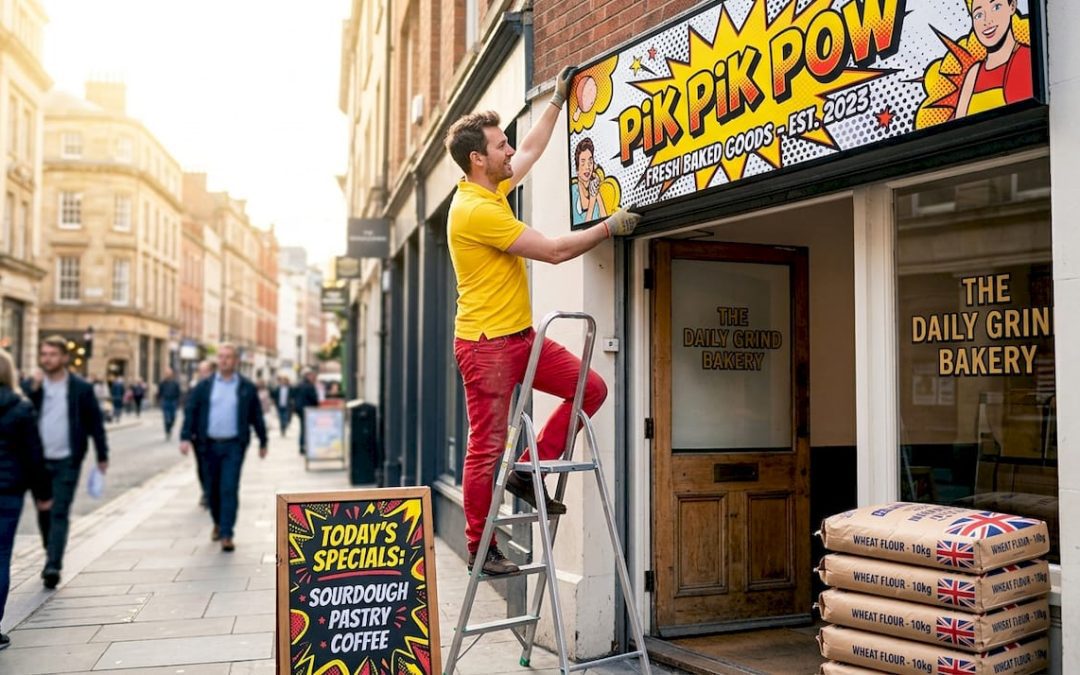
Walk past any busy high street and you will notice that the shops drawing the most foot traffic almost always have one thing in common: clear, well-designed outdoor signage. The importance of outdoor signs goes far beyond simply displaying your business name. Research shows that 76% of consumers entered a store they had never visited before solely because of its signage. That single statistic reframes how you should think about your shopfront. This article covers the core benefits of outdoor signage, the materials that make signs last, design principles that drive results, and the practical steps to get your installation right.
Table of Contents
- Key takeaways
- How outdoor signs impact brand visibility
- Choosing the right materials for outdoor signage
- Design principles for maximum sign impact
- Legal and practical considerations for installation
- Our perspective on what outdoor signs actually deliver
- How Pikpikpow can help your business stand out
- FAQ
Key takeaways
| Point | Details |
|---|---|
| Signs drive new footfall | 76% of consumers have entered an unfamiliar business purely because of its outdoor signage. |
| Material choice affects long-term cost | Cheap non-waterproof materials degrade quickly outdoors, raising total costs over time. |
| Design clarity is non-negotiable | High contrast, simple layouts, and consistent branding are the foundation of effective outdoor signs. |
| Regulations require planning | Illuminated and roadside signs often need local authority approval before installation. |
| Digital signage offers flexibility | Weatherproof digital signs allow dynamic messaging and content updates that static signs cannot. |
How outdoor signs impact brand visibility
Your sign is working every hour your business is open, and most hours it is not. No other marketing channel delivers that kind of continuous exposure for a one-time investment. The benefits of outdoor signage sit in that consistency. A well-positioned sign builds brand recognition over days, weeks, and months simply through repeated visual contact with passersby.
Out-of-home advertising delivers a median performance lift of 20% for in-person outcomes. That is double the lift achieved by broadcast television. This matters because it confirms that physical, real-world signage cuts through in a way that digital-only campaigns often struggle to replicate.
The outdoor sign effectiveness of your business depends on three core principles:
- Visibility. Your sign must be seen from a distance, from different angles, and in varying light conditions. Positioning, size, and illumination all affect this.
- Clarity. A passerby has two to three seconds to absorb your message. If your sign does not communicate what you do and where you are within that window, it has failed.
- Consistency. Your sign should use the same colours, fonts, and tone as your other brand materials. Inconsistency creates doubt in the minds of potential customers.
“68% of consumers made a purchase they had not planned because a sign caught their attention.” This is the impact of signage on customer behaviour at its most direct. Your sign is not just marking a location. It is actively influencing buying decisions.
Enhancing business presence outdoors also means thinking beyond your fascia sign. Pavement signs, window graphics, and projecting signs each contribute to your overall presence on the street. Used together, they create a complete visual identity that is hard to ignore.
Choosing the right materials for outdoor signage
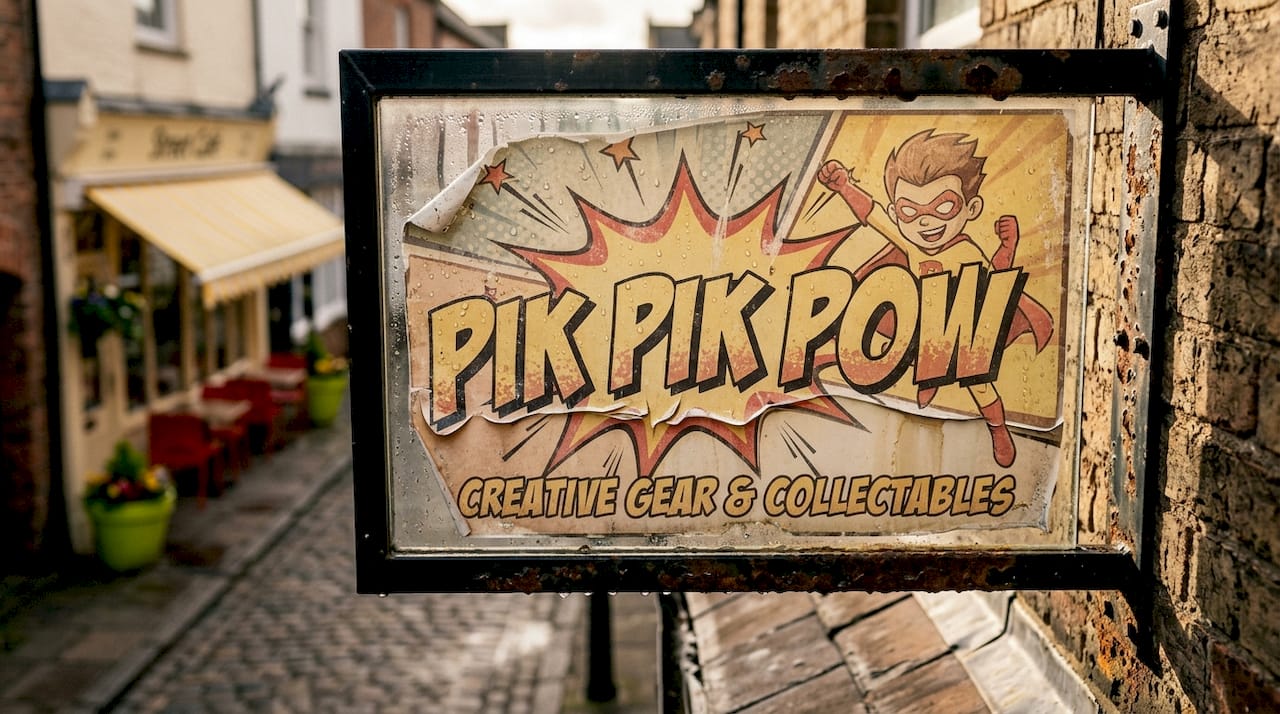
Getting the material choice right is one of the most underappreciated parts of the process. Many businesses focus on the upfront cost and overlook what the sign will cost them over five years. Non-waterproof signage suffers early fading, corrosion, and electrical failure, all of which raise total replacement and maintenance costs significantly.
Outdoor signs face UV bleaching from sunlight, water ingress from rain, condensation, and thermal cycling as temperatures shift between seasons. A sign that looks excellent in a showroom can deteriorate rapidly once it is exposed to a British winter followed by direct summer sun.
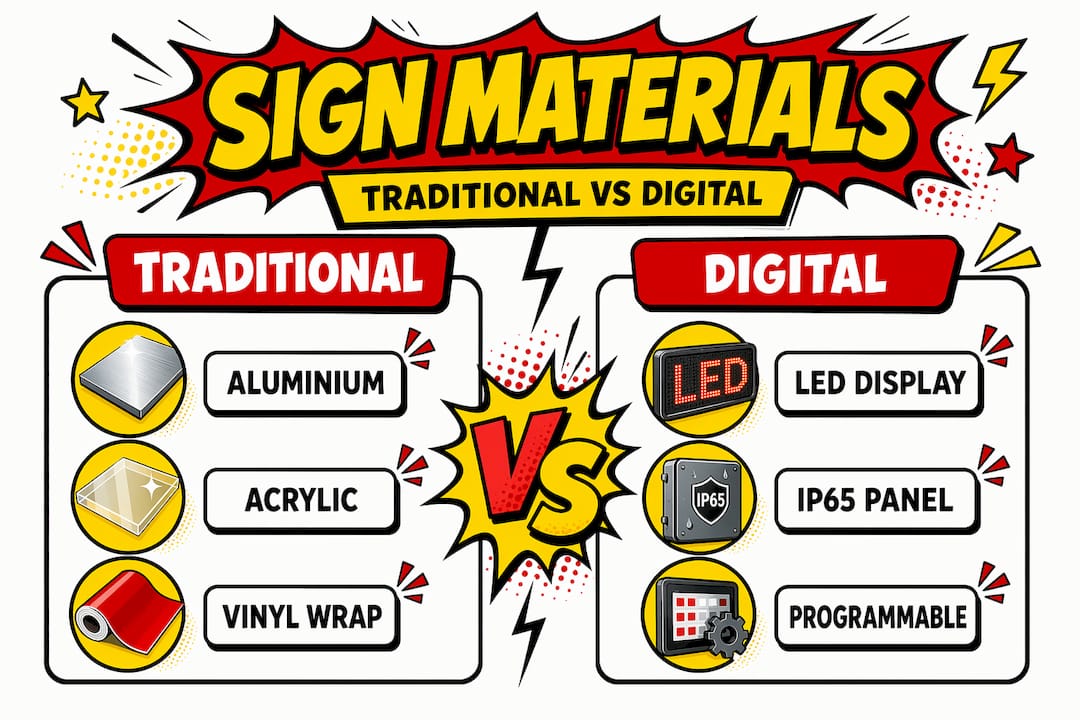
When selecting materials, IP ratings are a practical benchmark. IP65 is the minimum recommended for most outdoor static signs, meaning the enclosure is fully dust-tight and protected against water jets from any direction. Illuminated signs and digital outdoor displays should meet at least IP65, with IP67 or IP68 preferred for locations exposed to heavy rain or flooding risk.
Here is how the main signage options compare for outdoor use:
| Sign type | Weatherproofing | Durability | Flexibility | Upfront cost |
|---|---|---|---|---|
| Aluminium composite fascia | High | 10+ years | Low | Moderate |
| Acrylic with vinyl print | Moderate | 5 to 7 years | Low | Low to moderate |
| Illuminated tray sign | High | 8 to 12 years | Low | Moderate to high |
| Digital waterproof display | Very high | 5 to 10 years | Very high | High |
| PVC banner | Low | 1 to 2 years | Moderate | Very low |
Digital waterproof signs allow dynamic messaging, scheduled content updates, and improved return on investment despite higher upfront costs. For businesses that need to promote rotating offers, seasonal products, or time-sensitive information, the flexibility of digital outdoor signage often justifies the investment.
Pro Tip: Before committing to a material, ask your signage supplier for a sample that has been tested outdoors for at least twelve months. Colour consistency and structural integrity after prolonged exposure tell you far more than a fresh showroom panel.
Design principles for maximum sign impact
Good design is not about making a sign look attractive. It is about making it work. A sign that looks clever but confuses customers in three seconds or less has the opposite of the intended effect. Poor quality or confusing signage actively reduces the likelihood of customers entering your business, even when your products or services are excellent.
Follow these design principles to get your outdoor sign working as hard as possible:
Prioritise contrast above all else. Dark text on light backgrounds, bold colours, and strong spacing make messages easier to absorb at a glance. Avoid colour combinations with low contrast, such as mid-grey text on a white background.
Keep your message short. Your primary sign should communicate your brand name and, if space allows, a single supporting line that clarifies what you do. “Smith & Co. Butchers” says everything necessary. Additional information belongs on secondary signage or window displays, not the main fascia.
Use your brand fonts and colours exactly. Any deviation from your brand standards on your outdoor sign creates subtle inconsistency that erodes recognition over time. Customers who know your brand from social media, packaging, or print materials should recognise your signage instantly.
Consider visibility at different distances. A sign readable from ten metres may be unreadable from thirty. Letter height, typeface weight, and contrast all need to be tested at the intended viewing distance before you approve a final design.
Avoid decorative fonts for primary copy. Script and display typefaces are rarely legible at speed. Reserve these for logos or decorative elements. Your business name and category should use a clean, legible typeface at sufficient size to be read quickly.
The advantages of traditional signs lie in their permanence and the trust they communicate. A well-made, well-lit fascia sign signals that a business is established and serious. That matters for customer confidence, particularly for new visitors.
You can explore outdoor signage best practices in more detail to see how placement and design work together to maximise visibility on different types of street and retail environments.
Legal and practical considerations for installation
Getting the design right is only part of the process. Outdoor signage comes with regulatory requirements that vary depending on your location, sign type, and size. Skipping this step can result in enforcement notices, fines, or being required to remove a sign after it has been installed.
Here is what you need to address before installation:
- Planning permission. Most businesses in England and Wales rely on permitted development rights for standard fascia signs, but illuminated or roadside signs often require formal advertisement consent from the local planning authority. Listed buildings and conservation areas have stricter controls.
- Landlord consent. If you lease your premises, check your tenancy agreement. Most commercial leases require written landlord approval before any external signage is altered or installed.
- Electrical sign compliance. Illuminated signs must be installed by a qualified electrician and comply with BS 7671 wiring regulations. This is not optional.
- Pavement and projecting signs. Any sign that extends over a public pavement may require a licence from the local highway authority, regardless of whether it is a projecting wall-mounted sign or a freestanding A-board.
If you are working in a construction or development context, the requirements become more specific. A construction signage compliance guide covers the additional obligations for site hoardings, health and safety notices, and temporary directional signage.
Regular maintenance is the other side of the practical picture. Cleaning, checking fixings, inspecting for wear, and repairing damaged elements all preserve the impression your sign creates and reduce the cost of full replacement. A faded or broken sign sends the wrong message regardless of how good the original design was.
Pro Tip: Schedule a visual sign audit every six months. Check for fading, loose fixings, failed illumination, and any condensation behind illuminated panels. Catching problems early costs far less than a full replacement.
Our perspective on what outdoor signs actually deliver
I have worked with businesses across retail, construction, and commercial interiors on signage projects, and the pattern I see most consistently is this: businesses underinvest in outdoor signage at the start and then overspend later when they need to replace something that was not built to last.
What I have found is that businesses often treat their sign as a cosmetic finish rather than a commercial asset. The reality is that a well-specified outdoor sign delivers returns over a decade or more. The upfront cost, when spread across its lifespan, is modest compared to the footfall and first impressions it generates every single day.
The shift toward digital outdoor displays is something I find genuinely useful for the right businesses. Not every business needs a dynamic digital screen on their shopfront. But for those running frequent promotions, seasonal ranges, or services that change regularly, the ability to update content without replacing physical materials changes the economics entirely.
What I have also learned is that the emotional dimension of a well-designed sign is real. A sign that looks considered and professional signals to a potential customer that the business behind it is worth trusting. That trust is built before anyone walks through the door. It is the importance of first impressions made physical, and it is something no amount of online advertising can fully replicate at street level.
If I had one piece of advice for any business reviewing its signage, it would be this: commission the sign you will be proud of in ten years, not the cheapest option that feels acceptable today.
— PikPikPOW!
How Pikpikpow can help your business stand out
At Pikpikpow, we design and manufacture bespoke outdoor signage for businesses across retail, commercial, and construction sectors throughout the UK. Whether you need a precision-built illuminated fascia sign, architectural signage for a commercial development, or a weatherproof digital display for dynamic content, we combine design expertise with durable manufacturing to deliver results that hold up in the real world.
Our signage systems cover everything from shopfront fascias and projecting signs to full building-mounted displays, all specified for long-term outdoor performance. If your business is considering the move to dynamic content, our digital signage solutions are built to IP65 and above, giving you the flexibility to update messaging without replacing your physical installation. Get in touch with Pikpikpow to discuss your outdoor signage requirements.
FAQ
Why are outdoor signs important for businesses?
Outdoor signs are the first point of contact between a business and potential customers. Research shows that 76% of consumers entered an unfamiliar store because of its signage, making outdoor signs one of the most direct drivers of new footfall available to any business.
How does outdoor signage compare to other advertising?
Out-of-home advertising delivers twice the performance lift of broadcast television for in-person outcomes, making it one of the most cost-effective channels for businesses that rely on physical customer visits.
Do I need planning permission for an outdoor sign?
Standard fascia signs often fall under permitted development rights, but illuminated signs, projecting signs, and any signage in conservation areas or on listed buildings typically require formal advertisement consent from your local planning authority.
What materials are best for outdoor signs?
Aluminium composite, illuminated tray signs, and IP65-rated digital displays offer the best long-term durability for outdoor use. PVC banners and unprotected acrylic panels degrade much faster in UK weather conditions and cost more to replace over time.
How often should outdoor signs be maintained?
A visual inspection every six months is recommended, checking for fading, failed illumination, loose fixings, and any structural wear. Regular maintenance reduces total replacement costs and preserves the professional impression your sign creates.