
TL;DR:
- Effective school signage should promote wayfinding safety branding and inclusion.
- Material choices impact durability and long-term cost; test samples in real conditions.
- Involving pupils and staff in design and regular audits ensures signage remains relevant and respected.
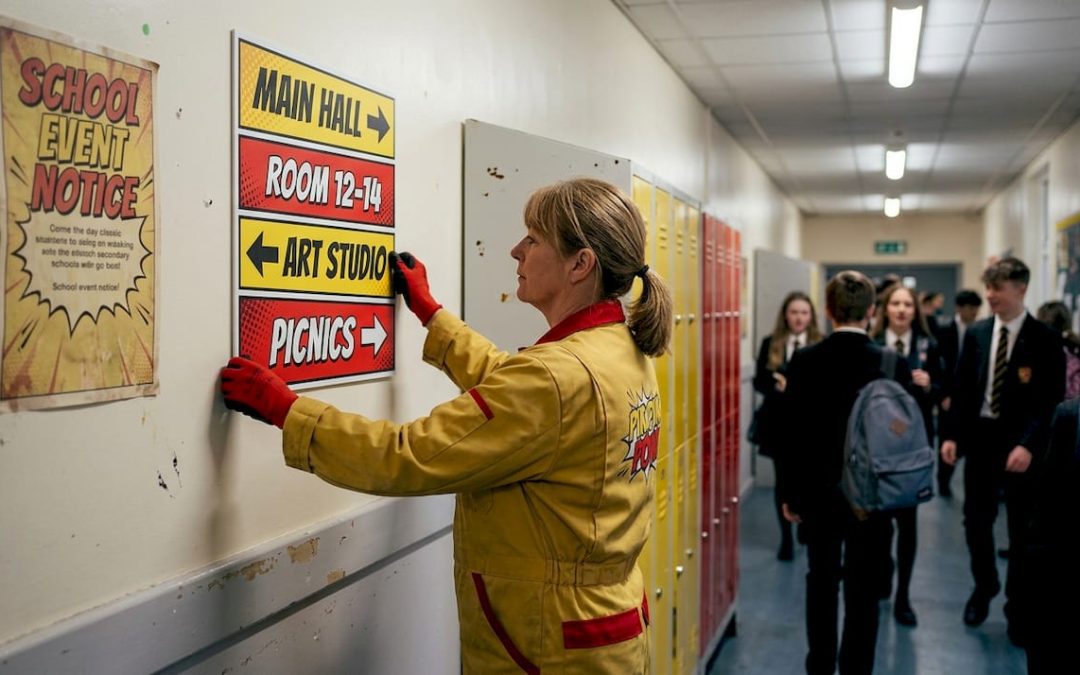
Navigating a busy school campus can be genuinely confusing for pupils, staff, parents, and visitors alike. Poor signage creates friction at every turn, from missed lesson changes to frustrated parents unable to find the main office. Effective school signage does far more than point people in the right direction. It reinforces school values, supports SEN pupils, promotes safety, and helps build a cohesive learning environment. School design and construction guidance from the Department for Education provides a framework for signage planning, and this article translates those principles into practical, actionable tips you can apply across your school estate.
Table of Contents
- Set clear objectives for school signage
- Choose the right materials for long-lasting impact
- Incorporate inclusive and accessible signage
- Maximise engagement through strategic placement and design
- Maintain and audit signage for ongoing effectiveness
- A fresh approach to school signage: what most guides miss
- Explore professional signage solutions for your school
- Frequently asked questions
Key Takeaways
| Point | Details |
|---|---|
| Set clear signage goals | Every school signage project starts with clear objectives for safety, branding, and engagement. |
| Choose durable materials | Select weatherproof, anti-vandal materials for lasting visibility indoors and outdoors. |
| Prioritise accessibility | Inclusive design ensures all pupils, including those with SEND, benefit from effective wayfinding. |
| Audit signage regularly | Routine audits help keep all signage relevant, readable, and compliant with standards. |
| Expert help available | Professional signage providers offer full planning, design, and installation support. |
Set clear objectives for school signage
With the context established, let’s start with your signage objectives. Before you commission a single sign, you need a clear sense of what you want your signage to achieve. Many schools treat signage purely as a navigational tool, but that thinking is far too narrow.
Effective school signage should address four distinct areas:
- Wayfinding: Helping pupils, visitors, and contractors find rooms, facilities, exits, and key services quickly and confidently.
- Safety: Communicating emergency procedures, hazard warnings, restricted zones, and fire exit routes clearly and compliantly.
- Branding: Reinforcing your school’s identity, values, and ethos through consistent use of colour, typography, and messaging.
- Inclusion: Ensuring that signage is readable and navigable for pupils with visual impairments, learning differences, or language barriers.
Once you have defined these objectives, they become the filter through which every signage decision passes. If a proposed sign doesn’t serve at least one of these goals, question whether it belongs in your plan at all.
One approach that consistently delivers better results is involving pupils during the planning phase. Pupils use the spaces daily and notice wayfinding gaps that adults simply overlook. A short workshop or feedback session with student council representatives can surface genuinely useful insights. This also creates a sense of ownership, which means pupils are more likely to respect and interact positively with the finished signage.
The effective campus signage guide for schools outlines how to structure this goal-setting process from the start. Meanwhile, reviewing your internal and wayfinding signage options early on helps you align your objectives with practical solutions.
“Clear objectives set at the planning stage prevent costly changes later. Schools that define success criteria before procurement consistently achieve better outcomes.”
Pro Tip: Create a one-page signage brief before approaching any supplier. Include your objectives, your school’s branding guidelines, key areas that need addressing, and your budget range. This saves time and ensures every quote you receive is genuinely comparable.
The DfE’s school design standards reinforce the importance of planning signage as part of the broader building design rather than as an afterthought, which means the earlier you define your objectives, the better.
Choose the right materials for long-lasting impact
Once your objectives are defined, the next step is to select suitable materials. Material selection is one of the most consequential decisions in any school signage project, yet it’s often driven by upfront cost alone. That approach almost always costs more in the long run.
School environments are demanding. Signage is exposed to:
- High footfall and physical contact, particularly in corridors and stairwells.
- Outdoor weather conditions, including UV exposure, rain, and frost in UK climates.
- Deliberate and accidental damage, including graffiti, scratching, and impact from bags or equipment.
- Frequent cleaning, often with chemical agents that degrade low-quality surfaces quickly.
For outdoor signage, aluminium composite panels and powder-coated aluminium are reliable choices. They resist rust, hold colour well under UV light, and withstand physical knocks. For indoor wayfinding, PVC foam board with UV laminate offers a cost-effective middle ground, while brushed aluminium or acrylic provides a more premium finish suited to reception areas and main entrance corridors.
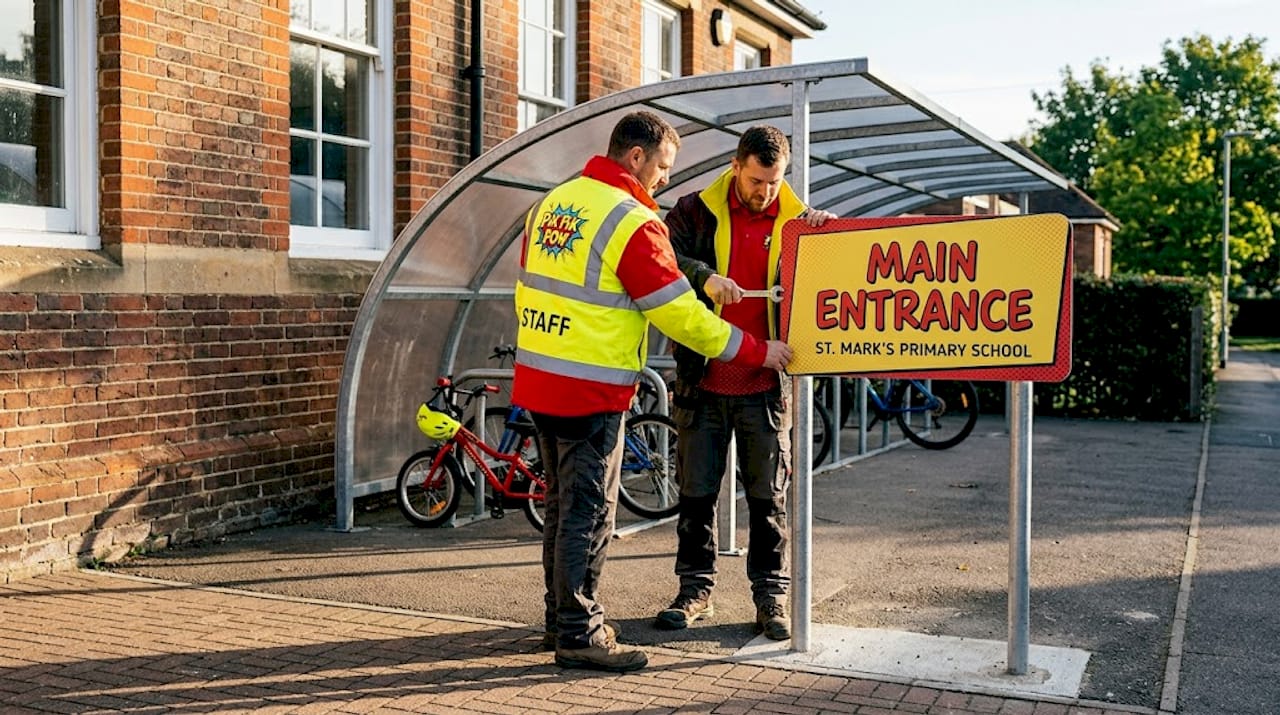
Anti-graffiti laminates are worth the additional cost in high-risk areas. They allow staff to clean off marker pen and paint without damaging the printed surface underneath, extending the usable life of each sign considerably. The guide to signage materials provides a thorough breakdown of material options across different environments and budgets.
Before finalising any material choice, understanding why durable signage matters helps make the case internally for a higher initial investment. Replacing signs every two years because of poor material selection is neither cost-effective nor operationally sensible.
“Material decisions made without testing in context often lead to premature failure. A sign that looks excellent in a supplier’s showroom may fade or delaminate within twelve months of outdoor installation.”
Pro Tip: Request material samples from your supplier and fix them to relevant locations within the school for four to six weeks before ordering. This real-world trial will reveal how materials respond to cleaning products, sunlight, and physical contact in your specific environment.
The school design and construction guidance from DfE also recommends that materials used in educational settings meet relevant British Standards for fire safety and durability, so always request compliance documentation from your signage supplier.
Incorporate inclusive and accessible signage
Material choices lay the foundation. Now, ensure your signage is accessible and inclusive. Accessibility in school signage is not a nice-to-have. It is a legal and ethical requirement that directly affects the daily experience of SEN pupils, visually impaired visitors, and staff with disabilities.
Accessible signage should incorporate the following features:
- Clear, simple symbols alongside text, reducing reliance on literacy and language.
- Tactile surfaces and Braille on key signs such as room numbers, toilet facilities, and emergency exits.
- Minimum font size of 70mm for primary directional signage in corridors, scaling up for distance.
- High contrast colour combinations, such as black on yellow or white on dark blue, for maximum legibility.
- Consistent placement height, ideally at 1.5 metres to the centreline, to suit wheelchair users and younger pupils.
- Avoided glossy finishes in naturally lit areas where glare can make signs unreadable for visually impaired users.
Consulting your SENCO (Special Educational Needs Coordinator) throughout the signage design process is invaluable. SENCOs can identify specific needs within your pupil population that a general designer would never anticipate. For example, some pupils with autism benefit from colour-coded zoning systems where each area of the school uses a distinct, consistent colour scheme. This reduces cognitive load and makes navigation more predictable.
The step-by-step effective wayfinding sign guide walks through how to build accessible design into each stage of your signage project.
| Accessibility feature | Benefit | Relevant user group |
|---|---|---|
| Tactile Braille panels | Enables independent navigation | Visually impaired pupils and visitors |
| High contrast colour | Improves legibility at a distance | Low vision users, all pupils |
| Symbol-based directionals | Reduces language dependency | EAL pupils, SEN users |
| Colour-coded zones | Reduces cognitive navigation load | Pupils with autism, younger children |
| Matte, anti-glare finishes | Eliminates reflective interference | Visually impaired users |
Regular audits post-installation are equally important. Accessibility needs change as your pupil intake changes. A sign that was perfectly clear for last year’s cohort may not serve this year’s pupils as well. DfE guidance specifically recommends testing prototypes with pupils and SENCOs before full installation, and revisiting signage after each major intake.
Pro Tip: Walk your school’s signage routes with a SENCO and a small group of SEN pupils twice per year. Their feedback will consistently surface issues that formal audits miss.
Maximise engagement through strategic placement and design
Accessibility sets the standard, and with that in place, strategic design can truly elevate engagement. The best-designed sign in the world delivers no value if it’s positioned where nobody looks. Placement is as important as the sign itself.
Here is a practical approach to placing signage for maximum impact:
- Map pupil movement patterns through the school at peak times such as start of day, break, lunch, and end of day. Signs should appear at every natural decision point where pupils choose direction.
- Position directional signs before the decision point, not at it. If a corridor splits into two, the sign should appear two to three metres before the junction, not directly beside it.
- Use height variation deliberately. Overhead hanging signs work well in open areas and dining halls. Wall-mounted signs at eye level suit corridors. Floor graphics work particularly well for young pupils in primary settings.
- Create visual hierarchy so the most critical information, such as fire exits and main facilities, reads first. Secondary information like room numbers should sit below or smaller.
- Test placements with pupils before committing to permanent installation. Use printed mock-ups fixed temporarily to understand sight lines, obstructions, and reading distances.
The comparison below shows how static and digital signage stack up in a school context:
| Factor | Static signage | Digital signage |
|---|---|---|
| Upfront cost | Lower | Higher |
| Ongoing cost | Minimal | Power, maintenance, software |
| Content flexibility | Fixed | Fully dynamic |
| Durability | Very high | Moderate |
| Engagement potential | Moderate | High |
| Accessibility | Consistent | Depends on content review |
| Best suited for | Wayfinding, safety, room labelling | Announcements, timetables, events |
The school signage installation guide covers placement decisions in detail, including height recommendations and fixings suitable for different wall surfaces. When digital signage is used, it should complement rather than replace static wayfinding. Dynamic screens are excellent for daily announcements, lunch menus, and event information, but they cannot replace the permanent clarity of a well-placed directional sign. The wayfinding signage guide explains how to build a layered system that combines both.
The DfE’s design standards recommend regular post-installation audits to confirm that signage continues to serve its intended purpose after the school population, layout, or use of spaces changes.
Pro Tip: Colour-code your signage system by zone. For example, science blocks in blue, arts in red, and administration in green. This gives pupils an intuitive orientation system that works even before they read a word.
Maintain and audit signage for ongoing effectiveness
To ensure signage remains impactful, continuous maintenance and audits are essential. Schools change constantly. Rooms are repurposed, departments move, staff numbers shift, and pupil needs evolve. Signage that was accurate in September can become outdated by January without a structured review process.
A practical audit schedule should include:
- Start of each term: Check all signage for physical damage, fading, and accuracy. Update any signs reflecting room allocations or staff information that has changed over the holiday period.
- End of each term: Gather feedback from staff and pupils about signage gaps or confusion points they’ve encountered. Log these for action before the next term begins.
- After any building work or room reallocation: Commission an immediate signage review for the affected areas, including any temporary wayfinding needed during works.
- Annual accessibility review: Include SENCO input and, where possible, feedback from SEN pupils and visually impaired users.
Feedback loops are often the most overlooked element of signage management. A simple suggestion form or a standing agenda item in your estates team meeting can capture issues before they become safety concerns. Staff who supervise corridors and entrances are particularly well placed to spot fading, damaged, or confusing signs.
Poorly maintained signage is not just an aesthetic issue. Faded emergency exit signs, outdated room labels, and damaged directional arrows can create genuine safety risks. The types of construction signage guide is a useful reference for understanding temporary and permanent safety signage requirements, particularly if your school is undergoing building works.
DfE guidance is clear that regular audits post-installation are a core part of responsible signage management in educational settings.
Schools that audit signage twice per year consistently report fewer navigation-related complaints from parents and visitors, and better compliance outcomes during Ofsted inspections.
Pro Tip: Photograph every sign in your school at the time of installation. These reference images make it far easier to spot gradual degradation during future audits, particularly for colour accuracy and legibility.
A fresh approach to school signage: what most guides miss
Having covered the key tips, here’s a perspective that most traditional guides overlook. The majority of school signage articles focus almost entirely on materials, placement, and compliance. Those elements matter. But the single biggest factor determining whether a school’s signage actually works is whether pupils and staff feel any ownership of it.
Signage that is designed in isolation by administrators and delivered as a finished product is often ignored or resented. Pupils, in particular, notice when their environment is changed without any consultation. By contrast, schools that involve student council members, SEN pupils, and form tutors in the prototyping process produce signage that pupils actively engage with and respect.
This is not a small detail. DfE guidance specifically recommends testing prototypes with pupils and SENCOs before full installation. Most guides mention this in passing. We’d argue it should be the first step, not the last. The step-by-step wayfinding sign creation process we recommend builds co-creation into the design stage precisely because the feedback gathered at that point is far more actionable than feedback gathered after permanent installation.
The second overlooked area is the regular audit cycle. Most schools install signage, feel satisfied with the result, and then revisit it only when something visibly breaks. But accessible, effective signage is a living system. It needs to evolve with the school. Treating it as a one-off project rather than an ongoing facility management responsibility is the most common and most costly mistake we see.
Explore professional signage solutions for your school
If you’re looking for expert help, a trusted signage partner can make a genuine difference to the quality and longevity of your school’s signage.
At Pik Pik POW!, we work with UK schools to design, manufacture, and install signage systems that are durable, accessible, and aligned with your school’s branding and safety requirements. From initial planning through to final installation, we provide hands-on support at every stage. Our range of signage systems covers everything from architectural entrance signs to room-labelling programmes, while our internal and wayfinding signage solutions are specifically designed for the demands of busy educational environments. Whether you’re refreshing an existing system or starting from scratch, our team is ready to help you create a signage environment that works for every pupil, member of staff, and visitor who walks through your doors.
Frequently asked questions
How often should school signage be audited?
School signage should be reviewed at the start and end of each term to confirm accuracy, legibility, and safety compliance. Regular audits post-install are specifically recommended by DfE guidance as part of responsible educational facility management.
Who should be involved in signage prototyping?
Pupils, SENCOs, and staff should all contribute to the prototyping and testing phase. Testing with pupils and SENCOs before full installation ensures the signage is genuinely accessible and useful for those who rely on it most.
What features make signage accessible?
Accessible signage combines clear symbols, tactile Braille surfaces, large fonts, and high contrast colours to serve pupils and visitors with a range of needs. DfE design standards provide the overarching framework for accessible signage in UK schools.
Are digital signs effective for schools?
Digital signage can significantly increase engagement for dynamic content such as timetables and announcements, but it requires routine content review and clear objectives to remain effective. DfE guidance recommends that all signage, including digital displays, be regularly audited for clarity and relevance.