
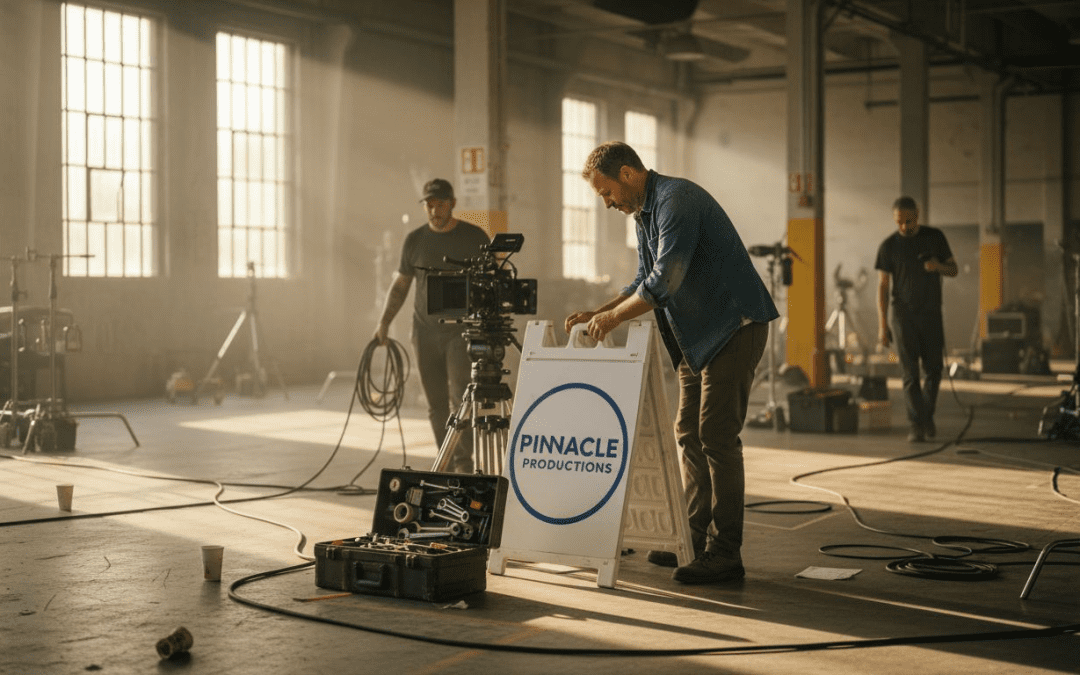
Film signage in the UK demands more than visual appeal. Production designers face a complex challenge: creating authentic, on-camera signs that also meet strict UK legal and accessibility requirements. Non-compliance can halt filming, trigger fines, and derail budgets. This guide walks you through every step, from understanding planning permissions to selecting materials, ensuring your signage enhances both brand identity and production efficiency without costly delays.
Table of Contents
- Prerequisites and Legal Considerations
- Design Principles for Film Signage
- Materials and Fabrication
- Step-by-Step Design and Production Process
- Safety and Regulatory Compliance
- Common Mistakes and Troubleshooting
- Expected Outcomes and Success Metrics
- Explore Professional Film Signage Solutions at Pik Pik Pow
- Frequently Asked Questions About Film Signage Design
Key Takeaways
| Point | Details |
|---|---|
| Legal compliance is mandatory | UK signage laws vary by location, size, and illumination; non-compliance risks production halts. |
| Accessibility improves inclusivity | Tactile elements and Braille are legally required under the Equality Act 2010. |
| Material choice impacts durability | Acrylic and vinyl with matte coatings reduce glare and withstand filming conditions. |
| Plan timelines carefully | Expect 4 to 6 weeks from design approval to on-set installation for seamless integration. |
| Avoid common pitfalls | Ignoring permissions and poor placement cause safety hazards and expensive delays. |
Prerequisites and Legal Considerations
Before you sketch your first design, understand the legal landscape. UK regulations around film signage are stringent, especially for external or illuminated signs. Most external or illuminated signage requires advertisement consent from local councils, and failing to secure permissions can force removal mid-production. That means costly delays and wasted budget.
Conservation areas impose even tighter controls. If your filming location falls within a historic zone, expect additional scrutiny on size, materials, and visual impact. Early consultation with local councils saves headaches later. You need to know whether your signage is classified as temporary or permanent, illuminated or non-illuminated, and what approvals each category demands.
Planning permission requirements depend on several factors:
- Sign dimensions and total display area
- Proximity to public highways or conservation zones
- Whether the sign is illuminated or non-illuminated
- Duration of installation (temporary vs. permanent)
- Local council policies specific to the filming area
Ignoring these prerequisites risks production shutdowns and fines that quickly exceed your signage budget. Always consult with your signage systems provider and local authorities before finalizing designs. Early engagement with councils and planning officers allows you to adjust designs proactively, keeping your production on schedule.
Design Principles for Film Signage
Once legal boxes are ticked, focus on design fundamentals. Film signage must be legible on camera, accessible to all, and consistent with brand identity. Effective film signage must use legible, sans-serif fonts at minimum 12pt size to ensure readability in varied lighting conditions. Fonts like Arial, Frutiger, or Helvetica work well because they avoid decorative flourishes that blur on screen.
Colour contrast is equally critical. High-contrast colours and consistent branding elements improve viewer brand recall by 27%, making your signage a powerful tool for reinforcing brand identity. Pair dark text with light backgrounds or vice versa, ensuring your palette aligns with brand guidelines while maintaining accessibility.
Accessibility is not optional. Inclusive signage design includes tactile elements like Braille complying with UK Equality Act 2010. Even on temporary sets, tactile signage supports inclusivity and legal compliance. Incorporate raised lettering, Braille translations, and clear pictograms to meet these standards.
Key design principles include:
- Sans-serif typefaces at 12pt minimum for clarity
- High-contrast colour combinations aligned with brand palettes
- Tactile elements and Braille per Equality Act requirements
- Consistent logo placement and colour usage across all signage
- Clear hierarchy with primary messages visually dominant
Pro Tip: Test your design mockups under filming lights before production. What looks great in daylight can wash out or create glare under studio lighting. Early testing prevents last-minute redesigns.
Consistency builds recognition. Every sign should echo your brand’s visual language, from typography to colour ratios. For more insights, explore our guide on signage design principles and effective signage design tips tailored to UK contexts.
Materials and Fabrication
Material selection directly affects signage durability and on-camera appearance. Durable materials like 1/8" acrylic sheets and matte vinyl coatings withstand filming conditions and reduce glare. Acrylic offers scratch resistance and works well for both indoor and outdoor shoots. Its rigidity ensures clean edges and professional finishes that hold up under repeated handling.
Vinyl provides flexibility and cost efficiency, particularly for temporary indoor signage or vehicle graphics. It adheres smoothly to varied surfaces and can be removed without residue, making it ideal for short-term productions. Matte finishes are essential; glossy surfaces reflect lights and create distracting hot spots on camera.
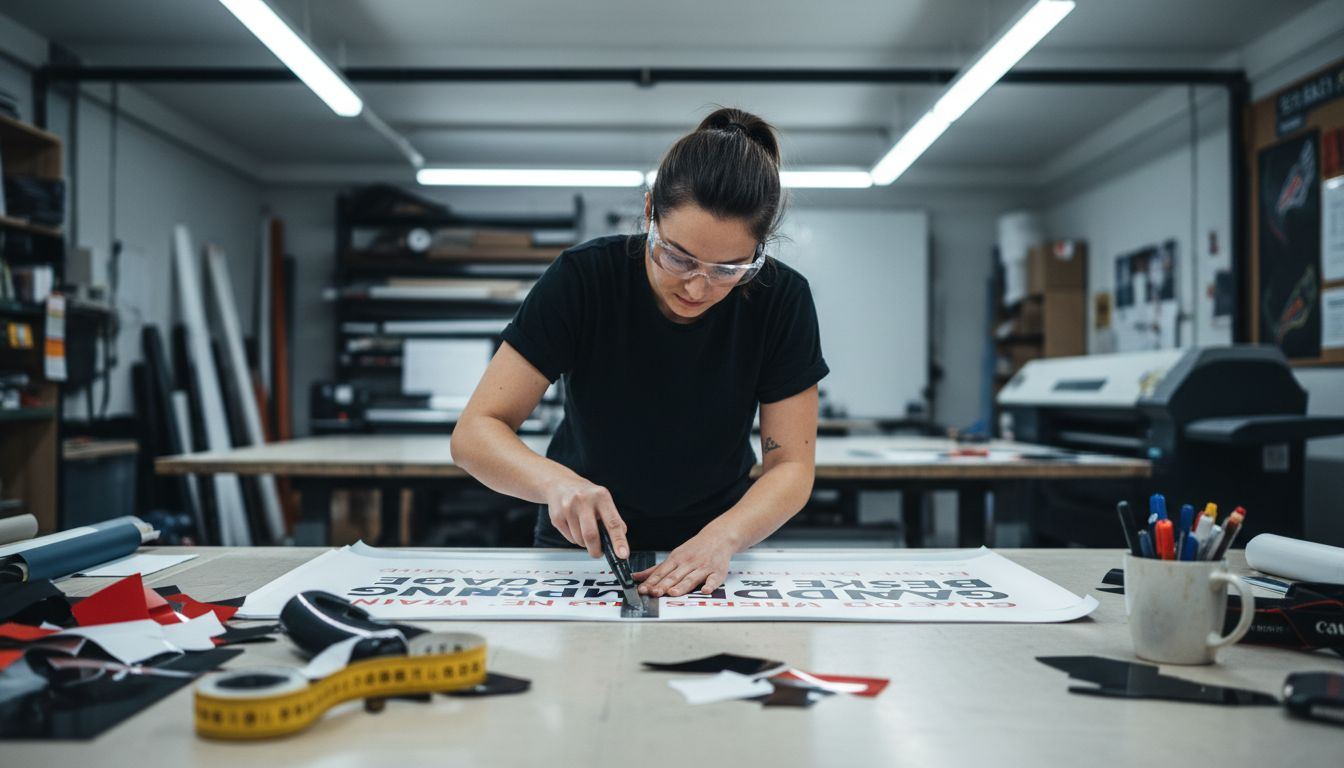
Pro Tip: Always request matte or satin coatings for film signage. Reflective surfaces can ruin takes and delay shooting schedules.
| Material | Durability | Cost | Best Use Case | Glare Resistance |
|---|---|---|---|---|
| Acrylic | High | Medium | Outdoor, permanent sets | Excellent with matte finish |
| Vinyl | Medium | Low | Indoor, temporary applications | Good with matte coating |
| Aluminium Composite | Very High | High | Architectural, long-term installations | Excellent |
| Foam Board | Low | Very Low | Short-term, lightweight needs | Poor |
Fabrication quality matters. Partner with signage fabrication methods specialists who understand film industry demands. They can advise on mounting techniques, edge finishing, and coatings that enhance both aesthetics and functionality. Engage fabricators early in the design phase to verify production feasibility and avoid surprises.
Step-by-Step Design and Production Process
A structured process keeps projects on track and budgets intact. Start by researching UK signage laws and securing necessary permissions from local councils. This groundwork prevents compliance issues that can derail production later.
Next, design with three priorities: legibility, branding, and accessibility. Use the principles outlined earlier, ensuring your mockups meet legal standards and creative vision. Share drafts with stakeholders early to gather feedback and refine before fabrication begins.
- Research UK signage regulations and obtain local council permissions.
- Develop design concepts incorporating legibility, brand consistency, and accessibility.
- Select durable materials suited to filming conditions and budget constraints.
- Engage fabricators early to confirm production feasibility and timelines.
- Finalize designs and approve material samples before mass production.
- Coordinate production schedules with filming timelines to avoid delays.
- Install signage with safety and production teams, ensuring compliant placement.
- Conduct final on-set reviews to verify placement, lighting, and camera angles.
| Phase | Duration | Key Deliverables |
|---|---|---|
| Research & Permissions | 1 to 2 weeks | Legal approvals, council permits |
| Design Development | 1 to 2 weeks | Final mockups, stakeholder sign-off |
| Fabrication | 2 to 3 weeks | Completed signage, quality checks |
| Installation & Review | 3 to 5 days | On-set placement, final adjustments |
Allow 4 to 6 weeks total from initial design approval to on-set installation. Rushing fabrication compromises quality and increases error risk. For more guidance, review our resources on signage project planning and signage production timeline to set realistic expectations.
Safety and Regulatory Compliance
Safety is non-negotiable on film sets. Signage placement must never obstruct walkways, emergency exits, or sightlines critical for crew movement. Poorly positioned signs create trip hazards and violate Health and Safety regulations, exposing productions to fines and liability.
UK Equality Act 2010 mandates tactile and accessible signage to prevent discrimination and legal consequences. This applies even to temporary sets. Include tactile elements, Braille, and clear pictograms to ensure inclusivity. Non-compliance risks legal action and damages your production’s reputation.
Coordinate with safety officers during installation. They assess risk factors like sign weight, mounting stability, and proximity to electrical equipment. Their input prevents accidents and ensures compliance with on-set safety protocols.
Key compliance considerations:
- Ensure signage does not block emergency exits or evacuation routes.
- Verify mounting methods are secure and appropriate for surface types.
- Include tactile and Braille elements per Equality Act requirements.
- Coordinate with safety officers for placement risk assessments.
- Document all compliance measures for production records.
“Accessible signage is not just a legal requirement; it reflects a commitment to inclusivity that enhances the production environment for everyone involved.”
For additional insights, explore our article on safety and compliance in signage to understand how strategic placement supports both safety and brand visibility.
Common Mistakes and Troubleshooting
Even experienced designers make avoidable errors. Ignoring accessibility standards is a frequent pitfall. Failing to include tactile elements or Braille risks fines and limits inclusivity. Always integrate accessibility from the start, not as an afterthought.
Another common mistake is underestimating fabrication timelines. Designers often assume quick turnarounds, only to face delays when fabricators need extra time for custom work. Build buffer periods into schedules to accommodate unexpected issues.
Poor placement creates safety hazards and visual distractions. Signs placed too low obstruct walkways; too high, they become illegible on camera. Review placement with both safety and camera teams before finalizing installation.
Frequent errors include:
- Skipping planning permissions, leading to forced removal and fines.
- Using glossy materials that create glare under filming lights.
- Ignoring accessibility requirements, risking legal and reputational damage.
- Underestimating production timelines, causing rushed, lower-quality work.
- Failing to test designs under actual filming conditions before installation.
Pro Tip: Conduct a pre-installation walkthrough with safety officers and camera operators. This catches placement issues early and saves costly adjustments during filming.
If compliance issues arise on set, act quickly. Consult legal advisors and local councils to understand required corrections. Temporary fixes like repositioning or adding tactile overlays can resolve minor violations without halting production.
Expected Outcomes and Success Metrics
Effective film signage delivers measurable benefits. Typical projects complete within 4 to 6 weeks, meeting budgets and legal standards without production delays. This timeline includes design approval, fabrication, and installation, assuming proactive planning and stakeholder engagement.
Brand visibility improves significantly. Effective signage boosts brand recall and on-screen presence by over 25%, reinforcing identity in every frame. Compliance with accessibility and safety standards reduces delays by 40%, keeping productions on schedule and within budget.
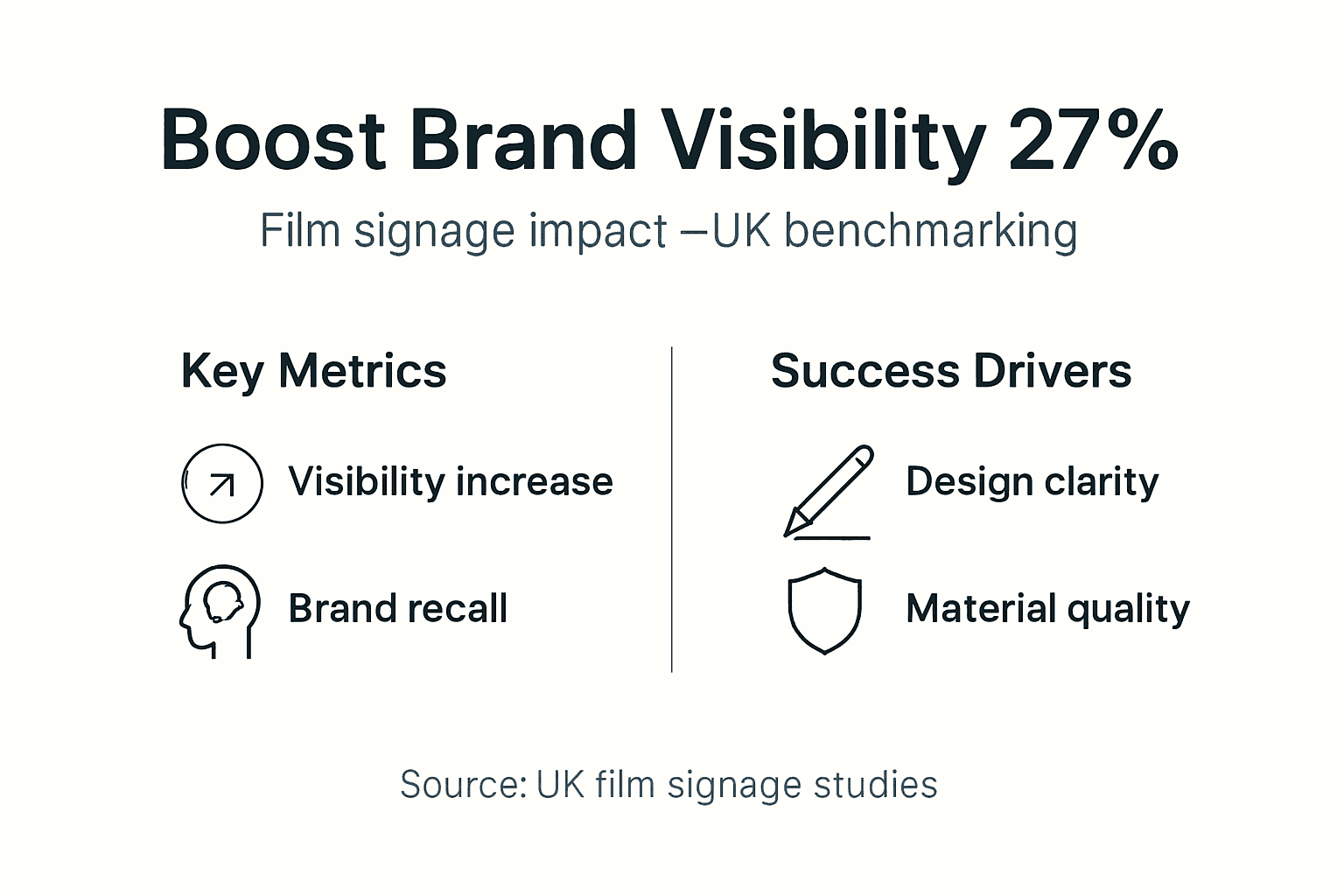
Positive feedback from production teams and crew indicates successful integration. When signage enhances set authenticity without causing operational friction, you know the project succeeded. Clear metrics help evaluate outcomes post-installation and inform future projects.
| Metric | Target Outcome | Measurement Method |
|---|---|---|
| Project Completion Time | 4 to 6 weeks | Timeline tracking from design to installation |
| Brand Visibility Increase | 25% or more | Viewer surveys, brand recall studies |
| Production Delay Reduction | 40% decrease | Comparison to previous projects without compliant signage |
| Safety Incident Rate | Zero incidents | On-set safety reports, crew feedback |
| Accessibility Compliance | 100% adherence | Legal audits, Equality Act checklists |
Tracking these metrics helps you refine processes and demonstrate value to stakeholders. Successful signage projects not only enhance visual storytelling but also streamline production logistics and reduce risk.
Explore Professional Film Signage Solutions at Pik Pik Pow
Applying these principles requires expertise and precision. Pik Pik Pow specializes in professional signage systems tailored to the unique demands of film and TV production. We combine design insight with manufacturing excellence, delivering signage that meets UK legal standards while enhancing on-camera impact.
Our illuminated film signage and wayfinding signage solutions support diverse production needs, from temporary sets to permanent installations. We understand tight filming schedules and work collaboratively to ensure your signage arrives on time, on spec, and ready for the camera. Reach out to discuss your next project and discover how our bespoke solutions elevate your production design.
Frequently Asked Questions About Film Signage Design
Do I need planning permission for temporary film signage in the UK?
Yes, many temporary film signs still require advertisement consent, especially if illuminated or visible from public areas. Always consult your local council early to confirm specific requirements and avoid mid-production removals.
Is tactile signage necessary on temporary film sets?
Absolutely. The UK Equality Act 2010 applies to all public and workplace environments, including temporary film sets. Including Braille and tactile elements ensures legal compliance and supports inclusivity for cast and crew.
How long does it take from design approval to on-set installation?
Typical timelines range from 4 to 6 weeks, covering design finalization, fabrication, and installation. Rushing this process risks quality issues, so plan ahead and build buffer time for unforeseen adjustments.
What materials work best for varied filming environments?
Acrylic suits outdoor and high-durability needs, while vinyl excels for temporary indoor applications. Both should feature matte coatings to minimize glare. Consult fabricators to match materials to specific environmental and budgetary constraints.
What should I do if signage compliance issues arise during filming?
Address them immediately by consulting legal advisors and local councils. Temporary solutions like repositioning signs or adding tactile overlays can resolve minor issues. Document all corrective actions to maintain production records and prevent future violations.