TL;DR:
- Durable outdoor signage maintains structural integrity and visual appeal under weather exposure. Selecting the right substrate, protective finish, and installation method extends sign lifespan and brand visibility. Aluminum and ACM are the most weather-resistant options, especially near coastlines or in high UV regions.
Durable outdoor signage is defined as exterior display material that retains both its structural integrity and visual appeal under prolonged exposure to UV radiation, moisture, wind, and temperature change. Knowing how to choose durable outdoor signage is the single most important decision you will make for long-term brand visibility. The wrong material fades within months, warps under rain, or corrodes in coastal air. The right combination of substrate, protective finish, and installation method keeps your sign looking sharp for years. This guide covers the key factors for outdoor sign durability, from material selection to protective coatings, so you can invest with confidence.
What materials are best for durable outdoor signage?
The best materials for outdoor signs combine weather resistance, structural rigidity, and low maintenance. Each substrate performs differently depending on your environment, budget, and sign size.
Aluminium
Aluminium is the most widely used metal for exterior signage. It is rust-proof and ideal for coastal and humid climates where corrosion risk is high. Salt air attacks steel rapidly, but aluminium holds its form and finish without rusting. For fascia signs, projecting signs, and shopfront lettering, aluminium delivers a professional result that lasts.
Aluminium composite material (ACM)
Aluminium composite material, often called ACM or Dibond, consists of two thin aluminium sheets bonded to a polyethylene core. ACM starts flat, is more rigid than pure aluminium sheet, and is lighter, making it a popular choice for large flat panels and building signage. It machines cleanly, accepts print well, and resists warping. ACM is the go-to substrate for architectural signage and retail fascias across the UK.
High-density polyethylene (HDPE)
HDPE signage is lightweight, UV stable, and cost-effective. It suits temporary site signage, construction hoardings, and budget-conscious applications. The trade-off is rigidity. HDPE can warp under sustained heat or when mounted without adequate support, so it works best in smaller formats or where frequent replacement is acceptable.
Pro Tip: Match your substrate to your environment before comparing prices. A cheaper HDPE panel that warps within a year costs more in the long run than an ACM panel installed correctly from the start.
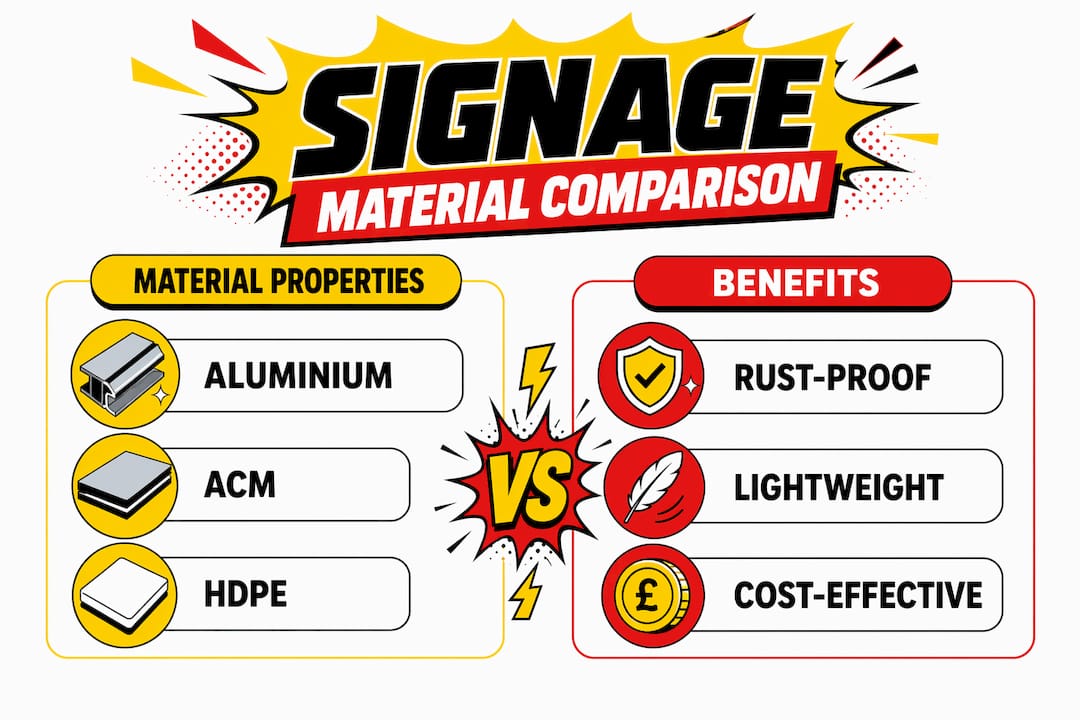
The table below summarises the key differences between the three main durable signage options.
| Material | Weather resistance | Weight | Best use |
|---|---|---|---|
| Aluminium | Excellent, rust-proof | Medium | Coastal, humid, long-term exterior |
| ACM (Dibond) | Excellent, rigid | Light | Large flat panels, fascias, retail |
| HDPE | Good, UV stable | Very light | Construction sites, temporary signs |
For a deeper look at substrates and how they perform across different commercial settings, Pikpikpow’s guide on choosing signage materials covers the full range of options.
How do environmental factors affect outdoor sign durability?
Your location determines which threats your signage faces most. A sign that performs well in central London may fail within two years on the Yorkshire coast. Understanding your environment is the first step in choosing effective outdoor signage.
UV radiation
UV exposure is the most common cause of premature sign failure. Ink fades significantly in just a few months without protective layers. Plastics yellow and become brittle. Paints chalk, losing their colour and sheen. UV chalking is not just cosmetic. Signs that chalk lose visual appeal and are considered failed investments by most commercial clients.
Moisture and humidity
Rain, condensation, and coastal humidity all accelerate material degradation. Moisture and humidity cause rust on steel and rot on timber. Waterproof substrates such as high-density urethane (HDU) and rust-proof aluminium withstand wet climates far better than untreated alternatives. If your premises sit near water or in a high-rainfall region, moisture resistance is non-negotiable.
Wind load
Large signs act like sails. Wind loads require rigid materials like ACM or steel to prevent bending or structural damage in elevated or exposed positions. A sign that flexes repeatedly in high winds will eventually crack, delaminate, or detach. Structural fixings must match the material’s weight and the site’s wind exposure rating.
Temperature extremes and coastal conditions
The key environmental threats to outdoor sign longevity are:
- Freeze-thaw cycles: Plastics become brittle in sustained cold and can crack when temperatures drop sharply overnight.
- Thermal expansion: Metal signs expand and contract with temperature change. Fixings must allow for movement.
- Salty coastal air: Salt accelerates corrosion on any ferrous metal. Aluminium and ACM are the preferred choices within two kilometres of the coast.
- Prolonged sun exposure: South-facing signs receive the highest UV load and need the most protective treatment.
For construction sites and outdoor promotional applications where UV exposure is a constant concern, UV-protective lamination plays a direct role in maintaining signage visibility and preventing premature fading.
What protective finishes extend outdoor signage life?
Material choice gets you halfway there. The finish applied to that material determines how long the sign retains its appearance. Choosing the right combination of material and finish tailored to environmental conditions is key to long-lasting signage.
UV-protective lamination. A UV lamination film applied over printed graphics acts as a sacrificial layer. UV-cured inks and laminations resist moisture, oils, and debris while extending colour life across multiple years. The laminate takes the environmental punishment so the print underneath does not.
PVDF and powder coatings. For metal signs, PVDF (polyvinylidene fluoride) coatings and high-grade powder coatings are the industry standard. PVDF coatings maintain colour fidelity for decades by preventing UV chalking. Powder coating provides a hard, even finish that resists chipping and chemical staining better than standard paint.
Scratch and chemical resistance. Gloss and satin laminates add a physical barrier against scratching, graffiti, and cleaning chemicals. Anti-graffiti overlaminate is worth specifying for ground-level signs in high-footfall areas. It allows surfaces to be wiped clean without damaging the print beneath.
Maintenance impact. Protective finishes reduce the frequency of cleaning and repair. A sign with a quality UV laminate and powder-coated frame needs little more than an occasional wipe-down. Without those layers, you face repainting or reprinting far sooner than planned.
Pro Tip: Always specify the finish alongside the substrate when briefing a signage supplier. A high-quality ACM panel with a budget laminate will still fade. The finish is not an optional extra.
How to select outdoor signage tailored to your business
Selecting the right sign is a process, not a single decision. Work through these steps before committing to a material or supplier.
Assess your location and climate. Identify the primary environmental threats: UV load, rainfall, wind exposure, and proximity to the coast. This narrows your material shortlist before you consider aesthetics.
Balance upfront cost with long-term maintenance. A cheaper substrate often costs more over five years once reprint and repair costs are factored in. Aluminium and ACM carry a higher initial cost but require far less ongoing maintenance than timber or untreated plastics.
Consider size, shape, and mounting method. Large elevated signs need rigid substrates and engineered fixings. Smaller signs at ground level have more flexibility. The mounting method affects both structural performance and planning permission requirements.
Plan for brand visibility and readability. High-contrast colour combinations and legible typefaces maintain readability as signs age. A sign that fades to a washed-out version of your brand colours does more damage than no sign at all.
Avoid common selection mistakes. The most frequent errors are:
- Choosing material based on price alone without considering the environment.
- Skipping UV protection on printed graphics.
- Using ferrous fixings on aluminium panels, which causes galvanic corrosion at the fixing points.
- Neglecting regular inspections and cleaning that maximise lifespan and maintain brand image.
For practical guidance on fitting and fixing, Pikpikpow’s resource on installing outdoor signs covers best practice for a range of mounting scenarios.
Key takeaways
Durable outdoor signage requires the right combination of substrate, protective finish, and installation method matched to your specific environment and brand requirements.
| Point | Details |
|---|---|
| Material determines baseline durability | Aluminium and ACM outperform timber and untreated plastics in most UK outdoor environments. |
| Environment shapes material choice | Coastal, high-UV, and high-wind locations each demand specific substrates and fixings. |
| Finishes protect the investment | UV lamination and PVDF or powder coatings prevent fading, chalking, and corrosion. |
| Long-term cost beats upfront savings | Higher-quality materials reduce reprinting and repair costs over a five-year period. |
| Maintenance extends sign life | Regular inspection and cleaning preserve both structure and appearance regardless of material quality. |
What we have learned from years of outdoor signage projects
Durability includes both structural strength and aesthetic retention. A sign that stays upright but looks faded and chalked is as damaging to your brand as one that falls down. That insight shapes every recommendation we make at Pikpikpow.
The most common mistake we see is businesses treating the finish as an afterthought. They specify a quality substrate, then accept whatever laminate or coating comes as standard. Six months later, the graphics have faded and the sign looks years older than it is. Specifying the finish with the same rigour as the substrate is what separates a sign that lasts from one that disappoints.
Technology has improved signage durability considerably. UV-cured inks, advanced PVDF coatings, and anti-graffiti laminates have all raised the baseline of what a well-specified outdoor sign can withstand. But no material or finish replaces a proper maintenance schedule. The businesses whose signs look best after five years are the ones that inspect and clean them regularly, not just the ones that spent the most upfront.
— PikPikPOW!
Pikpikpow’s outdoor signage solutions for lasting brand impact
Pikpikpow works with businesses across retail, construction, and commercial sectors to deliver outdoor signage built for the long term. Every project starts with a material and finish specification matched to your location, brand, and budget.
From aluminium fascia signs and ACM architectural panels to wide-format printed graphics with UV lamination, Pikpikpow’s signage systems cover the full range of durable outdoor applications. The team handles design, manufacturing, and installation, so your sign arrives correctly specified and correctly fitted. If you want outdoor signage that holds its appearance and structure for years, speak to Pikpikpow about your next project.
FAQ
What is the most durable material for outdoor signs?
Aluminium and aluminium composite material (ACM) are the most durable options for most UK outdoor environments. Both are rust-proof, weather-resistant, and accept protective coatings that extend their lifespan significantly.
How do I protect outdoor signage from fading?
Apply a UV-protective lamination or finish to all printed graphics. UV-cured inks and lamination films resist moisture, oils, and UV radiation, extending colour life across multiple years.
How long does outdoor signage typically last?
A well-specified aluminium or ACM sign with a quality UV finish and regular maintenance can last a decade or more. Cheaper substrates without protective coatings may need replacing within two to three years.
Does coastal air damage outdoor signs?
Salt air is highly corrosive to ferrous metals. Aluminium and ACM are the preferred materials for coastal locations because they resist corrosion without requiring additional anti-rust treatments.
How often should outdoor signs be inspected?
Inspect outdoor signs at least twice a year. Regular inspection and cleaning catch early signs of fading, fixing failure, or surface damage before they become costly repairs.