

Many British retailers still believe digital signage is too costly or difficult to manage, yet modern solutions have become remarkably accessible and user-friendly. For marketing managers aiming to boost brand visibility, understanding the difference between outdated myths and current realities unlocks new opportunities to engage and attract customers. Discover how embracing versatile digital display technologies empowers your retail chain to communicate dynamically and create memorable shopping experiences.
Table of Contents
- Digital Signage: Core Definition And Common Myths
- Types Of Digital Signage In UK Retail Spaces
- How Digital Signage Operates And Key Features
- Tech Trends And Integration For 2026 Retail
- Legal And Compliance Requirements In The UK
- Costs, Risks And Choosing The Right Solution
Key Takeaways
| Point | Details |
|---|---|
| Accessibility | Digital signage solutions are suitable for both large corporations and small retailers, making them an equitable communication tool across the market. |
| Simplified Management | Modern systems feature user-friendly interfaces and cloud-based platforms, allowing easy content updates and management without extensive technical expertise. |
| Enhanced Engagement | Various types of digital displays, such as interactive kiosks and video walls, significantly improve customer interaction and shopping experiences. |
| Legal Compliance | Retailers must ensure adherence to data protection regulations to mitigate legal risks associated with customer data collection and usage. |
Digital signage: core definition and common myths
Digital signage represents a dynamic electronic display technology transforming visual communication across retail environments. At its core, it involves using digital screens like LCD, LED, or projection systems to present multimedia content in public and private spaces.
The fundamental characteristics of digital signage include:
- Real-time content updates
- Remote management capabilities
- Interactive display options
- Versatility across multiple industries
Digital displays enable businesses to communicate more flexibly than traditional static signage. Electronic signage technologies have evolved rapidly, moving far beyond simple advertising platforms to become sophisticated communication tools.
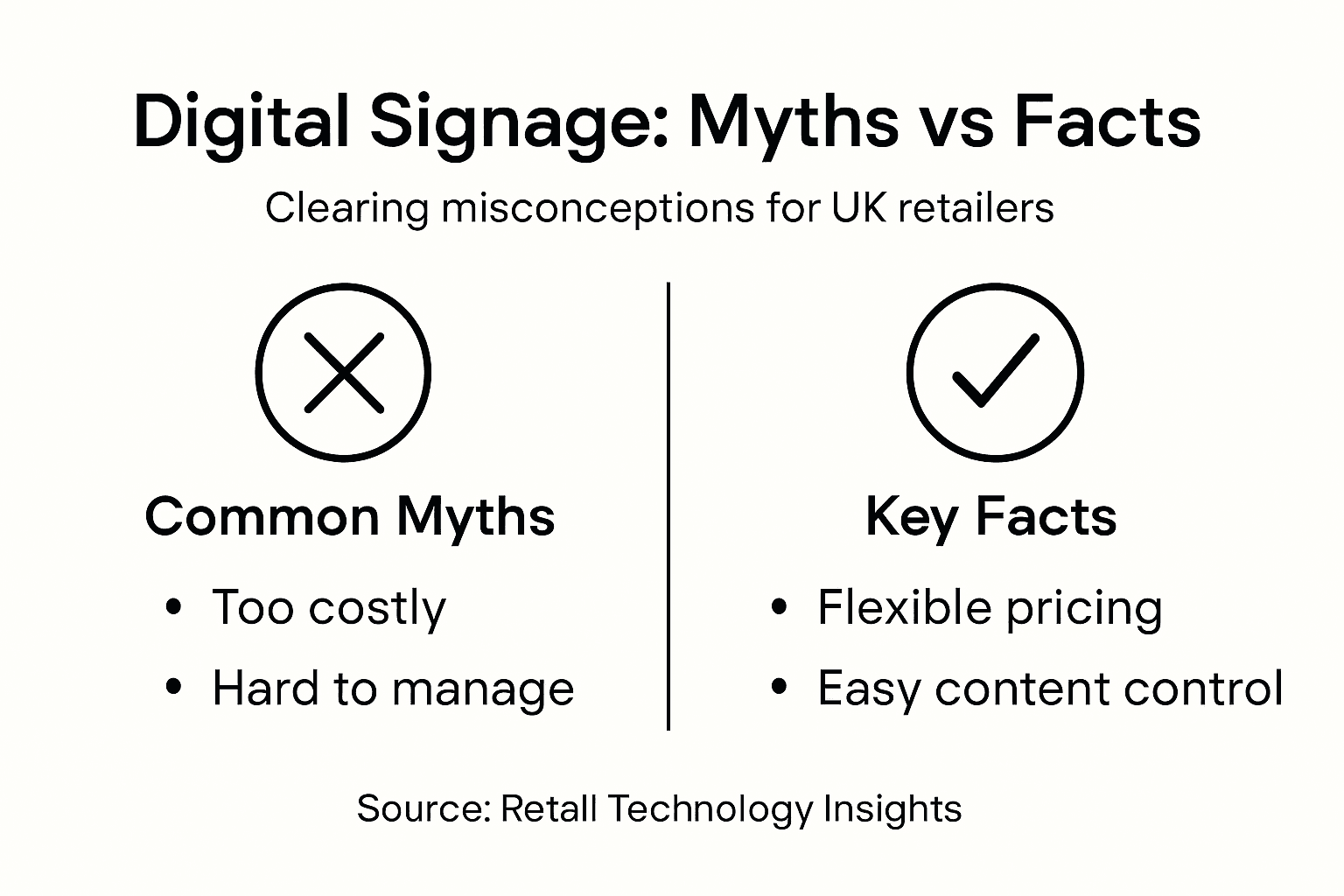
Common myths about digital signage persist, despite significant technological advancements. Many UK retailers mistakenly believe these systems are prohibitively expensive or overly complex to manage. In reality, modern digital signage solutions are increasingly accessible and user-friendly.
Key misconceptions include:
The following table dispels common myths about digital signage by contrasting them with the current reality in UK retail:
| Myth | Reality | Business Impact |
|---|---|---|
| Only for large corporations | Suitable for small retailers | Levels the playing field |
| Requires advanced expertise | User-friendly modern systems | Quick staff adoption |
| Maintenance is too costly | Affordable solutions available | Reduces ongoing expenses |
| Content management is complex | Cloud platforms simplify updates | Enables agile marketing |
- Digital signage is only for large corporations
- Implementation requires extensive technical expertise
- Maintenance costs are prohibitively high
- Content management is complicated
These myths overlook the substantial benefits digital signage offers. Cloud-based platforms have simplified content management, allowing even small businesses to leverage this technology effectively.
Pro tip: Start with a small, targeted digital signage deployment to understand its potential without significant initial investment.
Types of digital signage in UK retail spaces
Digital signage in UK retail environments has evolved into a sophisticated communication tool with multiple display types designed to engage customers and enhance shopping experiences. Digital display technologies have transformed traditional retail communication strategies, offering versatile solutions for brand messaging and customer interaction.
The primary types of digital signage in retail spaces include:
- Dynamic Promotional Displays: Large screens showcasing current offers, sales, and marketing campaigns
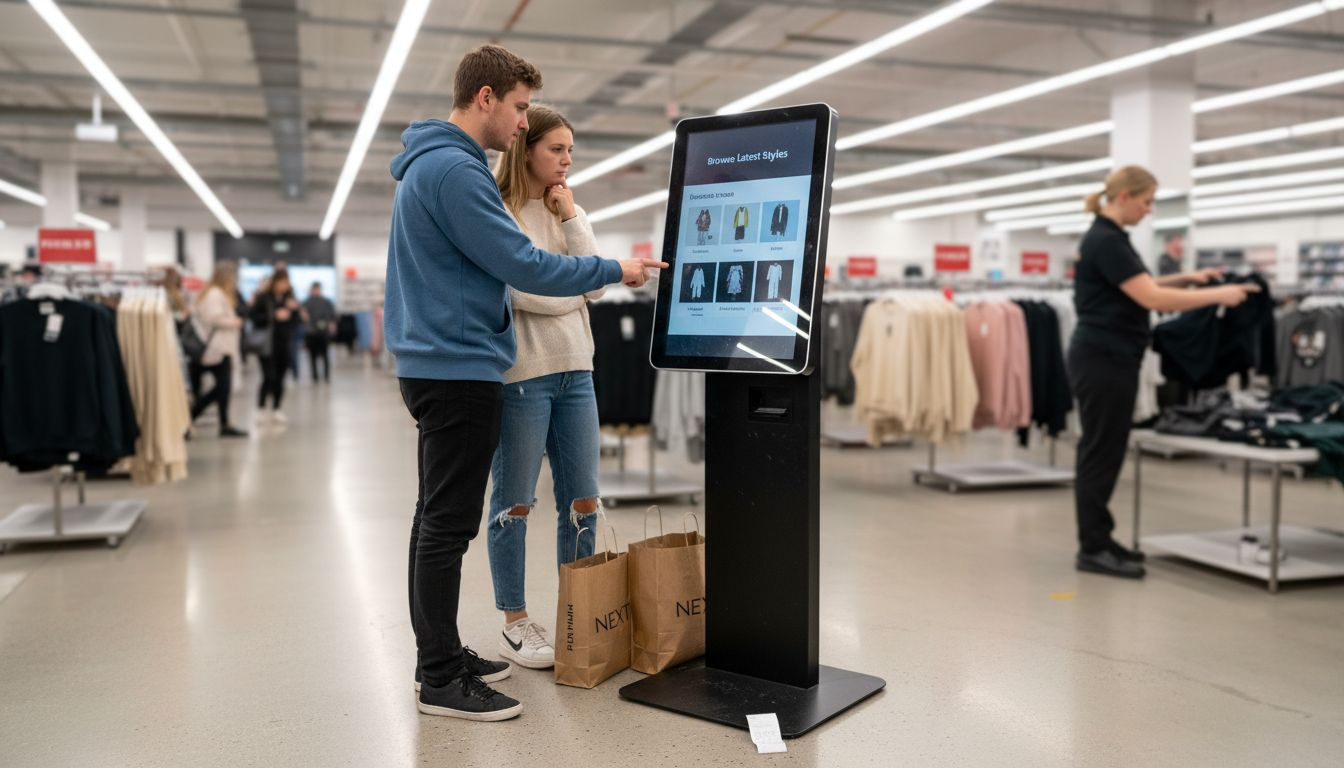
- Interactive Kiosks: Touchscreen interfaces allowing customer self-service and product exploration
- Video Walls: Expansive, multi-screen displays creating immersive visual experiences
- Digital Menu Boards: Customisable screens for pricing, product information, and menu updates
- Wayfinding Screens: Directional displays helping customers navigate complex retail environments
Each digital signage type serves a unique purpose in retail communication. Interactive displays, for instance, enable customers to browse product catalogues, check inventory, or even place orders directly. These systems go beyond traditional static signage by providing real-time, personalised information that enhances customer engagement.
The technical configurations of these digital signage types vary significantly. Retailers can choose from LCD screens, LED displays, projection systems, and touchscreen technologies depending on their specific communication needs. Signage classification methods demonstrate that the selection depends on factors like audience interaction, spatial constraints, and communication objectives.
Pro tip: Evaluate your specific retail environment and customer demographics before selecting digital signage types to ensure maximum engagement and return on investment.
How digital signage operates and key features
Digital signage systems represent a sophisticated technological ecosystem that transforms visual communication in retail environments. Digital signage technology integrates multiple complex components to deliver dynamic, responsive content across various display platforms.
The fundamental operational components include:
- Hardware Displays: LCD, LED, and projection screens
- Media Players: Dedicated devices rendering digital content
- Content Management Systems (CMS): Central control platforms for content creation and distribution
- Network Connectivity: Enables remote management and real-time updates
These systems operate through intricate technical mechanisms that allow retailers to manage and distribute multimedia content with remarkable precision. Interactive displays can now trigger specific content based on predetermined conditions, such as time of day, customer demographics, or inventory levels.
Key features that distinguish modern digital signage include:
- Dynamic content scheduling
- Remote content management
- Real-time performance analytics
- Multi-format media support
- Programmable conditional logic
The technological infrastructure enables content management platforms to provide unprecedented flexibility in messaging and brand communication. Retailers can now instantaneously update product information, pricing, and promotional content across multiple screens simultaneously, creating a responsive and adaptive communication environment.
Pro tip: Invest in a robust content management system that offers comprehensive analytics to track the effectiveness of your digital signage displays and continuously optimise your communication strategy.
Tech trends and integration for 2026 retail
Retail digital signage is undergoing a transformative evolution, driven by cutting-edge technological innovations that promise to redefine customer engagement. Advanced digital signage technologies are increasingly integrating artificial intelligence, machine learning, and internet of things capabilities to create more responsive and personalised retail experiences.
Key emerging technological trends for 2026 include:
- Artificial Intelligence (AI) Content Personalization
- Interactive Multichannel Interfaces
- Real-time Data Analytics
- Internet of Things (IoT) Integration
- Cloud-based Management Systems
These technologies enable retailers to develop sophisticated communication strategies that adapt dynamically to customer behaviour. Smart sensors and AI algorithms can now analyse customer demographics, track movement patterns, and instantly modify digital display content to maximise engagement and relevance.
The integration landscape for digital signage is becoming increasingly complex and interconnected. Retail technology platforms are now bridging multiple communication channels, including mobile devices, in-store sensors, and social media networks, creating a seamless and immersive customer experience.
Advanced digital signage systems in 2026 will likely feature:
This table summarises advanced digital signage trends expected in UK retail by 2026:
| Trend | Role in Retail | Example Benefit |
|---|---|---|
| AI Personalisation | Customises content for shoppers | Boosts engagement rates |
| IoT Integration | Links displays to smart devices | Enables responsive experiences |
| Emotion Recognition | Adjusts content to customer mood | Increases sales conversion |
| Predictive Content | Suggests relevant offers | Enhances customer satisfaction |
- Predictive content recommendations
- Emotion recognition technologies
- Personalised customer journey mapping
- Seamless omnichannel communication
- Automated performance optimization
Pro tip: Invest in flexible digital signage infrastructure that can integrate multiple technological platforms and adapt to rapidly changing consumer interaction paradigms.
Legal and compliance requirements in the UK
Digital signage deployment in UK retail spaces requires careful navigation of complex legal frameworks governing data protection, privacy, and consumer rights. Data protection regulations impose stringent requirements on businesses utilising technologies that collect or process customer information.
Key legal considerations for digital signage include:
- Data Protection Act 2018 compliance
- General Data Protection Regulation (GDPR) adherence
- Consumer Rights protection
- Consent Management protocols
- Data Security standards
Businesses must implement robust governance mechanisms to ensure legal compliance when deploying interactive or sensor-based digital signage technologies. This involves developing comprehensive data processing policies that transparently communicate how customer information is collected, stored, and utilised.
Specific legal obligations for retailers involve:
- Obtaining explicit customer consent for data collection
- Providing clear privacy notices
- Implementing secure data storage systems
- Enabling customer data access and deletion rights
- Conducting regular privacy impact assessments
Retailers must also remain vigilant about potential legal risks associated with digital signage technologies, including potential breaches of personal data protection regulations that could result in significant financial penalties and reputational damage.
Pro tip: Consult with a legal professional specialising in data protection to develop a comprehensive compliance strategy for your digital signage infrastructure.
Costs, risks and choosing the right solution
Navigating the digital signage landscape requires careful consideration of financial investments, potential operational risks, and strategic technology selection. Investment considerations encompass multiple dimensions beyond initial hardware and software procurement costs.
Key cost factors include:
- Initial hardware and installation expenses
- Software licensing and subscription fees
- Ongoing maintenance and technical support
- Content creation and management costs
- Potential infrastructure upgrades
Retail businesses must conduct comprehensive risk assessments when implementing digital signage solutions. These assessments should evaluate technological compatibility, potential cybersecurity vulnerabilities, and long-term scalability of chosen systems.
Critical selection criteria for digital signage solutions involve:
- Scalability and future-proofing capabilities
- Integration with existing technological infrastructure
- User-friendly content management interfaces
- Robust security and data protection features
- Comprehensive technical support options
Companies should prioritise solutions offering flexible pricing models, modular design, and comprehensive technical support. This approach minimises financial risks while ensuring adaptability to evolving technological landscapes and changing business requirements.
Pro tip: Request detailed total cost of ownership projections and conduct pilot testing before full-scale digital signage implementation to mitigate potential financial and operational risks.
Elevate Your Retail Presence With Bespoke Digital and Shop Signage Solutions
The challenges highlighted in the article such as navigating digital signage myths, managing dynamic content, and integrating advanced technologies in UK retail can feel overwhelming. Retailers aim to create engaging, flexible, and impactful customer experiences while balancing costs and compliance. With terms like real-time content updates, cloud-based management, and interactive kiosks making the difference, the need for expertly crafted, reliable signage solutions has never been greater.
At Pik Pik POW! we specialise in transforming retail spaces with high-quality shop signage that helps you cut through the noise and captivate your audience. Whether you want to enhance your storefront or add dynamic indoor displays that resonate with today’s tech-savvy shoppers, our bespoke indoor and outdoor signage offerings are designed with your goals in mind. Explore our Shop Signage Archives – Pik Pik Pow for creative inspiration and proven solutions.
Take the next step to ensure your retail environment delivers on the promises of digital transformation. Visit Pik Pik POW! now to discover how our design expertise and precision manufacturing elevate brands and spaces. For innovative interior signage ideas that complement your digital displays, see our Interior Signage Archives – Pik Pik Pow. Start your journey towards exceptional retail visibility today.
Frequently Asked Questions
What is digital signage and how does it work?
Digital signage is a dynamic electronic display technology that uses digital screens to present multimedia content in public and private spaces. It operates through a combination of hardware displays, media players, content management systems, and network connectivity, allowing for real-time content updates and remote management.
What are the key features of modern digital signage systems?
Key features of modern digital signage systems include dynamic content scheduling, remote content management, real-time performance analytics, multi-format media support, and programmable conditional logic that enables tailored messaging based on customer interactions or inventory levels.
How can digital signage enhance customer engagement in retail?
Digital signage enhances customer engagement by providing real-time, interactive content that allows users to browse product catalogues, check inventory, and access promotions. Features like interactive kiosks and wayfinding screens can create a more immersive shopping experience, leading to increased customer satisfaction and sales.
What are the common myths surrounding digital signage in retail?
Common myths about digital signage include the belief that it’s only for large corporations, requires advanced expertise to implement, has high maintenance costs, and involves complex content management. In reality, modern digital signage solutions are accessible, user-friendly, and can be beneficial for retailers of all sizes.