
Every Marketing Manager knows the struggle of standing out in crowded British retail spaces where brand presence and customer engagement hinge on the power of well-designed signage. Clear signage is more than information delivery—it shapes perceptions and influences decisions, directly affecting how customers interact with your brand. By focusing on bold visual strategy and user-centric design, you can create memorable experiences that drive both recognition and loyalty.
Table of Contents
- Signage Design As Visual Strategy
- Types Of Signage In UK Retail Spaces
- Branding And Enhancing Customer Experience
- Design Principles For Effective Signage Solutions
- Regulations, Accessibility And Legal Compliance
- Common Signage Mistakes And How To Avoid Them
Key Takeaways
| Point | Details |
|---|---|
| Visual Signage Design is Essential | Effective signage communicates brand identity and enhances customer experiences, serving as a strategic tool in UK retail. |
| Types of Signage Serve Distinct Purposes | Each signage type—storefront, wayfinding, promotional, informational, and digital—plays a specific role in guiding and engaging customers. |
| Focus on User Experience | Successful retail signage prioritises clarity, legibility, and intuitive navigation to foster a seamless shopping experience. |
| Avoid Common Mistakes | Businesses should steer clear of overcrowding signs and neglecting accessibility to maintain effective communication and enhance brand perception. |
Signage design as visual strategy
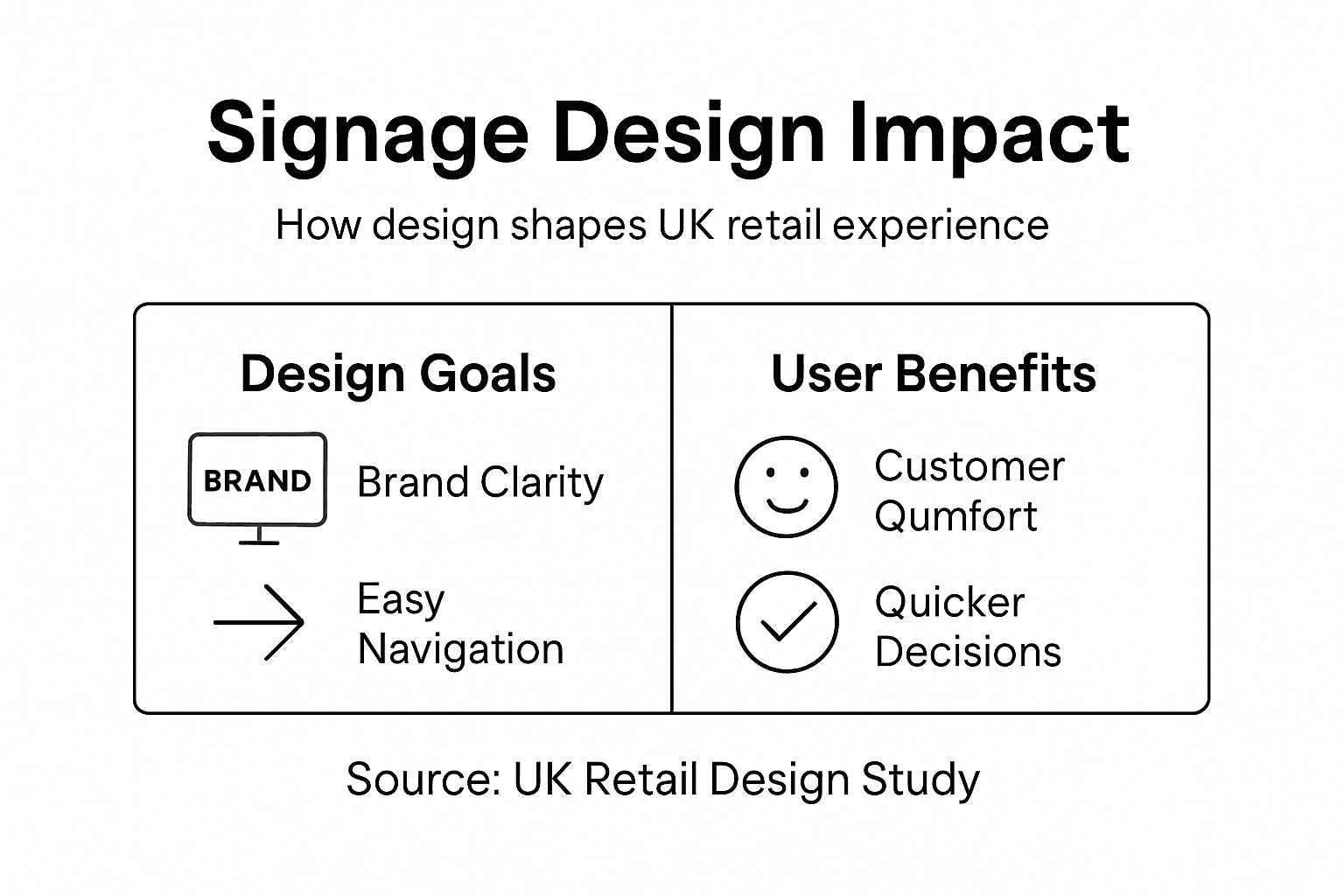
In the competitive landscape of UK retail, visual signage design has emerged as a critical strategic tool for communicating brand identity and guiding customer experiences. Retailers increasingly recognise that signage is far more than a functional necessity – it’s a powerful communication medium that can dramatically influence customer perceptions and behaviours.
Effective visual strategies in signage design involve several key principles:
- Creating visual salience through strategic colour and placement
- Developing consistent brand language across different signage formats
- Ensuring clarity and immediate comprehension of information
- Integrating wayfinding principles that support user navigation
The psychological impact of signage design cannot be overstated. Professionally designed signs communicate more than directional information – they convey brand personality, establish emotional connections, and guide customer interactions within retail environments. By understanding how visual cues influence perception, retailers can transform seemingly mundane signage into sophisticated brand communication tools.
Modern retail signage strategies prioritise user experience, focusing on reducing cognitive load and creating intuitive spatial interactions. This approach involves carefully considering factors like symbol recognition, colour psychology, and strategic placement to support seamless customer journeys.
Pro tip: Invest in professional design consultation to ensure your signage communicates both functional information and brand narrative effectively.
Types of signage in UK retail spaces
Retail signage in the United Kingdom encompasses a diverse range of visual communication tools designed to enhance customer experience, promote brand identity, and facilitate seamless navigation. Retail signage represents a critical intersection of marketing, design, and spatial communication, serving multiple strategic purposes for businesses across various sectors.
The primary types of signage found in UK retail spaces include:
- Storefront signage: Exterior signs that communicate brand name, logo, and initial brand impression
- Wayfinding signage: Directional signs helping customers navigate complex retail environments
- Promotional signage: Displays highlighting current offers, sales, and product information
- Informational signage: Signs providing essential details about products, prices, and store policies
- Digital signage: Interactive and dynamic display screens offering real-time information and engagement
Each signage type plays a unique role in creating a comprehensive visual communication strategy. Storefront signage serves as the first point of brand interaction, making a critical first impression on potential customers. These signs must balance aesthetic appeal with clear, legible branding that reflects the retailer’s unique identity.
Inside retail spaces, wayfinding signage supports intuitive customer navigation through strategic placement and design. Modern retailers understand that effective signage goes beyond mere direction – it’s about creating a seamless, stress-free shopping experience that encourages customer satisfaction and potential repeat business.

Pro tip: Regularly audit and update your retail signage to ensure it remains current, clear, and aligned with your evolving brand strategy.
Here is a summary of the main signage types and their strategic value in UK retail:
| Signage Type | Primary Purpose | Impact on Customer Experience |
|---|---|---|
| Storefront | Establish brand presence | Creates memorable first impressions |
| Wayfinding | Aid navigation | Reduces confusion, speeds up shopping |
| Promotional | Showcase offers | Drives impulse purchases and engagement |
| Informational | Convey essential details | Builds trust through transparency |
| Digital | Enable interactive content | Enhances engagement, offers real-time info |
Branding and enhancing customer experience
In the dynamic landscape of UK retail, branding has transcended traditional marketing approaches to become a holistic experience design strategy. Modern retailers understand that customer experience is not merely about transactions, but about creating meaningful connections that resonate emotionally and intellectually with their target audience.
Key elements of effective brand experience design include:
- Creating a consistent visual narrative across all touchpoints
- Developing sensory-rich environments that engage multiple customer senses
- Personalising interactions through targeted communication
- Ensuring seamless integration between physical and digital brand experiences
- Demonstrating authentic brand values through design choices
Design integration strategies transform customer interactions by linking product, space, and experience design to create compelling brand narratives. Successful retailers recognise that every visual element – from signage to store layout – contributes to the overall brand perception and customer engagement.
Modern retail brands are moving beyond transactional relationships, focusing instead on creating immersive experiences that reflect their unique identity. By carefully curating visual design elements, businesses can differentiate themselves in a competitive market, turning ordinary shopping interactions into memorable brand moments that foster long-term customer loyalty.
Pro tip: Conduct regular customer journey mapping to identify and refine touchpoints where design can create more meaningful brand interactions.
Design principles for effective signage solutions
Designing effective signage solutions requires a sophisticated understanding of visual communication, user experience, and strategic brand representation. Signage design is not merely about creating visually appealing displays, but about crafting intuitive, functional communication tools that seamlessly guide and inform users across diverse retail environments.
Key design principles for creating impactful signage include:
- Prioritising clarity and legibility
- Maintaining consistent visual language
- Ensuring high-contrast readability
- Adapting design to specific environmental contexts
- Supporting inclusive user navigation
- Minimising visual complexity
Design principles emphasise user-centric functionality by integrating clarity, context responsiveness, and comprehensive stakeholder collaboration. Successful signage solutions go beyond aesthetic considerations, focusing on creating meaningful spatial experiences that support intuitive navigation and enhance user understanding.
Typographic choices, colour psychology, and strategic placement play critical roles in signage effectiveness. Designers must carefully balance visual communication with spatial constraints, ensuring that signs provide essential information without overwhelming or cluttering the user’s visual field. This requires a nuanced approach that considers factors like viewing distance, environmental lighting, and potential user diversity.
Pro tip: Conduct regular user testing and accessibility reviews to ensure your signage design remains inclusive and effective across different user groups and environmental conditions.
Regulations, accessibility and legal compliance
In the United Kingdom, legal compliance in signage design extends far beyond aesthetic considerations, encompassing critical requirements that protect user rights and ensure inclusive communication. Businesses must navigate a complex landscape of regulations designed to create equitable, accessible environments for all individuals, regardless of their physical abilities or potential disabilities.
Key regulatory requirements for signage include:
- Compliance with the Equality Act 2010
- Adherence to Web Content Accessibility Guidelines (WCAG)
- Ensuring perceivability for users with visual impairments
- Maintaining clear, high-contrast visual communication
- Implementing inclusive design principles
- Meeting safety signage standards for emergency scenarios
Accessibility regulations mandate comprehensive design standards that go beyond traditional design expectations. These frameworks require businesses to create signage that is not just visually appealing, but fundamentally functional and accessible to all users, including those with diverse sensory and cognitive capabilities.
Beyond general accessibility, specific sectors like high-rise residential and commercial spaces have additional regulatory requirements. For instance, fire safety regulations now mandate precise wayfinding signage standards to support emergency response and user safety, demonstrating how legal compliance intersects with critical life-safety considerations.
Pro tip: Regularly consult with accessibility experts and conduct comprehensive user testing to ensure your signage design meets both legal requirements and genuine user needs.
Common signage mistakes and how to avoid them
Navigating the complex world of signage design requires a nuanced understanding of potential pitfalls that can undermine communication effectiveness. Retailers and businesses must be vigilant about avoiding common errors that can compromise their visual messaging and brand representation.
Most prevalent signage design mistakes include:
- Overcrowding signs with excessive information
- Selecting inappropriate materials for specific environments
- Neglecting brand consistency across different signage types
- Poor colour and contrast selection
- Inadequate consideration of viewing distances
- Ignoring accessibility and legibility requirements
- Inconsistent typography and font choices
Addressing common signage errors requires strategic planning and a comprehensive understanding of design principles. Successful signage solutions demand careful material selection, precise placement, and continuous evaluation to ensure maximum effectiveness and longevity.
The psychological impact of poorly designed signage can be significant, potentially creating confusion, frustration, and diminishing brand perception. Businesses must approach signage as a critical communication tool, investing time and resources in thoughtful design that prioritises clarity, consistency, and user experience.
Pro tip: Conduct periodic user experience audits of your signage, gathering feedback from diverse user groups to identify and rectify potential design shortcomings.
The following table highlights common signage mistakes alongside practical solutions:
| Mistake | Negative Effect | How to Avoid |
|---|---|---|
| Overcrowded design | Causes information overload | Prioritise essential content |
| Poor colour contrast | Hinders readability | Use high contrast colour schemes |
| Inconsistent branding | Weakens brand recognition | Implement strict visual guidelines |
| Ignoring accessibility | Excludes some customers | Follow legal accessibility standards |
Elevate Your Retail Brand With Expert Signage Solutions
The article highlights key challenges in UK retail signage such as achieving clarity, brand consistency, accessibility compliance and impactful visual strategies. If you seek bespoke signage that balances strong design with lasting functionality, Pik Pik POW! can turn these goals into reality. From eye-catching shopfronts to intuitive wayfinding signs that minimise customer confusion, our solutions reflect the latest best practices discussed, including high-contrast readability and seamless brand narrative.
Explore how our precision manufacturing and design expertise deliver signage that creates memorable first impressions and supports effortless navigation. Start enhancing customer experience today by visiting Pik Pik POW! and discovering bespoke indoor and outdoor signage tailored for your retail environment. Don’t let poor signage drag your brand down – contact us now to transform your retail space with clear, accessible and visually compelling signage solutions that truly stand out.
Frequently Asked Questions
What are the key principles of effective signage design in retail?
Effective signage design in retail involves creating visual salience through strategic colour and placement, developing consistent brand language, ensuring clarity for immediate comprehension of information, and integrating wayfinding principles to support user navigation.
How can signage impact customer experience in retail environments?
Signage impacts customer experience by guiding navigation, conveying brand personality, and establishing emotional connections. Well-designed signs can reduce cognitive load, enhance understanding, and create a more enjoyable shopping experience.
What are the different types of signage used in retail?
The main types of retail signage include storefront signage, wayfinding signage, promotional signage, informational signage, and digital signage. Each type serves specific purposes, enhancing customer interaction and brand identity.
What common mistakes should be avoided in signage design?
Common mistakes in signage design include overcrowding signs with excessive information, poor colour contrast affecting readability, inconsistent branding, and neglecting accessibility requirements. Avoiding these pitfalls ensures effective communication and enhances the overall customer experience.