
Project delays and compliance issues often start with misunderstanding the language of construction signage. For signage project managers in British construction companies, deciphering specialised terms is vital to ensure every marker, warning, and directive protects both workers and visitors. This guide highlights key terminology, such as combination signs and qualified person, helping you master the precise communication and legal standards that keep projects safe and efficient.
Table of Contents
- What Construction Signage Terminology Means
- Types of Signs on UK Building Sites
- How Signage Works and Why It Matters
- Legal Standards and Compliance Requirements
- Risks of Non-Compliant or Poor Signage
- Best Practices for Effective Signage Usage
Key Takeaways
| Point | Details |
|---|---|
| Understanding Signage Categories | Recognising different sign types—Directional, Warning, Mandatory, Prohibition, and Information—is crucial for effective communication on construction sites. |
| Legal Compliance | Adhering to Health and Safety Executive guidelines and regular audits are essential to avoid legal liabilities and ensure worker safety. |
| Sign Visibility and Clarity | Ensuring that signage is strategically placed, clear, and well-maintained minimizes risks and supports operational safety. |
| Training and Awareness | Continuous training for staff on signage interpretation enhances site safety and promotes a culture of compliance and protection. |
What Construction Signage Terminology Means
Construction signage terminology represents a specialised language that communicates critical safety, regulatory, and project management information across building sites. Understanding these technical terms is fundamental for project managers, site supervisors, and safety professionals working in the construction industry.
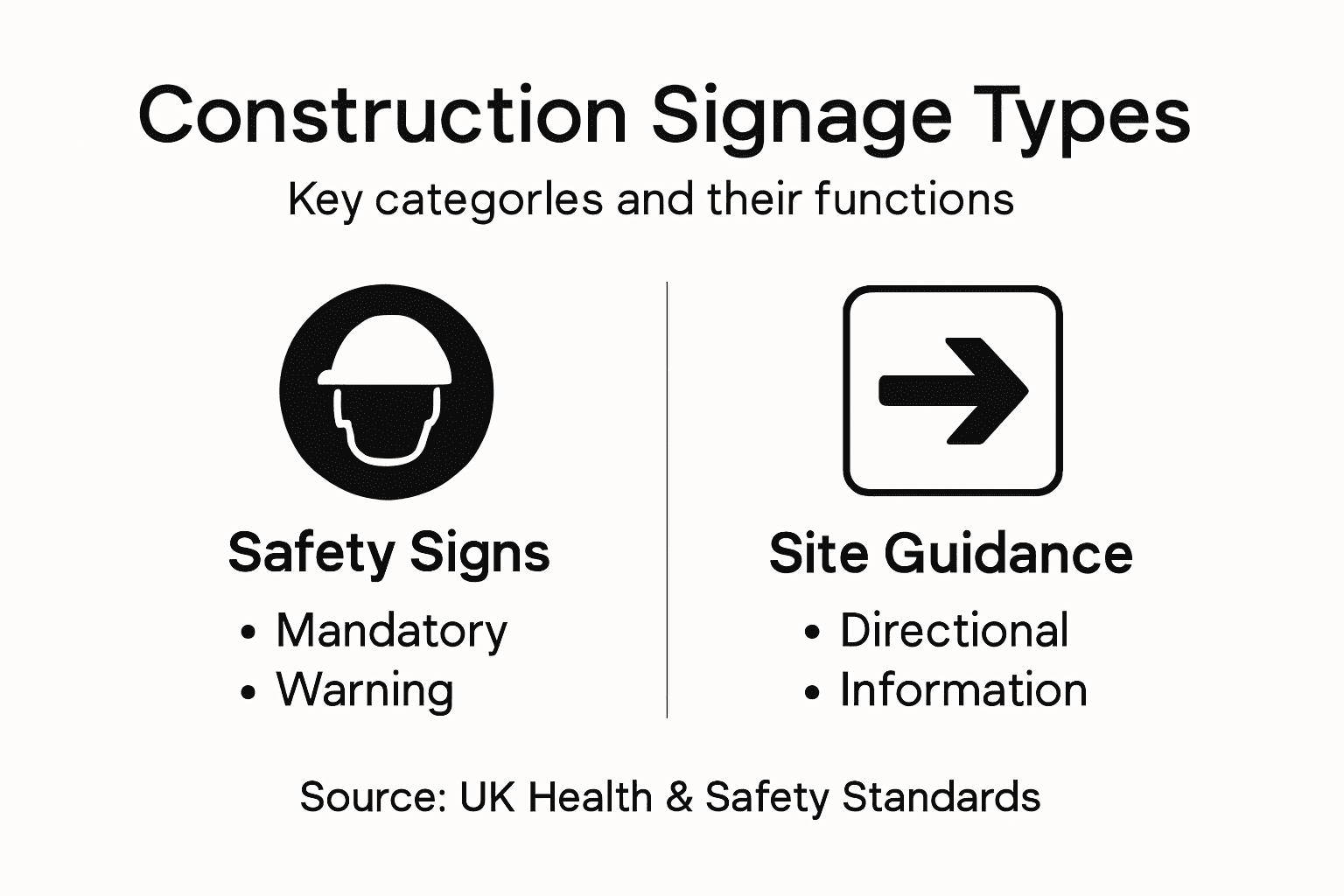
In the UK construction sector, signage terminology encompasses several key categories that define visual communication strategies:
- Directional Signs: Guiding movement and traffic flow on construction sites
- Warning Signs: Highlighting potential hazards and safety risks
- Mandatory Signs: Indicating required actions or protective equipment
- Prohibition Signs: Preventing specific dangerous behaviours
- Information Signs: Providing general site details and regulatory compliance information
The key construction signage definitions include various sign types that serve specific purposes. These range from temporary site markers to permanent installation indicators, each carrying unique regulatory implications and safety standards.
Complex construction sites require precise signage classification, which often involves understanding the roles and responsibilities of different personnel. According to OSHA construction safety guidelines, terms like competent person and qualified person play crucial roles in determining who can install, approve, and manage construction signage.
Understanding these terminological nuances helps construction professionals maintain rigorous safety standards, ensure regulatory compliance, and communicate effectively across multidisciplinary teams.
Pro tip: Always consult current industry standards and local regulations when interpreting construction signage terminology to ensure accurate implementation and safety compliance.
Types of Signs on UK Building Sites
UK building sites employ a diverse range of signage types to ensure safety, communicate critical information, and maintain regulatory compliance. These signs serve multiple functions, from guiding personnel and equipment to warning about potential hazards and mandating specific safety protocols.
The primary categories of signs found on UK construction sites include:
- Safety Signage: Highlighting potential risks and mandatory protective measures
- Directional Signs: Indicating site access, movement routes, and restricted areas
- Prohibition Signs: Preventing dangerous behaviours or unauthorized access
- Mandatory Action Signs: Specifying required personal protective equipment (PPE)
- Warning Signs: Alerting workers to specific hazards or temporary conditions
Construction site sign configurations vary depending on project complexity, location, and specific regulatory requirements. Dynamic signage technologies have revolutionised how construction sites communicate important information, with portable changeable message systems allowing real-time updates and enhanced safety communication.
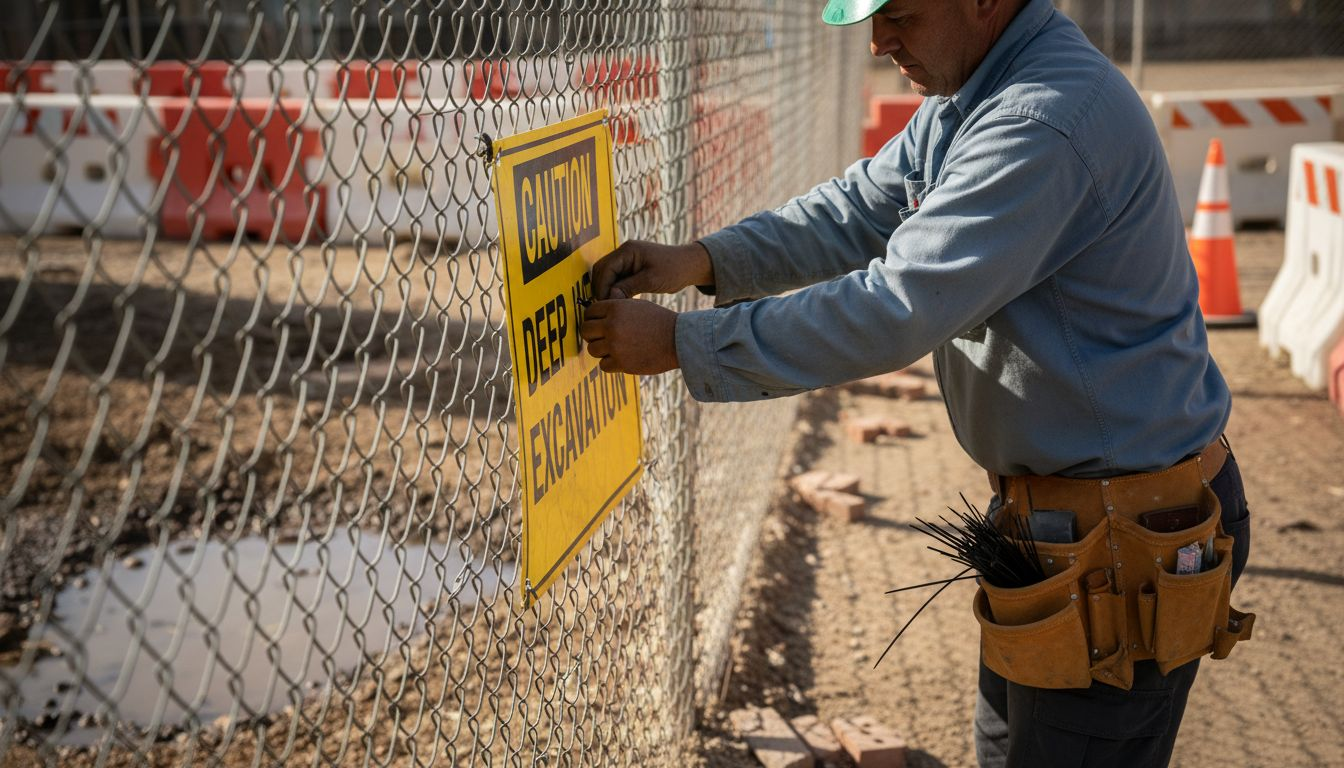
Technical signage in construction encompasses both permanent and temporary installations. Temporary signs typically address immediate site-specific conditions, while permanent signs provide long-term safety guidance and regulatory information. These signs must comply with Health and Safety Executive (HSE) regulations, ensuring clear, visible, and unambiguous communication across the construction environment.
Modern construction sites increasingly rely on sophisticated signage systems that integrate digital technologies, providing more dynamic and responsive safety communication methods. This evolution helps minimise risks and improve overall site safety management.
To help clarify the unique business impact of different signage types, see the table below:
| Signage Type | Typical Purpose | Impact on Site Operations |
|---|---|---|
| Directional Signs | Direct personnel and vehicles | Streamlines site movement |
| Warning Signs | Alert to hazards | Reduces accident likelihood |
| Mandatory Action | Enforce protective measures | Encourages safety compliance |
| Prohibition Signs | Restrict unsafe behaviours | Minimises legal liability |
| Information Signs | Share site-specific data | Supports regulatory adherence |
Pro tip: Regularly inspect and update construction site signage to ensure continued relevance and compliance with current safety standards and regulations.
How Signage Works and Why It Matters
Construction signage functions as a critical communication system that goes far beyond simple visual markers. These carefully designed systems play a pivotal role in protecting workers, managing site operations, and ensuring comprehensive safety across complex construction environments.
The primary mechanisms of construction signage include:
- Visual Communication: Instantly conveying critical safety information
- Regulatory Compliance: Meeting legal requirements for workplace safety
- Risk Mitigation: Reducing potential accidents through clear warnings
- Operational Guidance: Directing personnel and equipment movement
- Legal Protection: Documenting safety measures and site conditions
Construction site signage protocols demonstrate how systematic placement and maintenance of signs create comprehensive safety networks. These systems work by providing immediate, unambiguous information that helps workers and visitors understand potential hazards, required protective equipment, and site-specific rules.
The effectiveness of construction signage relies on several key principles. Visibility ensures that signs can be seen from appropriate distances, while clarity guarantees that the message is immediately understood. Temporary traffic control measures exemplify how strategic signage can manage complex human and vehicular interactions in dynamic construction environments.
Moreover, modern construction signage integrates advanced technologies, including digital displays and smart warning systems, which provide real-time updates and more sophisticated safety communications. This technological evolution transforms signage from passive indicators to active safety management tools.
Pro tip: Invest in regular staff training to ensure complete understanding and proper interpretation of all construction site signage.
Legal Standards and Compliance Requirements
Construction signage in the United Kingdom operates within a complex legal framework designed to protect workers, visitors, and the general public. These rigorous standards ensure that every sign placed on a construction site meets specific regulatory requirements that prioritise safety, visibility, and clear communication.
Key legal compliance elements for construction signage include:
- Regulatory Alignment: Adhering to Health and Safety Executive (HSE) guidelines
- Material Standards: Meeting specific durability and reflectivity requirements
- Placement Protocols: Following precise positioning and visibility regulations
- Content Specifications: Ensuring accurate, unambiguous safety messaging
- Maintenance Requirements: Keeping signs in perfect condition throughout project duration
Traffic control device standards provide critical guidance for construction signage legal compliance. These comprehensive regulations specify exact requirements for sign materials, reflective properties, and installation methods that ensure maximum safety and legal adherence.
The legal landscape for construction signage involves multiple layers of regulation. Structural integrity becomes a crucial legal consideration, with city building codes mandating specific requirements for sign load-bearing capabilities, material selection, and installation techniques. Construction managers must navigate these complex regulatory environments, ensuring that every sign meets not just safety standards, but precise legal specifications.
Beyond physical requirements, legal compliance also encompasses comprehensive documentation and ongoing verification. This means maintaining detailed records of sign installations, regular inspections, and immediate rectification of any signage that does not meet the stringent legal standards set by regulatory bodies.
Pro tip: Conduct monthly comprehensive audits of construction site signage to ensure continuous legal compliance and immediate identification of potential regulatory gaps.
The following table summarises key legal compliance requirements for construction signage:
| Compliance Aspect | Practical Requirement | Consequence of Failure |
|---|---|---|
| Material Standards | Use durable, reflective materials | Reduced visibility, fines |
| Placement Protocol | Precise location and height | Legal penalties, confusion |
| Maintenance | Regular inspections, immediate repairs | Increased risks, insurance void |
| Content Accuracy | Clear, unambiguous wording | Miscommunication, accidents |
Risks of Non-Compliant or Poor Signage
Poor or non-compliant construction signage represents a catastrophic risk that extends far beyond mere regulatory infractions. These seemingly innocuous oversights can trigger a cascade of potential consequences that compromise worker safety, project integrity, and organisational liability.
The primary risks associated with inadequate construction signage include:
- Physical Injury: Increased potential for workplace accidents
- Legal Liability: Potential for significant financial penalties
- Project Disruption: Potential halting of construction activities
- Reputational Damage: Loss of professional credibility
- Insurance Complications: Potential voiding of workplace insurance coverage
Construction safety guidelines emphasise the critical importance of identifying and mitigating potential hazards through proper signage. Improperly installed or maintained signs can create dangerous miscommunication that exposes workers and site visitors to unexpected risks.
Signage inspection protocols reveal that material degradation, incorrect placement, or visual obscurity can transform signs from safety tools into potential sources of confusion. Structural integrity of signage becomes paramount, with even minor defects potentially creating significant safety breaches that could lead to catastrophic workplace incidents.
Beyond immediate physical risks, non-compliant signage creates substantial legal and financial vulnerabilities. Construction companies may face substantial fines, legal action, and potentially prolonged project suspensions if regulatory bodies determine that signage fails to meet established safety standards.
Pro tip: Implement a daily sign inspection checklist to systematically verify the condition, placement, and clarity of all construction site signage.
Best Practices for Effective Signage Usage
Effective construction signage requires a strategic, systematic approach that goes beyond merely placing signs around a work site. Successful implementation demands careful planning, consistent maintenance, and a comprehensive understanding of both regulatory requirements and practical communication principles.
Key best practices for construction signage implementation include:
- Strategic Placement: Positioning signs for maximum visibility and impact
- Regular Maintenance: Ensuring signs remain clear, clean, and undamaged
- Consistent Messaging: Using standardised language and design
- Comprehensive Coverage: Addressing all potential hazards and site conditions
- Stakeholder Communication: Coordinating sign placement with all project teams
Construction site signage guidelines emphasise the importance of timely ordering, precise placement, and systematic removal of signs throughout the project lifecycle. Effective signage management requires a proactive approach that anticipates changing site conditions and potential risks.
Material standards and installation protocols play a crucial role in signage effectiveness. Reflective materials and crash-tested supports ensure that signs remain visible under various environmental conditions, providing reliable safety communication even in challenging work environments.
Successful signage implementation also involves ongoing training and awareness programmes. Construction teams must develop a culture of safety that recognises signs not as mere regulatory requirements, but as critical tools for protecting human lives and preventing potential accidents.
Pro tip: Develop a comprehensive sign management protocol that includes daily inspections, immediate replacement of damaged signs, and regular team briefings on signage updates.
Elevate Your Construction Site Safety with Expert Signage Solutions
Ensuring safety and compliance on construction sites relies heavily on clear, durable, and regulation-compliant signage. This article highlights the challenges of understanding specialised construction signage terminology and the risks posed by poor or non-compliant signs. From mandatory action signs to directional guidance every piece of signage must communicate effectively to protect workers and meet legal standards.
Pik Pik POW! specialises in bespoke signage solutions designed to tackle these exact challenges. We combine strong design expertise with precision manufacturing to deliver impactful, durable signs that help your site stay safe and fully compliant. Whether you require high-visibility outdoor construction signs, or customised mandatory safety signage, our team ensures your messages are clear, precise, and aligned with UK regulations.

Take control of your site safety now by partnering with a signage provider that understands the critical role of construction signage terminology and compliance. Visit us at Pik Pik POW! for bespoke solutions that improve communication and reduce risk on your build. Explore how our expertly crafted signage can safeguard your project and brand reputation today.
Frequently Asked Questions
What are the main types of construction signage?
Construction signage includes safety signage, directional signs, prohibition signs, mandatory action signs, and warning signs, each serving a specific purpose in ensuring safety and compliance on construction sites.
How does construction signage contribute to site safety?
Effective construction signage communicates critical safety information, directs personnel, warns about hazards, enforces mandatory protective measures, and helps mitigate risks, thereby enhancing overall safety on site.
What are the legal compliance requirements for construction signage?
Construction signage must adhere to specific regulations regarding material standards, placement protocols, content accuracy, and ongoing maintenance to ensure visibility and clear communication in line with safety regulations.
How can construction signs be effectively maintained?
Effective maintenance of construction signs involves regular inspections to ensure they are clear, clean, visible, and in proper condition, as well as timely replacement of any damaged or outdated signage.