
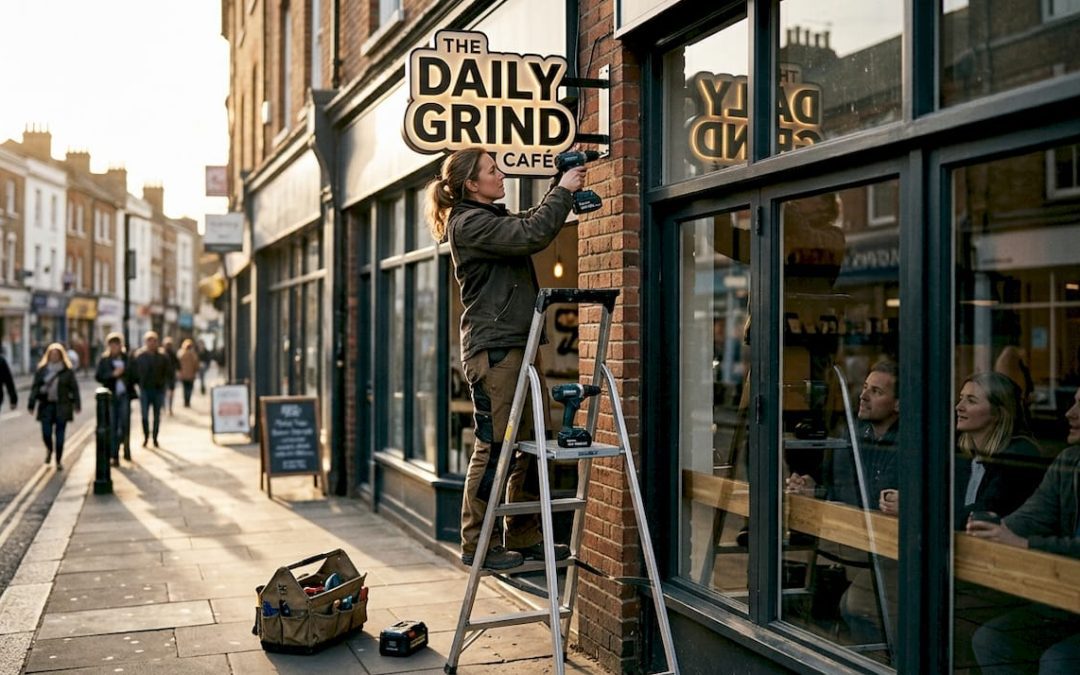
76% of consumers have entered a shop based purely on its signage. That single statistic should make every business owner stop and think. Yet many companies still settle for generic, off-the-shelf signs that do little to communicate who they are or what they offer. Bespoke signage is different. It is designed and built specifically for your brand, your location, and your audience. This guide explains exactly what bespoke signage involves, why it delivers measurable results, and how businesses in retail, construction, and film are using it to stand out and grow.
Table of Contents
- What is bespoke signage?
- Why bespoke signage matters for businesses
- Materials and methods: building bespoke signs
- Navigating regulations and compliance
- Practical applications: retail, construction, and film industry insights
- Next steps: work with signage experts
- Frequently asked questions
Key Takeaways
| Point | Details |
|---|---|
| Custom signage drives results | Bespoke signage boosts foot traffic, sales, and brand visibility for businesses. |
| Materials and compliance matter | Choosing the right materials and following regulations ensures durability and safety. |
| ROI is measurable | Businesses often see a return on investment within weeks thanks to custom signage. |
| Industry-tailored solutions | Retail, construction, and film sectors benefit from bespoke signage designed to their needs. |
What is bespoke signage?
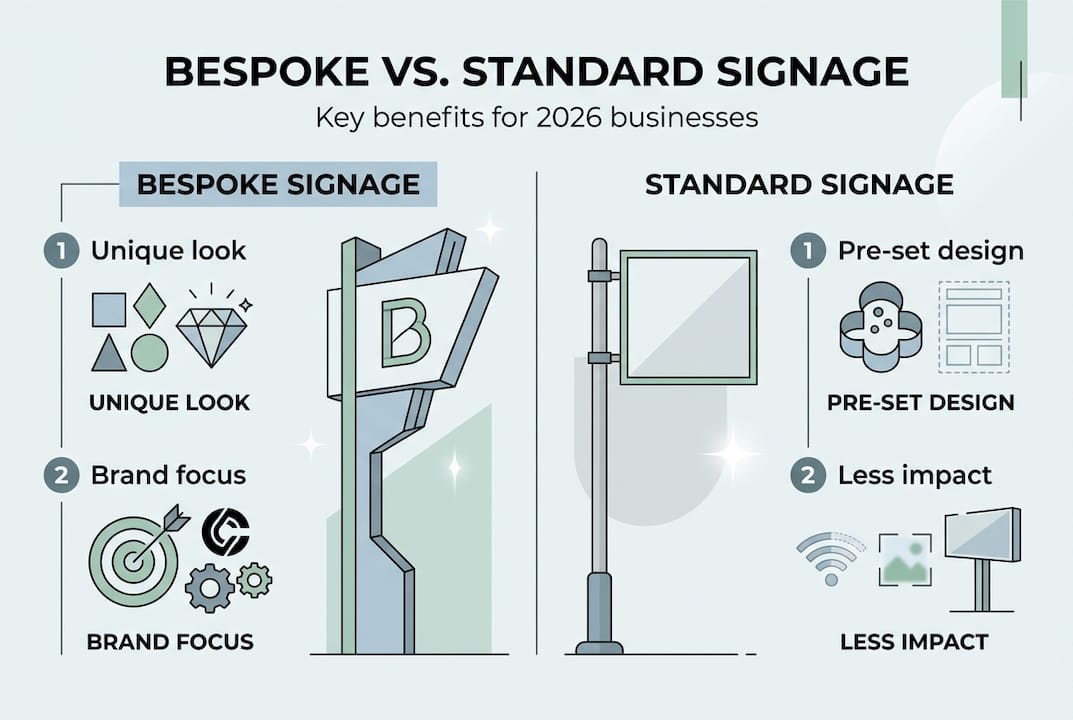
Bespoke signage is custom-designed and manufactured to meet the precise requirements of a specific business. Unlike modular or standard signage, which uses pre-made components in fixed sizes and formats, bespoke signage is built from scratch. Every element, from the dimensions and materials to the colours and lighting, is tailored to fit your brand identity and physical environment.
The range of bespoke sign types is broad. Common applications include:
- Shop fronts and fascia signs for retail businesses
- Internal wayfinding and directional signs for offices, hospitals, and commercial spaces
- Construction site signage including safety boards and hoarding graphics
- Film and TV set signage requiring flexible, temporary, and highly realistic designs
- Architectural and built-up lettering for corporate buildings and hospitality venues
The materials used in bespoke signage vary depending on the application and environment. Aluminium composite, acrylic, foamex, and correx are among the most widely used, each offering different properties in terms of durability, weight, and finish. Fabrication methods include CNC routing, laser cutting, and waterjet cutting, with LED lighting integrated for illuminated signs.
Here is a quick comparison between bespoke and standard signage:
| Feature | Bespoke signage | Standard signage |
|---|---|---|
| Design | Fully custom | Pre-set templates |
| Materials | Chosen for purpose | Fixed options |
| Fit | Exact to location | Approximate |
| Brand alignment | Precise | Limited |
| Longevity | High | Variable |
If you want to understand more about material choices, our guide on acrylic sign materials covers the options in detail.
Why bespoke signage matters for businesses
The business case for bespoke signage is well supported by data. Custom signage can increase foot traffic and sales by 10 to 40%, with some businesses reporting a return on investment of over 300%. That is a significant commercial outcome from what many still consider a one-off cost.
Beyond foot traffic, bespoke signage enhances brand identity and increases dwell time in retail environments. When customers spend more time in your space, they are more likely to make a purchase. Strong signage also builds familiarity and trust, which contributes to repeat visits and word-of-mouth referrals.
Here is a summary of measurable outcomes businesses have reported:
| Outcome | Reported impact |
|---|---|
| Foot traffic increase | 10% to 40% |
| Sales uplift | Up to 22% for some retailers |
| ROI | 300%+ in documented cases |
| Payback period | Under 30 days in some instances |
The benefits differ by industry. For retail, well-designed shop exterior signage draws customers in and sets expectations before they even step through the door. For construction businesses, site signage communicates professionalism and compliance. For film and TV productions, bespoke signs create authentic environments that standard props simply cannot replicate.
“Signage is often the first brand touchpoint a customer encounters. Getting it right from the outset pays dividends across every stage of the customer journey.”
Pro Tip: Before commissioning new signage, record your current foot traffic and sales figures. After installation, track the same metrics over 30 to 60 days. This gives you a clear, evidence-based picture of the return your signage is delivering.
For a broader look at how signage supports business growth, read our article on the importance of branded signage and how it connects to enhancing business visibility across different sectors.
Materials and methods: building bespoke signs
Understanding what goes into a bespoke sign helps you make better decisions when briefing a signage supplier. The choice of material affects not just appearance but also durability, maintenance requirements, and cost.
The most commonly used materials in bespoke sign fabrication include:
- Aluminium composite (ACM): Lightweight, rigid, and weather-resistant. Ideal for exterior fascia signs and construction hoardings.
- Acrylic (Perspex): Versatile and available in a wide range of colours and finishes. Works well for illuminated signs, cut lettering, and interior displays.
- Foamex (PVC foam board): Lightweight and cost-effective. Suited to short-term or indoor applications.
- Correx: A fluted polypropylene board used widely in construction and estate agency signage for its low cost and durability.
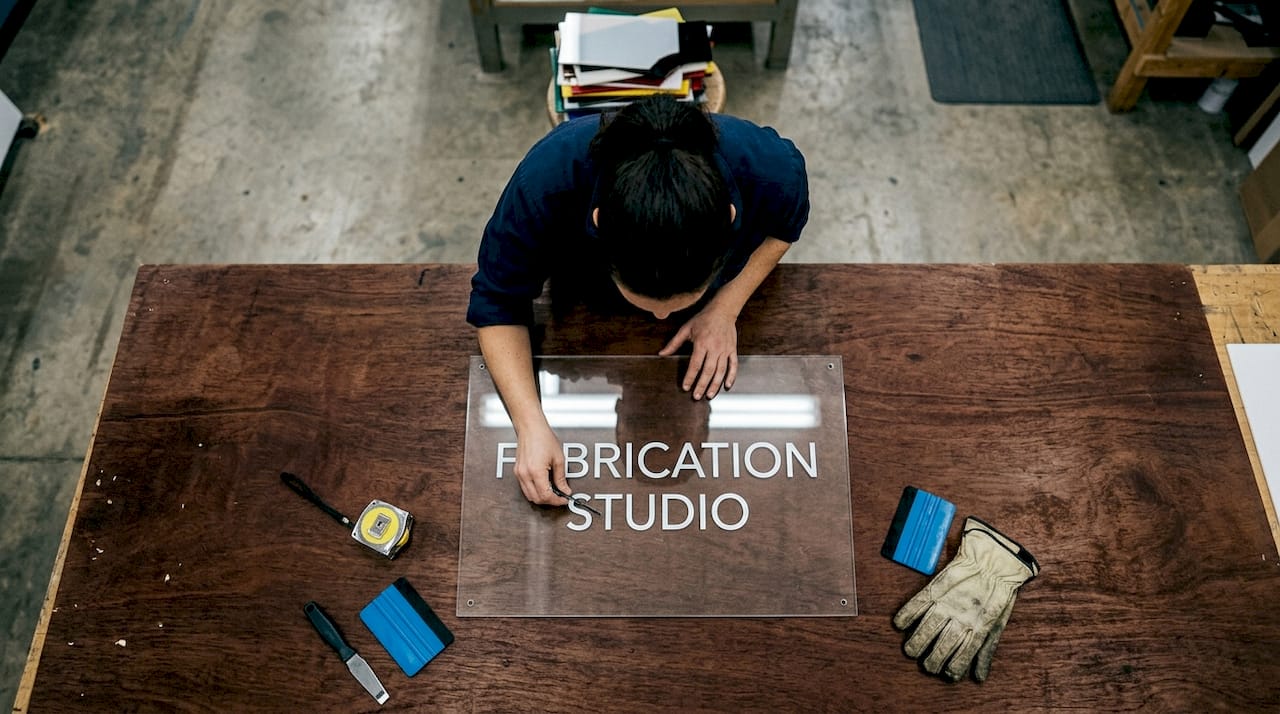
Fabrication techniques include CNC routing for precise cutting of complex shapes, laser cutting for fine detail work, and waterjet cutting for thicker materials. Powder coating is applied to metal components for a durable, weather-resistant finish. LED lighting is integrated into illuminated signs to reduce energy consumption and extend the lifespan of the sign.
The versatility of acrylic in particular makes it a popular choice across retail, hospitality, and commercial interiors. For businesses considering lit signage, our range of illuminated signage options covers everything from halo-lit lettering to full LED lightboxes.
Pro Tip: For outdoor signs, always specify materials rated for UV resistance and moisture exposure. A sign that looks excellent on day one but fades or warps within a year is a poor investment, regardless of the initial cost.
Navigating regulations and compliance
Regulatory requirements are one of the most frequently overlooked aspects of bespoke signage projects. Getting this wrong can result in costly delays, enforcement notices, or the need to remove and replace completed work.
Key regulatory considerations include:
- Planning permission: Most permanent exterior signs in the UK require advertisement consent from the local planning authority. This is separate from building regulations and applies even if the sign is on your own property.
- Conservation and historic areas: Signs in conservation areas or on listed buildings face stricter controls. Illuminated signs, projecting signs, and large format graphics are often restricted or prohibited.
- Accessibility requirements: Internal signage in public buildings must meet accessibility standards. This includes tactile and Braille elements for wayfinding signs used by visually impaired visitors.
- Energy codes: Illuminated signs must comply with energy efficiency standards, which affects the specification of lighting systems.
- Landlord approval: If you are a tenant, your lease may require written consent from the landlord before any signage is installed or altered.
“Regulatory non-compliance in signage is not just a legal risk. It can result in removal costs, reputational damage, and delays to your opening or rebranding timeline.”
For businesses in the construction sector, construction signage compliance involves additional considerations around site safety and CDM regulations. Internal projects must also account for wayfinding compliance signage and, where relevant, health and safety signage requirements.
Working with an experienced signage supplier means these requirements are built into the project from the start, not addressed as an afterthought.
Practical applications: retail, construction, and film industry insights
Bespoke signage looks different depending on the sector, but the underlying principle is the same: the sign must serve a specific purpose for a specific audience in a specific environment.
Here is how it plays out across three key industries:
- Retail: Shop fronts, window graphics, and interior point-of-sale displays are the most visible applications. A well-executed fascia sign communicates brand values instantly and draws passing trade. Businesses that invest in quality signage systems for business report consistent improvements in footfall and customer engagement.
- Construction: Site signage serves a dual purpose. It communicates safety information to workers and visitors while also acting as a marketing tool for the developer or contractor. Hoarding graphics, directional signs, and health and safety boards all need to meet specific regulatory standards while remaining visually coherent.
- Film and TV: Productions require signage that looks authentic on camera, can be installed and removed quickly, and is often produced to very tight deadlines. Bespoke fabrication allows for exact replication of real-world signs, period-accurate designs, or entirely fictional brand identities for fictional businesses featured in a production.
Industry-specific signage enhances brand identity for retail, ensures compliance for construction, and adapts flexibly for film sets. The common thread is that standard, off-the-shelf solutions simply cannot meet these varied and precise demands.
One documented example: a café that replaced its generic signage with a bespoke illuminated fascia and window graphics saw a 22% increase in sales within the first month. That outcome is not unusual when signage is treated as a strategic investment rather than a functional afterthought.
Next steps: work with signage experts
Now that you have a clear understanding of bespoke signage, from materials and fabrication through to compliance and industry applications, the next step is working with a team that can deliver it to a high standard.
At Pik Pik POW!, we specialise in designing and manufacturing bespoke signage for retail, construction, commercial interiors, and the TV and film industry. Whether you need a complete bespoke signage system, digital signage solutions for dynamic environments, or internal wayfinding signage that meets accessibility standards, we handle every stage from initial design through to installation. Our team brings together design expertise and precision manufacturing to create signage that performs. Get in touch to discuss your project and find out what bespoke signage can do for your business.
Frequently asked questions
How much does bespoke signage cost?
Costs vary based on materials, size, complexity, and any regulatory requirements such as planning permission. The ROI can exceed 300% in documented cases, with some businesses recovering their investment in under 30 days.
Do I need planning permission for new signs?
In most cases, yes. Planning consent is required for permanent exterior signs in the UK, with additional restrictions applying in conservation areas and on listed buildings.
Which materials are best for outdoor signage?
Aluminium composite, acrylic, and foamex are the most widely used materials for outdoor signs, offering durability and weather resistance. LED lighting is the preferred choice for illuminated outdoor applications due to its energy efficiency and long lifespan.
How does signage affect sales and foot traffic?
Custom signage increases sales by 10 to 40% in many documented cases, with individual businesses such as cafés reporting a 22% uplift in sales following a signage upgrade.
How do I ensure my signage complies with accessibility laws?
You must include tactile features and Braille on relevant internal signs, comply with energy codes for illuminated signs, and secure planning permission where required. Working with an experienced signage supplier ensures these requirements are addressed from the outset.