TL;DR:
- Choosing the right signage material depends on environmental exposure, lifespan, and visual needs. Durable substrates like aluminum composite panels, HDU, and acrylic offer long-lasting performance suitable for specific outdoor and indoor applications. Proper maintenance and early material testing can extend signage longevity and reduce long-term costs.
Choosing durable signage materials means selecting substrates that withstand environmental stressors such as weather, UV exposure, and physical impact, ensuring your signage remains visible and effective for its intended lifespan. The industry term for this decision process is substrate selection, and getting it right upfront saves you from costly replacements and brand inconsistency down the line. Materials like aluminium composite panels (ACM), High-Density Urethane (HDU), and acrylic each serve different purposes, and matching the right substrate to your environment is the single most important factor in long-term signage performance. This guide gives you a clear framework for how to choose durable signage materials that work for your business, your budget, and your location.
How to choose durable signage materials: key criteria
The first question to ask is not “which material looks best?” but “where will this sign live, and what will it face?” A sign on a coastal shopfront faces salt air, wind, and UV radiation. A sign inside a shopping centre faces foot traffic, cleaning chemicals, and artificial light. These are completely different briefs, and they demand different substrates.
Work through these criteria before you request a quote or choose a material:
- Location and exposure. Outdoor signs face UV rays, moisture, and temperature swings. Indoor signs face humidity, cleaning products, and physical contact. Identify the specific stressors your sign will encounter.
- Longevity expectations. A permanent fascia sign needs a material rated for 7–10 years or more. A promotional display for a three-month campaign needs something far less expensive.
- Visual and branding requirements. Some materials accept print better than others. Acrylic delivers a premium finish for retail interiors. ACM gives a flat, professional surface for large exterior panels.
- Budget and total cost of ownership. A cheaper substrate that fails in two years costs more than a durable one that lasts ten. Choosing the right material upfront reduces long-term costs by minimising repairs, replacements, and brand disruption.
- Compliance and safety. Certain environments, including construction sites and public buildings, require signage that meets specific fire resistance or impact resistance standards. Check local regulations before specifying a material.
Pro Tip: Request physical samples from your signage supplier before committing to a material. A sample lets you assess weight, finish, and rigidity in your actual environment, not just on a specification sheet.
What are the most durable signage materials?
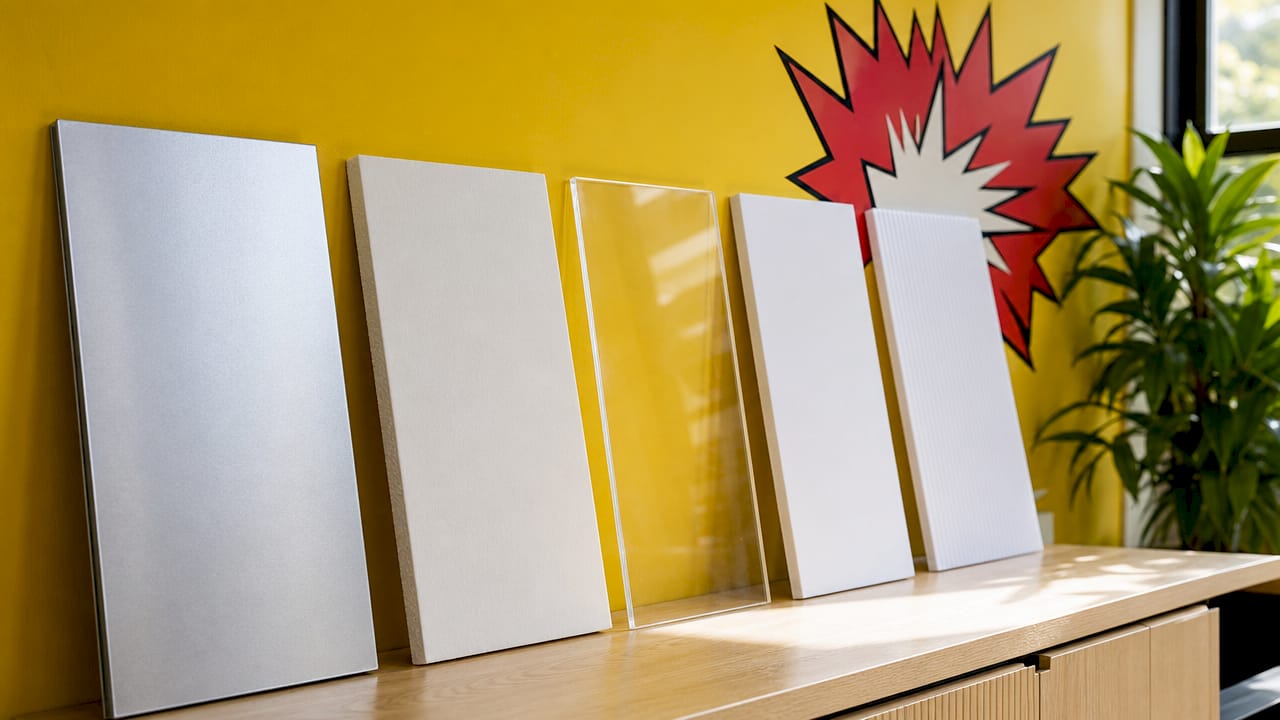
Understanding the properties of each substrate is the foundation of good substrate selection. The table below summarises the most widely used materials, their strengths, and their best applications.
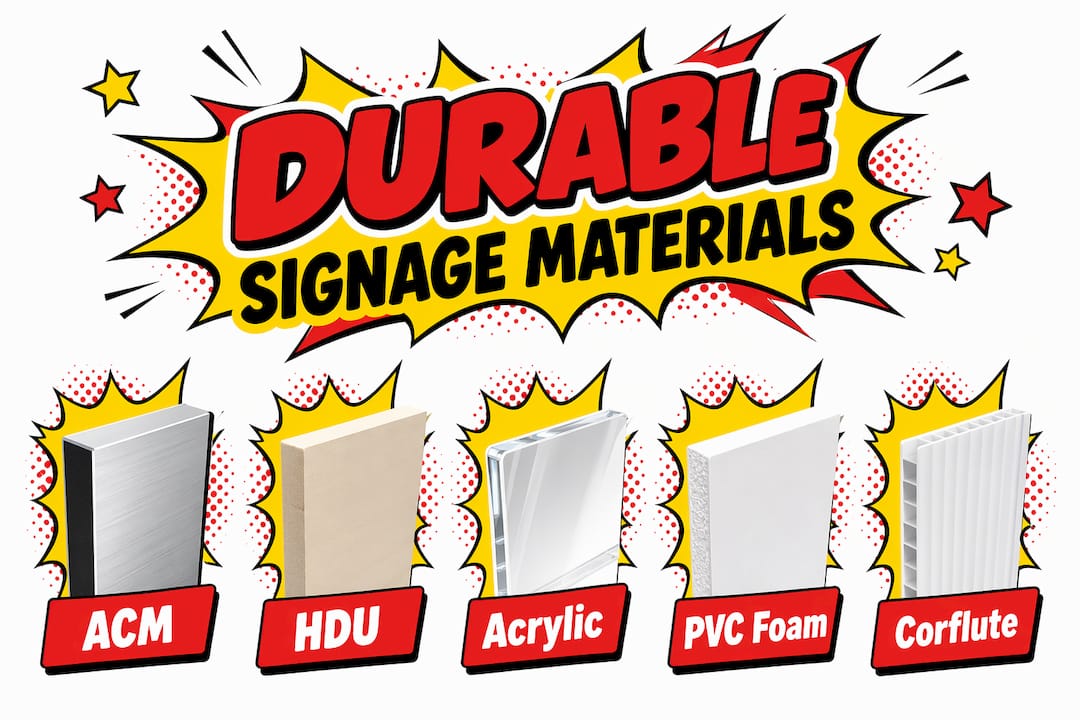
| Material | Durability | Best use | Limitations |
|---|---|---|---|
| Aluminium composite (ACM) | 7–10+ years outdoors | Permanent exterior panels, fascia signs | Higher upfront cost |
| High-Density Urethane (HDU) | Long-term outdoor use | Monument signs, carved dimensional signage | Specialist fabrication needed |
| Acrylic | Medium, indoor or sheltered outdoor | Retail interiors, illuminated signs | UV yellowing without protection |
| Polycarbonate | High impact resistance | Safety-critical or high-traffic areas | Can scratch more easily than acrylic |
| PVC foam board | 2–5 years outdoors | Mid-term promotional displays | Not suited to permanent outdoor use |
| Corflute (corrugated polypropylene) | Up to 18 months outdoors | Event, construction, and real estate signs | Low durability, not for permanent use |
| Steel | Very high, long-term | Industrial and architectural signage | Heavy, requires rust treatment |
| Timber | Variable | Heritage or boutique branding | Prone to rot and insect damage without treatment |
ACM offers excellent weather resistance and flat rigidity, making it the go-to choice for permanent outdoor applications. That combination of UV resistance and structural stability is why it appears on shopfronts and building fascias across the UK.
HDU resists rot, insects, and moisture while delivering the carved, dimensional look that timber cannot sustain outdoors. Experts recommend HDU over wood for carved outdoor signage because of its superior durability and lower maintenance demands.
Acrylic and polycarbonate deliver smooth, professional finishes and work well for illuminated signs and retail interiors. Without UV protection, however, acrylic yellows and becomes brittle under prolonged sun exposure.
PVC foam board typically lasts 2–5 years outdoors and suits mid-term promotional signs and displays. It is lightweight and affordable, but it is not a long-lasting signage choice for permanent exterior use.
Corflute is practical for short-term outdoor signage up to 18 months. It is widely used for construction site hoardings, real estate boards, and event signage where cost matters more than longevity.
Wood signage requires considerable maintenance and is prone to rot and insect damage outdoors. Its natural aesthetic appeals in certain contexts, but longevity concerns make it a poor choice without regular upkeep and specialist treatment.
How do you match signage materials to your environment?
Material knowledge only becomes useful when you apply it to your specific context. The right substrate for a retail shopfront in Manchester differs from the right choice for a warehouse safety sign in Leeds or a temporary hoarding on a construction site in London.
Outdoor versus indoor applications
Outdoor signage faces the full range of British weather, including rain, frost, wind, and UV radiation. ACM and aluminium are the most reliable long-lasting signage choices for permanent exterior use. HDU suits dimensional or carved signs where aesthetics matter as much as durability. For indoor applications, acrylic and PVC foam board perform well because they are not exposed to moisture or temperature extremes.
High-traffic and industrial settings
Facilities with heavy footfall or physical contact need impact-resistant materials. Polycarbonate outperforms acrylic in these settings because it absorbs knocks without cracking. Steel suits industrial environments where signage may face forklift proximity, chemical exposure, or extreme temperatures. For industrial floor marking and facility signage, material selection follows the same logic: match the substrate to the specific physical stressors of the space.
Climate and UV considerations
Climate factors like moisture, sunlight, and temperature fluctuations directly affect how long a sign lasts. In the UK, moisture resistance is the priority for most outdoor signs. In south-facing locations with high sun exposure, UV-stabilised materials are non-negotiable. ACM and aluminium handle both well. Avoid non-UV-stabilised plastics in any outdoor setting, as they degrade visibly within one to two years.
Matching material to sign type
Different sign types have different performance requirements:
- Storefront and fascia signs. ACM or aluminium for flat panels; HDU for dimensional lettering and carved features.
- Wayfinding signs. Aluminium or powder-coated steel for outdoor wayfinding; acrylic or PVC for interior wayfinding systems.
- Safety signs. Polycarbonate or aluminium, depending on the environment. Safety signage must meet BS EN ISO 7010 standards in the UK.
- Promotional and temporary signs. Corflute or PVC foam board for short campaigns; vinyl banners for events and short-term outdoor display.
How do you maintain signage to extend its lifespan?
Even the most durable substrate degrades without basic maintenance. A consistent maintenance routine protects your investment and keeps your brand looking professional.
Regular cleaning, protective coatings, and prompt repairs significantly extend the life of outdoor signage. UV laminates and weatherproof coatings reduce fading and surface degradation, particularly on printed graphics exposed to direct sunlight.
Follow these practices to get the most from your signage:
- Clean signs with a mild soap solution and a soft cloth. Avoid abrasive cleaners, which scratch acrylic and polycarbonate surfaces.
- Apply UV-protective laminates to printed graphics on outdoor signs. This is the single most effective way to prevent colour fade.
- Inspect fixings and mounting hardware at least twice a year. Loose fixings cause signs to shift, which stresses the substrate and can cause cracking or delamination.
- Address minor damage quickly. A small chip or crack in an ACM panel is a straightforward repair. Left untreated, moisture enters the substrate and accelerates failure.
- Schedule a formal review of your signage every three to five years. Assess whether refurbishment or replacement is more cost-effective based on the material’s remaining lifespan.
Pro Tip: When specifying printed graphics for outdoor signs, always request UV-stabilised inks and a weatherproof overlaminate. These two additions can double the visible lifespan of your printed graphics without significantly increasing the cost.
Key takeaways
Choosing the right signage substrate upfront is the most cost-effective decision you can make, because durable materials reduce replacements, protect your brand, and lower long-term operational disruption.
| Point | Details |
|---|---|
| Match material to environment | Outdoor signs need UV and moisture resistance; ACM and aluminium are the most reliable choices. |
| HDU outperforms wood outdoors | HDU resists rot and insects, making it the better long-term option for dimensional exterior signs. |
| PVC and corflute suit short-term use | PVC foam board lasts 2–5 years; corflute suits campaigns up to 18 months. Do not use either for permanent outdoor signage. |
| Maintenance extends lifespan | UV laminates, regular cleaning, and prompt repairs protect any substrate and delay costly replacements. |
| Total cost of ownership matters | A durable material with a higher upfront cost almost always costs less over five to ten years than a cheaper substrate replaced twice. |
What we have learned from specifying signage materials
The most common mistake we see from business owners is choosing a material based on the lowest quote rather than the total cost of ownership. A PVC foam board sign installed on an exposed shopfront might save £200 upfront. Two years later, it is warped, faded, and reflecting poorly on the brand. The replacement cost, including labour and downtime, far exceeds what a proper ACM panel would have cost from the start.
The second mistake is ignoring the local environment. A sign that performs well in a sheltered retail park will fail quickly on a coastal high street. Salt air accelerates corrosion on untreated metals and degrades adhesives faster than most people expect. We always ask clients about their exact location before recommending a substrate, because the same sign type can require completely different materials depending on where it sits.
The advice we give every client is this: spend time on the brief before you spend money on the sign. Identify the stressors, set a realistic lifespan target, and then work backwards to the material. Consulting your signage supplier early, and asking to see real-world examples of their work in similar environments, gives you far more confidence than any specification sheet. Samples matter too. Holding a material in your hand, seeing how it catches light, and understanding its weight tells you things a product description never will.
— Pikpikpow
Signage that is built to last, made for your business
Pikpikpow works with businesses across retail, construction, commercial interiors, and the TV and film industry to deliver signage that performs in the real world. Whether you need a permanent exterior fascia, dimensional lettering, or a full signage system for a multi-site operation, the team combines design expertise with material knowledge to specify the right substrate for your environment and budget.
From shop and exterior signage to interior wayfinding and branded graphics, Pikpikpow handles the full process from material selection through to installation. Get in touch to discuss your requirements, request samples, or receive a quote tailored to your sector and location.
FAQ
What is the most durable material for outdoor signage?
Aluminium composite material (ACM) is the most durable choice for permanent outdoor signage, offering UV resistance, moisture resistance, and a lifespan of 7–10 years or more.
How long does PVC foam board last outdoors?
PVC foam board typically lasts 2–5 years outdoors. It suits mid-term promotional displays but is not recommended for permanent exterior signage.
Is HDU better than wood for outdoor signs?
HDU is the better choice for outdoor dimensional signage. It resists rot, insects, and moisture, whereas untreated wood degrades quickly without regular maintenance.
How do I protect printed graphics on outdoor signs?
Apply UV-stabilised inks and a weatherproof overlaminate when specifying printed outdoor graphics. UV laminates and weatherproof coatings reduce fading and surface degradation significantly.
What signage materials work best indoors?
Acrylic and PVC foam board are well suited to indoor signage. Acrylic delivers a premium finish for retail and illuminated signs, while PVC foam board suits lighter display and wayfinding applications.