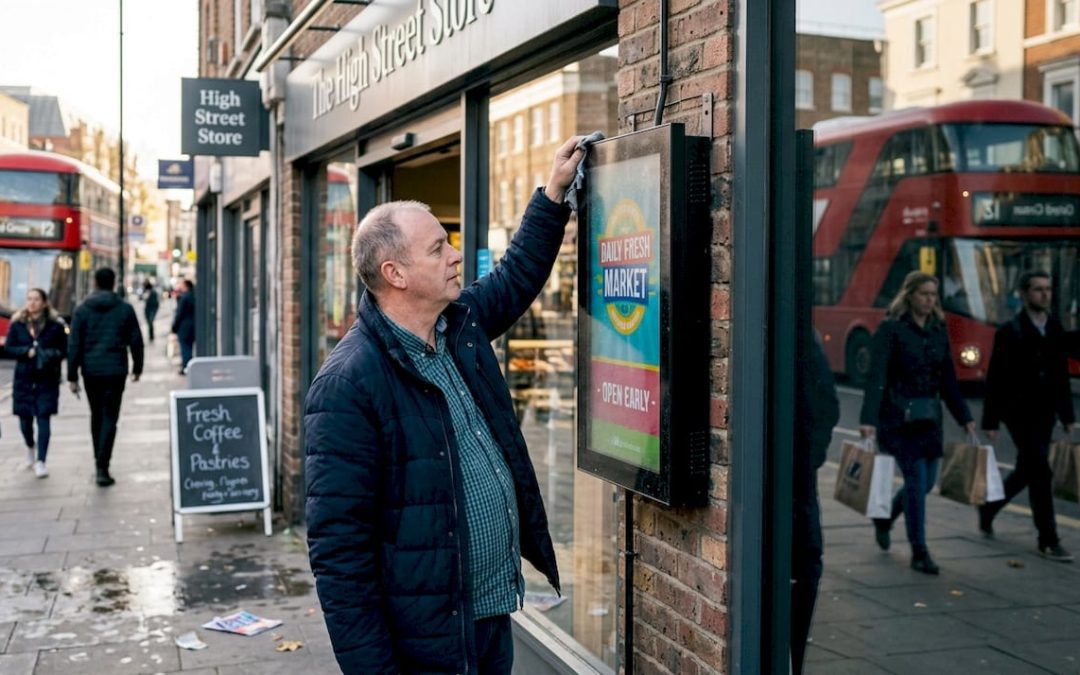
Most retailers invest heavily in stock, pricing strategy, and digital marketing, yet overlook one of the most powerful sales tools standing right in front of their customers. 76% of consumers enter shops based on signage alone. That single fact should reshape how you think about your shopfront, your aisles, and every display in between. This article breaks down the strategic role of retail signage, the principles that make it work, the mistakes that cost businesses money, and how to measure whether your investment is actually paying off.
Table of Contents
- Why signage matters in modern retail environments
- Core functions of retail signage: beyond the obvious
- Principles of effective retail signage: design, placement and messaging
- Digital versus traditional signage: choosing the right fit
- Measuring signage ROI and common pitfalls to avoid
- Retail signage in action: UK examples and practical takeaways
- Signage solutions tailored for UK retail success
- Frequently asked questions
Key Takeaways
| Point | Details |
|---|---|
| Signage drives store entry | Over three-quarters of UK shoppers enter shops based on effective signage. |
| Clarity and placement matter | Clear, eye-level signage with concise messaging leads to higher engagement and sales. |
| Digital earns quick ROI | Digital signage can deliver double-digit sales lifts with payback in as little as 30 days. |
| Avoid common pitfalls | Overcrowded, hard-to-read, or non-compliant signage causes confusion or may result in penalties. |
| Measurable impact | Use footfall, sales lift, and dwell time to evaluate signage effectiveness and guide improvements. |
Why signage matters in modern retail environments
First impressions happen fast. Before a customer reads your price tags or speaks to your staff, they have already formed an opinion based on what they see outside and inside your store. Signage is the first conversation you have with a potential customer, and it happens without a single word being spoken.
Consistent, well-designed signage reinforces your brand identity at every touchpoint. It tells customers who you are, what you sell, and why they should trust you. The branded signage benefits for retail businesses go well beyond aesthetics. Signage placed at key decision points, such as near product displays or at the entrance, directly influences purchasing behaviour.
The numbers back this up clearly. According to retail signage data, 76% enter shops based on signage, and 58% are influenced to buy by in-store displays. That is a significant portion of your footfall and revenue being shaped by your signs.
“Effective signage at the right moment does not just inform, it converts.”
Here is what excellent signage delivers for your retail business:
- Visibility: Draws customers in from the street and makes your brand recognisable
- Trust: Professional, consistent signage signals credibility and quality
- Navigation: Helps customers find what they need quickly, reducing frustration
- Sales lift: Targeted displays at decision points increase purchase rates
- Brand identity: Reinforces your signage and brand identity across every customer interaction
Core functions of retail signage: beyond the obvious
Signage does far more than display your shop name. It serves multiple distinct functions across your retail environment, each with a measurable impact on your business performance.
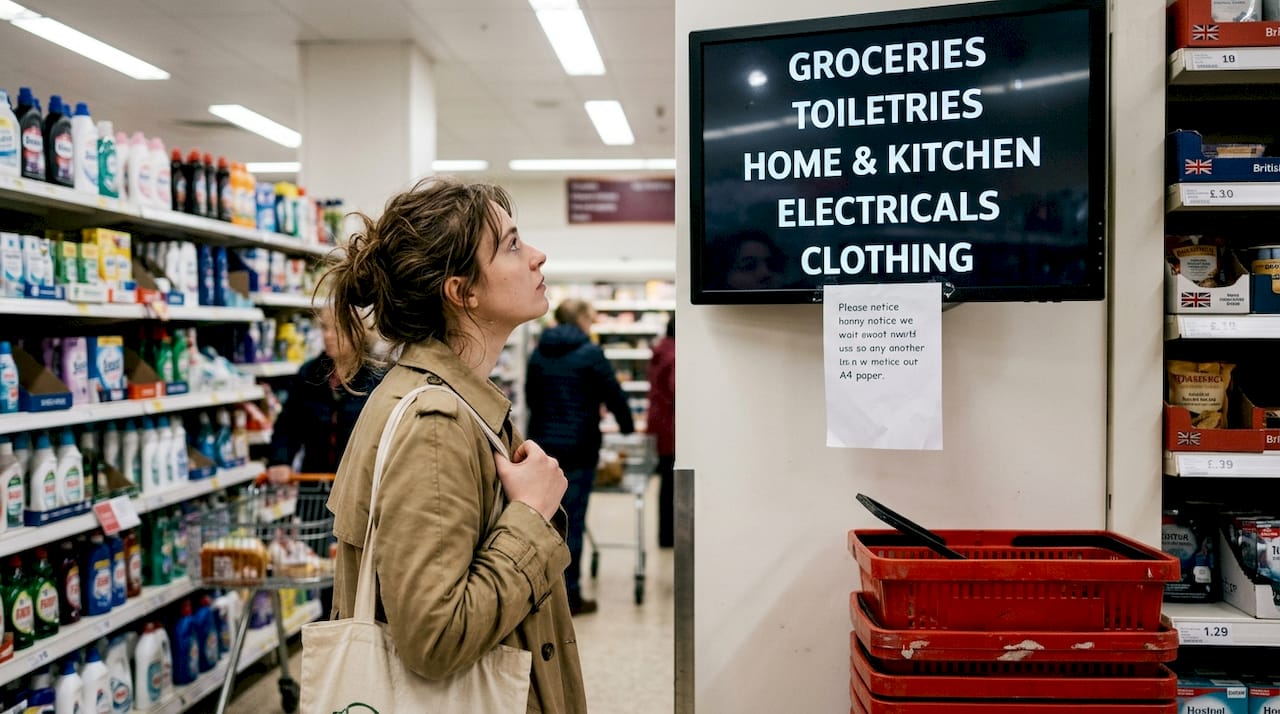
The table below outlines the core functions and what they deliver:
| Function | Purpose | Business impact |
|---|---|---|
| Branding | Communicates identity and values | Builds recognition and loyalty |
| Wayfinding | Guides customers through the store | Reduces confusion, speeds up shopping |
| Promotions | Highlights offers and new products | Drives impulse purchases and upsells |
| Compliance | Meets legal and safety requirements | Avoids fines and protects customers |
| Product information | Explains features, pricing, and benefits | Reduces staff queries, supports decisions |
Research shows that well-placed promotional signage can deliver a purchase lift of 8.1% in grocery retail alone. That figure scales significantly when you apply the same logic to fashion, homeware, or specialist retail environments. The design in signage solutions you choose will directly affect how well each function performs.
Non-promotional signage also shapes the customer experience in ways that are easy to underestimate:
- Clear aisle and department signs reduce the time customers spend searching
- Safety and compliance signs build confidence that your store is well managed
- Accessible signage, including appropriate font sizes and contrast levels, ensures all customers feel welcome
- Consistent visual language across signage in commercial interiors creates a cohesive, professional environment
Principles of effective retail signage: design, placement and messaging
Having signage is not enough. The design, placement, and messaging all need to work together to produce results. Poor execution wastes budget and can actively put customers off.
Start with the 5-second rule. Your message should be clear enough for a customer to grasp it in under five seconds. If it takes longer, you have lost them. Best practices also include high-contrast colour combinations, eye-level placement, and a clear visual hierarchy that guides the eye naturally.
Follow these steps to create signage that actually works:
- Define the purpose of each sign before designing it. Is it for branding, navigation, or promotion?
- Keep the message focused. One sign, one message. Avoid cramming in multiple offers or instructions.
- Choose the right signage materials for the environment. Outdoor signs need weather resistance; indoor signs can prioritise finish and detail.
- Position at eye level wherever possible, and place promotional signs directly next to the relevant products.
- Test before committing. Put up a prototype and observe how customers interact with it before a full rollout.
- Review and refresh regularly. Faded or outdated signs damage credibility.
Pro Tip: Design your signage with accessibility in mind from the start. High-contrast text, clear fonts, and appropriate sizing ensure your signs work for customers with visual impairments, which broadens your reach and demonstrates good practice.
The table below gives practical guidance on letter height and viewing distances, based on industry best practices:
| Viewing distance | Recommended letter height |
|---|---|
| Up to 3 metres | 2.5 cm |
| Up to 6 metres | 5 cm |
| Up to 15 metres | 12.5 cm |
| Up to 30 metres | 25 cm |
For signage design tips specific to UK retail environments, it is worth reviewing what works for your store format before briefing a supplier. You should also consider whether digital signage in retail could complement your static displays.
Digital versus traditional signage: choosing the right fit
Digital signage is growing rapidly in UK retail, and for good reason. It offers flexibility, dynamic content, and the ability to update messaging instantly. But it is not always the right choice for every situation.
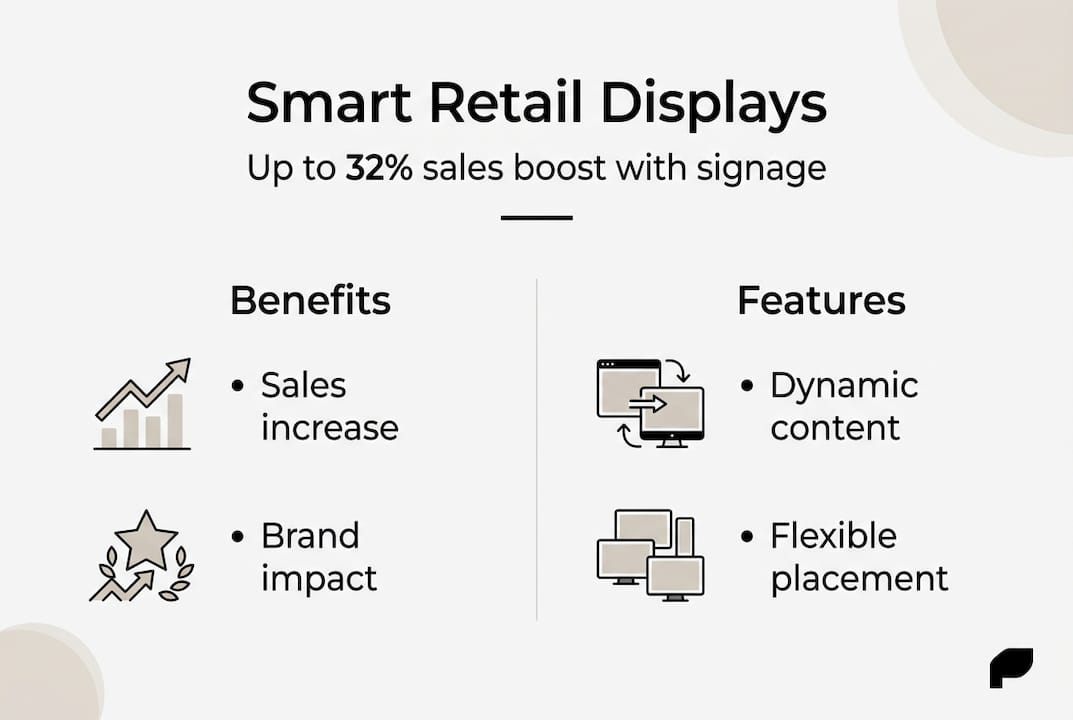
Digital signage can deliver a sales lift of up to 32% when used effectively. However, technical failures, power outages, and higher upfront costs are real considerations. Traditional static signage, by contrast, is reliable, cost-effective, and often more appropriate for wayfinding and brand presence.
The Herhausen Study found that emotional content on digital displays consistently outperforms discount-led messaging, which is a useful insight when planning your content strategy.
| Feature | Digital signage | Traditional signage |
|---|---|---|
| Upfront cost | Higher | Lower |
| Flexibility | High (update instantly) | Low (reprint required) |
| Maintenance | Ongoing (tech support) | Minimal |
| Best use case | Promotions, dynamic content | Wayfinding, brand identity |
| Risk | Technical failure, power loss | Fading, physical damage |
| ROI potential | Up to 32% sales lift | Steady, long-term brand value |
Pro Tip: Use digital displays for time-sensitive promotions and seasonal campaigns, and rely on static signage for wayfinding and permanent brand messaging. The two approaches work best together, not in competition. Explore the latest signage trends and news to stay ahead of what is working in UK retail.
Measuring signage ROI and common pitfalls to avoid
Investing in signage without measuring its impact is a missed opportunity. The good news is that tracking signage performance does not require complex systems.
The core metrics to monitor are sales lift at promoted locations, footfall before and after installation, dwell time near key displays, and customer survey feedback. Fast digital payback can occur within 30 days in some cases, particularly for promotional digital displays.
“In high-footfall retail environments, well-executed digital signage can recoup its cost within a single month of deployment.”
Follow these steps to measure your signage ROI effectively:
- Set a baseline by recording current sales figures and footfall data before any changes.
- Implement one change at a time so you can isolate the impact of each sign or display.
- Measure over a consistent period, ideally four to eight weeks, to account for natural trading variation.
- Gather customer feedback through brief surveys or staff observations to capture qualitative insight.
- Iterate based on results. Replace underperforming signs and scale what works.
Pro Tip: Treat signage like any other marketing campaign. Set clear objectives before you start, track results consistently, and be prepared to adjust. Quick wins from promotional displays can fund longer-term investment in permanent professional signage systems.
Common pitfalls to avoid include overcrowded messaging that confuses rather than guides, ignoring accessibility requirements, failing to maintain signs so they remain clean and undamaged, and overlooking compliance obligations. Poor signage causes genuine frustration for customers and can result in fines or enforced removal if it breaches planning or safety regulations.
Retail signage in action: UK examples and practical takeaways
Theory is useful, but seeing how these principles apply in real UK retail settings makes them far easier to act on. Here are practical examples of signage working effectively across different store types:
- Window graphics in fashion retail draw passing footfall by showcasing seasonal offers or new arrivals, turning browsers into visitors
- Clear aisle signage in supermarkets and homeware stores reduces the time customers spend searching, which improves satisfaction and increases the likelihood of additional purchases
- Digital promotion boards at tills capture attention during the natural pause at checkout, making them ideal for upselling or highlighting loyalty programmes
- Wayfinding signage in larger stores, such as department stores or DIY retailers, reduces staff interruptions and helps customers feel confident navigating independently
Research shows that proximity to product placement boosts purchase rates by 2%, which reinforces the importance of positioning signs directly alongside the products they relate to. Accessibility failures, such as signs placed too high or with insufficient contrast, actively exclude customers and reduce the effectiveness of your investment.
To run a cost-effective signage refresh, start with an audit of your current signs. Identify what is faded, outdated, or poorly positioned. Prioritise high-traffic areas first, then work through secondary zones. Use wayfinding signage options to improve navigation before adding promotional layers. A phased approach spreads cost while delivering visible improvements quickly.
Signage solutions tailored for UK retail success
If you are ready to put these principles into practice, working with a specialist signage partner makes the process significantly more straightforward. At Pik Pik POW!, we design, manufacture, and install bespoke signage solutions for UK retailers of all sizes, from independent boutiques to multi-site chains.
Whether you need signage systems for retail that cover your entire store, digital signage solutions to drive dynamic promotions, or wayfinding signage that improves the customer journey, we can help you plan and deliver it. Our team combines design expertise with precision manufacturing to create signage that performs from day one. Get in touch to discuss your requirements and find out how the right signage can deliver a measurable uplift for your business.
Frequently asked questions
How much can the right signage really increase retail sales?
Effective signage at key decision points can lift sales by up to 32%, particularly when digital displays are used for targeted promotions in high-footfall areas.
Are there legal requirements for shop signage in the UK?
Yes, UK retailers must comply with local council planning permissions, accessibility standards, and health and safety regulations. Non-compliance can result in fines or enforced removal of signs.
What is the ‘5-second rule’ in signage design?
The 5-second rule means your sign’s message should be simple and clear enough for a customer to understand it in under five seconds, ensuring it communicates effectively even in busy retail environments.
How can I measure if my signage investment is working?
Track sales lift, dwell time, footfall changes, and customer feedback before and after installation to build a clear picture of your signage’s impact.