

Over 76% of UK consumers have visited a business based solely on its signage, proving exterior signage drives real foot traffic and revenue. Yet many managers still view signage as mere decoration rather than a strategic business asset. This guide explains what exterior signage truly is, how to choose durable materials for UK weather, navigate regulatory requirements, leverage emerging technologies, and apply sector-specific best practices to maximise your brand’s outdoor visibility and customer engagement.
Table of Contents
- Understanding Exterior Signage: Definition And Core Functions
- Material Selection And Sustainable Signage
- Regulatory Compliance And Planning Permissions In The UK
- Technological Trends In Exterior Signage
- Sector-Specific Exterior Signage Applications And Best Practices
- Common Misconceptions About Exterior Signage
- Installation And Maintenance For Longevity
- Explore Expert Exterior Signage Solutions With Pik Pik Pow
- Frequently Asked Questions
Key takeaways
| Point | Details |
|---|---|
| Definition and impact | Exterior signage attracts customers, builds brand awareness, and influences 76% of UK consumers’ visit decisions. |
| Material sustainability | Aluminium, acrylic, and recycled materials withstand UK weather whilst supporting environmental commitments. |
| UK regulations | Advertisement consent is required in approximately 90% of cases; planning permission ensures compliance. |
| Technology integration | Digital signage market exceeds £8 billion by 2029, offering dynamic content alongside traditional formats. |
| Sector applications | Retail, construction, and film industries benefit from tailored signage addressing unique visibility and compliance needs. |
Understanding exterior signage: definition and core functions
Exterior signage comprises physical outdoor signs designed to attract attention, inform passersby, and guide customers to your premises. These signs fulfil three essential functions that directly impact your bottom line.
First, they build brand awareness by displaying your logo, colours, and messaging where potential customers travel daily. Second, they attract foot traffic by catching the eye of people who might never have discovered your business otherwise. Third, they provide wayfinding, helping visitors navigate complex sites like retail parks or construction zones.
Effective exterior signage impacts 76% of UK consumers’ visit decisions, making it one of the most cost-effective marketing investments available. For retail businesses, a well-placed shopfront sign converts passing traffic into customers. Construction firms use site signage to project professionalism and comply with safety requirements. Film production companies rely on flexible exterior signs to mark locations and manage access during shoots.
Your exterior signage creates the first impression before customers even enter your premises. A faded, damaged sign suggests neglect, whilst a crisp, professionally installed sign conveys quality and attention to detail.
Core functions of exterior signage:
- Brand visibility: Establishes your identity in busy streetscapes and differentiates you from competitors
- Customer attraction: Draws attention through strategic placement, lighting, and eye-catching design elements
- Navigation support: Guides visitors efficiently to entrances, parking, and specific departments or zones
Exploring comprehensive signage systems helps you understand which formats best suit your business objectives. Staying current with latest signage news ensures you adopt effective strategies as consumer behaviour evolves. Understanding design’s role in signage impact reveals how visual elements work together to drive engagement and recall.
Material selection and sustainable signage
Choosing the right materials for your exterior signage determines both its lifespan and environmental footprint. UK weather demands durability, yet sustainability increasingly matters to consumers and stakeholders who judge brands by their environmental commitments.
Aluminium composite panels offer exceptional weather resistance and maintain appearance through rain, frost, and sunshine. They resist corrosion and provide a lightweight yet sturdy substrate for graphics. Acrylic delivers vibrant colour reproduction and can be formed into dimensional letters that catch light beautifully. Treated wood brings warmth and natural aesthetics but requires regular maintenance to prevent rot and fading.
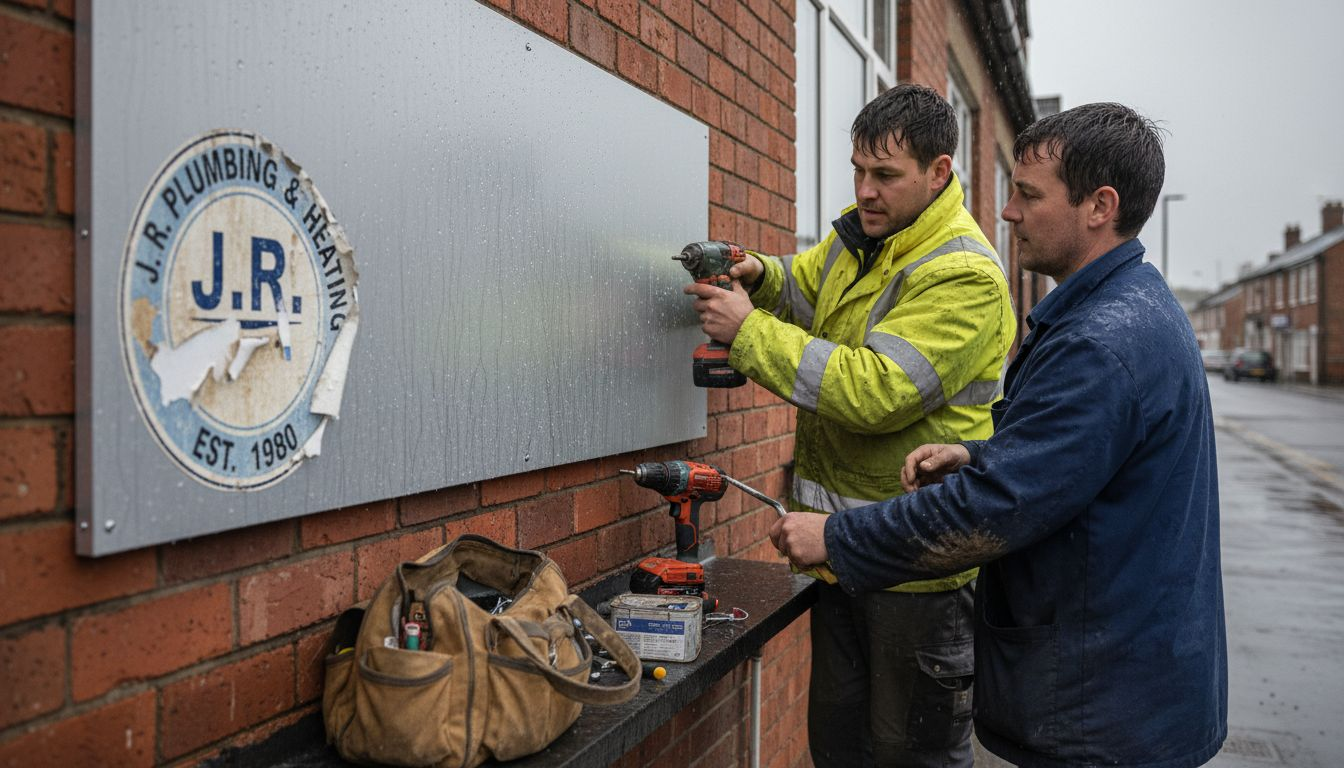
Sustainable options are transforming exterior signage without compromising quality. Recycled aluminium performs identically to virgin material whilst reducing carbon emissions. Bamboo offers renewable beauty for businesses wanting distinctive, eco-friendly signage. Water-based and eco-solvent inks eliminate harmful volatile organic compounds without sacrificing colour vibrancy or longevity.
UK weather variability means your signage must withstand temperature swings, persistent moisture, and occasional harsh conditions. Materials that crack in frost or fade in summer sun require costly replacement and damage your brand image. Investing in weather-appropriate materials extends signage lifespan from 5 to 15 years or more, delivering better return on investment.
Pro Tip: Match material selection to your brand values by choosing sustainable options that align with your corporate responsibility commitments whilst ensuring durability for long-term cost savings.
Material comparison for UK conditions:
- Aluminium composite: Lightweight, corrosion-resistant, excellent for large formats, recyclable at end of life
- Acrylic: Versatile, takes colour well, ideal for illuminated signs, available in recycled formulations
- Treated wood: Natural aesthetic, requires maintenance, best for heritage or rustic brand positioning
- Bamboo: Fast-growing renewable resource, distinctive appearance, suits eco-conscious brands
Review different signage materials to compare performance characteristics and sustainability credentials. Learn how eco-friendly printing methods support environmental goals whilst delivering professional results.
Regulatory compliance and planning permissions in the UK
Navigating UK signage regulations protects you from fines, removal orders, and reputational damage. Advertisement consent and planning permission requirements vary by location, signage type, and size, making professional guidance invaluable.
Advertisement consent is required in approximately 90% of exterior signage cases across the UK. Local planning authorities assess whether proposed signs respect visual amenity, public safety, and character of the surrounding area. Illuminated signs, signs projecting from buildings, and those visible from highways face stricter scrutiny.
Planning controls address multiple concerns beyond simple aesthetics. Safety regulations ensure signs don’t obstruct sightlines for drivers or pedestrians. Environmental considerations protect conservation areas, listed buildings, and green spaces. Height, size, and placement restrictions maintain streetscape harmony whilst allowing reasonable commercial expression.
Securing necessary permissions before installation saves time and money. Submit detailed drawings showing sign dimensions, materials, colours, and mounting methods. Include photographs of the existing site and explain how your proposed signage integrates respectfully. Allow 8 to 12 weeks for processing, longer in conservation areas or for complex applications.
Common pitfalls include assuming small signs need no permission, ignoring illumination restrictions, and failing to consult neighbours whose views may be affected. Installing signage without required consent can trigger enforcement action requiring expensive removal and reapplication.
Steps for regulatory compliance:
- Research local requirements: Contact your planning authority early to understand specific rules for your location and signage type
- Prepare detailed documentation: Provide clear drawings, specifications, and site photographs supporting your application
- Consider heritage constraints: Extra restrictions apply in conservation areas, near listed buildings, and within national parks
- Address safety proactively: Ensure proposed signage meets highway visibility, fire safety, and accessibility standards
- Factor timing into projects: Build 8 to 12 weeks into project schedules for planning approval processes
Understand planning permission for signage through detailed guidance covering common scenarios. Explore compliant exterior signage systems designed to meet UK regulatory standards.
Technological trends in exterior signage
Digital innovation is reshaping exterior signage by adding flexibility, interactivity, and real-time content updates that static signs cannot match. The digital signage market in the UK is expected to exceed £8 billion by 2029, driven by falling costs and proven engagement benefits.
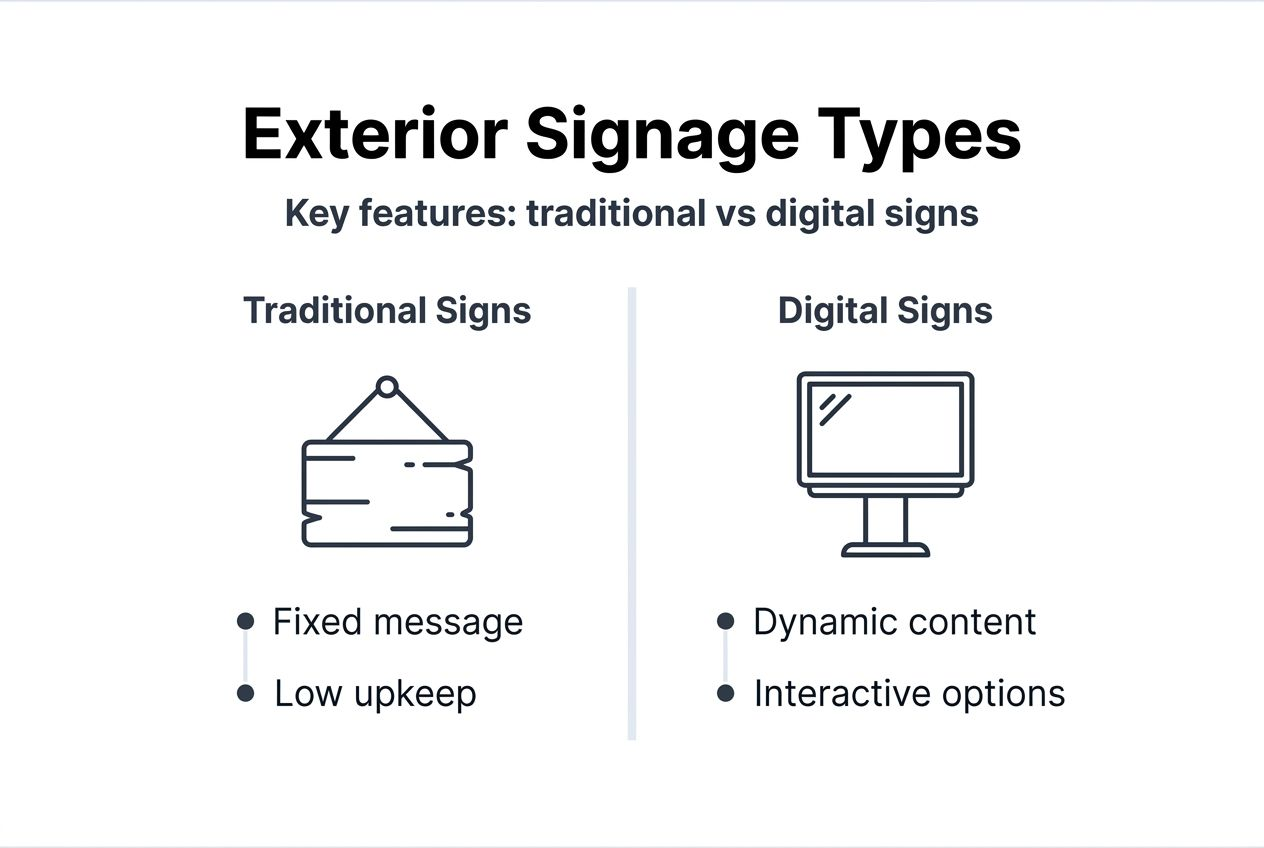
Traditional static signage excels at delivering consistent messaging with minimal maintenance. Costs remain predictable, and lifespan can exceed 10 years with proper care. However, updating content requires physical replacement, limiting responsiveness to promotions, seasonal campaigns, or real-time information needs.
Digital displays offer dynamic content scheduling, allowing you to show different messages throughout the day or respond instantly to weather, stock levels, or events. LED technology delivers brilliant visibility in sunlight whilst consuming less energy than older display types. Touchscreens and QR codes add interactivity, letting customers explore product details, check availability, or access exclusive offers.
Energy efficiency innovations make digital signage increasingly sustainable. Solar panels can power small to medium displays entirely off-grid, eliminating running costs and supporting green credentials. Motion sensors dim or activate screens only when pedestrians approach, reducing energy waste without compromising impact.
Pro Tip: Combine traditional and digital elements strategically by using permanent structural signage for brand identity whilst adding digital displays for time-sensitive promotions and interactive customer engagement.
| Feature | Traditional signage | Digital signage |
|---|---|---|
| Initial cost | Lower | Higher |
| Content flexibility | Fixed, requires replacement | Updated instantly via software |
| Typical lifespan | 10 to 15 years | 5 to 8 years |
| Energy consumption | None (unless illuminated) | Ongoing (offset by LED efficiency) |
| Maintenance | Minimal cleaning | Software updates, occasional repairs |
| Engagement potential | Static visual impact | Dynamic, interactive, time-scheduled |
Discover digital signage trends transforming UK retail environments. Explore comprehensive digital signage solutions and innovative digital signage solutions tailored to business objectives.
Sector-specific exterior signage applications and best practices
Different industries face unique signage challenges requiring tailored approaches that balance visibility, durability, regulatory compliance, and operational constraints.
Retail sector:
High street retailers compete intensely for attention in crowded shopping districts. Three-dimensional lettering with LED backlighting creates depth and remains visible after dark, extending effective trading hours. Window graphics complement fascia signs by showcasing products and promotions without cluttering primary brand messaging. Durable materials withstand constant exposure whilst maintaining crisp appearance that reflects product quality.
Construction industry:
Construction sites demand signage serving dual purposes: promoting the contractor’s brand and meeting health and safety obligations. Aluminium composite panels resist damage from dust, moisture, and accidental impacts common on active sites. Reflective safety icons ensure visibility in low light, protecting workers and visitors. Temporary yet professional appearance demonstrates competence to potential clients passing the site.
Film and television production:
Production companies need flexible signage installed and removed quickly without damaging locations. Lightweight modular systems mount securely but disassemble cleanly, crucial for shoots in rented or heritage buildings. Clear wayfinding signage manages crew access and controls public areas during filming. Professional appearance maintains production values in behind-the-scenes content and location photographs.
Best practices across sectors:
- Prioritise visibility: Position signs where target audiences naturally look, considering sightlines from roads, footpaths, and adjacent premises
- Respect context: Choose materials and designs complementing surrounding architecture and neighbourhood character
- Plan for maintenance: Select finishes resisting local environmental challenges like coastal salt spray or urban pollution
- Integrate lighting thoughtfully: Illuminate signs for 24-hour visibility without creating light pollution or disturbing neighbours
- Test readability: Verify text size and contrast work at typical viewing distances before final production
Learn strategies for designing retail signage that converts browsers into buyers. Explore sector-specific signage solutions addressing unique industry requirements.
Common misconceptions about exterior signage
Several persistent myths undermine signage effectiveness by causing businesses to underinvest or make poor material and design choices.
Myth: Signage is purely decorative and doesn’t influence customer behaviour.
Data proves otherwise. Over 76% of UK consumers base visit decisions on signage, making it a primary driver of foot traffic and sales. Well-designed exterior signage functions as a 24-hour salesperson working without breaks, reaching thousands of potential customers monthly at minimal ongoing cost.
Myth: Material choice is only about visual appeal.
Aesthetics matter, but durability and sustainability determine long-term value. A beautiful sign that fades within two years costs more than an initially higher-priced option lasting 12 years. UK weather variability demands materials proven to resist moisture, temperature extremes, and UV degradation without constant maintenance.
Myth: Digital signage will completely replace traditional formats.
Both formats serve distinct purposes. Traditional signage provides permanent brand presence and works continuously without power or connectivity. Digital displays excel at timely, interactive content but require ongoing energy and maintenance. Successful strategies combine both, using structural signage for core identity and digital elements for dynamic messaging.
Common pitfalls to avoid:
- Ignoring local regulations: Assuming you can install signage without checking planning requirements often leads to enforcement action
- Choosing cheap materials: False economy results in premature replacement, damaging brand image with shabby, faded signs
- Neglecting maintenance: Even durable signs need periodic cleaning and inspection to maintain professional appearance
- Poor visibility planning: Failing to consider viewing distances, angles, and lighting conditions reduces signage effectiveness dramatically
“Exterior signage represents one of the most cost-effective marketing investments available, delivering continuous brand exposure and customer attraction with minimal ongoing costs when properly specified and maintained.”
Installation and maintenance for longevity
Professional installation and consistent maintenance protect your signage investment whilst ensuring ongoing brand impact and regulatory compliance.
Installation and maintenance process:
- Site assessment: Survey mounting surfaces, verify structural capacity, identify electrical requirements, and confirm regulatory compliance before ordering materials.
- Professional installation: Engage qualified installers who understand UK building regulations, electrical safety standards, and proper weatherproofing techniques.
- Initial documentation: Photograph completed installation, record materials used, and file planning permissions and certificates for future reference.
- Establish maintenance schedule: Plan quarterly inspections and cleaning, with additional checks after severe weather events.
- Prompt repairs: Address damage immediately to prevent minor issues escalating into structural failures or safety hazards.
- Performance monitoring: Track customer feedback and foot traffic to assess signage effectiveness and justify future investments.
Regular maintenance extends signage lifespan by 20% to 30%, transforming a 10-year sign into one lasting 12 to 13 years. This dramatically improves return on investment whilst maintaining the professional appearance that supports premium brand positioning.
Cleaning removes pollutants, bird droppings, and grime that degrade finishes and reduce visibility. Inspections catch loose fixings, water infiltration, and electrical issues before they cause failures or safety risks. Timely repairs cost far less than emergency replacements whilst avoiding the reputational damage of shabby, neglected signage.
Pro Tip: Schedule seasonal checks especially after harsh winter weather in the UK, when freeze-thaw cycles can damage fixings and seals, ensuring problems are caught early.
Maintenance best practices:
- Use appropriate cleaning methods: Avoid abrasive materials or harsh chemicals that damage protective coatings and graphics
- Check electrical components: Verify LED drivers, transformers, and connections remain dry and properly insulated
- Inspect mounting hardware: Tighten fixings and replace corroded fasteners before they fail
- Monitor light output: Replace failing lamps or LEDs promptly to maintain even illumination
- Update graphics proactively: Refresh faded or outdated graphics before they harm brand perception
Ensure quality through professional signage installation services that meet UK standards and support long-term performance.
Explore expert exterior signage solutions with Pik Pik Pow
Transforming signage strategy from concept to reality requires expertise spanning design, materials, regulation, and installation. Pik Pik Pow delivers comprehensive exterior signage solutions tailored to retail, construction, and film industry requirements throughout the UK.
Our bespoke signage systems combine weather-resistant materials with striking design that elevates brand presence and withstands demanding UK conditions.
We integrate innovative digital signage alongside traditional formats, creating flexible solutions that adapt to changing business needs. Our team manages planning permissions, ensuring compliance whilst maximising impact. From initial consultation through installation and maintenance support, we deliver signage that drives customer engagement and supports long-term business growth. Complement your exterior presence with our wayfinding signage solutions that guide visitors seamlessly from street to destination.
Frequently asked questions
What is the best material for exterior signage in the UK?
Aluminium composite panels and treated acrylics with eco-friendly inks offer excellent durability and weather resistance for UK conditions. Recycled materials provide sustainable alternatives without compromising performance or longevity.
Do I need planning permission for exterior signage?
Advertisement consent is usually required in about 90% of cases across the UK, varying by location, signage size, and illumination. Always check with your local planning authority before installation to avoid enforcement action and costly removal. Detailed guidance on planning permission requirements helps navigate the approval process.
How can digital signage complement traditional exterior signs?
Digital signage offers dynamic content updates and interactivity that traditional formats cannot match, ideal for promotions and real-time information. Combining both approaches maximises impact whilst controlling costs, using permanent structural signage for brand identity and digital signage benefits for flexible messaging.
What maintenance is required to keep exterior signage effective?
Regular cleaning, seasonal inspections, and prompt repairs extend lifespan by 20% to 30%, protecting your investment and brand image. Professional installation from the start facilitates easier maintenance and ensures ongoing compliance with safety and planning requirements. Explore comprehensive signage maintenance tips for preserving long-term performance.