

Standing out in the crowded United Kingdom property market starts before visitors step inside—a property’s signage shapes perception, builds trust, and communicates value instantly. Developers and managing agents know that every entrance, corridor, and facade is an opportunity to express brand identity and quality. Investing in thoughtful, consistent signage creates not only a sense of place but also lasting impressions that drive tenant interest, strengthen branding, and support higher valuations.
Table of Contents
- Defining Signage’s Impact on Property Identity
- Signage Types and Their Branding Roles
- Design Elements Shaping Brand Perception
- Compliance with UK Signage Regulations
- Maximising Value and Avoiding Common Pitfalls
Key Takeaways
| Point | Details |
|---|---|
| Impact of Signage | Signage significantly influences property identity and visitor perception, creating recognisable brands and enhancing user experience. |
| Design Consistency | A cohesive signage strategy across properties boosts brand recognition and trust, while poor design can lead to negative impressions and reduced property value. |
| Regulatory Compliance | Adhering to signage regulations mitigates legal risks and ensures public safety, enhancing brand credibility and property reputation. |
| Strategic Signage Investment | Investing in quality signage leads to measurable improvements in tenant enquiries, lease rates, and overall property valuation. |
Defining Signage’s Impact on Property Identity
Signage shapes how people perceive and experience property. It communicates brand values, guides navigation, and builds immediate recognition. Signage affects spatial experience and property identity in measurable ways.
Physical signage reinforces the distinctiveness of a location. It’s not merely decorative—it builds sense of place and establishes character. When developers and managing agents invest in thoughtful signage, they’re creating visual anchors that help properties stand out in competitive markets.
How Signage Creates Property Identity
Property identity develops through consistent visual communication. Your signage serves as the primary touchpoint for first impressions, establishing expectations about quality, professionalism, and brand positioning.
Key ways signage defines property identity:
- Spatial clarity: Well-designed signage helps people navigate and understand property purposes
- Brand consistency: Repeated visual elements create recognition across multiple properties
- Cultural narrative: Signage can reflect local character and community values
- Market positioning: Professional signage signals premium or accessible positioning
Controlled signage environments foster positive evaluations and coherent property identity—essential for branding success.
The Perception Connection
Research shows that controlled signage environments enhance how people evaluate properties and commercial spaces. Chaotic or poorly maintained signage creates negative impressions, regardless of actual property quality.
Visitors form opinions within seconds of arrival. Your signage determines whether they perceive professionalism, trustworthiness, and value. This perception directly influences leasing decisions, tenant enquiries, and overall property performance.
Why Property Developers Should Care
For developers managing multiple sites, consistent signage creates recognisable portfolios. Tenants and investors recognise quality branding immediately. Property values and rental rates often improve when identity is clear and cohesive.
Signage also manages expectations about property standards. It tells potential occupants what they’re stepping into before they enter.
Pro tip: Document your signage strategy from planning stages—ensure every site element (fascias, wayfinding, entrance signage) reinforces your core brand identity consistently across your entire property portfolio.
Signage Types and Their Branding Roles
Different signage types serve distinct branding purposes. Each communicates specific messages and shapes how people interact with your property. Understanding these roles helps you create cohesive brand strategies across all physical spaces.
Signage functions beyond aesthetics—it guides behaviour, builds recognition, and reinforces brand values. Strategic use of multiple signage types ensures your property communicates clearly at every touchpoint.
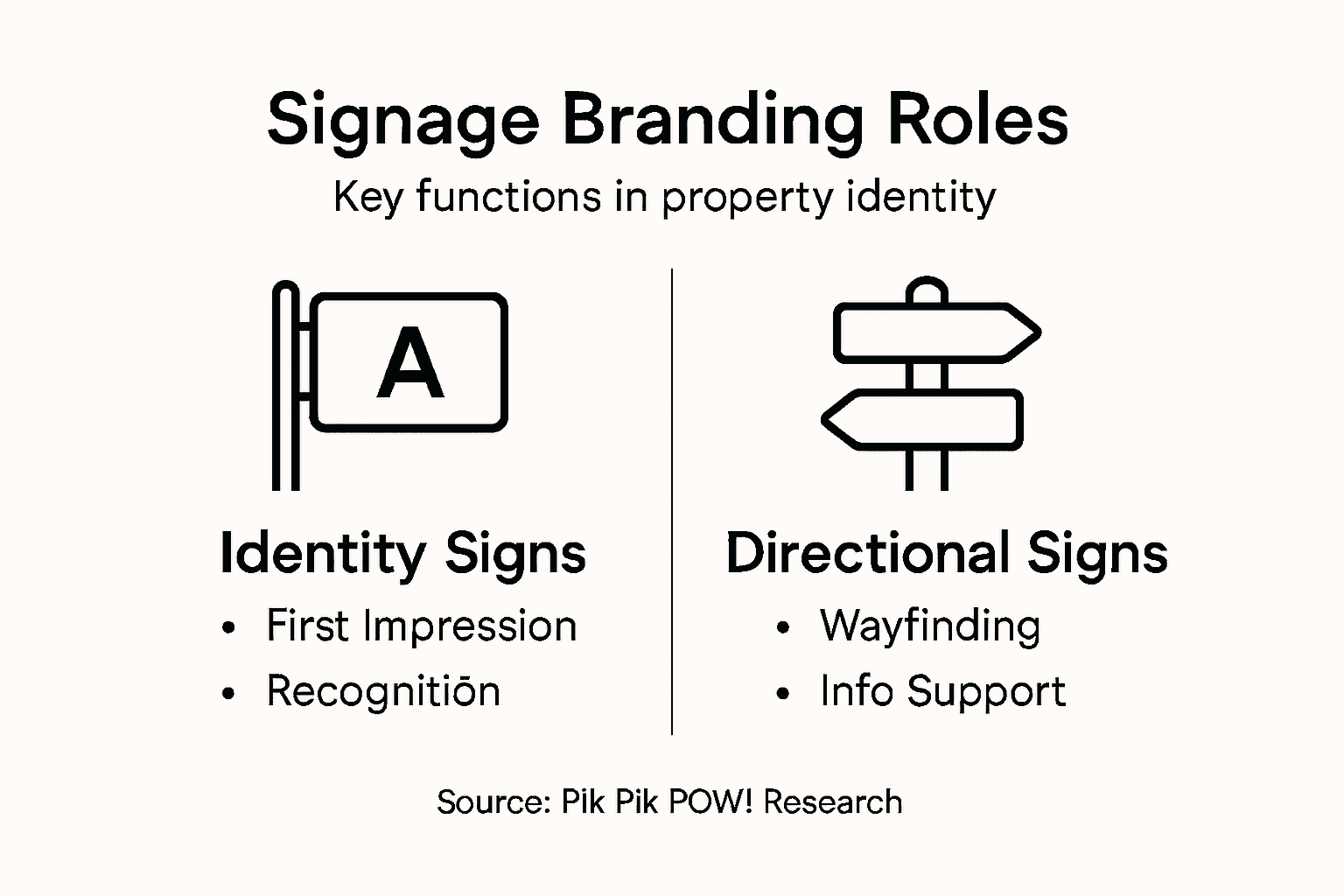
Core Signage Categories
Property signage falls into three functional categories. Each plays a specific role in brand communication and user experience.
Main signage types include:
- Identity signage: Establishes brand recognition and property ownership through logos, names, and visual markers
- Directional signage: Guides visitors through spaces, reducing confusion and improving property navigation
- Informational signage: Communicates rules, policies, amenities, and building features to occupants
- Promotional signage: Highlights special features, leasing opportunities, or tenant offerings
Various signage types serve distinct branding roles, from establishing recognition to influencing perceptions and behaviour. Each category carries specific communication objectives.
The following table summarises how different signage types contribute to overall property branding:
| Signage Type | Branding Role | Typical Placement |
|---|---|---|
| Identity signage | Drives brand recognition | Main entrance, facade |
| Directional signage | Guides navigation | Corridors, car parks |
| Informational signage | Explains rules and amenities | Lobbies, walls, lifts |
| Promotional signage | Highlights special offers | Windows, reception, outdoors |
Identity Signage: Your Brand’s First Statement
Identity signage communicates who you are instantly. Fascia signs, entrance signage, and building nameboards create immediate brand recognition.
This signage category accomplishes:
- Building recall among potential tenants and visitors
- Establishing professionalism and property credibility
- Creating visual consistency across multiple properties
- Supporting property valuation and marketability
Identity signage creates lasting first impressions—often determining whether visitors enter your property or pass by.
Directional and Informational Roles
Directional signage prevents frustration by clearly marking routes, car parks, and facility entrances. Informational signage communicates building standards, safety requirements, and available services.
These types enhance user experience significantly. They demonstrate professional property management and reinforce brand positioning as organised and visitor-friendly.
Wayfinding signage also supports brand consistency. When designed cohesively, advisory and directional signs communicate your brand values through clarity and attention to detail.
Strategic Integration Across Properties
Successful property branding uses all signage types together. Identity signage attracts attention, directional signage creates positive experiences, and informational signage builds trust through transparency.
Developers managing multiple sites benefit from consistent signage strategies. Standardised fonts, colours, and messaging across properties create recognisable portfolios that tenants and investors immediately trust.
Pro tip: Audit your entire signage portfolio quarterly—photograph each property’s entrance, directional, and informational signs to ensure consistency and identify maintenance or design updates needed before brand perception suffers.
Design Elements Shaping Brand Perception
Design choices influence how people perceive your property instantly. Colour, typography, spacing, and layout communicate brand values before anyone reads a single word. Strategic design decisions transform signage from functional to powerful branding tools.

Every design element serves a purpose. Poor design undermines your brand message, whilst cohesive design reinforces professionalism and trustworthiness across properties.
The Power of Colour and Typography
Colour creates immediate emotional responses. Bold colours attract attention; neutral tones convey sophistication. Your colour palette should reflect brand positioning and cultural context.
Typography shapes legibility and brand personality:
- Font choice: Communicates professionalism, creativity, or tradition
- Font size: Determines readability from distance and accessibility
- Weight variation: Creates visual hierarchy and guides attention
- Spacing: Improves clarity and prevents visual overwhelm
Design elements such as colour contrast and spacing directly influence legibility and user comprehension. Well-designed signage reflects property identity and facilitates clear communication.
Visual Identity and Brand Consistency
Consistent visual identity builds recognition across all properties. When your signage uses the same colour palette, typography, and layout principles, people instantly recognise your brand.
This consistency accomplishes critical outcomes:
- Creating recognisable brand portfolios across multiple sites
- Building trust through professional, polished appearances
- Increasing property recall and tenant enquiries
- Supporting premium positioning and rental rates
Cohesive visual identity tells tenants and investors your brand is deliberate, managed, and trustworthy.
Layout and Spatial Arrangement
How information is arranged influences perception. Clear hierarchy directs attention to critical messaging. Cluttered layouts create confusion and diminish brand credibility.
Proper spacing prevents visual fatigue. Balance between elements creates a sense of order. Asymmetrical or dynamic layouts can project innovation, whilst symmetrical arrangements convey stability and professionalism.
Designers must consider viewing distance and angles. Typography and visual identity elements require comprehensive consideration to positively influence how diverse audiences perceive your property’s brand.
Accessibility Through Design
Effective design serves all visitors. Sufficient contrast ratios ensure readability for people with vision impairments. Clear typography and adequate sizing benefit everyone, not just accessibility requirements.
Design inclusivity reflects brand values. Properties that prioritise accessible signage demonstrate consideration for all users, strengthening community trust and brand reputation.
Pro tip: Test your signage designs at actual viewing distances—photograph prototypes from the street, car park, and entrance points to ensure readability and impact before manufacturing, saving costly revisions and installation delays.
Compliance with UK Signage Regulations
UK signage regulations exist to protect public safety and maintain visual standards. Non-compliance results in enforcement action, fines, and reputational damage. Understanding these requirements protects your property investment and strengthens brand credibility.
Regulations vary by location, property type, and signage category. Local councils enforce planning and advertising regulations, whilst health and safety laws apply universally. Compliance demonstrates professionalism and trustworthiness to tenants and investors.
Key Regulatory Requirements
Property signage must meet multiple regulatory standards simultaneously. Planning permission, advertising regulations, and safety standards all apply depending on signage type and location.
Critical compliance areas include:
- Planning permission: Required for most external signage above certain sizes
- Advertisement regulations: Control what messaging can appear publicly
- Health and safety: Signage must not obstruct emergency exits or safety features
- Accessibility standards: Must comply with Equality Act requirements
- Building regulations: Installation methods must meet structural safety standards
Statutory requirements for design and placement ensure safety and compliance, protecting both public welfare and property reputation. Adherence prevents penalties and contributes to trustworthy brand image.
Planning Permission Essentials
Most external property signage requires planning permission. Size thresholds determine whether consent is needed—oversized or illuminated signs typically require formal applications. Avoiding this process invites enforcement notices and costly removal.
Local planning authorities assess applications based on visual impact and local character. Understanding your council’s criteria improves approval chances. Professional design that respects local context demonstrates good faith.
Ongoing Compliance Responsibilities
Compliance doesn’t end after installation. Regulations require ongoing maintenance and condition monitoring. Damaged, faded, or unsafe signage creates liability and undermines brand perception.
Regular audits identify compliance issues:
- Monthly visual inspections for damage or deterioration
- Quarterly documentation of signage condition
- Annual professional safety assessments
- Immediate rectification of defects
Non-compliance costs multiply—fines, removal orders, and reputational damage far exceed initial investment in proper compliance.
Professional Guidance and Support
Regulatory and compliance frameworks are crucial for successful property branding. Compliance protects property reputation and value whilst avoiding legal disputes. Professional signage partners understand local regulations and manage applications for you.
Developers managing multiple properties benefit from centralised compliance management. Consistent documentation and maintenance schedules prevent oversights across sites.
Pro tip: Create a signage compliance register for each property documenting planning permissions, installation dates, maintenance records, and next compliance review dates—this demonstrates due diligence to councils and protects against enforcement action if issues arise.
Maximising Value and Avoiding Common Pitfalls
Signage investment delivers measurable returns when executed strategically. Poor decisions waste budgets, damage brand perception, and create legal exposure. Understanding what works—and what fails—protects your investment and accelerates branding success.
The difference between thriving and struggling properties often comes down to signage quality and consistency. Properties with strategic signage command higher rental rates and attract quality tenants faster.
The Signage Clutter Trap
Crowded signage undermines professionalism. Multiple competing messages confuse visitors and dilute brand impact. Signage clutter and poor regulation reduce user satisfaction and diminish commercial success.
Common clutter mistakes include:
- Oversized or excessive promotional signage
- Mismatched styles and fonts across properties
- Competing messages without visual hierarchy
- Poor maintenance creating chaotic appearance
- Tenant signage without brand guidelines
Cohesive, controlled signage communicates strength. Fewer, better-designed signs outperform cluttered approaches every time. Strategic placement ensures impact without overwhelming spaces.
Below is a comparison of common signage design pitfalls and their effects on property value and perception:
| Pitfall | Impact on Brand Perception | Impact on Property Value |
|---|---|---|
| Cluttered messaging | Appears unprofessional | Reduces tenant interest |
| Poor visual consistency | Signals weak management | Lowers rental rates |
| Non-compliant signage | Damages brand reputation | Can lead to enforcement penalties |
| Outdated signage | Suggests neglect | Hampers property attractiveness |
Design Incongruence Costs Money
Signage that contradicts brand values damages perception immediately. Premium properties with budget signage appear untrustworthy. Budget properties with premium signage build credibility.
Design coherence across all properties creates recognisable portfolios. Mismatched approaches signal poor management to investors and tenants. Consistent investment in quality demonstrates commitment to brand positioning.
Strategic signage management maximises branding outcomes whilst poor regulation creates lasting brand damage.
Regulatory Shortcuts Create Expensive Problems
Skipping planning permission feels cost-effective initially. Enforcement notices, removal orders, and fines eliminate any savings instantly. Reputational damage compounds these costs through lost enquiries and reduced valuations.
Proactive compliance prevents these issues:
- Engage local councils early in design phases
- Budget for professional applications and approvals
- Document all permissions and compliance measures
- Plan maintenance schedules before installation
Avoiding compliance pitfalls requires careful planning and proactive regulatory engagement. Poor compliance challenges harm market position and brand equity significantly.
Maximising Return on Investment
Successful signage strategies balance impact, compliance, and consistency. Properties investing in quality, cohesive signage see measurable improvements in:
- Tenant enquiry volumes and quality
- Lease negotiation positions and rental rates
- Property valuations and investor interest
- Brand recognition across portfolios
Regular audits identify underperforming signage. Refreshing dated or damaged signs maintains brand perception. Strategic upgrades keep properties competitive as markets evolve.
Pro tip: Conduct annual signage audits comparing your properties against competitor properties in your area—photograph entrances, directional signs, and maintenance conditions to identify gaps, then prioritise high-visibility sites for strategic investment first.
Elevate Your Property Branding with Expert Signage Solutions
The article highlights critical challenges such as maintaining brand consistency, managing signage clutter, and ensuring compliance with UK signage regulations. If you are seeking to avoid poor visual consistency and regulatory pitfalls while creating a strong, recognisable property identity, specialised signage expertise is essential. Strategic use of identity, directional, and informational signage can transform first impressions and build tenant trust through clear, professional communication.
At Pik Pik POW!, we understand how impactful bespoke indoor and outdoor signage drives property branding success. Our design and signage services combine creative design with precision manufacturing to deliver high-quality, compliant signage that aligns perfectly with your brand values and market positioning.
Take control of your property’s visual narrative today. Boost tenant enquiries, enhance market positioning and maintain regulatory compliance with professionally crafted signage from Pik Pik POW!. Contact us now to ensure your property stands out for all the right reasons and start building a cohesive, trusted brand identity across your portfolio. Visit Pik Pik POW! to get started.
Frequently Asked Questions
What types of signage contribute to property branding success?
Different types of signage contribute to branding success, including identity signage for brand recognition, directional signage for navigation, informational signage for communicating rules and amenities, and promotional signage for highlighting special offers.
How does poor signage affect a property’s perceived value?
Poor or cluttered signage negatively affects the perceived value of a property by creating confusion and leading to negative first impressions, which can deter potential tenants and reduce overall attractiveness.
What design elements should be considered for effective property signage?
Key design elements include colour schemes that reflect brand personality, typography that ensures legibility, proper spacing for clarity, and visual hierarchy to guide attention effectively. Cohesive design across signage reinforces brand identity.
Why is compliance with signage regulations important for property developers?
Compliance with signage regulations is crucial as it protects public safety, avoids legal penalties, enhances brand credibility, and ensures the property meets local standards. Failing to comply can lead to fines and reputational damage.