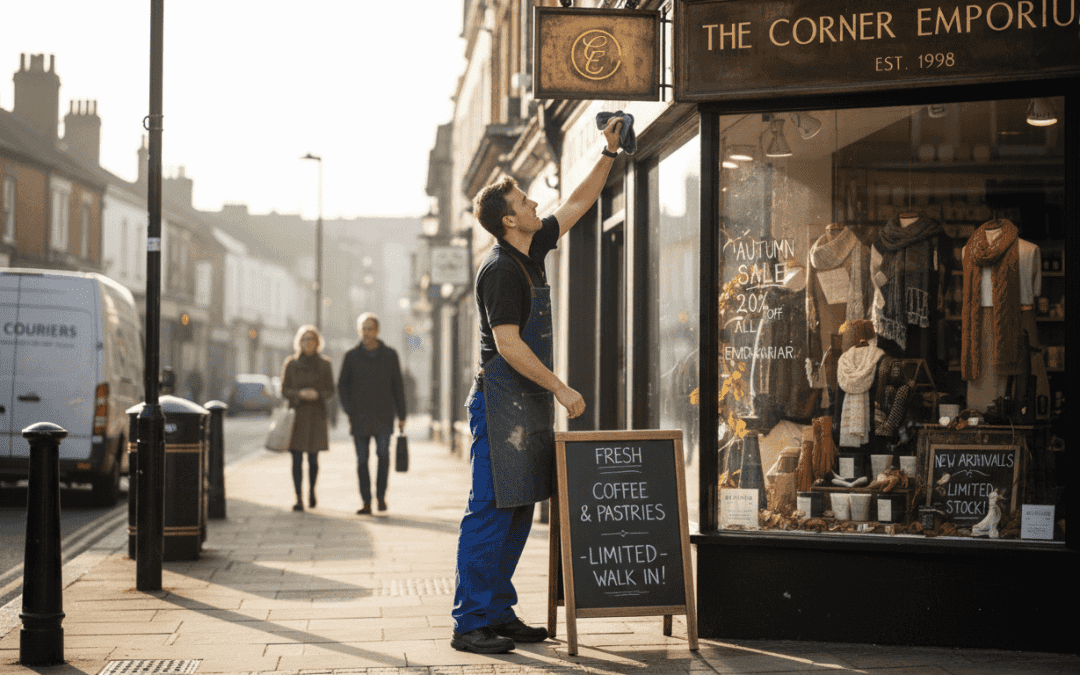
Creating a strong brand presence across multiple storefronts is a daily challenge for retail marketing managers. Customers form their opinion of your brand within seconds of seeing your signage, so every detail really matters. Signage is the physical expression of your visual identity, ensuring customers recognise and trust your brand wherever they shop. This guide highlights practical ways to align custom signage with your company’s personality, making every location work for your brand’s impact and consistency.
Table of Contents
- Defining Brand Identity Through Signage
- Essential Signage Types For Retail Success
- Design Principles That Build Brand Recognition
- Ensuring Consistency Across Multiple Locations
- Compliance, Safety, And Regulatory Obligations
Key Takeaways
| Point | Details |
|---|---|
| Brand Identity | Signage is crucial in representing a retail brand’s identity, reflecting its values through consistent visual elements across all locations. |
| Signage Consistency | Maintaining uniformity in signage design enhances customer trust and loyalty, making it vital for multi-location retailers. |
| Regulatory Compliance | Adhering to safety and advertising regulations is essential to avoid legal liabilities and assure customer safety. |
| Effective Design Principles | Clarity, consistency, and distinctiveness in signage are key to making a memorable brand impression and guiding customer navigation. |
Defining Brand Identity Through Signage
Your brand identity is more than a logo or colour scheme. It’s the complete visual and emotional experience customers encounter when they interact with your retail chain. Signage serves as the physical embodiment of this identity, translating abstract brand values into tangible, recognisable elements that shoppers see every single day.
Brand identity encompasses the entire visual language system your company uses to communicate its personality and values. Every storefront sign, window display, and directional marker reinforces who you are as a retailer. For marketing managers overseeing multiple locations, consistency across these visual elements becomes critical to building customer recognition and trust.
Consider what happens when a customer walks past your first store. They notice your fascia sign, spot your window graphics, and recognise your colour palette. When they encounter your second location across town, they should experience the exact same visual impression. That consistency is what transforms individual shopfronts into a cohesive brand presence.
How Signage Communicates Brand Personality
Signage doesn’t just display information. It tells your brand’s story through design choices, typography, materials, and placement. The way text appears, the colours you select, and even the quality of materials used all convey messages about your brand’s values and positioning.
A luxury retail chain might use premium materials and minimalist designs to communicate exclusivity. A family-oriented business might employ bright colours and playful typography to signal approachability. These aren’t random choices. They’re deliberate design decisions that align signage with brand DNA.
Structured brand management practices ensure that signage reflects your brand’s core personality across every location. Without this consistency, customers become confused about what your brand actually represents.
Key Elements That Define Brand Through Signage
Multiple signage components work together to establish clear brand identity:
- Colour schemes that appear consistently across all signs and materials
- Typography choices that reflect your brand’s tone and positioning
- Logo placement and sizing standards that maintain brand recognition
- Material quality that communicates your brand’s value proposition
- Design style (modern, traditional, minimalist, bold) that aligns with brand personality
- Messaging tone that matches how your brand speaks to customers
When designing impactful signage, each element works together to create a unified brand experience. A single inconsistency between locations can undermine the entire visual identity you’re trying to establish.
Effective signage transforms abstract brand identity into something customers can see, recognise, and remember across every interaction with your retail chain.
Consistency as a Strategic Tool
For retail chains with multiple storefronts, signage consistency directly impacts customer loyalty. When customers see your brand presented identically across different locations, it reinforces legitimacy and professionalism. They’re more likely to trust a chain that looks cohesive than one where each store appears different.

This consistency extends beyond aesthetics. It includes message hierarchy, information architecture, and the overall visual experience. A customer should navigate your signage intuitively at any location because the system remains predictable and familiar.
Managing this across multiple sites requires careful planning and clear brand guidelines that designers and installers follow religiously.
Pro tip: Create detailed signage specifications for each location type (high street, shopping centre, retail park) so installers know exactly how your brand should appear regardless of storefront size or layout.
Essential Signage Types for Retail Success
Not all signage serves the same purpose. Your retail chain needs different sign types working together to guide customers, reinforce branding, and communicate essential information. Understanding which signage types matter most helps you allocate your budget effectively and create a cohesive customer experience across all locations.
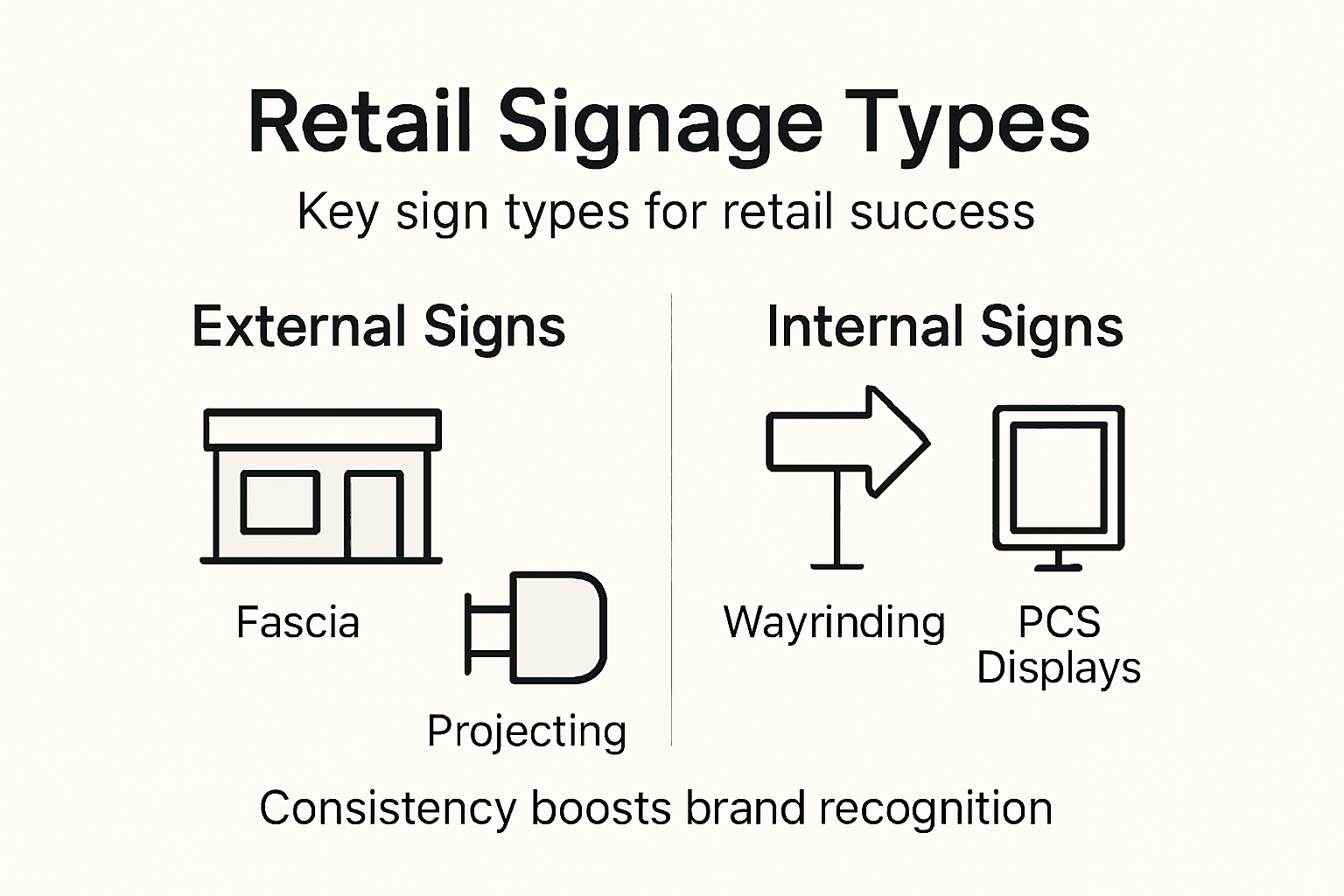
Essential signage categories include external and internal families designed for distinct functions. External signage draws customers in and establishes first impressions. Internal signage guides them through your store and reinforces key messages. Each type plays a specific role in your overall brand strategy.
For retail chains with multiple locations, consistency across these signage types becomes even more critical. A customer should recognise your brand instantly whether they’re looking at a high street shop, shopping centre unit, or retail park location.
External Signage That Drives Footfall
Your external signage is your loudest voice. It competes for attention on busy streets, attracts passing customers, and establishes your brand presence before anyone steps through your door.
Key external signage types include:
- Fascia signs (the main storefront sign displaying your business name and logo)
- Window graphics and promotional displays that showcase products or current offers
- Entrance signs and threshold markers that guide customers into the store
- Monolith signs or freestanding structures for locations without traditional shopfronts
- Directional signs pointing customers to your store from main thoroughfares
- Gateway signs announcing your brand presence at key entry points
These signs must be visible from distance, clearly readable, and aligned with your brand identity. Poor external signage loses potential customers before they ever reach your door. You want people to spot your store instinctively.
Internal Signage That Enhances Navigation
Inside your store, signage guides customers and influences their shopping behaviour. Internal signs reduce confusion, help customers find what they need quickly, and create opportunities for additional sales.
Essential internal signage types work together to create smooth navigation:
- Directional signs guiding customers to departments or sections
- Product category signs identifying merchandise areas clearly
- Promotional signage highlighting special offers or new arrivals
- Regulatory and safety signs meeting legal requirements
- Reception or information signs directing customers to staff
- Vinyls and wall graphics reinforcing brand personality throughout the space
Clear, consistent signage types enhance customer experience and reduce navigation frustration. When customers move through your store without confusion, they spend more time browsing and typically purchase more.
The following table summarises how different retail signage types contribute to customer experience and brand value:
| Signage Type | Primary Purpose | Ideal Location | Brand Value Impact |
|---|---|---|---|
| Fascia sign | Brand visibility and recognition | Storefront | Strengthens first impression |
| Window graphics | Promote offers and style | Street-facing windows | Drives customer curiosity |
| Directional signage | Customer navigation | Store interior/exterior | Reduces confusion, aids flow |
| Digital displays | Dynamic messaging and updates | Entry, key departments | Modern brand perception |
| Regulatory signage | Safety and legal compliance | Throughout premises | Demonstrates responsibility |
| Wall graphics | Reinforce brand personality | Feature walls, corridors | Enhances store ambience |
Digital and Interactive Signage
Modern retail chains increasingly use digital displays for dynamic content. These signs adapt quickly to promotions, seasonal campaigns, or real-time information without replacement costs.
Digital signage offers flexibility that static signs cannot match. You can update messages across all locations simultaneously, test promotional messaging, and respond to sales trends immediately.
The most effective retail chains combine traditional external signage for brand recognition with internal signage systems that guide customers seamlessly through the store experience.
Selecting Signage Types for Your Chain
Choose signage types based on your store format, customer journey, and brand positioning. A premium retailer needs different signage than a discount chain. A flagship store needs more comprehensive internal signage than a small concession unit.
Start by mapping your customer’s journey from street to checkout. Where do they need guidance? Where do promotional messages matter most? Where should your brand personality shine through? Your signage strategy should address each of these moments.
Pro tip: Audit your current signage across 3-5 locations to identify inconsistencies, then create a standardised signage specification document that all new locations must follow, reducing design time and installation costs.
Design Principles That Build Brand Recognition
Great signage design isn’t about being flashy. It’s about creating visual elements so consistent and distinctive that customers recognise your brand instantly, whether they’re walking past your high street location or browsing your shopping centre store.
Effective design principles focus on clarity, consistency, and distinctiveness. These three elements work together to cement your brand in customers’ minds. When applied to signage, they transform casual shoppers into brand-loyal customers who actively seek out your stores.
Your design choices communicate messages faster than words. The typeface you select, the colours you use, and how you arrange elements all send signals about your brand’s personality and values.
Start with Clarity and User Needs
Customers should understand your signage instantly. No confusion, no squinting, no guesswork. Starting with user needs ensures your signage speaks directly to what your customers actually want to know.
Clear signage answers immediate questions:
- Is this the right store for me?
- Where do I find what I’m looking for?
- What’s on offer right now?
- How do I get in?
When signage fails at clarity, customers move to competitors. A fascia sign that’s hard to read loses footfall. A directory inside your store that confuses navigation frustrates shoppers. Clarity directly impacts your bottom line.
Consistency That Builds Recognition
Consistency doesn’t mean uniformity. Your flagship store can look different from your concession unit, but both must feel unmistakably yours. Consistency is about reliable visual patterns that customers learn to recognise and trust.
Consistent elements across your chain include:
- Logo placement and sizing standards
- Colour palette used in all signage
- Typography choices (fonts and hierarchy)
- Material finishes and quality levels
- Brand messaging tone and language
- Design proportions and spacing
When a customer sees your colour scheme, they should think of your brand automatically. This recognition becomes a competitive advantage that takes months to build but only moments to lose through inconsistency.
Distinctiveness That Prevents Confusion
Your signage must stand apart from competitors. This isn’t about being louder or brasher. It’s about being unmistakably yours through deliberate design choices that reflect your brand’s unique identity.
Consistent and distinctive visual elements protect your brand identity legally and commercially. Trademark protection reinforces that your design system is uniquely yours. When customers see your specific combination of colours, logos, and design elements, they associate it exclusively with your brand.
The most recognisable retail brands succeed because their signage design principles remain constant across every location, allowing customers to identify them instantly.
Applying Design Principles to Signage
Translate these principles into concrete design decisions. Choose colours that feel uniquely yours and use them consistently. Select a typeface that matches your brand’s personality and apply it across all signage. Establish clear hierarchy so the most important information catches attention first.
Every decision should answer: Does this reinforce our brand identity or dilute it? If you’re unsure, it probably dilutes it. Consistency is earned through deliberate choices, not accident.
Pro tip: Create a detailed brand guidelines document specifying exact Pantone colour codes, approved typefaces, logo sizing, and design spacing rules, then require all designers and installers to follow it precisely across every location.
Ensuring Consistency Across Multiple Locations
Managing signage across multiple retail locations feels like herding cats. Each store has different dimensions, lighting conditions, and architectural constraints. Yet customers expect your brand to look identical everywhere. This tension between flexibility and consistency is where most retail chains struggle.
The solution isn’t rigid uniformity. It’s structured flexibility through clear guidelines that everyone follows. Maintaining brand consistency involves establishing clear brand guidelines and training teams uniformly across all locations. When your staff, designers, and installers understand the non-negotiables, they can adapt within boundaries without compromising brand identity.
Without consistency systems, your second store looks slightly different from your first, your fifth store drifts further, and by your tenth location, customers aren’t sure if they’re walking into your brand or a completely different company.
Create Comprehensive Brand Guidelines
Brand guidelines are your consistency rulebook. They specify exactly how your signage should appear across every location. Think of them as instructions that leave room for sensible adaptation, not random interpretation.
Your guidelines must document:
- Logo size, placement, and minimum clearance on fascia signs
- Exact Pantone colour codes (not just “blue”)
- Approved typefaces and how to use them
- Sign material specifications (aluminium, vinyl, illumination type)
- Spacing and proportions between elements
- How to adapt designs for different storefront widths
- Quality standards for installation and finishes
Without these specifics, each designer makes different assumptions. One person thinks your logo should be large and bold. Another thinks it should be subtle. One chooses a similar-but-different blue because the exact colour wasn’t specified. Multiply this across ten locations and your brand splinters.
Centralise Design Approval and Resources
One approver prevents drift. Having a single person or team responsible for sign design across all locations ensures consistency. This doesn’t mean micromanaging every detail. It means one person checks every design against your guidelines before it goes to print.
Centralised resources speed up the process. Keep brand assets (logos, approved layouts, colour files) in one accessible location. When a new store needs signage, designers pull from the approved library rather than recreating elements from scratch. This reduces errors and installation delays.
Consider using project management tools or shared design platforms where all team members access the same files, preventing outdated versions from being used.
Train Installation Teams Thoroughly
Even perfect designs fail if installers don’t understand the standards. Installation teams need training on brand guidelines specific to their role. They should know why spacing matters, why colour accuracy matters, and what checks they should perform before sign completion.
Visual training materials work better than written documents. Show photos of correct installations and common mistakes side by side. Create installation checklists that teams must complete and sign off on.
Consistency across multiple locations isn’t about uniformity; it’s about reliable visual patterns that customers learn to recognise and trust wherever they encounter your brand.
Monitor and Audit Regularly
Regular audits catch inconsistencies before they become widespread problems. Visit locations quarterly to photograph signage and compare it against your guidelines. Document any deviations and address them immediately.
Photographic audits build a visual record of how your brand looks across locations. Over time, this reveals which guidelines are being missed most often. That’s where you need clearer instructions or additional training.
Pro tip: Assign someone on your team to visit 2-3 locations monthly with a checklist and camera, taking photos of every sign and comparing them against your brand guidelines document, then report inconsistencies to your design team for correction.
Compliance, Safety, and Regulatory Obligations
Your signage isn’t just a branding opportunity. It’s a legal responsibility. UK retail chains must comply with multiple regulations governing safety, accessibility, planning permissions, and advertising standards. Overlooking these obligations creates liability risks, potential fines, and damage to your reputation.
Compliance requirements vary depending on your signage type, location, and what information you’re displaying. A fascia sign needs planning permission in some areas. Safety signage must meet specific standards. Illuminated signs have electrical safety requirements. Understanding what applies to your business prevents costly mistakes and keeps customers safe.
Think of compliance as the foundation supporting your branding efforts. Without it, even the most brilliant signage design becomes a liability.
To clarify the regulatory requirements for retail signage in the UK, see this reference table:
| Compliance Area | Key Requirement | Risk if Ignored |
|---|---|---|
| Planning permission | Local authority approval needed | Fines, removal order |
| Safety regulations | Display required HSE signs | Liability in accidents |
| Accessibility | High contrast, clear fonts | Discrimination claims |
| Fire safety | Illuminated exit signs | Breach of fire code |
| Advertising rules | Honest, clear promotional claims | Legal action, fines |
Planning Permissions and Local Authority Requirements
Most external signage requires planning permission. This varies by local authority, but generally fascia signs, projecting signs, and illuminated displays need approval. Some councils are stricter than others. What’s allowed on a high street might be prohibited in a conservation area.
Before commissioning any external signage, contact your local planning authority. They’ll tell you what you need and what’s prohibited. Proceeding without permission can result in enforcement notices requiring removal or significant costs to make signage compliant.
Internal signage typically doesn’t need planning permission, but building regulations may apply if you’re installing permanent fixtures.
Health and Safety Compliance in Retail
Retailers must display appropriate safety and informational signs to manage common risks and meet statutory obligations. Health and Safety Executive (HSE) guidance specifies what signs are required and where they must appear.
Mandatory safety signage includes:
- Emergency exit signs and evacuation route markers
- Fire safety signs (extinguisher locations, assembly points)
- Slip and trip hazard warnings
- First aid location signs
- Electrical hazard warnings
- Staff-only area restrictions
- Maximum occupancy signs where required
These signs aren’t optional extras. They’re legal requirements that protect staff and customers whilst demonstrating your commitment to safety.
Accessibility and Inclusive Design Standards
Accessibility matters legally and morally. Signage must be readable for people with visual impairments, hearing difficulties, or cognitive disabilities. This includes appropriate contrast ratios, font sizes, and pictograms alongside text.
UK businesses must adhere to regulations governing accessibility requirements under the Equality Act 2010. Inaccessible signage can result in discrimination claims and reputational damage.
Design with accessibility from the start rather than retrofitting later. Clear, high-contrast signage with sans-serif fonts benefits everyone, not just those with specific needs.
Fire Safety and Building Regulations
Fire safety signage is non-negotiable. All exit routes must have clearly illuminated emergency exit signs visible from any point in the building. Exit signs must meet specific luminance and visibility standards.
If you’re installing permanent signage in your store, building regulations may require compliance with fire safety standards. Certain materials, adhesives, and installation methods have restrictions based on fire performance ratings.
Compliance with safety and regulatory obligations protects your customers, your staff, and your business from legal liability whilst building customer trust in your brand.
Advertising Standards and Consumer Protection
Any promotional signage claiming product benefits must comply with advertising standards. Misleading claims, false price comparisons, or unsupported health claims violate Consumer Protection from Unfair Trading Regulations.
Be particularly careful with percentage discount claims. “50% off” must be clearly defined with original prices visible. Vague claims like “huge savings” without specifics can breach regulations.
Pro tip: Before launching any new signage campaign, have your legal or compliance team review promotional claims and contact your local planning authority about permissions, ensuring you start with a clean compliance slate rather than discovering issues after installation.
Elevate Your Retail Brand Identity with Expert Signage Solutions
Creating a consistent, clear, and distinctive brand presence across multiple retail locations is a challenge many retail chains face. From maintaining colour schemes and typography to ensuring compliance and delivering a seamless customer journey, the details matter. Your signage is not just a visual element but a strategic tool that shapes recognition and loyalty. At Pik Pik POW!, we understand these critical needs and specialise in bespoke indoor and outdoor signage solutions crafted to embody your brand identity flawlessly.
Explore our expert range of shop signage and interior signage services designed to deliver impactful, consistent branding throughout your retail chain. Act now to transform your stores with signage that tells your unique story every time a customer approaches. Visit Pik Pik POW! today and take the first step towards signage that truly elevates your brand.
Frequently Asked Questions
How does signage influence brand identity in retail chains?
Signage communicates a brand’s personality through design, colour, typography, and material quality. It creates a consistent visual language that helps customers recognise and trust the brand across different locations.
What are key elements of effective signage in reinforcing brand identity?
Important elements include colour schemes, typography choices, logo placement, material quality, design style, and messaging tone that together create a unified brand experience and prevent confusion amongst consumers.
Why is consistency in signage important for retail chains?
Consistency in signage across multiple locations enhances customer loyalty and builds trust. It ensures that customers recognise the brand instantly, making navigation and product recognition easier, ultimately leading to increased sales.
What are essential types of signage to consider for a retail chain?
Essential types include external signage like fascia signs and window graphics, and internal signage such as directional signs and promotional displays. Each plays a critical role in guiding customers and reinforcing brand messaging effectively.