
Every retail manager understands the challenge of turning a busy store into a space where customers feel both guided and inspired. Signage is far more than decoration, as effective design can transform routine shopping into memorable brand interaction. Consistent branding through visual cues, such as logo placement and colour schemes, directly strengthens brand visibility while improving navigation and user experience. Explore practical strategies and design concepts proven to boost recognition and engagement across demanding retail environments.
Table of Contents
- What Is Signage Design And Why It Matters
- Types Of Signage Design In UK Retail
- Core Elements For Effective Signage Design
- Brand Visibility And Customer Engagement
- Legal And Regulatory Considerations For Signage
- Common Pitfalls In Signage Design To Avoid
Key Takeaways
| Point | Details |
|---|---|
| Importance of Signage Design | Signage design is crucial for effective visual communication, enhancing brand identity and user experience. |
| Key Components | Effective signage should prioritise clarity, readability, and brand alignment through consistent design elements. |
| Material Selection | Choosing the right materials is essential for durability and visual appeal, tailored to the specific environment. |
| Legal Compliance | Adhering to signage regulations ensures safety, visibility, and public compliance across various environments. |
What Is Signage Design and Why It Matters
Signage design is a strategic visual communication discipline that combines aesthetics, functionality, and brand identity to create meaningful graphical representations across physical spaces. At its core, signage design transforms spaces by providing clear, compelling information while simultaneously expressing an organisation’s visual personality.
The fundamental purpose of signage design extends far beyond simple directional guidance. Modern signage serves multiple critical functions:
- Communicating brand identity and values
- Enhancing spatial navigation and user experience
- Providing essential wayfinding information
- Creating visual interest and engagement
- Supporting architectural and environmental aesthetics
Professional wayfinding and signage design significantly impacts how people interact with indoor and outdoor environments. Effective design considers multiple elements like colour psychology, typography, iconography, and spatial context to create intuitive visual communication systems.
Universities like University College London demonstrate the strategic importance of consistent signage. Their comprehensive signage manual emphasises integrating brand elements such as logos, colour palettes, and typefaces to create a cohesive visual identity that supports recognition and usability across diverse building types.
Key Components of Effective Signage Design
- Clear, legible typography
- Consistent colour schemes
- Strategic placement
- Universal accessibility
- Brand alignment
Pro tip: Invest time in understanding your specific environmental context and target audience when designing signage to ensure maximum effectiveness and engagement.
Types of Signage Design in UK Retail
The UK retail landscape encompasses a diverse range of signage design types that serve critical communication and branding purposes. Signage technicians work with multiple categories of visual communication systems, each tailored to specific environmental and marketing requirements.
Retail signage can be broadly categorised into several key types:
- Vehicle Signage: Includes full vehicle wraps and partial graphics
- Building Signage: Encompasses entry/exit signs, fascia signs, and window displays
- Directional Signage: Wayfinding signs within retail spaces
- Promotional Signage: Temporary displays for marketing campaigns
- Regulatory Signage: Health and safety information displays
Each signage type requires careful consideration of materials, visibility, and regulatory compliance. For instance, signs may be constructed from wood, vinyl, plastics, metal, glass, or composite materials, depending on the specific application and environmental conditions.
To better understand signage design applications, here is a comparison of key signage types used in UK retail environments:
| Signage Type | Common Location | Business Impact |
|---|---|---|
| Vehicle Signage | Company vehicles | Increases brand exposure |
| Building Signage | Retail façades | Improves storefront identity |
| Directional Signage | Store interiors | Enhances customer flow |
| Promotional Signage | Promotional spaces | Drives specific offers |
| Regulatory Signage | Entrances and exits | Ensures legal compliance |
Regulatory Considerations
Outdoor advertisements in retail spaces must adhere to strict governmental guidelines. These regulations cover illuminated and non-illuminated signs, addressing aspects like placement, size, and visual impact to ensure public safety and aesthetic standards.

Signage Design Material Options
The table below summarises common signage materials and key factors to consider when selecting them:
| Material | Durability | Typical Usage |
|---|---|---|
| Aluminium composite panel | High (weatherproof) | External shop signs |
| Acrylic or polycarbonate | Good (versatile) | Illuminated or 3D displays |
| Printed vinyl | Medium (flexible) | Vehicle wraps, promotional use |
| LED illuminated systems | Long-lasting | Night visibility, branding |
| Wood or metal framework | Robust (premium) | Feature walls, heritage style |
- Aluminium composite panels
- Acrylic and polycarbonate
- Printed vinyl
- Illuminated LED systems
- Wooden and metal frameworks
Pro tip: Always consider the specific environmental context and brand identity when selecting signage materials and design approaches.
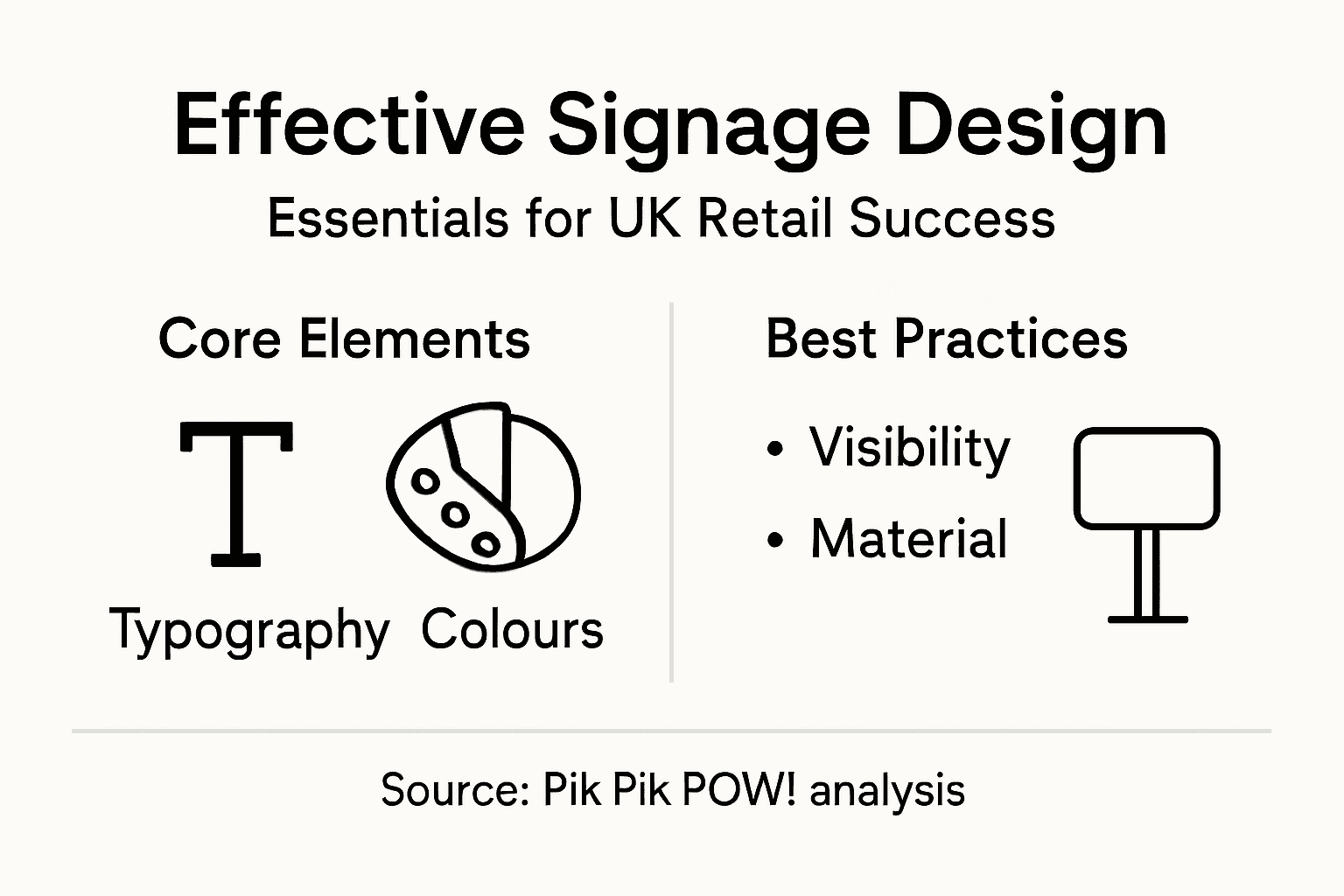
Core Elements for Effective Signage Design
Signage design represents a complex visual communication strategy that goes far beyond simple information display. Comprehensive signage systems require careful integration of multiple design elements to create a cohesive and impactful brand experience.
The fundamental core elements of effective signage design include:
- Visual Consistency: Maintaining uniform brand colours, typography, and graphic styles
- Readability: Ensuring clear, legible text and symbols
- Placement Strategy: Strategic positioning for maximum visibility
- Material Selection: Choosing appropriate substrates for durability
- Regulatory Compliance: Adhering to safety and accessibility standards
Colour psychology plays a crucial role in signage effectiveness. High-contrast colour combinations enhance readability and draw attention, while maintaining brand identity. Typography selection is equally critical, with font choices directly impacting comprehension and visual appeal.
Key Design Considerations
Professional signage design demands meticulous attention to technical and aesthetic details. Signage guidelines from leading institutions emphasise the importance of:
- Precise colour matching
- Consistent logo usage
- Appropriate font sizes
- Clear hierarchical information presentation
- Seamless integration with architectural environments
Pro tip: Conduct thorough user testing to validate signage design effectiveness across different lighting conditions and viewing distances.
Brand Visibility and Customer Engagement
Brand visibility represents a critical strategic objective for businesses seeking meaningful customer connections. Research on employer brand communications reveals how signage functions as a powerful medium for shaping consumer perceptions and reinforcing brand identity.
Effective brand engagement through signage involves multiple strategic approaches:
- Creating visual narratives that resonate with target audiences
- Developing consistent brand messaging across physical spaces
- Utilising colour psychology to evoke emotional responses
- Designing intuitive, memorable visual experiences
- Communicating brand values through design elements
Signage serves as more than a mere directional tool. It acts as a silent communicator, transmitting complex brand stories through strategic visual design. Colour selection, typography, and spatial placement work together to create immersive brand experiences that connect with customers on both rational and emotional levels.
Strategic Brand Communication Elements
Successful brand engagement requires a holistic approach that considers:
- Emotional resonance
- Visual consistency
- Clarity of messaging
- Cultural relevance
- Immediate visual impact
Pro tip: Conduct regular customer perception audits to ensure your signage design continues to effectively communicate your brand’s evolving narrative and values.
Legal and Regulatory Considerations for Signage
Signage regulations form a critical framework governing visual communication across various UK environments. UK legislation establishes comprehensive signage standards that businesses must carefully navigate to ensure legal compliance and public safety.
Key legal considerations encompass multiple regulatory domains:
- Health and safety requirements
- Planning and advertising controls
- Accessibility standards
- Construction site regulations
- Public space usage guidelines
The Health and Safety (Safety Signs and Signals) Regulations 1996 provide specific mandates for signage design and placement. These regulations demand that signs be clear, durable, and positioned to maximise visibility and understanding. Construction design regulations further emphasise risk management through precise signage implementation.
Regulatory Compliance Checklist
Businesses must ensure their signage meets these critical legal standards:
- Conform to official safety colour codes
- Maintain appropriate sign dimensions
- Ensure clear, legible typography
- Implement consistent placement protocols
- Update signs to reflect current regulations
Pro tip: Consult with legal and safety experts annually to verify your signage remains fully compliant with the latest regulatory requirements.
Common Pitfalls in Signage Design to Avoid
Signage design requires meticulous attention to detail to prevent critical communication failures. Health and safety guidelines highlight common design pitfalls that can significantly compromise visual communication effectiveness.
The most prevalent design mistakes include:
- Overcrowding visual spaces
- Using inconsistent typography
- Neglecting colour contrast
- Ignoring placement ergonomics
- Failing to maintain sign quality
Visual clutter represents a substantial barrier to effective communication. When signs become dense with information, they paradoxically reduce comprehension and user engagement. Wayfinding frameworks emphasise the importance of clarity and strategic information presentation.
Critical Design Error Prevention
Signage designers must focus on:
- Simplifying message complexity
- Ensuring high readability
- Maintaining consistent visual language
- Prioritising critical information
- Implementing regular design audits
Pro tip: Conduct user testing and gather feedback to continuously refine your signage design approach and eliminate potential communication barriers.
Elevate Your Brand Impact with Expert Signage Design
The article highlights key challenges such as maintaining visual consistency, selecting the right materials, and ensuring regulatory compliance to boost UK brand visibility through signage design. If you want to avoid common pitfalls like overcrowded messages and ineffective placement, understanding the core elements of readability, colour psychology, and strategic positioning is essential.
At Pik Pik POW!, we specialise in addressing these challenges by combining strong design expertise with precision manufacturing to deliver bespoke indoor and outdoor signage solutions. Whether you need to enhance your retail shopfront or create impactful vehicle graphics, our solutions are tailored to communicate your brand values clearly and memorably across all environments.
Take control of your brand’s visual narrative with our comprehensive signage services at Pik Pik POW!. Discover how precision craftsmanship and strategic design can transform your space today.
Experience the power of professional signage design firsthand.
Ready to boost your brand’s presence with expertly crafted signage? Visit Pik Pik POW! now and start your journey towards standout brand visibility and customer engagement.
Frequently Asked Questions
What are the key components of effective signage design?
Effective signage design includes key components such as clear, legible typography, consistent colour schemes, strategic placement, universal accessibility, and brand alignment. These elements work together to create impactful visual communication.
How does colour psychology influence signage design?
Colour psychology significantly affects how signage is perceived. High-contrast colour combinations enhance readability and attract attention, while specific colours can evoke emotional responses and align with brand identity, making the design more engaging.
What types of signage materials are commonly used in retail?
Common signage materials in retail include aluminium composite panels for external signs, acrylic or polycarbonate for illuminated displays, printed vinyl for vehicle wraps, and durable wood or metal for premium feature walls. Each material serves different purposes based on durability and visual impact.
What are some common pitfalls to avoid in signage design?
Common pitfalls in signage design include overcrowding visual spaces with too much information, using inconsistent typography, neglecting colour contrast, ignoring strategic placement, and failing to maintain the quality of signs. These mistakes can hinder effective communication and user engagement.