
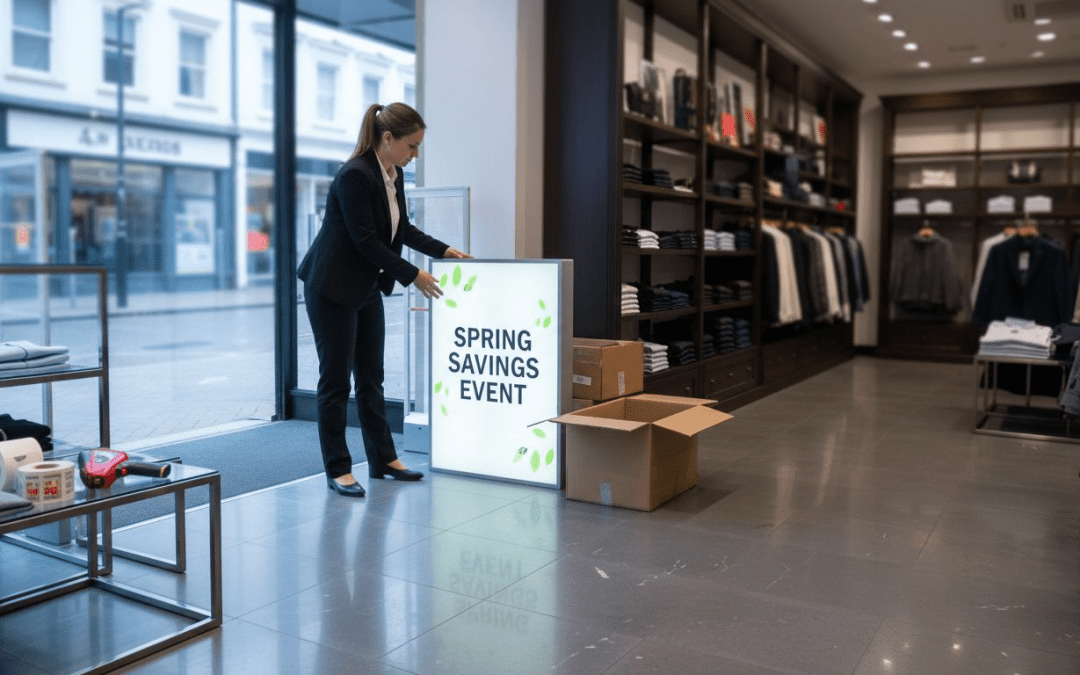
Selecting the right indoor signage for your UK retail store can feel overwhelming. With countless options varying in cost, durability, and visibility impact, marketing and brand managers need clear guidance to make informed choices. This article explores six practical indoor signage examples backed by performance data, helping you match solutions to your brand identity, budget constraints, and customer experience goals while navigating the evolving retail landscape of 2026.
Table of Contents
- How to Choose Indoor Signage: Key Selection Criteria
- Example 1: Backlit and Illuminated Indoor Signage
- Example 2: Digital and Interactive Indoor Signage
- Example 3: Vinyl Decal Indoor Signage
- Example 4: Hanging and Suspended Indoor Signs
- Example 5: Eco-Friendly and Sustainable Indoor Signage
- Example 6: Foam Board and Temporary Indoor Signage
- Summary Comparison of Indoor Signage Options
Key Takeaways
| Point | Details |
|---|---|
| Selection Criteria | Prioritize visibility, durability, cost alignment, installation ease, brand consistency, and sustainability when evaluating indoor signage options. |
| Six Proven Types | Backlit signs boost visibility 30%, digital screens extend engagement 2.5 minutes, vinyl decals cost £15-£25/sqm, hanging signs improve wayfinding 40%, eco options appeal to 58% of customers, foam boards suit temporary campaigns. |
| Cost vs Performance | Premium backlit signs deliver long-term brand impact while vinyl decals and foam boards offer budget-friendly flexibility for frequent updates. |
| Situational Matching | High footfall stores benefit from digital signage, large spaces need hanging wayfinding solutions, and eco-conscious brands should prioritize sustainable materials. |
How to Choose Indoor Signage: Key Selection Criteria
Before diving into specific signage types, you need a clear framework for evaluation. The right indoor signage balances multiple factors that directly impact your store’s performance and customer perception.
Visibility and Illumination: Your signage must capture attention in varied lighting conditions. Backlit and illuminated options consistently outperform standard printed signs in dim retail environments. Stores with natural window displays face different challenges than interior spaces with artificial lighting.
Durability and Lifespan: Consider how long you need the signage to last. Permanent directional signs require materials that withstand years of use, while promotional displays can use lighter, temporary solutions. Climate control in your store affects material degradation rates.
Cost and Budget Alignment: Initial investment tells only part of the story. Factor in installation costs, maintenance requirements, and replacement frequency. A £500 sign lasting ten years often proves more economical than £50 signs replaced annually.
Installation and Maintenance: Complicated installation increases labour costs and store disruption. Self-adhesive vinyl decals offer quick application, while suspended ceiling signs may require professional installers. Maintenance frequency impacts long-term operational expenses.
Brand Identity Consistency: Your signage must reinforce brand positioning. Premium retailers need polished, professional finishes, while trendy boutiques might embrace more experimental materials. Every sign communicates your brand values whether you intend it or not.
Sustainability and Hygiene: Modern consumers increasingly value environmental responsibility. Hygiene-conscious retailers increasingly favour antimicrobial indoor signage surfaces to improve customer confidence and safety. Sustainable materials demonstrate corporate responsibility while meeting regulatory expectations.
Pro Tip: Create a weighted scorecard ranking these six criteria by importance to your specific retail context. This objective framework prevents emotional decision-making and ensures consistency across multiple store locations.
When you design signage for UK retail, these criteria form the foundation of effective selection. Now let’s examine six proven indoor signage types and their real-world performance.
Example 1: Backlit and Illuminated Indoor Signage
Backlit signage transforms ordinary displays into attention-commanding brand statements. These signs use LED or fluorescent lighting positioned behind translucent panels, creating even illumination that dramatically improves readability.
Key advantages include:
- Visibility increases up to 30% in low-light conditions compared to non-illuminated alternatives
- Durable acrylic materials withstand daily wear for 10+ years in high-traffic locations
- Premium finish options elevate brand perception in flagship store zones
- Energy-efficient LED technology reduces operating costs while maintaining consistent brightness
Backlit signs excel in permanent installations where brand presence matters most. Think checkout areas, feature walls, and department identifiers. The upfront investment ranges from £200 to £800 per sign depending on size and complexity, but longevity justifies the cost for core branding elements.
Installation requires electrical connections, making these less suitable for frequent repositioning. However, the professional appearance and superior visibility create lasting impressions on customers navigating your retail space.
Pro Tip: Specify edge-lit LED technology for thinner profiles that integrate seamlessly with modern retail aesthetics. This approach uses less energy while delivering the same visual impact as traditional backlit designs.
Discover more about backlit sign benefits and how they enhance retail environments through strategic illumination.
Example 2: Digital and Interactive Indoor Signage
Digital screens bring dynamic content capabilities to retail environments, allowing you to update messaging instantly without physical replacement. These interactive displays capture attention through movement and can adapt to different times of day or promotional cycles.
Core benefits include:
- Customer engagement time extends by 2.5 minutes when viewing digital content versus static displays
- LED screens cut energy consumption by 50% compared to fluorescent-lit traditional signage
- Content flexibility allows A/B testing of messaging and real-time promotional adjustments
- Interactive touchscreens provide product information and wayfinding without staff intervention
Digital signage suits high-footfall stores where frequent message updates justify the investment. Shopping centres, flagship locations, and experiential retail spaces gain maximum value from this technology. Initial costs range from £500 to £3,000 per screen, with ongoing content management requirements.
The trade-off involves higher upfront expenses and technical maintenance needs. Screen failures require specialist repairs, and content creation demands design resources or subscriptions to content management platforms.
These displays work best when integrated into broader digital signage solutions that coordinate messaging across multiple touchpoints within your retail space.
Example 3: Vinyl Decal Indoor Signage
Vinyl decals offer remarkable versatility at budget-friendly price points. These adhesive graphics apply directly to walls, windows, or floors, creating custom branded environments without permanent modifications.
Key characteristics include:
- Cost-effective pricing typically ranges from £15 to £25 per square metre
- Average lifespan reaches 5 to 7 years with proper surface preparation and application
- Quick installation and removal supports frequent rebranding or seasonal campaigns
- Wide variety of finishes including matte, gloss, and textured options for creative expression
Vinyl excels for retailers who refresh branding regularly or operate in leased spaces requiring removable solutions. Window displays, directional floor graphics, and temporary promotional messaging all benefit from this flexible medium.
Surface preparation determines longevity. Smooth, clean walls accept vinyl better than textured surfaces. Professional installation prevents bubbles and ensures clean edges that maintain appearance throughout the lifespan.
When you design vinyl decal signage, consider the viewing distance and lighting conditions to optimize legibility and visual impact.
Example 4: Hanging and Suspended Indoor Signs
Suspended signage maximizes vertical space while improving customer navigation through retail environments. These ceiling-mounted displays guide shoppers to specific departments or products without consuming valuable floor or wall space.
Notable advantages include:
- Wayfinding effectiveness improves by 40% in large stores when overhead directional signage supplements wall-mounted options
- Ceiling space utilization creates unobstructed sightlines at eye level for merchandise displays
- Double-sided designs provide directional messaging visible from multiple approach angles
- Lightweight materials reduce structural load requirements in existing retail spaces
Hanging signs prove essential in warehouse-style retailers, department stores, and any space exceeding 300 square metres. They work particularly well in locations with high ceilings where wall signage becomes less visible.
Installation considerations include ceiling structure capacity and safe suspension methods. Professional assessment ensures compliance with health and safety regulations while protecting customers and staff.
Explore comprehensive wayfinding signage strategies that combine suspended, wall-mounted, and floor-level elements for optimal navigation support.
Example 5: Eco-Friendly and Sustainable Indoor Signage
Sustainable signage addresses growing environmental consciousness among UK consumers while supporting corporate responsibility initiatives. These solutions use recycled materials, low-impact production methods, and designs optimized for longevity.
Environmental benefits include:
- 58% of UK customers prefer brands demonstrating environmental responsibility through visible sustainability efforts
- Recycled aluminum frames and FSC-certified wood substrates reduce virgin material consumption
- Water-based inks and solvent-free adhesives minimize indoor air quality impact
- Modular designs enable component replacement rather than complete disposal at end of life
Eco-friendly signage strengthens brand positioning among environmentally conscious demographics. It provides tangible evidence of sustainability commitments beyond marketing claims. Costs typically align with conventional options, sometimes slightly higher for certified materials.
As one sustainability consultant notes:
Visible sustainable choices in retail design create authentic connections with customers who increasingly vote with their wallets for responsible businesses.
Implementing eco-friendly signage printing demonstrates commitment to environmental stewardship while maintaining professional aesthetics and durability standards.
Example 6: Foam Board and Temporary Indoor Signage
Foam board signs deliver lightweight, economical solutions for short-term promotional needs. These rigid panels mount easily using adhesive strips or stands, perfect for campaigns lasting weeks rather than years.
Practical features include:
- Individual sign costs range from £20 to £35 depending on size and print quality
- Ideal lifespan of 3 to 6 months suits seasonal promotions and limited-time offers
- Minimal weight allows repositioning without tools or installation expertise
- Quick fabrication turnaround supports agile marketing responses to market conditions
Retailers running frequent promotions benefit from foam board’s flexibility and affordability. Sale announcements, product launches, and event promotions all suit this medium. The material lacks durability for permanent installations but excels in temporary applications.
Storage between uses requires dry, flat conditions to prevent warping. Consider stackability when ordering multiple signs for rotation through different store locations.
Stay informed about new signage options and temporary display trends through regular visits to resources like temporary signage updates.
Summary Comparison of Indoor Signage Options
Understanding how these six signage types compare across key attributes helps you match solutions to specific retail needs. This objective comparison reveals trade-offs between cost, durability, and functionality.
| Signage Type | Cost Range | Lifespan | Visibility Impact | Installation Complexity | Best Use Case |
|---|---|---|---|---|---|
| Backlit/Illuminated | £200-£800 | 10+ years | High (30% boost) | Medium (electrical) | Permanent branding, feature areas |
| Digital/Interactive | £500-£3,000 | 5-7 years | Very High (2.5 min engagement) | High (electrical + network) | High footfall, dynamic content |
| Vinyl Decals | £15-£25/sqm | 5-7 years | Medium | Low (self-adhesive) | Frequent rebranding, windows |
| Hanging/Suspended | £100-£400 | 7-10 years | High (40% wayfinding improvement) | Medium (ceiling mounting) | Large stores, navigation |
| Eco-Friendly | £150-£600 | 8-12 years | Medium-High | Medium | Sustainability-focused brands |
| Foam Board | £20-£35 | 3-6 months | Low-Medium | Very Low (stands/adhesive) | Temporary promotions, sales |
This comparison reveals no single